
Types of Relationships in Data Modeling
Exploring relationship types with real-world examples and implementation details
Key Highlights
- Understanding fundamental relationship types: From one-to-one and one-to-many to many-to-many and recursive relationships.
- Real-world examples and implementation: Illustrations such as person-to-passport, customer orders, and employee hierarchies help demonstrate these concepts.
- Ensuring data integrity: Proper modeling of relationships strengthens database design by enforcing business rules and reducing redundancy.
Introduction
Data modeling is an essential component of designing databases and information systems. It involves defining the structure of data, the entities (such as tables or objects), and the relationships between these entities. Relationships in data modeling are the means by which entities communicate and interact, thereby ensuring that data integrity, consistency, and business rules are maintained. This comprehensive guide examines the different types of relationships in data modeling, using detailed examples, and touches on both implementation aspects and practical considerations essential for robust database design.
Types of Relationships
1. One-to-One (1:1) Relationship
A one-to-one relationship in data modeling involves linking one record in a table with exactly one record in another table. There is a strict correspondence between the entities where each entity instance relates to only one instance in the connected table. Such relationships are particularly useful when you want to decompose a table to reduce complexity or manage sensitive data separately.
Examples and Use Cases
Consider a scenario where each individual in a system has a unique passport. In this case:
- A "Person" entity (or table) holds basic personal details.
- A "Passport" entity contains passport-specific information.
In terms of design, a unique foreign key in one or both tables ensures that a person is linked to only one passport and vice versa. This model is used not only for personal details but also in scenarios where data separation is advisable for security or organizational purposes.
Implementation Considerations
Implementation generally involves enforcing unique constraints on the linking fields. Database management systems allow designers to set up these constraints to forbid the occurrence of one-to-one relationships being converted inadvertently into one-to-many relationships.
2. One-to-Many (1:M) Relationship
One-to-many relationships are the most common type of relationship in database schemas. In this setup, a single record from one entity (the "one" side) can be associated with multiple records from another entity (the "many" side). However, each record in the "many" side is tied to only one instance in the "one" entity. This structure efficiently models hierarchical relationships and dependencies between data elements.
Examples and Use Cases
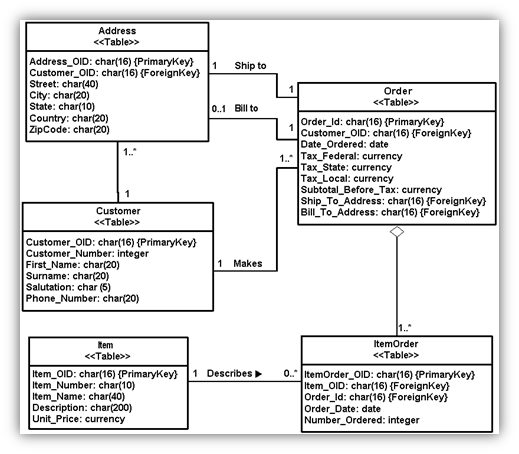
A classic example of a one-to-many relationship is the relationship between customers and orders. Here:
- An individual customer (from the "Customer" table) can place multiple orders over time.
- Each order (in the "Order" table) is associated with a single customer via a foreign key that references the customer.
Another commonly cited example is the relationship between departments and employees, where one department encompasses many employees, yet every employee belongs exclusively to one department.
Implementation Considerations
This relationship model is usually implemented by embedding a foreign key in the table that resides on the "many" side. For instance, the "Order" table would have a column such as "CustomerID" ensuring that every order record can be traced back to a specific customer.
3. Many-to-Many (M:N) Relationship
Many-to-many relationships accommodate situations where multiple records in one table can be linked to multiple records in another table. This type of relationship naturally occurs in scenarios where entities on both sides have complex interactions with one another. Directly mapping a many-to-many relationship in a relational database would be inefficient and redundant, which is why an intermediary table (often known as a junction or associative table) is introduced.
Examples and Use Cases
Consider an academic environment where students enroll in courses. The relationship between students and courses is many-to-many:
- A single student can enroll in several courses.
- Each course can have numerous enrolled students.
To effectively model this relationship:
- A "Student" table stores student details.
- A "Course" table holds course-related information.
- An "Enrollment" table acts as the junction, linking student IDs and course IDs and possibly including additional attributes (like enrollment date or grade).
Implementation Considerations
The junction table is crucial in forming a many-to-many relationship. This table typically has composite keys combining foreign keys from each associated table. Referential integrity must be maintained; any deletion or update operations should cascade properly to avoid orphan records.
4. Recursive (Self-Referencing) Relationship
A recursive or self-referencing relationship is a unique scenario where records in a table are related to other records in the same table. This model is particularly useful in situations where the data naturally forms a hierarchy or a tree-like structure.
Examples and Use Cases
A typical use case involves an employee directory where each employee reports to a supervisor, who is also an employee:
- The "Employee" table contains information about each employee.
- A column such as "SupervisorID" refers back to the primary key of the same "Employee" table.
This self-referential mechanism allows the modeling of an organizational hierarchy, where each employee (except the top-level executive) identifies a manager.
Implementation Considerations
Implementation involves designing constraints that avoid circular references that would cause integrity issues. Using foreign key constraints to reference the same table is standard practice. Recursive relationships are especially powerful in designing systems like file directories, bill of materials structures, or any hierarchy-based model.
5. Identifying vs. Non-Identifying Relationships
Beyond the fundamental relationship types, another essential consideration is whether a relationship is identifying or non-identifying. This distinction profoundly affects how the entities are bonded to each other in the underlying schema.
Identifying Relationship
An identifying relationship is one in which the primary key of the "parent" entity forms a part of the primary key of the "child" entity. In these cases, the child entity cannot exist without its parent, and the relationship is often represented in ER diagrams by a solid line. For example, in a scenario where the components of a product are uniquely defined by the product itself, the part’s identity might be inherently tied to the product’s identity.
Non-Identifying Relationship
On the other hand, a non-identifying relationship indicates that while entities are related, the primary key of the parent entity is not used in forming the primary key of the child entity. These relationships are often represented by a dashed line in ER diagrams. They still enforce referential integrity but allow each table to maintain its own primary key independence. An example might be the relationship between a blog and its posts where the post has its independent identity even though it is linked to the blog.
Detailed Comparison Table
The following table summarizes the key aspects of the discussed relationship types:
| Relationship Type | Description | Real-World Example | Implementation Strategy |
|---|---|---|---|
| One-to-One | Each record in table A is associated with only one record in table B | Person and Passport | Unique foreign key constraints |
| One-to-Many | A record in table A can relate to multiple records in table B | Customer and Orders; Department and Employees | Foreign key in the "many" table referencing the "one" table |
| Many-to-Many | Multiple records in table A relate to multiple records in table B | Students and Courses; Posts and Tags | Junction table with composite keys |
| Recursive (Self-Referencing) | Records in the same table have relationships with one another | Employee and their Supervisors | Foreign key referencing the primary key within the same table |
| Identifying vs. Non-Identifying | Determines inclusion of parent's primary key in child's primary key | Product components (Identifying) vs. Blog posts (Non-Identifying) | Defining primary key composition and referential integrity rules |
Applications and Broader Implications
Ensuring Data Integrity
The correct application of relationship types is crucial to ensuring data integrity and consistency. Data models enforce business rules through these relationships, dictating how data is stored, retrieved, and manipulated. For instance, using a one-to-many relationship for customer order management prevents data anomalies such as orphan records where orders exist without associated customers. Similarly, self-referencing relationships in organizational models ensure that reporting hierarchies are maintained accurately, supporting the integrity of managerial and subordinate roles.
Optimizing Data Retrieval
The optimal design of relationships directly influences the performance of query operations. For example, retrieving data from a one-to-many relationship can be expedited by indexing the foreign key in the "many" table, thereby reducing the lookup time. In many-to-many relationships, the junction table requires careful indexing and query optimization to efficiently join large datasets. The proper indexing strategy greatly improves the system performance,减少 redundant data checks and ensures a faster response time for complex queries involving multiple joins.
Facilitating Application Development
In object-oriented design and modern application frameworks, mapping these relationships appropriately simplifies coding practices and promotes reusability. ORM (Object Relational Mapping) frameworks in languages like Java, Python, and Ruby often provide annotations or methods (like hasOne(), hasMany(), belongsTo()) to define relationships. This abstraction allows developers to conceptualize relationships in terms of objects rather than database tables, providing a higher-level representation that aligns well with real-world business logic.
Mitigating Data Redundancy
In data modeling, one critical goal is to minimize redundancy. Properly defining relationships ensures that data is stored in normalized forms, reducing duplicate entries that can lead to inconsistencies. For example, if customer information were repeated in every order record rather than being linked, any update to that information would need to be propagated manually to all instances — a classic case of data redundancy. Modeling relationships effectively avoids these pitfalls, ensuring that each piece of data is stored in one consistent, authoritative location.
Advanced Considerations
Balancing Normalization and Performance
Database design is a balancing act between normalization (to avoid redundancy) and performance (to reduce the cost of joins across many tables). While highly normalized databases ensure consistency and integrity, excessive joins in complex many-to-many or recursive relationships may negatively impact performance. Striking the right balance means employing techniques such as denormalization, indexing, view creation, and even caching selectively when performance bottlenecks arise in large-scale applications.
Modeling for Change
Business rules and data needs evolve over time. A well-designed relational schema that incorporates clearly defined relationship types is more flexible to change. Whether you need to add more details to an existing relationship (such as timestamps or state information to a junction table) or modify the entities involved, a thoughtful design accommodates change with minimal disruption. It’s important to plan for scalability and future expansions during the design phase.
Object-Oriented and NoSQL Considerations
While the discussed relationships are typically associated with relational databases, the underlying principles also apply to object-oriented design. In an ORM configuration, relationships are manifest as object properties. Even in NoSQL databases, which are more flexible in structure, the understanding of relationships and data integrity remains important. NoSQL databases might use alternative methods, like embedding or referencing documents, to represent these relationships, but the conceptual framework is similar.
Implementing Relationships in Practice
The Role of Constraints and Foreign Keys
Regardless of the type of relationship being modeled, the enforcement of data integrity is largely achieved through the implementation of constraints—such as foreign keys—and proper indexing. In practical terms:
- Foreign key constraints ensure that relationships mirror the business logic set out during the design phase.
- Unique constraints in one-to-one relationships prevent data mismatch and duplication.
- Composite keys in many-to-many relationships ensure that junction tables only permit valid pairings of records.
Case Study: E-Commerce Database
To illustrate these principles, consider an e-commerce database:
- One-to-One: Each customer profile might be linked to a single user login record to ensure security and personalized experiences.
- One-to-Many: A customer can place various orders. Thus, an "Orders" table references the customer via a foreign key.
- Many-to-Many: Products and orders: a product can be part of many orders, while an order can consist of many individual products. A junction table named "OrderDetails" often holds pairing information such as quantity and price for each order-product combination.
- Recursive Relationship: An employee hierarchy where each employee’s record contains a reference to their manager, supporting a multi-level reporting structure.
This model ensures that complex interactions such as product inventory, customer orders, and employee management are handled in a structured, maintainable manner.
Best Practices
Considering the multiple types covered:
- Clear Definition: Clearly define each entity and its role within the overall data model. Understand how data points will be accessed and maintained.
- Use of Indexes: Strategically use indexes on foreign keys, particularly in one-to-many and many-to-many relationships, to optimize query performance.
- Documentation: Maintain robust documentation of relationships and constraints within your data model. This helps during maintenance and when scaling the application.
- Validation: Implement validation rules at the application level to ensure business rules are enforced in line with relational integrity.
Conclusion
In summary, understanding the different types of relationships in data modeling is fundamental to creating efficient, scalable, and reliable databases. Whether you are dealing with one-to-one, one-to-many, many-to-many, or recursive relationships, a deep comprehension of each type helps ensure that your data structure is optimized for integrity, retrieval, and future expansion. Additionally, the differentiation between identifying and non-identifying relationships adds another layer of nuance that can support robust schema design. With real-world examples such as person-to-passport, customer orders, and employee hierarchies, we can see that these relationships not only reflect logical business processes but also influence the technical implementation through constraints, indexing, and join strategies.
Designing effective data models isn’t only about understanding how to store data—it’s about establishing a framework where data integrity, efficiency, and adaptability are prioritized. The careful planning and execution of relationship types streamline complex queries, prevent data redundancy, and allow for the growth and evolution of applications. As modern applications continue to evolve with increasingly complex data needs, the core principles of relationship modeling remain critical in ensuring that both relational and non-relational databases can serve their intended purposes without loss of consistency or performance.
References
- What is Data Modeling? - Sigma Computing
- Data Modeling: Defining Relationships - Microsoft Learn
- Data Model Relationships - Hevo Data
Recommended
Last updated February 19, 2025