
Bench Press Without the Pinch: Your Guide to Neck Pain Relief
Safely manage neck pain from a pinched nerve and get back to your chest press routine with targeted exercises and form adjustments.
Experiencing sharp pain, tingling, or numbness radiating from your neck during or after bench pressing can be alarming. This discomfort often points towards a pinched nerve in the neck (cervical radiculopathy), a condition where a nerve root exiting your cervical spine becomes compressed or irritated. While frustrating, especially for avid lifters, understanding the causes and implementing specific strategies can help alleviate the pain and allow for a safer return to exercises like the bench press.
Key Insights for Neck Pain Relief
- Prioritize Form Over Weight: Incorrect bench press technique, especially lifting the head or improper shoulder blade positioning, is a major contributor to neck strain and nerve irritation.
- Gentle Movement is Therapeutic: Specific exercises like chin tucks, shoulder rolls, and nerve glides can help decompress the nerve, reduce muscle tension, and improve neck mobility.
- Listen to Your Body: Pushing through sharp pain can worsen the condition. Rest, modification, and gradual progression are crucial for recovery and preventing re-injury.
Understanding the Connection: Neck Pain and Bench Pressing
What is a Pinched Nerve in the Neck?
Cervical radiculopathy, commonly known as a pinched nerve in the neck, occurs when one of the nerve roots branching out from your cervical spine (neck region) becomes compressed, inflamed, or damaged. This compression can be caused by surrounding tissues like bone spurs (from arthritis), herniated discs, tight muscles, or swollen tendons. The result is often a constellation of symptoms that can include:
- Sharp or burning pain in the neck
- Pain radiating down the shoulder, arm, and sometimes into the hand
- Numbness or tingling sensations (paresthesia) along the nerve's path
- Muscle weakness in the affected arm or hand
- Pain that worsens with certain neck movements
How Can Bench Press Aggravate a Pinched Nerve?
The bench press, while primarily targeting the chest, shoulders, and triceps, can inadvertently place significant stress on the neck and upper spine if performed incorrectly. Several factors contribute to this:
- Poor Head Position: Lifting your head off the bench or actively pushing your head back into the bench during the lift creates excessive tension in the neck muscles and can misalign the cervical spine. Your head should remain neutral and resting gently on the bench throughout the movement.
- Improper Shoulder Blade (Scapular) Positioning: Failing to retract (pull back) and depress (pull down) the shoulder blades allows the shoulders to round forward, transferring stress upwards towards the neck. Maintaining tight, stable shoulder blades provides a solid base and protects the neck.
- Incorrect Bar Path: A purely vertical bar path can sometimes lead to suboptimal shoulder mechanics and neck strain. Many find a slight "J-curve" path (starting over the shoulders and touching lower on the chest before pressing back up towards the shoulders) feels more natural and less stressful on the joints.
- Excessive Muscle Tension: Holding too much tension in the neck and upper trapezius muscles, often unconsciously, can directly contribute to nerve irritation.
- Using Too Much Weight: Sacrificing form for heavier weight inevitably leads to compensation patterns that often involve straining the neck.
Addressing these technical flaws is paramount not only for relieving current pain but also for preventing future episodes.
Immediate Relief Strategies for Neck Pain
Before jumping back into bench pressing or even specific exercises, focus on calming the initial inflammation and pain.
Rest and Activity Modification
The most crucial first step is to avoid activities that aggravate your neck pain. This likely means temporarily pausing bench pressing and potentially other heavy upper body lifts. Gentle movement is generally encouraged, but respect pain signals. Continuing to perform exercises that cause sharp or radiating pain can worsen inflammation and delay recovery.
Cold and Heat Therapy
- Cold Therapy (Ice): Applying an ice pack wrapped in a thin towel to the affected area of your neck for 15-20 minutes several times a day can help reduce inflammation and numb acute pain, especially within the first 48 hours of a flare-up or immediately after activity.
- Heat Therapy: Applying moist heat (like a warm compress or shower) can help relax tight neck and shoulder muscles, improve blood flow, and reduce stiffness. Heat is often more beneficial before performing gentle stretches or exercises once the acute inflammation phase has passed.
Over-the-Counter Pain Relief
Nonsteroidal anti-inflammatory drugs (NSAIDs) like ibuprofen or naproxen can help reduce both pain and inflammation associated with a pinched nerve. Acetaminophen can help with pain but doesn't have significant anti-inflammatory effects. Always use these medications as directed and consult with your doctor or pharmacist if you have underlying health conditions or are taking other medications.
Targeted Exercises for Neck Pain Relief
Once the acute pain begins to subside, incorporating specific gentle exercises can help decompress the affected nerve, improve mobility, strengthen supporting muscles, and promote better posture. Perform these exercises slowly and controllably, focusing on quality over quantity. Stop immediately if any exercise causes sharp, shooting pain, or increases numbness/tingling down your arm. Some muscle soreness or stretching sensation is normal, but nerve pain is not. Aim for 2-3 sets of 5-10 repetitions, 1-2 times daily, gradually increasing as tolerated.
Core Neck Stability: Chin Tucks
This is arguably the most important exercise for alleviating pressure on cervical nerves and correcting forward head posture.
How to Perform:
- Sit or stand tall with your shoulders relaxed and back straight. Look straight ahead.
- Gently glide your chin straight back, as if making a "double chin," keeping your eyes level (don't tilt your head up or down).
- You should feel a stretch at the base of your skull and engagement in the front of your neck.
- Hold for 3-5 seconds, then relax.
Variation: Chin Tuck with Extension: After performing the chin tuck, slowly tilt your head backward, looking towards the ceiling, while maintaining the tucked chin position. Hold briefly and return.
Shoulder and Upper Back Mobility: Shoulder Rolls & Scapular Retractions
Releasing tension in the shoulders and strengthening the upper back helps support the neck.
Shoulder Rolls:
- Sit or stand tall with arms relaxed at your sides.
- Slowly roll your shoulders upwards towards your ears, then backwards, then downwards, making large circles.
- Perform 10 repetitions backward, then 10 repetitions forward.
Scapular Retractions (Shoulder Blade Squeezes):
- Sit or stand tall, arms relaxed.
- Gently squeeze your shoulder blades together and slightly down, as if trying to pinch a pencil between them.
- Avoid shrugging your shoulders up towards your ears.
- Hold for 5 seconds, then relax.
Gentle Neck Stretches: Tilts and Turns
Improve neck range of motion gently.
Side Tilts (Lateral Flexion):
- Sit or stand tall, shoulders relaxed.
- Slowly tilt your head towards one shoulder, bringing your ear closer to the shoulder without lifting the shoulder itself.
- Hold the gentle stretch for 15-20 seconds.
- Return to the center and repeat on the other side.
Head Turns (Rotation):
- Sit or stand tall.
- Slowly turn your head to look over one shoulder, keeping your chin level.
- Hold for 5-10 seconds.
- Return to the center and repeat on the other side.
Nerve Mobilization: Nerve Glides (Flossing)
These exercises gently move the nerve through its pathway to reduce irritation. Perform very carefully and stop if symptoms worsen.
Basic Cervical Nerve Glide:
- Sit tall with good posture.
- Perform a gentle chin tuck.
- Slowly tilt your head away from the painful side.
- Simultaneously, extend the arm on the painful side straight out to the side, palm facing up or down (experiment to see what feels best), until a gentle tension or stretch is felt. *Do not push into pain.*
- To increase the glide: Gently tilt your head towards the outstretched arm while slightly lowering the arm.
- To decrease the glide: Gently tilt your head away from the arm while slightly raising the arm.
- Move slowly back and forth between these positions 5-10 times.
Trapezius Relief: Trap Stretch
Target the upper trapezius muscle, which often gets tight and contributes to neck pain.
How to Perform:
- Sit tall in a chair. You can grasp the bottom of the chair with the hand on the side you want to stretch for stability.
- Slowly tilt your head away from the side you are stretching (e.g., tilt head to the left to stretch the right trap).
- You can gently increase the stretch by placing your opposite hand (left hand in this example) on the top of your head and applying very light pressure. *Do not pull hard.*
- Hold for 20-30 seconds. Repeat on the other side.
Visualizing Your Relief Strategy
This mindmap outlines the key exercises discussed that can help alleviate symptoms of a pinched nerve in the neck, paving the way for a safer return to activities like bench pressing.
(Forward & Backward)"] id2b["Neck Side Tilts"] id2c["Neck Rotations (Turns)"] id2d["Trap Stretch"] id3["Upper Back Support"] id3a["Scapular Retractions
(Shoulder Blade Squeezes)"] id4["Nerve Health"] id4a["Nerve Glides / Flossing
(Perform with Caution)"]
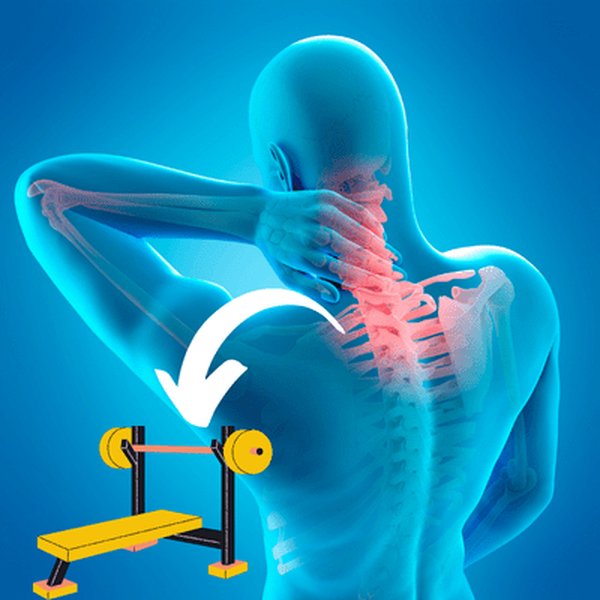
Common bench press errors like improper head position can contribute to neck pain.
Safely Modifying Your Bench Press Technique
Once your pain has significantly reduced and you have better neck mobility, you can consider gradually reintroducing the bench press, paying meticulous attention to form.
Maintain Neutral Head and Spine Alignment
This is non-negotiable. Your head should remain in contact with the bench throughout the entire lift, maintaining a neutral position (avoid tucking the chin excessively or letting the head tilt back). Do not lift your head off the bench as you press, and actively resist pushing your head forcefully into the pad. Engaging your core muscles will help stabilize your entire torso and spine.
Master Shoulder Blade Positioning
Before initiating the lift, actively pull your shoulder blades back (retraction) and down towards your hips (depression). Maintain this tight upper back position throughout the set. This creates a stable shelf for your upper body and prevents the shoulders from rolling forward, which protects both the shoulder joints and the neck.
Control the Bar Path
Focus on a smooth, controlled descent and ascent. While individual leverages vary, many find a slight arc or "J-curve" – where the bar touches slightly lower on the chest and is pressed back up towards the starting position over the shoulders – feels more natural and less stressful than a strict vertical path. Experiment carefully to find what works best for your body.
Consider Grip and Load Adjustments
A slightly narrower grip might reduce external rotation at the shoulder, potentially easing neck tension for some individuals. Most importantly, start with significantly lighter weight than you were using previously. Focus entirely on perfecting your form with lighter loads before gradually increasing the weight. Prioritize controlled, slow repetitions over lifting heavy.
Bench Press Safety Factors
This chart visualizes key factors influencing neck safety during the bench press. Achieving high scores across these areas minimizes risk. Proper form and controlled loading are paramount, supported by adequate mobility, strength balance, warm-up, and recovery.
Bench Press Form Check: Do's and Don'ts for Neck Safety
Refer to this table for a quick summary of crucial form points to protect your neck while bench pressing:
| Technique Aspect | Do 👍 | Don't 👎 |
|---|---|---|
| Head Position | Keep head neutral and resting gently on the bench. | Lift head off the bench OR push head forcefully into the bench. |
| Shoulder Blades | Actively retract (pull back) and depress (pull down) shoulder blades. Maintain tightness. | Allow shoulders to round forward or shrug up towards ears. |
| Bar Path | Use a controlled path, often a slight J-curve feels best. | Lose control of the bar; excessively fast or jerky movements. |
| Core | Engage core muscles to stabilize the torso and spine. | Allow excessive arching or instability through the core. |
| Weight Selection | Prioritize perfect form with manageable weight. Progress gradually. | Sacrifice form to lift heavier weight; ego lifting. |
| Pain Management | Stop immediately if sharp neck or radiating arm pain occurs. | Push through nerve pain signals. |
Gradual Return to Training and Alternatives
Listen to Your Body
This cannot be overstated. As you reintroduce bench pressing, pay close attention to how your neck feels during and after the exercise. Any return of sharp pain, numbness, or tingling is a sign to stop and reassess. You may need more rest, more focus on corrective exercises, or further form adjustments.
Progressive Overload
Start with very light weights or even just the empty bar to groove the correct movement pattern. Focus on volume (sets and reps) with perfect form before incrementally adding weight. Progress slowly over weeks, not days.
Exploring Bench Press Alternatives
If the barbell bench press continues to cause issues despite form corrections and exercises, consider alternatives that may place less stress on the neck:
- Dumbbell Bench Press: Allows for a more natural range of motion and potentially less strain. Ensure controlled movement.
- Incline or Decline Press (Barbell or Dumbbell): Changing the angle can alter the stress on the neck and shoulders. Experiment to see if one angle feels better.
- Machine Chest Press: Provides more stability and support, potentially reducing neck involvement. Ensure the machine fits your body well.
- Push-ups: A fundamental bodyweight exercise that builds chest strength with good core and scapular control.
Exercise Guidance for Neck Pain
Understanding how to safely exercise with neck pain is crucial. This video provides demonstrations of exercises often recommended for relieving pinched nerve symptoms in the neck, similar to those described above. Watching proper execution can help ensure you are performing the movements correctly and safely.
The video titled "3 SAFE Exercises for a Pinched Nerve in Neck (Cervical Radiculopathy)" demonstrates gentle exercises aimed at reducing nerve compression symptoms like radiating arm pain or tingling. These types of movements focus on improving mobility and reducing pressure without aggravating the condition, making them a potentially useful part of your recovery strategy before attempting strenuous lifts like the bench press again.
When to Seek Professional Medical Advice
While many cases of pinched nerves improve with conservative care (rest, exercises, form correction), it's essential to know when to seek help from a healthcare professional, such as a doctor or physical therapist.
Consult a professional if you experience:
- Severe pain that doesn't improve with home care
- Pain that progressively worsens
- Significant muscle weakness in your arm or hand
- Loss of coordination or dexterity in your hand
- Symptoms persisting for several weeks despite trying conservative measures
- Symptoms following a traumatic injury
A doctor can provide an accurate diagnosis, potentially ruling out other conditions, and may order imaging tests (like an MRI) if necessary. A physical therapist is invaluable for assessing your movement patterns, identifying specific muscle imbalances or weaknesses, providing manual therapy techniques (like traction or soft tissue mobilization), and designing a personalized rehabilitation program tailored to your specific needs and goals, including a safe return to bench pressing.
Untreated or improperly managed pinched nerves can potentially lead to chronic pain or permanent nerve damage, so don't hesitate to seek expert guidance if your symptoms are severe or persistent.
Frequently Asked Questions (FAQ)
Can I still bench press with a pinched nerve in my neck?
How long does it take to recover from a pinched nerve affecting bench press?
What if the recommended exercises make my neck pain worse?
Besides form, what else can help prevent neck pain during bench press?
Recommended Further Exploration
- Explore detailed guides on perfecting bench press technique specifically to minimize neck involvement.
- Discover additional stretches targeting common areas of tightness that contribute to neck pain.
- Learn about the various techniques physical therapists use to treat pinched nerves in the neck.
- Find chest-strengthening exercises that might be suitable alternatives if bench pressing remains problematic.
References
Last updated May 4, 2025