
Unlocking Pure Manganese Sulfate: Strategies for Calcium and Magnesium Removal
Navigating selective ion separation in industrial manganese sulfate solutions while preserving product integrity.
Separating calcium (Ca²⁺) and magnesium (Mg²⁺) ions from a concentrated manganese sulfate (MnSO₄) solution (35 g/L Mn²⁺, 0.7 g/L Ca²⁺, 4 g/L Mg²⁺) presents a common challenge in hydrometallurgy and chemical production. The goal is to remove these contaminants effectively without compromising the valuable manganese content, introducing new impurities, or forming unwanted manganese precipitates like MnO₂ or Mn(OH)₂. Achieving this requires careful selection of methods that are scalable, cost-effective, and mindful of critical process parameters, especially pH.
Key Insights at a Glance
Essential takeaways for effective purification
- Multiple Viable Pathways: Several techniques, including precipitation, solvent extraction, ion exchange, and membrane processes, can effectively separate Ca²⁺ and Mg²⁺ from MnSO₄ solutions.
- pH Control is Paramount: Maintaining the solution pH within a specific range (typically acidic, e.g., pH 2-6) is crucial to prevent manganese precipitation (Mn(OH)₂, MnO₂) and maximize the selectivity of Ca/Mg removal.
- Balancing Act: The optimal method depends on balancing factors like desired final purity, acceptable manganese loss, capital and operational costs, scalability requirements, and tolerance for added reagents or process complexity.
Exploring Separation Methodologies
A detailed look at techniques for selective Ca²⁺ and Mg²⁺ removal
Choosing the right separation technology requires understanding the principles, advantages, and limitations of each approach. Here are the primary methods considered for purifying your manganese sulfate solution:
Precipitation Techniques
Leveraging Solubility Differences
Precipitation methods exploit the different solubilities of manganese, calcium, and magnesium compounds under specific chemical conditions (like pH or the presence of certain anions). Careful control is essential to selectively precipitate Ca²⁺ and Mg²⁺ while keeping Mn²⁺ in solution.
- Carbonate Precipitation: This is a widely cited method involving the addition of soluble carbonates (e.g., sodium carbonate - Na₂CO₃, ammonium carbonate - (NH₄)₂CO₃) or potentially CO₂ gas. Calcium and magnesium form less soluble carbonates (CaCO₃, MgCO₃) than manganese carbonate (MnCO₃) under controlled conditions. Thermodynamic analyses suggest carbonate precipitation offers better selectivity for Mn over Mg compared to hydroxide precipitation.
- Advantages: Relatively cost-effective, scalable, good selectivity possible.
- Considerations: The feeding method and rate of carbonate addition are crucial to minimize manganese co-precipitation. Requires downstream solid-liquid separation (filtration/sedimentation). Introduces carbonate ions, though these might be removed later or be acceptable depending on the final product use. Precise pH control is still necessary.
- Hydroxide Precipitation (pH Adjustment): This involves carefully raising the solution pH using a base (e.g., NaOH, Ca(OH)₂). Calcium hydroxide (Ca(OH)₂) and magnesium hydroxide (Mg(OH)₂) precipitate at lower pH values than manganese(II) hydroxide (Mn(OH)₂), which typically starts precipitating significantly above pH 8-9. Some sources suggest raising pH to 10.5-11 for Ca/Mg removal.
- Advantages: Can be cost-effective, uses common reagents.
- Considerations: This method carries a *high risk* of manganese co-precipitation if pH is not meticulously controlled or if localized high pH zones occur. Operating at pH 10.5-11 is very close to the Mn(OH)₂ precipitation range, requiring sophisticated control systems. Lower pH adjustments (e.g., pH 3-4 mentioned in one source) are unlikely to precipitate hydroxides but might relate to other precipitation forms (e.g., complex sulfates) or the Barium method below.
- Barium Compound Precipitation: A specific approach uses barium hydroxide (Ba(OH)₂) for pH adjustment and barium fluoride (BaF₂) or other barium salts to precipitate calcium and magnesium, potentially as sulfates (CaSO₄, MgSO₄ have limited solubility, and BaSO₄ is very insoluble, driving reactions) or fluorides. Research suggests high removal efficiencies ( >95% for Ca/Mg) with high Mn recovery (>96%).
- Advantages: Potentially high removal efficiency.
- Considerations: Introduces barium, which is toxic and must be completely removed or accounted for. Requires careful stoichiometric control and management of potentially hazardous fluoride reagents. The exact mechanism at lower pH (3-4) needs clarification but likely involves sulfate or fluoride precipitation aided by barium.
Solvent Extraction (SX)
Selective Liquid-Phase Transfer
Solvent extraction uses an organic liquid (extractant) immiscible with the aqueous manganese sulfate solution to selectively bind and transfer Ca²⁺ and Mg²⁺ ions into the organic phase, leaving purified MnSO₄ in the aqueous phase (raffinate).
- Process Example (P204/4PC System): A synergistic solvent extraction (SSX) system using di-2-ethylhexyl phosphoric acid (P204) and an alkyl-4-pyridinecarboxylate ester (4PC) dissolved in a carrier like sulfonated kerosene has demonstrated effectiveness. The loaded organic phase is then scrubbed (e.g., with dilute H₂SO₄) to remove any co-extracted Mn²⁺ and subsequently stripped (e.g., with stronger H₂SO₄) to recover Ca²⁺ and Mg²⁺, allowing solvent regeneration and reuse.
- Advantages: Capable of producing very high purity MnSO₄ solutions (low Ca/Mn and Mg/Mn ratios achievable). Continuous operation and scalability are possible.
- Considerations: Higher initial capital cost for SX circuits. Ongoing costs for solvent makeup (due to losses) and regeneration. Requires careful control of pH, phase ratios (A/O), and contact times during extraction, scrubbing, and stripping stages. Potential for organic entrainment in the aqueous phase requires mitigation.
Ion Exchange (IX)
Solid Resin Adsorption
Ion exchange utilizes solid polymer resins containing functional groups that can reversibly bind ions from the solution. By selecting appropriate resins, Ca²⁺ and Mg²⁺ can be selectively adsorbed while allowing Mn²⁺ to pass through.
- Process: Strong acid cation (SAC) exchange resins are typically used. The MnSO₄ solution flows through a column packed with the resin in its active form (e.g., H⁺ or Na⁺ form). Ca²⁺ and Mg²⁺ ions displace the H⁺/Na⁺ ions and bind to the resin due to their higher affinity. Once the resin is saturated (breakthrough occurs), it is taken offline and regenerated (e.g., using strong acid or brine) to release the captured Ca²⁺/Mg²⁺, preparing it for the next cycle.
- Advantages: Well-established and robust technology. Can achieve high levels of purification. Scalable for industrial volumes. No chemical addition to the bulk solution during the loading phase.
- Considerations: Requires periodic regeneration, generating a waste stream containing the removed ions and regenerant chemicals. Resin fouling or degradation can occur over time. Requires monitoring of pH and flow rates. Capital cost for resin and columns.
Membrane Technologies
Physical Separation Barriers
Membrane processes use semi-permeable barriers to separate components based on size, charge, or pressure-driven transport.
- Electrodialysis (ED): Uses an electric field to drive ions across ion-selective membranes (cation and anion exchange membranes). Cations (Mn²⁺, Ca²⁺, Mg²⁺) move towards the cathode, passing through cation exchange membranes, while anions (SO₄²⁻) move towards the anode through anion exchange membranes. By arranging membranes appropriately, streams enriched and depleted in specific ions can be created. Selectivity between divalent cations can be challenging but potentially managed through operating conditions.
- Membrane Filtration (Nanofiltration - NF / Ultrafiltration - UF): NF membranes can potentially separate divalent ions (Ca²⁺, Mg²⁺, Mn²⁺) from monovalent ions and water based on size and charge interactions. However, achieving selective separation *between* divalent ions (Ca/Mg vs. Mn) using solely NF/UF is generally difficult due to their similar hydrated ionic radii and charge. It might be more applicable for pre-concentration or removing larger impurities.
- Membrane Electrolysis: Mentioned as a method for recovering minerals (like Mg(OH)₂) from brine or seawater using cation exchange membranes in an electrolytic cell. Adapting this specifically for selective Ca/Mg removal from MnSO₄ while preserving Mn²⁺ requires careful cell design and control to manage electrochemical reactions and pH gradients near electrodes, avoiding Mn oxidation/precipitation.
- Advantages: Avoids addition of chemical reagents to the main solution. Can operate continuously.
- Considerations: Membrane fouling can reduce efficiency and requires cleaning/replacement. Electrodialysis and electrolysis can have significant energy costs. Selectivity between ions of similar charge/size can be limited for NF/UF. Capital costs for membrane stacks and systems.
Other Methods
Alternative Approaches
- Crystallization: Involves carefully controlling conditions (temperature, concentration) to selectively crystallize manganese sulfate (MnSO₄·xH₂O) while leaving the more soluble calcium and magnesium sulfates in the mother liquor. Can produce high-purity solid product but is often energy-intensive (evaporation/cooling cycles) and achieving high recovery without significant Ca/Mg inclusion can be difficult.
- Chelating Agents: Specific chemicals (e.g., EDTA, DTPA) can form stable, soluble complexes with metal ions. By controlling pH, it might be possible to selectively chelate Ca²⁺ and Mg²⁺. However, removing the metal-chelate complexes afterwards adds complexity (e.g., requiring further separation steps like adsorption or extraction), and the chelating agents themselves alter the solution matrix.
Comparative Analysis of Separation Methods
Visualizing the trade-offs
Selecting the best method involves weighing various factors. The radar chart below provides a qualitative comparison of the primary methods based on key performance indicators relevant to your requirements. Scores are indicative (1=Low, 5=High), representing a generalized assessment.
Method Summary Table
This table provides a concise overview of the primary separation techniques:
| Method | Principle | Typical Reagents/System | Key Advantages | Key Disadvantages | Scalability | Relative Cost (OpEx) | pH Sensitivity |
|---|---|---|---|---|---|---|---|
| Carbonate Precipitation | Selective precipitation of CaCO₃/MgCO₃ | Na₂CO₃, (NH₄)₂CO₃, CO₂ | Cost-effective, Good selectivity possible | Risk of Mn co-precipitation, Adds carbonate, Solid handling | High | Low-Moderate | High (for selectivity & Mn loss) |
| Hydroxide Precipitation | Selective precipitation of Ca(OH)₂/Mg(OH)₂ via pH adjustment | NaOH, Ca(OH)₂, etc. | Uses common reagents | *Very high risk* of Mn precipitation if pH uncontrolled, Solid handling | High | Low | Very High (Critical for Mn loss) |
| Solvent Extraction (SX) | Selective transfer to organic phase | Organic extractants (e.g., P204+4PC) in kerosene | High purity achievable, Continuous process | Higher cost (solvent loss/regen), Complex operation, Organic entrainment | High | Moderate-High | High (for extraction/stripping efficiency) |
| Ion Exchange (IX) | Selective adsorption onto resin | Cation exchange resins | High purity possible, Robust, No reagent addition during loading | Requires regeneration (waste stream), Resin cost/lifespan | High | Moderate | Moderate (affects resin capacity/selectivity) |
| Membrane Tech (ED/NF) | Separation via membranes (charge/size/pressure) | Membrane modules, Power supply (ED) | No chemical addition to bulk solution | Membrane fouling, High energy cost (ED), Selectivity limits (NF) | High | Moderate-High | Moderate (affects membrane performance/stability) |
Visualizing the Purification Challenge
Mindmap of Separation Strategies
This mindmap illustrates the different categories of methods available for tackling the removal of calcium and magnesium from your manganese sulfate solution, highlighting key considerations for each branch.
(Remove Ca²⁺/Mg²⁺)"] ["Precipitation"] ["Carbonate
(Na₂CO₃, CO₂)"] ["Advantages: Cost, Selectivity"] ["Cons: Mn Co-ppt Risk, Solids"] ["Hydroxide
(pH Adjust)"] ["Adv: Common Reagents"] ["Cons: HIGH Mn Risk, pH Control Critical"] ["Barium
(Ba(OH)₂, BaF₂)"] ["Adv: High Efficiency Claim"] ["Cons: Ba Toxicity, Reagent Cost/Handling"] ["Solvent Extraction (SX)"] ["P204 / 4PC System"] ["Advantages: High Purity"] ["Cons: Cost, Complexity, Solvent Loss"] ["Ion Exchange (IX)"] ["Cation Resins"] ["Advantages: Established, Purity"] ["Cons: Regeneration Waste, Resin Cost"] ["Membrane Technologies"] ["Electrodialysis (ED)"] ["Adv: No Chemical Additives"] ["Cons: Energy Cost, Selectivity"] ["Nanofiltration (NF)"] ["Adv: Potential Size Separation"] ["Cons: Fouling, Divalent Selectivity Issues"] ["Other Methods"] ["Crystallization"] ["Adv: Solid Product"] ["Cons: Energy Intensive, Recovery/Purity Trade-off"] ["Chelating Agents"] ["Adv: Selectivity Possible"] ["Cons: Added Complexity, Agent Removal"] ["Key Constraints"] ["Maintain [Mn²⁺]"] ["Avoid Mn Precipitates"] ["Minimize Impurities"] ["Scalable & Cost-Effective"] ["Control pH (Acidic Preferred)"]
Industrial Separation Equipment Examples
Visualizing the Scale of Operations
Many of the discussed methods, particularly Ion Exchange and Precipitation, utilize large-scale industrial equipment. The images below showcase typical setups used in chemical processing and water treatment facilities, illustrating the type of hardware involved in implementing these separation techniques at an industrial level. Ion exchange systems, for example, involve large columns filled with resin beads where the selective adsorption process takes place, requiring associated tanks, pumps, and control systems for operation and regeneration.
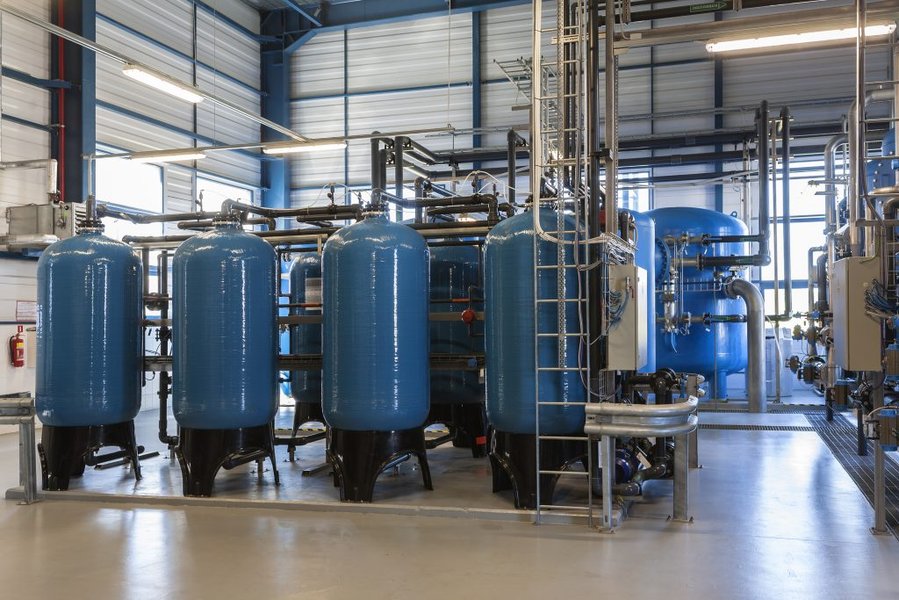
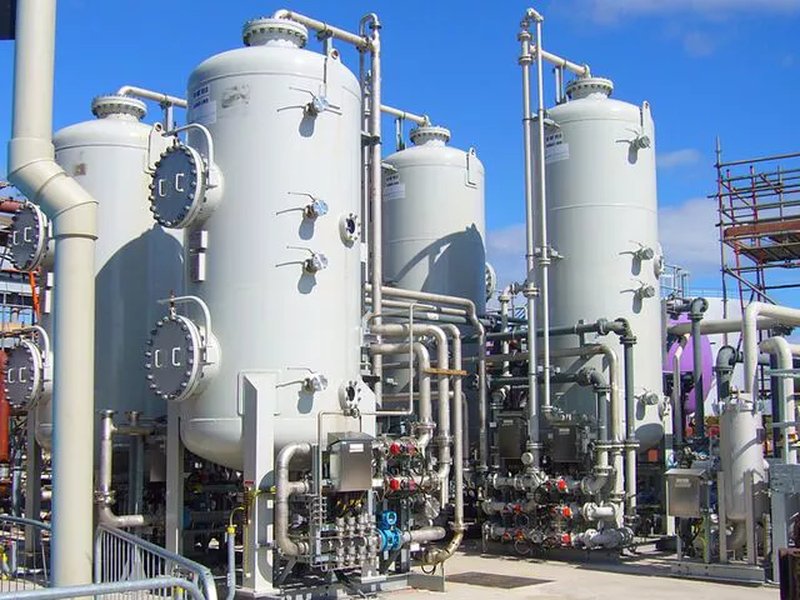
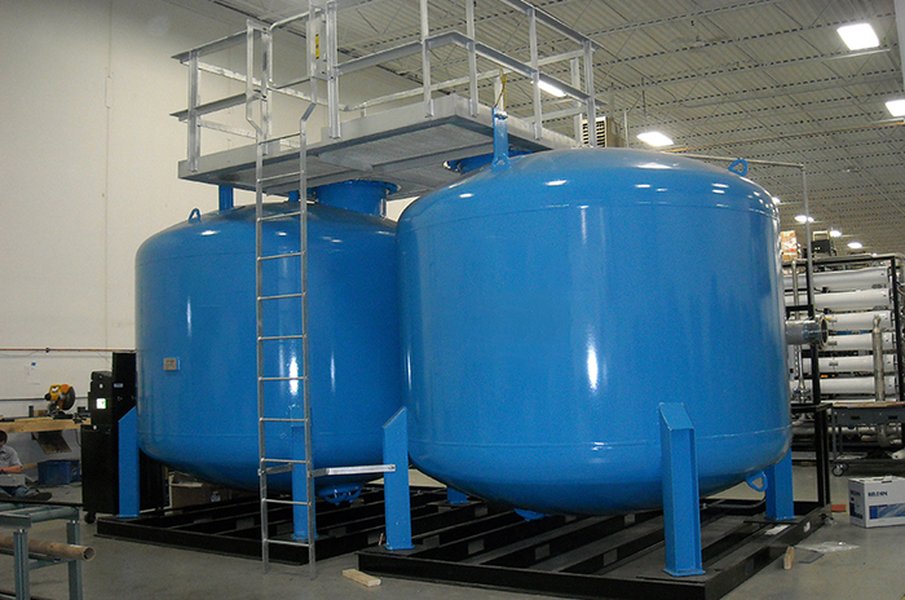
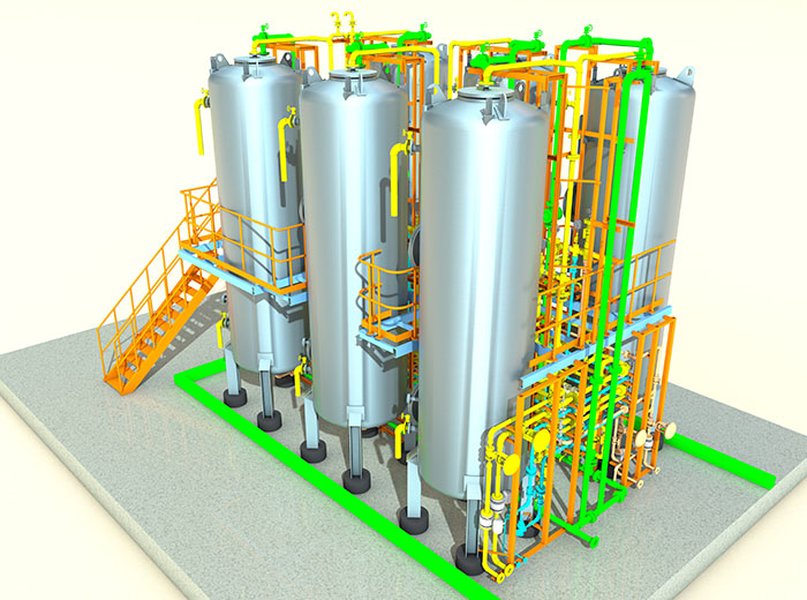
Examples of industrial ion exchange systems and columns used for selective ion removal.
Understanding Water Hardness Removal Concepts
Insights from Water Treatment
While your specific challenge involves a concentrated manganese sulfate solution, the fundamental principles of removing calcium and magnesium ions are shared with water softening processes used in municipal and industrial water treatment. This video explains the concept of water hardness (caused primarily by Ca²⁺ and Mg²⁺) and discusses common treatment methods like ion exchange and precipitation (lime-soda softening), providing a valuable background on the chemistry and technology involved in separating these specific ions from aqueous solutions.
Critical Process Considerations
Factors Guiding Method Selection and Operation
Importance of pH Control
The Cornerstone of Selectivity and Stability
As highlighted repeatedly, maintaining the correct pH is arguably the most critical parameter. Manganese(II) ions (Mn²⁺) are relatively stable in acidic to near-neutral solutions (typically cited as pH < 8 or 9). However, as pH increases, the risk of hydrolysis to Mn(OH)₂ (manganese(II) hydroxide) grows significantly. Furthermore, under oxidizing conditions (which can be influenced by pH and dissolved oxygen), Mn²⁺ can oxidize to form insoluble manganese dioxide (MnO₂). Most selective separation methods rely on operating in a pH window where Ca²⁺ and Mg²⁺ react or adsorb preferentially, while Mn²⁺ remains soluble and unreactive. An acidic range (e.g., pH 2-6 or 3-4, depending on the method) is often preferred to ensure Mn²⁺ stability and enhance selectivity in precipitation or extraction processes.
Impurity Management
Avoiding Contamination from the Process Itself
Your requirement to minimize introducing impurities is key.
- Precipitation methods inherently add counter-ions (e.g., carbonate, hydroxide, potentially barium or fluoride). Downstream removal or tolerance of these ions must be considered. Incomplete precipitation can also leave residual reagents.
- Solvent extraction carries the risk of slight organic solvent dissolution or entrainment into the purified aqueous phase, requiring polishing steps if unacceptable.
- Ion exchange adds minimal impurities during the loading cycle, but the regeneration process uses chemicals (acids, salts) that form a separate waste stream. Resin fines could potentially contaminate the product if not filtered.
- Membrane methods generally add no chemical impurities to the bulk stream but rely on the physical integrity and selectivity of the membrane.
Scalability and Economics
Industrial Viability
While most discussed methods *can* be scaled, their economic feasibility varies:
- Capital Costs (CAPEX): Precipitation systems might have lower initial costs compared to complex SX circuits, large IX installations, or advanced membrane systems.
- Operational Costs (OPEX): Precipitation costs depend on reagent consumption. SX involves solvent makeup and regeneration energy. IX requires regenerant chemicals and potentially resin replacement. Membrane methods often have significant energy costs (pumping, electrical potential for ED/Electrolysis) and membrane replacement costs.
Frequently Asked Questions (FAQ)
Addressing Common Queries
Which method typically yields the highest purity manganese sulfate? +
Solvent Extraction (SX) and multi-stage Crystallization processes are often capable of achieving the highest purity levels for the final manganese sulfate product. Ion exchange can also yield high purity solutions, particularly if optimized regeneration and rinsing cycles are employed. Precipitation methods might struggle more with co-precipitation, potentially requiring additional purification steps.
What is generally the most cost-effective approach for large volumes? +
Precipitation methods (especially carbonate or carefully controlled hydroxide precipitation) are often considered among the most cost-effective options from an operational standpoint due to relatively inexpensive reagents, particularly at large industrial scales. However, the overall cost-effectiveness depends heavily on factors like reagent consumption, energy use, waste disposal costs, required purity levels, and capital investment. Ion exchange can also be cost-effective in the long run despite higher initial investment, especially if resin lifetime is long and regeneration is efficient.
What are the primary risks associated with incorrect pH control? +
Incorrect pH control poses several risks:
- Manganese Loss: If the pH rises too high (e.g., > 8-9), manganese(II) hydroxide (Mn(OH)₂) can precipitate, leading to significant loss of the target product.
- Manganese Oxidation: Under certain conditions (especially higher pH and presence of oxygen), Mn²⁺ can oxidize to insoluble MnO₂, further contributing to product loss and contamination.
- Reduced Selectivity: The efficiency of separating Ca²⁺/Mg²⁺ from Mn²⁺ often depends strongly on maintaining the optimal pH range for the chosen method (precipitation, SX, IX). Deviation can lead to poor separation.
- Equipment Issues: Uncontrolled precipitation can cause scaling and blockages in pipes and equipment.
Can different separation methods be combined in a process? +
Yes, combining methods is very common in industrial purification processes. For instance, a bulk removal step using precipitation might be followed by a polishing step using ion exchange to achieve very high purity. Alternatively, membrane filtration could be used upstream to remove suspended solids before feeding the solution to an ion exchange or solvent extraction circuit. Designing multi-stage processes allows leveraging the strengths of different techniques to meet specific purification goals efficiently.
How do the initial concentrations of Ca²⁺ and Mg²⁺ affect method choice? +
The initial concentrations (0.7 g/L Ca²⁺ and 4 g/L Mg²⁺) are significant impurity levels relative to the target Mn²⁺ (35 g/L).
- Higher impurity loads generally favour methods with high capacity and potentially lower operating costs for bulk removal, such as precipitation.
- Ion exchange resin capacity and regeneration frequency will be directly impacted by the concentration of ions being removed. Higher concentrations mean faster saturation and more frequent regeneration cycles.
- Solvent extraction circuits need to be designed with appropriate phase ratios and extraction stages to handle the mass transfer required for the given impurity levels.
References
Supporting Research and Literature
- Separation of manganese from calcium and magnesium in sulfate solutions via carbonate precipitation - ResearchGate
-
Preparation of high-purity manganese sulfate solutions from industrial manganese sulfate solutions by synergistic solvent extraction - ScienceDirect
- The Efficient Removal of Calcium and Magnesium Ions from Industrial Manganese Sulfate Solution through the Integrated Application of Concentrated Sulfuric Acid and Ethanol - MDPI
-
Selective electrochemical separation and recovery of calcium and magnesium from brine using membrane electrolysis - ScienceDirect
- Study on purification of manganese sulfate solution by evaporation-cooling coupling method to remove the calcium and magnesium - IOPscience
- Method for removing calcium and magnesium from manganese sulfate solution - Google Patents
Recommended Further Exploration
Related Queries for Deeper Insights
Last updated April 5, 2025