
The Drive Decoded: Is the 2016-2019 Renault Clio Automatic a Joyride or Just a Journey?
Exploring whether Renault's popular supermini with an automatic gearbox truly delivers driving excitement between 2016 and 2019.
The Renault Clio, a stalwart in the competitive supermini segment, has long been appreciated for its style and practicality. For the 2016-2019 model years, particularly those equipped with an automatic transmission, the question of its "fun-to-drive" character often arises. While offering convenience, especially in urban environments, how does the automatic Clio fare when it comes to sheer driving pleasure? This exploration delves into its driving dynamics, transmission performance, and overall engagement to provide a comprehensive answer.
Key Insights: The Clio Automatic Experience
- Comfort Over Exhilaration: The 2016-2019 automatic Clio generally prioritizes a comfortable and refined ride over raw, sporty thrills, making it a competent daily driver.
- Transmission Temperament: The Efficient Dual Clutch (EDC) automatic gearbox offers smoothness in everyday driving but can exhibit hesitancy or slower responses during spirited acceleration, impacting the "fun" factor for some.
- Renault Sport (RS) Exception: While RS models are exclusively automatic and significantly more powerful, their gearboxes still face scrutiny for not being as engaging as a manual or some rivals' performance automatics, though they offer a much sportier experience than standard Clios.
A 2016 Renault Clio, showcasing the design language of the era.
Dissecting the Driving Dynamics
The fourth-generation Renault Clio, especially after its 2016 facelift, saw improvements aimed at enhancing driving dynamics and interior quality. These updates included a sharper exterior look, upgraded cabin materials, and enhanced technology. Renault also worked on refining the steering for a more direct feel.
Handling and Suspension: A Tale of Two Priorities
Comfort and Composure
The Clio from this period is widely praised for its supple suspension, which adeptly absorbs imperfections on poor road surfaces, contributing to a comfortable ride. This makes it a relaxing car for both city commutes and longer motorway journeys. It generally exhibits little engine or wind noise at cruising speeds, further enhancing its refined character. The chassis feels competent and provides a good sense of stability.
Agility versus Engagement
While the Clio offers decent agility and nimble handling in urban settings, its steering, though improved, is often described as not being as sharp or communicative as that of key rivals like the Ford Fiesta. The focus tends to be more on ease of driving and comfort rather than outright driver engagement. It handles corners confidently but may not provide the "pointy" or "lively" feel that enthusiasts often seek in a fun-to-drive supermini.
The Automatic Transmission: Convenience with Caveats
The automatic transmission in the 2016-2019 Clio is typically Renault's 6-speed Efficient Dual Clutch (EDC) system. It was commonly paired with engines like the 0.9-litre or 1.2-litre turbocharged petrol units, and in some markets, the 1.5-litre diesel.
Smooth Operator in Daily Use
For everyday driving, the EDC gearbox generally provides smooth and timely shifts, contributing to a relaxed driving experience. It excels in stop-start city traffic, reducing driver fatigue. When driven sedately or cruising on the motorway, the transmission operates unobtrusively.
Performance Under Pressure
The "fun" aspect can be diminished by the EDC's behavior under more demanding conditions. Several reviews note that the gearbox can feel sluggish, hesitant, or slow to respond when quick acceleration is required, such as during overtaking maneuvers or when driving more spiritedly. It might hold gears longer than desired or exhibit a delay in downshifting, which can make the car feel less responsive and dynamic than its engine might otherwise allow. This "soft" throttle response and occasional lag can detract from a sporty feel.
For example, the 1.2-litre turbocharged petrol engine paired with the automatic provides adequate power for a city car, with 0-100km/h times around 9.4 to 12.2 seconds. However, some reviews suggest it can struggle when accelerating from a standstill and that shifts can be slow when a quick burst of power is needed.
The Renault Sport (RS) Factor
The Renault Clio RS models, such as the RS200 and RS220 Trophy, are the performance flagships of the range and were exclusively offered with the EDC automatic transmission during this period. These "little firecrackers" deliver a significantly more thrilling experience than standard Clios, thanks to their powerful turbocharged engines (typically a 1.6-litre unit).

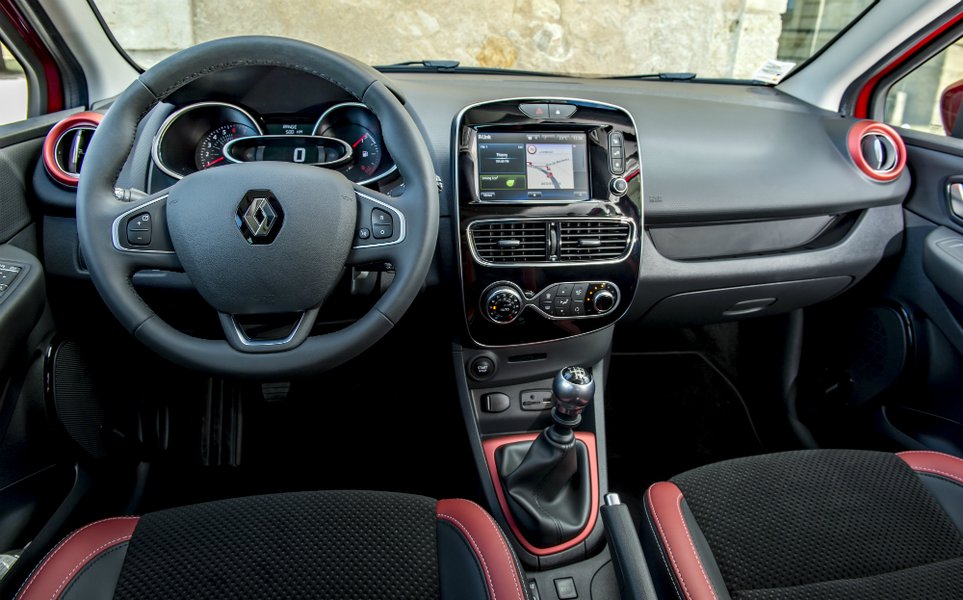
The sportier interior of a Clio RS, often featuring unique trim and paddle shifters.
Enhanced Performance, Similar Transmission Traits
While the RS models boast sharper throttle response (especially in "Sport" or "Race" modes), stiffer suspension, and a more aggressive character, the automatic gearbox remains a point of contention for some enthusiasts. Critics often express disappointment over the lack of a manual option, suggesting it would enhance driving enjoyment. The dual-clutch automatic in the RS, while robust, can still exhibit occasional slow shifts for a high-performance car, and some feel it doesn't offer the same level of driver involvement as a manual or more finely-tuned performance automatics from competitors. The ride in RS models is also noticeably firmer, which can be less comfortable in daily urban driving.
Radar Perspectives: Clio Automatic Driving Attributes
To visualize how the 2016-2019 Renault Clio automatic variants fare in terms of driving enjoyment, the radar chart below compares a standard automatic Clio, an RS automatic Clio, and an "Ideal Fun Supermini Auto" across key attributes. The scores are based on a synthesis of expert reviews and general perceptions, where 10 is a perfect score for that attribute in the supermini class.
This chart illustrates that while the standard Clio automatic excels in comfort and ride suppleness, its "fun" factor and transmission responsiveness for sporty driving are moderate. The RS version improves on the sporty aspects but still doesn't quite reach the benchmark for an ideal "fun" supermini automatic in all areas, particularly concerning transmission engagement.
Visualizing the Factors: Clio Automatic Fun Mindmap
The mindmap below breaks down the various elements that contribute to, or detract from, the "fun to drive" nature of the 2016-2019 Renault Clio automatic.
Fun to Drive?"] id1["Driving Dynamics"] id1a["Suspension"] id1a1["Supple & Comfortable"] id1a2["Good on Poor Surfaces"] id1b["Handling"] id1b1["Agile in City"] id1b2["Less Sharp than Rivals (e.g., Fiesta)"] id1c["Steering"] id1c1["Direct but Lacks Ultimate Feedback"] id2["Automatic Transmission (EDC)"] id2a["Pros"] id2a1["Smooth in Normal Driving"] id2a2["Good for City Commuting"] id2b["Cons (for 'Fun' Factor)"] id2b1["Sluggish/Hesitant Under Acceleration"] id2b2["Slow Shifts in Sporty Driving"] id2b3["Can Feel Less Engaging than Manual"] id3["Engine Variants"] id3a["Standard Petrol/Diesel Autos"] id3a1["Adequate Power for Daily Use"] id3a2["Focus on Efficiency & Comfort"] id3b["Renault Sport (RS) Autos"] id3b1["Significantly More Power"] id3b2["Sportier Setup (Suspension, Modes)"] id3b3["Gearbox Still a Compromise for Some Enthusiasts"] id4["Comparisons to Rivals"] id4a["Ford Fiesta"] id4a1["Often More Agile & Engaging"] id4b["Volkswagen Polo"] id4b1["Typically More Refined Interior"] id5["Overall Impression"] id5a["Competent & Relaxing Daily Driver"] id5b["Not the Most Thrilling in Class"] id5c["'Fun' is Subjective but Generally Tamed by Auto Box"]
This mindmap highlights that while the Clio automatic has strengths in comfort and daily usability, the transmission characteristics and handling balance position it more as a refined commuter than an outright B-road entertainer, especially in its standard forms.
Performance Perspectives: Clio RS 220 Trophy Review
To get a sense of the automatic transmission's behavior in a performance context, the following video reviews the Renault Clio RS 220 Trophy from 2016. While an RS model, it showcases the EDC automatic gearbox in its sportiest application within the Clio lineup of that era, offering insights into its capabilities and limitations when "fun" is a key objective.
Video: Renault Clio 220 Trophy 2016 review by Car Keys. This provides a look at the automatic gearbox in a high-performance Clio variant.
The review typically highlights the increased power and focused chassis of the Trophy model but also touches upon the nuances of its automatic transmission, which, even in this guise, was a topic of discussion among enthusiasts comparing it to manual alternatives or more responsive dual-clutch systems in other hot hatches.
Weighing the Pros and Cons
Here's a summary table of the advantages and disadvantages of the 2016-2019 Renault Clio automatic's driving experience, specifically concerning its "fun" aspect:
| Aspect | Pros (Contributing to Enjoyment/Ease) | Cons (Detracting from "Fun" Factor) |
|---|---|---|
| Transmission (EDC Automatic) | Smooth shifts in regular driving; effortless in city traffic; reduces driver fatigue. | Can be slow to react during spirited driving; potential for hesitation or lag; may feel less engaging than a manual. |
| Handling & Ride | Supple suspension absorbs bumps well; comfortable ride; generally composed and stable; agile in urban settings. | Steering can lack ultimate feedback; not as sharp or "playful" as some rivals (e.g., Ford Fiesta); focus more on comfort than outright sportiness in standard models. |
| Engine Performance (Standard Models) | Adequate power for daily tasks; generally fuel-efficient; refined at cruising speeds. | Automatic gearbox can sometimes blunt engine responsiveness, making it feel less peppy than its figures suggest. |
| Renault Sport (RS) Models | Significantly more power and sportier setup; more aggressive driving modes; definitely more "fun" than standard Clios. | Automatic gearbox still a point of criticism for some enthusiasts seeking maximum engagement; firmer ride can be less comfortable daily. |
| Overall Driving Experience | Relaxing and easy to drive; good for commuting and long distances; quiet cabin. | May not satisfy drivers looking for a highly interactive or thrilling experience; "fun" is more subdued and comfort-oriented. |
Frequently Asked Questions (FAQ)
Is the standard 2016-2019 Renault Clio automatic genuinely fun to drive?
For most drivers, the standard automatic Clio from this period is more competent, comfortable, and easy to live with than outright "fun" in a sporty sense. Its strengths lie in urban agility and cruising comfort. If "fun" means a very engaging, sporty drive with sharp responses, it might feel a bit tame, primarily due to the automatic transmission's characteristics which can prioritize smoothness over rapid response.
How does the automatic gearbox in the Clio RS models compare for driving fun?
The Clio RS automatic is significantly more fun than the standard models due to its powerful engine and sportier tuning. However, even in the RS, the EDC automatic gearbox has been criticized by some enthusiasts for not being as quick or engaging as a manual transmission or some competitor performance automatics. It's fun, but perhaps not the ultimate expression of driving pleasure for some purists.
Is the Clio automatic more fun than a Ford Fiesta automatic of the same era?
Generally, the Ford Fiesta (whether manual or automatic) is cited as being more "fun to drive" with more agile handling and communicative steering compared to the Renault Clio. The Clio often wins on ride comfort over poor surfaces, but the Fiesta typically offers a more spirited and engaging driving experience.
Did the 2016 facelift improve the "fun" aspect of the automatic Clio?
The 2016 facelift brought welcome improvements in interior quality and some exterior styling tweaks. While Renault aimed to refine driving dynamics, including steering feel, the fundamental characteristics of the EDC automatic transmission and its impact on the "fun" factor remained largely consistent. The facelift enhanced the overall package but didn't transform the automatic Clio into a thrill-seeker's first choice.
Conclusion: A Balanced Performer
The 2016-2019 Renault Clio automatic offers a driving experience that leans towards comfort, refinement, and everyday usability. For drivers prioritizing a smooth ride, easy urban navigation, and relaxed cruising, it's a competent and pleasant supermini. The automatic gearbox, while generally smooth, can sometimes feel hesitant or slow to respond during more spirited driving, which tends to temper the "fun" factor for those seeking a truly dynamic and engaging experience.
The Renault Sport (RS) variants provide a much zestier drive, being significantly more powerful and focused. However, even these performance-oriented models, being exclusively automatic, face some criticism from enthusiasts who feel the gearbox doesn't quite match the car's sporty potential or the engagement of a manual. Ultimately, while the automatic Clio is enjoyable for many aspects of driving, if "fun" is defined by sharp handling, immediate responses, and a deeply connected feel, it may not be the top pick in its class, especially when compared to rivals like the Ford Fiesta.
Recommended Further Exploration
- How does the Renault Clio EDC automatic gearbox compare to Volkswagen's DSG in small cars?
- What are the long-term reliability ratings for the 2016-2019 Renault Clio automatic transmission?
- Which small automatic hatchbacks from 2016-2019 offer the most engaging driving experience?
- Detailed comparison: 2018 Renault Clio automatic vs 2018 Ford Fiesta automatic for driving fun.
References
Last updated May 21, 2025