
Unveiling the Critical Moments: When to Report Unauthorized and Prohibited Items
Navigating the complex rules of reporting to ensure safety, compliance, and security across various environments.
Essential Insights: Key Reporting Triggers
- Immediate Action for Threats: Any item posing a potential risk to life, safety, or security must be reported instantly upon discovery or suspicion.
- Policy and Legal Adherence: Reporting is often mandated by organizational policies, local, national, or international laws and regulations specific to the environment (e.g., airports, workplaces, data handling).
- Contextual Sensitivity: The nature of the item, where it's found, and the specific protocols of that environment (e.g., H-O-T for public spaces, IRB rules for research) dictate the urgency and method of reporting.
Understanding "Unauthorized" vs. "Prohibited" Items
Before diving into reporting protocols, it's crucial to distinguish between "unauthorized" and "prohibited" items. While often used interchangeably, they can have nuanced differences:
- Prohibited Items: These are objects or materials explicitly banned from a specific location, environment, or service due to safety, security, or legal reasons. Examples include weapons in airports, explosives in mail, or certain chemicals in a laboratory not designated for their use. Their presence is a direct violation of established rules.
- Unauthorized Items: These items may not be intrinsically illegal or banned everywhere, but their presence in a particular context, or access by a specific individual, is not permitted. This can include personal electronic devices in secure areas, access to classified data without clearance, or even an employee bringing a non-company-approved tool into a restricted zone. The "unauthorized" aspect often pertains to access, possession, or disclosure without proper permission.
In many cases, an item can be both prohibited and unauthorized. The key is that their presence or handling triggers a need for assessment and, frequently, reporting.
Core Principles: When is Reporting Necessary?
Several overarching principles guide the decision to report issues related to unauthorized or prohibited items. These apply broadly across various sectors and situations.
Immediate Reporting for Safety and Security Threats
This is the most critical principle. If an item is discovered or suspected, and it poses an immediate or potential risk to life, health, or security, it must be reported without delay. This includes items like unattended suspicious packages, firearms, explosives, hazardous materials, or anything that seems out of place and dangerous. Protocols like the H-O-T (Hidden, Obviously suspicious, Typical location) or the 4 Cs (Confirm, Clear, Communicate, Control) are often employed to assess such situations, especially in public spaces.
Upon Discovery During Standard Procedures
Many unauthorized or prohibited items are found during routine checks, security screenings, inspections, or investigations. Regardless of whether the item poses an immediate overt threat, its discovery often necessitates reporting according to established protocols. This ensures that even seemingly minor infractions are documented and handled correctly, preventing potential escalation or repeated violations.
Compliance with Organizational Policies and Legal Mandates
Organizations, government agencies, and regulated industries almost invariably have specific policies and standard operating procedures (SOPs) detailing how to handle and report unauthorized or prohibited items. These are not merely guidelines but often carry legal weight. Reporting is necessary to comply with these internal directives and external laws, which can range from local ordinances to international regulations. Failure to report can lead to significant penalties for individuals and organizations.
Context is Key: Specific Reporting Scenarios
The specific circumstances and environment heavily influence when and how reporting should occur. Below are common contexts where reporting unauthorized or prohibited items is critical.
Public Spaces and Security Checkpoints
In managed buildings, public transport hubs, and at security checkpoints (like those at event venues or building entrances), staff and security personnel are trained to identify and deal with unattended or suspicious items. Any item that seems out of place, deliberately hidden, or gives cause for concern should be reported immediately to on-site staff or security. They will typically follow established protocols, such as the H-O-T or 4 Cs, to assess the risk and escalate if necessary. For items found during bag searches that are prohibited by the venue's policy, security officers will usually confiscate the item and report it according to their internal procedures.
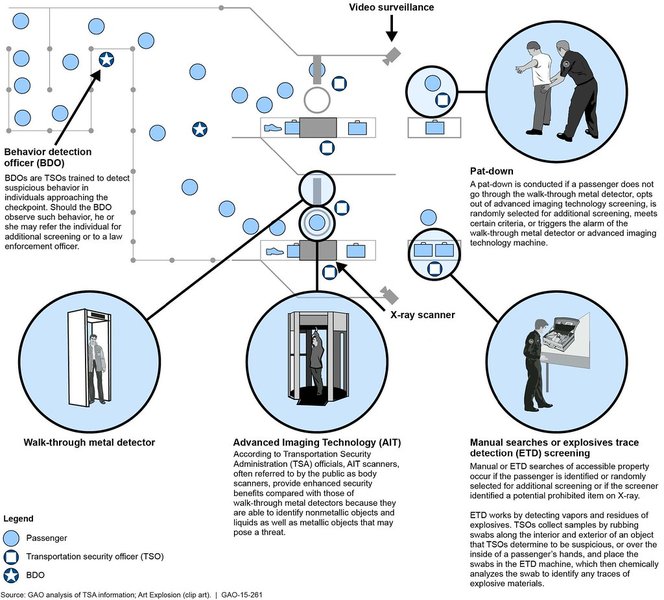
Passenger screening checkpoint where prohibited items are identified and handled.
Transportation: Air, Mail, and Shipping
The transportation sector has stringent rules for prohibited items.
Air Travel
Airlines and aviation security agencies like the Transportation Security Administration (TSA) in the U.S. maintain extensive lists of items prohibited in carry-on or checked baggage. Discovery of such items (e.g., firearms, explosives, certain liquids over specified limits) during screening requires immediate reporting and action, which may include confiscation, fines, or even arrest. Unattended items in airports are treated with high suspicion and must be reported immediately.

A visual guide often provided by TSA indicating items allowed or prohibited in carry-on luggage.
Mail and Shipping Services
Postal services (e.g., USPS) and private shipping companies (e.g., UPS, FedEx) prohibit the mailing of certain items, such as explosives, flammable materials, illegal substances, or hazardous waste. If such items are discovered or suspected in packages, they must be reported to the relevant authorities (e.g., U.S. Postal Inspection Service) or internal security for proper handling and investigation.
Workplaces and Federal Facilities
Most organizations have policies regarding items that are not permitted on their premises. These can range from weapons and illegal drugs to personal appliances or unauthorized recording devices. Federal facilities have particularly strict regulations (e.g., Interagency Security Committee (ISC) standards in the U.S.) regarding prohibited items to ensure the safety and security of personnel and assets. Discovery of any such item must be reported to a supervisor, internal security, or the designated facility security officer. This reporting helps maintain compliance, ensures proper documentation, and allows for appropriate action, which might include confiscation of the item and disciplinary measures.
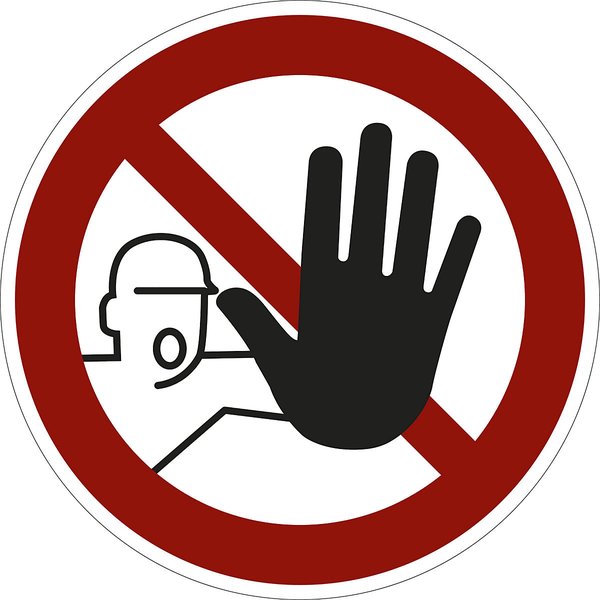
Signage often used to denote areas where unauthorized persons or items are prohibited.
Data and Information Security
In the digital age, "unauthorized items" extend to data. Unauthorized access, use, disclosure, modification, or destruction of sensitive or classified information (e.g., Controlled Unclassified Information (CUI), Personally Identifiable Information (PII), HIPAA-protected health information, classified government documents) constitutes a serious breach. Such incidents must be reported according to specific protocols, often involving IT security departments, Data Protection Officers, or relevant government agencies. Reporting timelines can be legally mandated, such as the HHS Breach Notification Rule requiring notification within 60 days for certain health data breaches. Early reporting is crucial to mitigate damage, protect affected individuals, and comply with legal obligations.
This video discusses Controlled Unclassified Information (CUI) and the importance of protecting it from unauthorized disclosure, highlighting a key area where reporting is critical in information security.
Specialized Environments: Research, Healthcare, and Finance
Certain specialized fields have unique reporting requirements:
Research and Healthcare
In research settings, particularly those involving human subjects or sensitive materials, any major protocol violation, including unauthorized access to data or improper handling of research materials (which could be considered "prohibited" in that context), must be reported to the Institutional Review Board (IRB) or Human Research Protection Program (HRPP). This often has specific timeframes, for example, within 10 working days if changes are made to eliminate immediate hazards.
Financial Institutions
Unauthorized transactions on credit cards, debit cards, or bank accounts must be reported to the financial institution immediately upon discovery. This helps prevent further financial loss and allows the institution to investigate potential fraud.
Environmental and Waste Management
The disposal of certain items is prohibited in regular landfills (e.g., hazardous waste, certain electronics). Identifying and correctly managing these prohibited wastes, including reporting their improper disposal or attempts to dispose of them incorrectly, is essential for environmental compliance and safety.
Visualizing Reporting Dynamics: A Comparative Overview
The urgency, complexity, and consequences of reporting unauthorized or prohibited items can vary significantly depending on the context. The following radar chart provides a comparative visualization of these dynamics across different scenarios. The scores (from a hypothetical minimum of 2 to a maximum of 10) reflect general tendencies: a higher score indicates greater intensity for that particular metric.
This chart illustrates that while a suspicious unattended bag demands maximum urgency, reporting a major data breach involves high complexity and severe consequences for non-reporting. Understanding these nuances helps prioritize actions effectively.
Navigating the Reporting Process: A Decision Framework
The decision to report and the subsequent actions involve several interconnected factors. This mindmap outlines a general framework for navigating issues related to unauthorized and prohibited items.
This mindmap provides a structured way to think about the various facets involved, from initial identification and assessment to the reporting channels and the fundamental reasons for taking action.
Summary of Reporting Triggers, Actions, and Authorities
The following table summarizes key scenarios requiring reporting of unauthorized or prohibited items, typical triggers, who to report to, and general urgency levels. This is not exhaustive but covers common situations.
| Scenario | Trigger for Reporting | Primary Reporting Contact(s) | Typical Urgency |
|---|---|---|---|
| Suspicious Unattended Item in Public Space | Item appears hidden, unusual, or poses potential risk (H-O-T/4Cs assessment positive) | On-site Staff, Security Personnel, Local Law Enforcement | Immediate |
| Prohibited Item at Airport Security | Detection of weapons, explosives, or other TSA-banned items during screening | TSA Officers, Airport Security, Law Enforcement | Immediate |
| Workplace Policy Violation (Non-Dangerous Item) | Discovery of an item banned by company policy (e.g., unauthorized personal appliance) | Supervisor, Internal Security, Human Resources | Promptly, as per company policy |
| Workplace Policy Violation (Dangerous Item) | Discovery of a weapon, illegal substance, or hazardous material | Supervisor, Internal Security, potentially Law Enforcement | Immediate |
| Unauthorized Data Access/Disclosure (e.g., CUI, PII, HIPAA) | Actual or suspected breach/exposure of private, restricted, or classified data | IT Security, Data Protection Officer, Supervisor, Relevant Regulatory Body (e.g., HHS for HIPAA) | Immediate for critical breaches; otherwise, within specified legal/policy timeframe (e.g., 60 days for some HHS breaches) |
| Research Protocol Violation (Involving Hazard or Data Integrity) | Unauthorized use of materials, data compromise, or procedural change posing immediate hazard | Principal Investigator, Institutional Review Board (IRB)/Human Research Protection Program (HRPP) | Within specified institutional timeframe (e.g., 10 working days for certain UCSF violations) |
| Illegal Item in Mail/Shipping | Discovery or strong suspicion of explosives, narcotics, or other federally prohibited items in transit | Postal Inspection Service, Shipping Company Security, Law Enforcement | Immediate |
| Unauthorized Financial Transaction | Unrecognized activity on credit/debit card or bank account | Financial Institution (Bank, Credit Card Company) | Immediate upon discovery |
| Improper Disposal of Prohibited Waste | Attempted or actual disposal of hazardous materials or regulated items in unauthorized ways | Environmental Compliance Officer, Local Waste Management Authority, EPA | Promptly, upon discovery |
Frequently Asked Questions
What if I'm unsure if an item is truly prohibited or unauthorized?
When in doubt, it's always best to err on the side of caution. Report your concern to a supervisor, security personnel, or the relevant authority within your organization or context. They are better equipped to make a determination. Clearly articulate why you are concerned. It's better to report a potential issue that turns out to be benign than to ignore something that could pose a risk.
Are there anonymous ways to report issues concerning unauthorized or prohibited items?
Many organizations and some government agencies offer anonymous reporting channels, such as hotlines or online portals (e.g., some Department of Defense or regulatory body reporting systems). Check your organization's policies or the relevant agency's website. However, for immediate threats to safety, direct and immediate reporting to on-site personnel or emergency services is paramount, where anonymity might be secondary to the urgency of the situation.
What are the potential consequences if I fail to report a known unauthorized or prohibited item?
Failure to report can have serious consequences, varying by jurisdiction and context. These can include disciplinary action by an employer (up to and including termination), civil penalties or fines (e.g., by TSA for prohibited items at airports), loss of licenses or certifications, or even criminal charges if the failure to report contributes to harm or violates specific laws. Moreover, it can jeopardize the safety and security of others.
Does the reporting procedure differ for items that are illegal versus items that are merely against policy?
Yes, typically. If an item is illegal (e.g., narcotics, unregistered firearms, explosive devices), reporting procedures will almost certainly involve notifying law enforcement in addition to internal security or supervisors. The item itself may need to be secured as evidence. For items that are prohibited by policy but not illegal (e.g., a personal space heater in an office where they are banned, outside food in a restricted dining area), the response is usually handled internally, perhaps involving confiscation of the item and/or disciplinary warnings, but not necessarily law enforcement unless the situation escalates or involves other violations.
Recommended Further Exploration
- What are the specific H-O-T and 4 Cs protocols for assessing suspicious items?
- How do reporting requirements for data breaches differ across various industries like healthcare and finance?
- What legal protections exist for individuals who report unauthorized or prohibited items in good faith?
- Can you explain the chain of custody procedures for handling confiscated illegal items?
References
 static.conocophillips.com
Last updated May 9, 2025