
Delimitation of Research on Student Financial Behaviors
Understanding the boundaries of a focused study on budgeting and saving
Key Insights
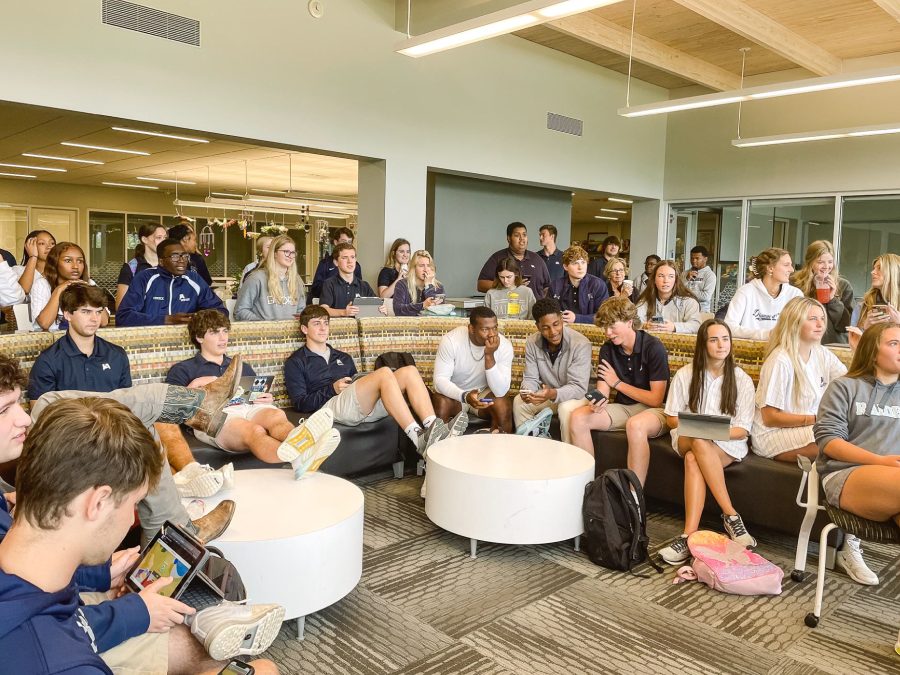
- Focused Population: The study zeroes in on the student body of Central Luzon High School of Paniqui Tarlac Inc., ensuring detailed insights within a specialized context.
- Financial Behaviors: Emphasis is on exploring daily budgeting practices, long-term saving strategies, and the influence of external socio-economic factors.
- Limitations Acknowledgement: Recognizes that self-reported data and a single-institution focus introduce constraints on broader generalizability.
Introduction to the Study Delimitation
In any research endeavor, it is crucial to establish clear boundaries. The research in question is centered on analyzing the budgeting and saving behaviors of students at Central Luzon High School of Paniqui Tarlac Inc. This particular focus anchors the study within a well-defined context that facilitates a detailed investigation of financial management practices among adolescents and young adults in an educational setting.
By setting the population to a specific student body, the researchers aim to capture nuanced data reflective of the variables that influence daily financial decisions, long-term saving commitments, and the broader socio-economic influences affecting these behaviors. This delimitation not only streamlines the research process but also maintains a concentration on factors that are immediately relevant to the participants’ lived experiences.
Scope of the Study
Focused Population and Context
The population selected for this study comprises the student body of Central Luzon High School of Paniqui Tarlac Inc. Choosing this specific group directly influences the depth and applicability of the data collected. The study is explicitly designed to observe and analyze financial behaviors amongst these students, limiting external variations that might arise if a more diverse group were incorporated.
Analytical Focus Areas
There are several core aspects around which the research steering is tightly controlled:
- Daily Budgeting Practices: The mechanisms by which students allocate their daily resources to meet necessities and discretionary spending.
- Long-term Saving Strategies: The planning and execution of saving plans that are intended to cover future financial goals or emergencies.
- Influence of External Socio-economic Factors: How factors such as family income, peer influence, cultural attitudes, and community economic conditions influence the overall financial behaviors of students.
These focus areas collectively provide a framework for understanding the multifaceted nature of financial management within an educational context. The complexity of these components ensures that while the study is bounded, it remains detailed in its interrogation of relevant financial practices.
Limitations and Boundaries
Population Constraint
The paramount limitation in this research is its focus on a singular institution – Central Luzon High School of Paniqui Tarlac Inc. While this enables an in-depth study of the specific student population, it simultaneously confines the generalizability of the study's outcomes. The behaviors and conditions observed in this school might not necessarily mirror those in different regions or other educational settings within the country.
Implications of a Narrow Sample
The primary implication of using a narrow, localized sample is that while insights can be highly detailed and contextually rich, they may lack external validity when compared to broader populations. The unique social, economic, and educational environment at this school plays a significant role in shaping the students' financial behaviors. Translating these findings to other schools, where contextual factors differ, requires caution. Thus, the findings should be interpreted as indicative of trends within this institution and not as universal truths.
Reliance on Self-Reported Data
Another critical limitation pertains to the data-gathering methods. The study leverages surveys and interviews wherein students report their own budgeting and saving behaviors. Self-reported data, although valuable, is inherently susceptible to biases. Respondents may inadvertently or purposely present their financial situations in a favorable light or may inaccurately recall their practices. These biases, including social desirability or recall bias, challenge the authenticity and reliability of the data.
Methodological Considerations
The reliance on subjective responses introduces an element of uncertainty regarding the veracity of the data collected. This limitation underscores the need for future research to potentially incorporate more objective measures such as financial records, third-party assessments, or even digital tracking of budgeting behavior. Employing a mixed-method approach could help mitigate these biases by providing a more balanced and robust set of data.
Extent of Socio-Economic Impacts
While the study considers socio-economic factors as one of its dimensions, the complexity of how external environments affect financial decisions is acknowledged as a challenging field. The external impacts such as family economic status, peer pressure, and access to financial services vary greatly and may not be uniformly represented within a single institution's sample. The study captures an overview of these factors, but the depth of analysis is contingent on the variability and ease of isolating specific socio-economic influences.
Contextual Nuances
It is important to recognize that socio-economic dynamics are multifaceted. While this investigation outlines possible socio-economic influences, further granular studies are warranted to dissect these effects completely. The current delimitation aims to provide a snapshot of these influences rather than an exhaustive analysis. This approach ensures that the focus remains aligned with the primary research objectives while still appreciating the breadth of external factors at play.
Future Research Directions
Broadening the Study Population
To overcome the limitations associated with a narrow sample size, future research should consider expanding the population to include multiple educational institutions. This expansion would offer a wider diversity of socio-economic backgrounds, cultural influences, and financial practices, thereby enhancing the generalizability of the findings. A comparative analysis could highlight variations and commonalities across different settings, offering richer and more applicable insights into student financial management.
Incremental Scaling
Gradually scaling the study by initially replicating the research in similar institutions and later among a more eclectic mix of schools could provide a step-by-step validation of the financial behavior patterns observed. This phased approach helps in identifying key trends that are consistent across various demographics, ultimately contributing to a more comprehensive body of knowledge in financial literacy in student populations.
Enhanced Data Collection Methods
To address the biases inherent in self-reported data, future studies should integrate both quantitative and qualitative methods. Utilizing actual financial data records, along with digital tracking or observational studies, can enhance the accuracy of financial behavior assessments. An interdisciplinary approach that combines data from various sources will likely yield a more balanced and objective evaluation of budgeting and saving behaviors.
Mixed-Method Approach
A mixed-method approach would not only validate self-reported data but also provide deeper insights into the routine financial decision-making processes of students. This strategy facilitates a richer narrative that can be cross-verified through multiple data points, thereby reducing potential biases and errors.
Longitudinal Studies
In addition to broadening the participant base and diversifying data collection methods, implementing longitudinal studies could provide valuable insights over time. Tracking changes in budgeting and saving behaviors across different stages of student life can shed light on behavioral evolution and the long-term impacts of financial education.
Temporal Analysis
A longitudinal framework allows researchers to observe how interventions, socio-economic fluctuations, and educational advancements influence student financial behaviors in the long term. Such studies not only deepen the current understanding but also help in formulating strategies to improve financial literacy and management among students.
Comprehensive Overview Table
| Aspect | Description | Limitations |
|---|---|---|
| Population Focus | The study specifically examines the student body of Central Luzon High School of Paniqui Tarlac Inc. to capture detailed financial practices. | Limits generalizability; findings may not apply to other schools or geographical areas. |
| Financial Management Dimensions | Investigates daily budgeting practices, long-term saving strategies, and external socio-economic influences. | External factors are multifaceted and may not be fully explored in a single-institution study. |
| Data Collection Methods | Relies on self-reported data through surveys and interviews to capture financial behaviors. | Subject to biases such as social desirability and recall bias, which may affect data accuracy. |
| Generalizability | Targets a specific demographic, thus providing in-depth insights into the chosen sample. | Results may not be representative of the broader student population in different socio-economic environments. |
Implications for Broader Financial Literacy Research
Impact on Policy and Educational Practice
The detailed focus on a single educational institution offers valuable case-specific insights that can inform local policy and educational practices. By understanding the intricacies of budgeting and saving behaviors, educators and policymakers can design targeted interventions aimed at improving financial literacy at the school level. This includes curriculum enhancements, tailored financial education programs, and resource allocation aimed at fostering sound financial habits.
Despite its localized nature, the study serves as a foundational step towards more comprehensive research. It opens up avenues for examining the efficacy of financial education programs and the role of institutional support in shaping long-term financial well-being. When combined with data from future expanded studies, these insights could contribute to nationwide strategies designed to enhance financial literacy among young learners.
Challenges and Opportunities for Future Research
While localized studies provide depth, they also highlight the challenges of reconciling context-specific findings with broader trends. The primary challenge lies in balancing detailed, context-driven insights with the need for widespread applicability. Future researchers are confronted with the dual task of expanding the sample size while preserving the integrity and depth of the initial observations.
Yet, these challenges present opportunities. By diversifying the research sample and incorporating objective data collection methods, future studies could refine the understanding of financial behaviors across varied environments. This not only enriches the academic discourse but also lays the groundwork for practical applications in educational program design and financial policy formulation.
References
- Delimitations in Research - Research Method
- Scope and Delimitations in Research - AJE
- Scope and Delimitations - DiscoverPhDs
- How To Write Scope and Delimitation - FilipiKnow
- Scope and Delimitations in Research - PapersOwl
Recommended Queries for Further Exploration
Last updated March 14, 2025