
The Field of AI Generated Data Sets (AIGD)
Exploring the Frontiers of Synthetic Data in Modern Research
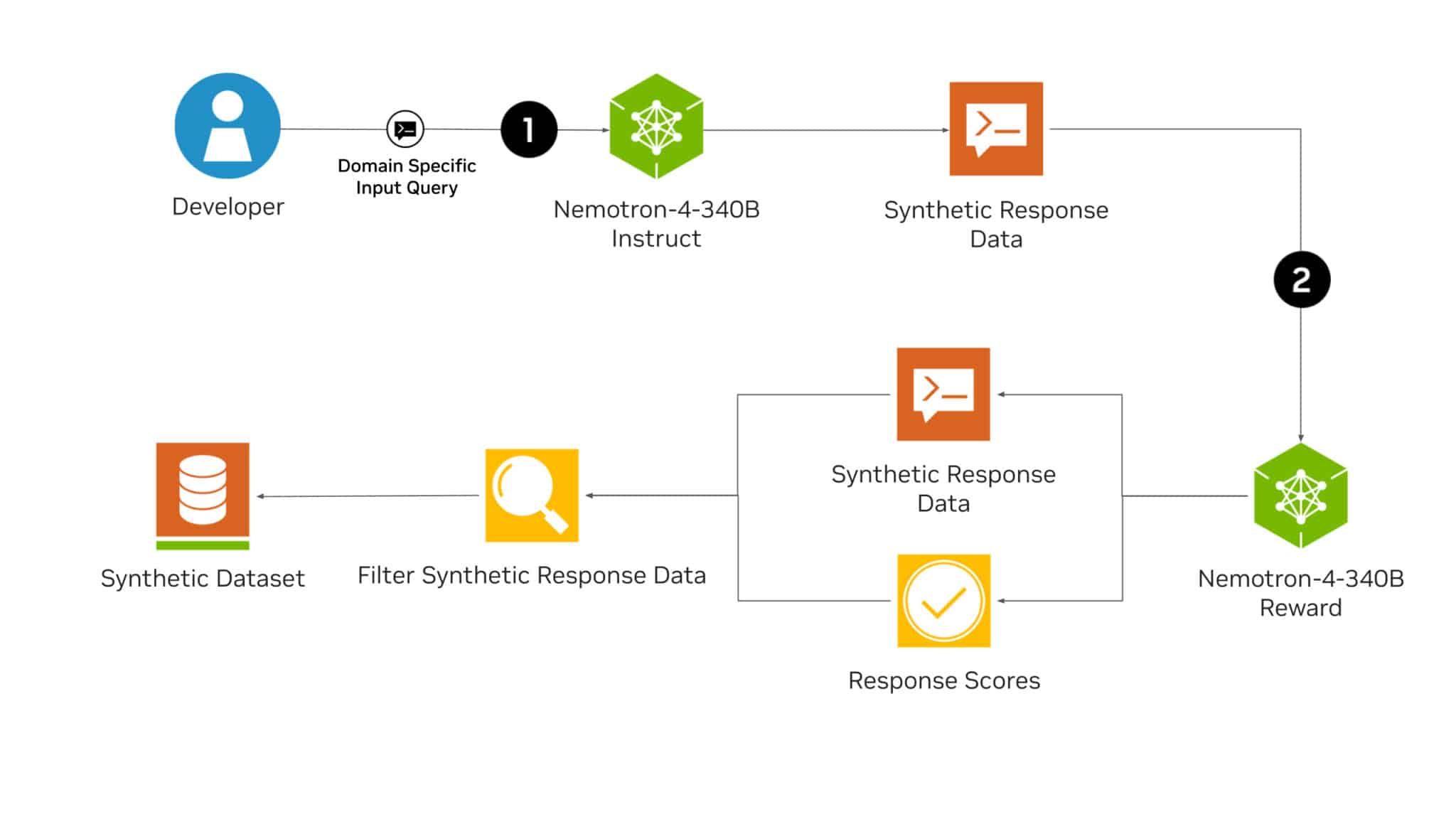
Key Takeaways
- Enhanced Data Privacy and Accessibility: Synthetic datasets provide robust solutions to privacy concerns, allowing researchers to share and utilize data without compromising sensitive information.
- Diverse Applications Across Industries: AIGD is revolutionizing fields such as finance, healthcare, and autonomous systems by enabling the simulation of rare events and the augmentation of limited real-world data.
- Ongoing Challenges and Innovations: Ensuring data quality, mitigating biases, and developing standardized evaluation metrics are critical areas driving current research and future advancements in AIGD.
Introduction
The advent of Artificial Intelligence Generated Data Sets (AIGD) marks a pivotal advancement in the realm of data science and machine learning. AIGD refers to the creation of synthetic data through sophisticated algorithms and generative models that emulate the statistical properties and intricate relationships inherent in real-world data. This approach addresses several challenges associated with traditional data collection, including cost, privacy, scarcity, and bias, thereby opening new avenues for research and application across diverse domains.
Background and Motivation
In the rapidly evolving landscape of machine learning and artificial intelligence, the demand for large, high-quality datasets has surged. Traditional methods of data collection often face limitations such as high costs, ethical and privacy concerns, and limited availability of certain types of data. Synthetic data generation emerges as a compelling alternative, offering scalability and the ability to simulate rare or sensitive scenarios that might be challenging to capture through conventional means.
Generative Techniques
Generative Adversarial Networks (GANs)
Generative Adversarial Networks (GANs) have revolutionized the field of synthetic data generation. Comprising two neural networks—the generator and the discriminator—GANs engage in a competitive process where the generator creates data samples, and the discriminator evaluates their authenticity. This adversarial training leads to the production of highly realistic synthetic data that can closely mimic the nuances of real datasets.
Variational Autoencoders (VAEs)
Variational Autoencoders (VAEs) offer a probabilistic approach to data generation, providing control over latent space representations. By learning the underlying distribution of the input data, VAEs can generate new data samples that maintain the essential characteristics of the original dataset. This makes VAEs particularly useful in scenarios requiring structured and interpretable synthetic data.
Diffusion Models and Other Techniques
Diffusion models represent a recent advancement in generative modeling, characterized by their ability to produce high-quality and diverse data through a process of iteratively denoising data points. These models have shown remarkable proficiency in generating complex data types, including images and time-series data. Additionally, hybrid approaches that integrate reinforcement learning with generative models are being explored to optimize synthetic data for specific downstream tasks.
Applications
Data Augmentation
AIGD plays a crucial role in addressing class imbalance and enhancing the diversity of training datasets. By generating additional synthetic samples, researchers can enrich their datasets, thereby improving the performance and generalizability of machine learning models, especially in scenarios involving rare events or limited data availability.
Privacy and Security
Synthetic data offers a viable solution to privacy concerns, especially in sensitive domains such as healthcare and finance. By generating data that retains the statistical properties of real data without containing identifiable information, AIGD enables researchers to share and utilize datasets without risking privacy breaches. Integrating techniques like differential privacy with generative models further enhances the security of synthetic datasets.
Financial Services
In the financial sector, AIGD is leveraged to simulate customer behaviors, develop anti-money laundering models, and enhance fraud detection systems. By creating synthetic datasets that encompass a wide range of financial transactions, including rare fraudulent activities, financial institutions can train more robust and effective predictive models.
Healthcare
The healthcare industry benefits significantly from synthetic data through the simulation of patient records for research and development purposes. AIGD enables the creation of comprehensive patient datasets that preserve the intricate patterns of medical records while safeguarding patient privacy, thereby facilitating advancements in medical research and AI-driven diagnostic tools.
Autonomous Systems
In the realm of autonomous driving and robotics, AIGD is instrumental in creating simulated environments and scenarios for training and testing algorithms. These synthetic datasets allow for extensive testing under controlled conditions, including the simulation of rare or hazardous events, thereby enhancing the safety and reliability of autonomous systems.
Challenges and Considerations
Quality and Fidelity
Ensuring that synthetic data accurately replicates the complexities and statistical properties of real data remains a fundamental challenge. High-fidelity synthetic datasets are essential for the reliable training and evaluation of machine learning models. Ongoing research focuses on improving generative models to produce data that closely matches the intricacies of real-world datasets.
Bias and Representativeness
Synthetic data generation is susceptible to inheriting and potentially amplifying biases present in the training data. Addressing biases is critical to ensuring that synthetic datasets are representative and fair. Researchers are actively developing methods to detect and mitigate biases in generative models to produce more equitable synthetic data.
Evaluation Metrics
The evaluation of synthetic data quality poses significant challenges due to the lack of standardized benchmarks. Metrics such as Fréchet Inception Distance (FID) for images and domain-specific qualitative assessments are commonly used, but there is a growing need for comprehensive evaluation frameworks that can reliably assess the utility and authenticity of synthetic datasets across various applications.
Emerging Trends and Research Directions
Multi-Modal Data Generation
Integrating multiple data modalities, such as combining text with images or time-series data with event data, is an emerging trend in AIGD. Multi-modal synthetic data aims to create more cohesive and realistic datasets that better simulate real-world conditions, enhancing the applicability of synthetic data in complex scenarios.
Explainability in Synthetic Data
As synthetic data becomes integral to critical decision-making processes, the transparency and explainability of generative models are gaining prominence. Researchers are focusing on developing methods to elucidate the data generation process, ensuring that synthetic datasets are not only effective but also understandable and trustworthy.
Continuous Learning and Adaptation
Generative models that can continuously learn and adapt to new data streams are being explored to maintain the relevance and quality of synthetic datasets over time. This dynamic approach ensures that synthetic data remains up-to-date and reflective of evolving real-world patterns and trends.
Integration with Federated Learning
Combining synthetic data generation with federated learning frameworks is an innovative approach to address data heterogeneity and privacy concerns in decentralized environments. This integration facilitates collaborative learning while preserving data privacy, thereby expanding the applicability of synthetic data in distributed systems.
Performance and Validation
Empirical studies have demonstrated that models trained on synthetic data can achieve performance comparable to those trained on real data, particularly in terms of predictive accuracy and generalization. Validation frameworks, such as MIT’s Synthetic Data Vault, provide open-source tools for assessing the quality of synthetic datasets, ensuring that they meet the required standards for various applications.
Future Outlook
The future of AIGD is poised for significant growth as the demand for high-quality synthetic data continues to rise. Advancements in generative modeling techniques, coupled with interdisciplinary collaborations across academia, industry, and government, will drive innovations that address current challenges and expand the horizons of synthetic data applications. As trust and reliability in synthetic datasets improve, their integration into critical domains like clinical trials, policy simulations, and large-scale machine learning deployments is expected to become increasingly prevalent.
Conclusion
AI Generated Data Sets are transforming the landscape of data science and machine learning by providing scalable, cost-effective, and privacy-preserving alternatives to traditional data collection methods. While challenges related to data quality, bias mitigation, and evaluation persist, ongoing research and technological advancements are paving the way for more robust and versatile synthetic data solutions. As AIGD continues to evolve, it promises to unlock new potentials in research, industry applications, and beyond, fostering innovation and enabling breakthroughs across a multitude of fields.
References
| Generative Technique | Key Features | Primary Applications |
|---|---|---|
| Generative Adversarial Networks (GANs) | Competitive training between generator and discriminator | Image synthesis, fraud detection, financial simulations |
| Variational Autoencoders (VAEs) | Probabilistic framework and latent space control | Structured data generation, healthcare simulations |
| Diffusion Models | Iterative denoising process for data generation | High-quality image generation, time-series data |
| Hybrid Approaches | Integration of reinforcement learning with generative models | Optimized synthetic data for specific tasks, autonomous systems |
Mathematical Foundations of Generative Models
Understanding the mathematical underpinnings of generative models is crucial for appreciating their capabilities and limitations. For instance, Generative Adversarial Networks (GANs) can be described by the following minimax game objective:
$$\min_G \max_D V(D, G) = \mathbb{E}_{x \sim p_{data}(x)}[\log D(x)] + \mathbb{E}_{z \sim p_z(z)}[\log(1 - D(G(z)))]$$
Here, \( G \) represents the generator network, \( D \) represents the discriminator network, \( p_{data}(x) \) is the distribution of real data, and \( p_z(z) \) is the distribution of the noise input to the generator. The generator aims to produce data that maximizes the discriminator's probability of misclassifying the synthetic data as real, while the discriminator strives to correctly distinguish between real and fake data.
Code Example: Training a Simple GAN
import tensorflow as tf
from tensorflow.keras import layers

# Define the generator model
def build_generator(latent_dim):
    model = tf.keras.Sequential()
    model.add(layers.Dense(128, activation='relu', input_dim=latent_dim))
    model.add(layers.Dense(784, activation='sigmoid'))
    return model

# Define the discriminator model
def build_discriminator(input_shape):
    model = tf.keras.Sequential()
    model.add(layers.Dense(128, activation='relu', input_dim=input_shape))
    model.add(layers.Dense(1, activation='sigmoid'))
    return model

# Compile and train the GAN
def train_gan(generator, discriminator, epochs, batch_size, latent_dim):
    discriminator.compile(optimizer='adam', loss='binary_crossentropy')
    discriminator.trainable = False
    gan_input = layers.Input(shape=(latent_dim,))
    generated = generator(gan_input)
    gan_output = discriminator(generated)
    gan = tf.keras.Model(gan_input, gan_output)
    gan.compile(optimizer='adam', loss='binary_crossentropy')

    # Training loop
    for epoch in range(epochs):
        # Generate fake data
        noise = tf.random.normal([batch_size, latent_dim])
        generated_data = generator.predict(noise)

        # Get real data
        real_data = ...  # Load real data here

        # Train discriminator
        labels_real = tf.ones((batch_size, 1))
        labels_fake = tf.zeros((batch_size, 1))
        discriminator.train_on_batch(real_data, labels_real)
        discriminator.train_on_batch(generated_data, labels_fake)

        # Train generator
        noise = tf.random.normal([batch_size, latent_dim])
        gan.train_on_batch(noise, labels_real)

        if epoch % 1000 == 0:
            print(f"Epoch {epoch} completed")

# Parameters
latent_dim = 100
generator = build_generator(latent_dim)
discriminator = build_discriminator(784)
train_gan(generator, discriminator, epochs=10000, batch_size=64, latent_dim=latent_dim)
Conclusion
AI Generated Data Sets are at the forefront of a paradigm shift in data-centric research and application. By offering scalable, cost-effective, and privacy-preserving alternatives to traditional data collection, AIGD enables unprecedented opportunities for innovation and discovery across a multitude of fields. While challenges related to data quality, bias, and evaluation metrics persist, the continuous advancements in generative modeling and interdisciplinary collaboration are driving the field toward more robust and versatile synthetic data solutions. As AIGD continues to mature, its integration into critical domains is expected to accelerate, fostering breakthroughs that were previously unattainable due to data constraints.
Last updated February 10, 2025