
Research Title Proposal for Electrostatic Precipitators
Innovative Perspectives on Particle Filtration in Energy, Engineering, and Medicine
Highlights
- Interdisciplinary Focus: Integrates applications in energy production, industrial engineering, and medical air purification.
- Advanced Technological Insights: Emphasizes efficiency, reduced emissions, and health safety improvements.
- Comprehensive Evaluation: Synthesis of economic, environmental, and technological dimensions.
Introduction
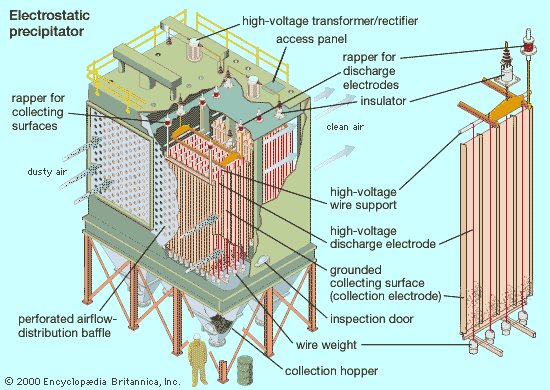
Electrostatic precipitators (ESPs) have long been recognized as a critical technology for particle removal across various sectors. Their ability to remove fine particulates, such as fly ash, bacteria, and other airborne contaminants, is essential for improving environmental quality, boosting industrial efficiency, and safeguarding public health. The versatility of these devices makes them relevant in numerous fields, including energy production, engineering design, and medical applications. In light of the increasing need for sustainable and health-conscious technologies, it is vital to create a comprehensive research title that encapsulates the diverse roles of ESPs.
In energy production, ESPs are routinely used in power generation plants to capture particles from combustion gases, resulting in cleaner and more efficient energy output. The technology not only complies with stringent environmental standards but also enhances the longevity and performance of industrial systems. In the field of engineering, innovative designs and operational improvements of ESPs are continually being developed to meet the challenges of modern industrial processes. Meanwhile, the medical sector has started exploring ESP applications in air purification and pathogen control. These devices have demonstrated potential in reducing surgical smoke, eliminating bacteria and fungi, and limiting the airborne spread of viruses, thereby becoming integral to safer medical environments.
Literature Review and Technological Integration
Energy Production
Within the energy production sector, electrostatic precipitators are primarily deployed in coal-fired power plants and other combustion systems. Their primary role is to extract fly ash and particulate matter from exhaust gases, contributing to significant environmental and efficiency improvements. The use of ESPs in energy systems can achieve extremely high removal efficiencies, often exceeding 99% for certain pollutant types. As energy regulations become more rigorous, the integration of ESPs not only supports environmental compliance but also optimizes the overall performance of energy systems.
Key Aspects in Energy Applications:
The operation of an ESP in power plants involves complex electrostatic and fluid dynamic phenomena. Advanced techniques, such as induction charging, have been explored to improve the particle charging process, thereby enhancing the collection efficiency even with lower operational costs. Studies have demonstrated that technological innovations in ESP design can lead to greater particulate removal rates and lower maintenance requirements. Economic and environmental analyses show that optimizing these systems can reduce emission-related shutdowns and boost operational reliability.
Engineering and Industrial Applications
In industrial engineering, the design and performance of ESPs are continually refined to meet the challenges of modern manufacturing and process industries. Beyond power plants, these devices are integral to cement production, petrochemical refining, metallurgical processes, and other industrial applications that generate particulate emissions. The engineering community is focused on enhancing the structural design, electrical configuration, and overall efficiency of ESPs.
Design Innovations and Performance Enhancements:
Recent research has emphasized the need for next-generation ESPs that integrate advanced charging mechanisms and data-driven monitoring systems. The deployment of real-time sensors and automation can help optimize the performance of these devices. Additionally, novel configurations that combine traditional corona discharge methods with induction charging have shown promise in reducing power consumption while achieving superior dust collection efficiency. Such innovations are also contributing to reduced operational costs and prolonged service intervals.
Medical Applications and Health Implications
The medical field increasingly recognizes the importance of air purification, particularly in settings where airborne pathogens can pose serious risks. Electrostatic precipitators have found their application in healthcare facilities to combat the spread of bacteria, viruses, and other disease-causing particles. Their use in operating rooms, patient recovery areas, and pharmaceutical production wings is critical to maintaining a sterile and safe environment.
Technological Benefits in Healthcare Environments:
In medical settings, ESPs have been utilized to manage surgical smoke—a known health hazard during operative procedures. Moreover, effective filtration of airborne microorganisms ensures that both patients and healthcare personnel are less exposed to potential infections. Research into the therapeutic applications of electrostatic precipitation indicates positive trends in reducing the incidence of airborne transmission of pathogens. The implementation of these systems in hospitals can be directly linked to enhanced air quality and reduced operational disruptions caused by infectious outbreaks.
Comparative Analysis Table
| Application Sector | Primary Function | Key Innovations | Benefits |
|---|---|---|---|
| Energy Production | Removal of fly ash and particulates from exhaust gases | Induction charging, advanced sensor integration | High efficiency, regulatory compliance, reduced downtime |
| Industrial Engineering | Filtration of dust and particulate matter in various manufacturing processes | Optimized structural designs, real-time monitoring | Enhanced operational reliability, reduced maintenance costs |
| Medical Applications | Air purification and reduction of airborne pathogens | Hybrid charging techniques, integration with HVAC systems | Improved air quality, reduced risk of infections, safer patient environments |
Proposed Research Title
As we have broadly reviewed and detailed the multifaceted applications of electrostatic precipitators, it becomes imperative to encapsulate the essence of this innovation in a singular research title. After synthesizing insights from advancements in the field, the following research title offers a comprehensive perspective:
"Multidisciplinary Applications of Electrostatic Precipitators: Innovations in Particle Removal Technology for Sustainable Energy, Advanced Industrial Engineering, and Healthcare Air Purification"
This title encapsulates the multidisciplinary nature of ESP technology. It addresses the efficiency improvements in energy production, the engineering advancements made for industrial applications, and the critical role of these devices in enhancing medical environments. The title adds a layer of innovation by emphasizing the technological strides that have been made in particle removal techniques, ensuring that the focus is on sustainable and economically viable solutions.
In-Depth Analysis
Interdisciplinary Significance
The field of electrostatic precipitation is a perfect example of where cross-disciplinary innovation converges. In energy sectors, the application of ESPs not only leads to environmental benefits by reducing hazardous emissions, but also ties directly into operational efficiency. For instance, in coal-fired power plants, the integration of advanced ESPs has a two-fold impact: it ensures compliance with environmental regulations while simultaneously protecting crucial equipment from wear and tear caused by particulate deposits.
In engineering disciplines, the pursuit of next-generation ESP designs has led to the exploration of materials science, fluid dynamics, and electrical engineering. Innovations, such as induction-based charging systems and real-time performance monitoring with automation, have transformed the traditional paradigms of dust collection into high-performance, cost-effective solutions. These developments have broader implications for industries that demand precise particulate control—ranging from cement production to the petrochemical sector.
Technological and Economic Impacts
From an economic standpoint, the optimization of ESPs can lead to significant reductions in operational costs. Fewer shutdowns, lower maintenance expenses, and higher collection efficiencies translate directly into improved bottom-line performance for industrial operations. Moreover, the simultaneous reduction in particulate emissions has far-reaching benefits for environmental sustainability. Regulatory bodies globally are increasingly enforcing stricter emissions standards, and technologies such as advanced ESPs become indispensable tools not only for the adherence of these norms but also for supporting sustainable industrial growth.
Furthermore, these benefits extend into the healthcare sector, where the financial and human cost implications of hospital-acquired infections are significant. By integrating efficient air purification systems that incorporate ESP technology, medical facilities can drastically reduce the incidence of airborne pathogens, thereby saving lives and decreasing healthcare costs attributable to infectious outbreaks.
Challenges and Future Prospects
Despite the promising advantages, there are challenges in optimizing ESP systems across these diverse applications. Design limitations, initial setup costs, and the need for specialized maintenance persist as common hurdles. However, ongoing interdisciplinary research continues to address these challenges. Future developments in materials engineering, machine learning for predictive maintenance, and improved sensor networks are set to further optimize ESP performance.
In anticipation of these advancements, the proposed research title not only reflects current technological capabilities but also hints at future prospects. It encourages researchers from various fields—energy, engineering, and medicine—to collaborate, share insights, and push the boundaries of current technology. This cohesive approach will be critical for unlocking further economic, environmental, and public health benefits.
Methodologies for Further Research
Experimental Design
Future studies based on this research title might incorporate both laboratory experiments and field tests. In controlled settings, researchers can analyze the efficiency of various ESP designs under different operational parameters, comparing traditional corona discharge methods to novel induction charging techniques. Field studies in power plants and industrial facilities can provide real-world performance data, while parallel clinical evaluations in hospitals could assess the impact on air purification and pathogen reduction.
Key Experimental Components:
- Performance Metrics: Particle collection efficiency, energy consumption, and maintenance intervals.
- Operational Parameters: Temperature, humidity, and particulate load variations.
- Data Analytics: Utilization of real-time monitoring and machine learning for adaptive control of ESP systems.
A multidisciplinary experimental framework would yield comprehensive data, validating the cross-sector advantages of enhanced ESP designs. This research not only consolidates our understanding of these systems but also paves the way for improved standards and guidelines in practical applications.
Economic and Environmental Considerations
Cost-Benefit Analysis
A robust economic analysis will examine both the direct costs associated with installing and maintaining ESP systems and the indirect savings achieved through increased efficiency and compliance with environmental policies. By reducing downtime and minimizing fines related to emissions, advanced ESP technology delivers tangible economic benefits to energy producers and industrial facilities. Moreover, improved air quality in medical environments translates into reduced healthcare costs, making a compelling case for cross-disciplinary adoption.
Environmental Impact
Environmentally, ESPs play a crucial role in curbing particulate emissions, a key contributor to air pollution. Their deployment directly influences the mitigation of airborne contaminants that harm ecosystems, human health, and weather patterns. Integrated studies demonstrate that ESP implementations result in cleaner ambient air, promoting better health outcomes and enhancing the overall quality of life in urban as well as industrial regions.
Conclusion
The proposed research title—"Multidisciplinary Applications of Electrostatic Precipitators: Innovations in Particle Removal Technology for Sustainable Energy, Advanced Industrial Engineering, and Healthcare Air Purification"—captivates the spirit of contemporary innovation. It synthesizes the core benefits and challenges of using electrostatic precipitator technology in diverse fields ranging from power generation to healthcare. By bridging the gap between economic viability, environmental sustainability, and technological innovation, this research initiative not only addresses current needs but also lays the foundation for future developments. The interdisciplinary nature of this inquiry compels researchers to collaborate across fields and create integrated solutions that can drive progress in both industrial practices and public health standards.
In summary, advancing ESP technology through rigorous interdisciplinary research has the potential to revolutionize multiple sectors simultaneously. This comprehensive perspective highlights the importance of synergy between environmental, economic, and technological dimensions, positioning electrostatic precipitators as essential contributors to the advancement of sustainable industrial and healthcare practices.
References
- Electrostatic Precipitators (ESP) - VIRIDIS Engineering Sdn Bhd
- SPECIFIC SOLUTIONS WITH BROAD BENEFITS: Electrostatic Precipitators And ...
-
Electrostatic Precipitator - an overview | ScienceDirect Topics
- Electrostatic precipitator | Definition, Diagram, Application Of ...
- Electrostatic Precipitators (ESP) - Mitsubishi Power
- Types, Benefits & Applications for Electrostatic Precipitators
Recommended

 dam.assets.ohio.gov
Last updated February 26, 2025