
Unlocking the Blueprint: How the Restoration Movement Views the Path to Salvation
Exploring the specific steps and beliefs central to the Church of Christ perspective on receiving God's grace.
The Restoration Movement, which emerged in the early 19th century United States, sought a return to the fundamental principles and practices of the early Christian church as depicted in the New Testament. A significant branch of this movement, the Churches of Christ, emphasizes a specific understanding of the "plan of salvation." This perspective is rooted in the belief that the Bible alone provides the authoritative pattern for how individuals can respond to God's offer of grace through Jesus Christ, rejecting later human creeds and traditions.
Essential Insights
- Restoration Goal: The primary aim is to restore the faith and practices of the New Testament church, using the Bible as the exclusive guide.
- Sequential Steps: Salvation involves a series of biblically mandated responses: hearing the Gospel, believing in Christ, repenting of sins, confessing faith, and being baptized by immersion.
- Emphasis on Baptism: Baptism is viewed not merely as symbolic but as an essential act of obedience for the remission of sins and receiving the Holy Spirit, distinguishing this view from "faith alone" doctrines.
Foundations: Returning to the Source
The Drive for New Testament Christianity
Pioneering figures like Barton W. Stone, Thomas and Alexander Campbell, and Walter Scott spearheaded the Restoration Movement. Their core conviction was that divisions and traditions within Christianity obscured the simple, powerful message of the Gospel found in the scriptures. They advocated for stripping away centuries of human additions and returning to the pattern established by the apostles in the first century. This commitment led to a focus on the explicit commands and examples found in the New Testament regarding conversion and Christian living.
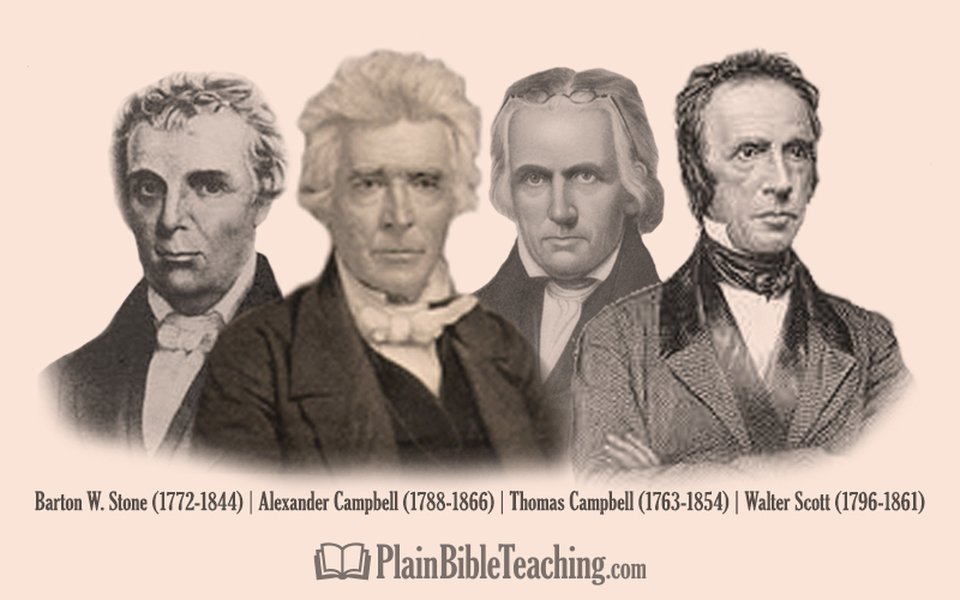
Key figures associated with the early Restoration Movement.
Within this framework, the "plan of salvation" is not seen as a human invention but as God's revealed pathway for humanity to receive forgiveness and eternal life, drawn directly from scriptural accounts of conversion, particularly in the Book of Acts.
The Blueprint for Salvation: Steps of Obedient Faith
From the perspective of the Churches of Christ, responding to God's grace involves several distinct, necessary steps. These are presented as a sequence of obedient actions rooted in faith, often summarized based on key New Testament passages.
Step 1: Hearing the Gospel
The Indispensable Starting Point
The journey begins with hearing the message of Jesus Christ. Faith, according to this perspective, cannot originate in a vacuum; it must be based on the proclaimed Word of God. Romans 10:17 is foundational: "So then faith comes by hearing, and hearing by the word of God." This involves learning about God's love, humanity's sin, Christ's identity as the Son of God, His sacrificial death, burial, and resurrection, and the call to respond. Hearing the Gospel provides the necessary information and motivation for the subsequent steps.
Step 2: Believing in Jesus Christ
Embracing the Truth
Hearing the message must lead to belief, or faith. This isn't merely intellectual agreement but a deep conviction and trust in Jesus as the Christ, the Son of God, and the Savior. Hebrews 11:6 states, "But without faith it is impossible to please Him, for he who comes to God must believe that He is, and that He is a rewarder of those who diligently seek Him." John 20:31 adds, "...but these are written that you may believe that Jesus is the Christ, the Son of God, and that believing you may have life in His name." This belief forms the bedrock upon which repentance and confession are built.
Step 3: Repenting of Sins
A Change of Heart and Direction
Genuine belief leads naturally to repentance. This is understood as more than just regret; it's a fundamental change of mind regarding sin and God, resulting in a turning away from a life of sin and towards obedience to God. Jesus Himself emphasized its necessity (Luke 13:3: "...unless you repent you will all likewise perish."), and Peter commanded it on the Day of Pentecost (Acts 2:38: "Repent, and let every one of you be baptized..."). Repentance signifies a decisive break with past disobedience and a commitment to follow Christ's teachings.
Step 4: Confessing Faith in Christ
Declaring Allegiance
The internal reality of faith and repentance is to be expressed outwardly through confession. This involves verbally acknowledging Jesus Christ as Lord and Son of God before others. Romans 10:9-10 is a key passage: "...if you confess with your mouth the Lord Jesus and believe in your heart that God has raised Him from the dead, you will be saved. For with the heart one believes unto righteousness, and with the mouth confession is made unto salvation." The example of the Ethiopian eunuch confessing his belief before baptism (Acts 8:37, in some manuscripts) illustrates this step. It's a public declaration of allegiance to Christ.
Step 5: Baptism by Immersion
The Point of Forgiveness and New Life
Baptism holds a place of critical importance in the Restoration Movement's understanding of salvation. It is viewed as the God-ordained point at which a penitent believer receives the forgiveness of sins and the gift of the Holy Spirit. This is based on passages like Acts 2:38 ("...be baptized...for the remission of sins..."), Mark 16:16 ("He who believes and is baptized will be saved..."), and 1 Peter 3:21 ("...baptism now saves you...").
Baptism is understood specifically as immersion in water, symbolizing the believer's participation in the death, burial, and resurrection of Jesus Christ (Romans 6:3-4). It is not considered a "work" that earns salvation, but rather an essential act of obedient faith where the believer contacts the cleansing blood of Christ. This emphasis distinguishes the Church of Christ perspective from many Protestant denominations that view baptism as primarily symbolic or not essential for salvation.
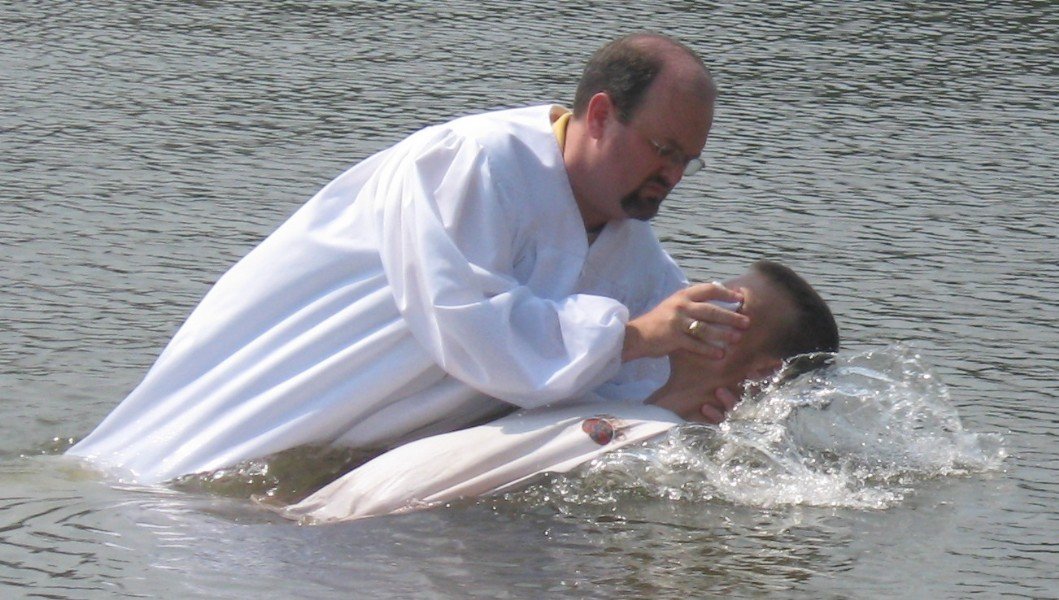
Baptism by immersion is viewed as participation in Christ's death, burial, and resurrection.
Step 6: Living Faithfully
The Ongoing Journey
Salvation is not merely secured at baptism but requires ongoing commitment and faithfulness. After becoming a Christian through the preceding steps, the individual is called to live a life dedicated to serving God, growing in spiritual maturity, participating in the life of the church, and resisting sin. Revelation 2:10 encourages perseverance: "Be faithful until death, and I will give you the crown of life." Continuance in faith and obedience is necessary to remain in a saved state, reflecting the understanding that salvation encompasses a lifelong relationship with Christ. Some within the movement teach that salvation can be forfeited through persistent, unrepentant sin.
Visualizing the Path to Salvation
The sequential nature of these steps, rooted in New Testament teaching and examples, forms a clear pathway according to the Restoration Movement perspective. This mindmap illustrates the core components and their relationship within God's plan:
(Restoration Movement / Church of Christ Perspective)"] id1["Foundation: God's Grace & Christ's Sacrifice"] id2["Human Response (Obedient Faith)"] id2a["1. Hear the Gospel
(Romans 10:17)"] id2b["2. Believe in Jesus Christ
(Hebrews 11:6, John 20:31)"] id2c["3. Repent of Sins
(Acts 2:38, Luke 13:3)"] id2d["4. Confess Faith in Christ
(Romans 10:9-10)"] id2e["5. Be Baptized (Immersion)
(Acts 2:38, Mark 16:16, Romans 6:3-4)"] id2e1["For Remission of Sins"] id2e2["Receiving the Holy Spirit"] id2e3["Entering into Christ / Church"] id2f["6. Live Faithfully
(Revelation 2:10, 1 John 1:7-9)"] id2f1["Ongoing Growth & Obedience"] id2f2["Perseverance"]
This structure emphasizes that while initiated by God's grace, salvation requires a specific, active response from individuals as outlined in Scripture.
Emphasis on Key Elements: A Comparative View
The Restoration Movement's plan of salvation places distinct emphasis on certain elements compared to other theological perspectives, particularly those emphasizing "faith alone" (*sola fide*). This radar chart provides a visual representation of the relative stress placed on different components within the Church of Christ understanding versus a generalized Evangelical viewpoint, based on the synthesized information. Note that this is an illustrative comparison based on theological distinctives, not precise empirical data.
As the chart illustrates, while both perspectives highly value God's grace and the importance of faith, the Restoration Movement places significantly more emphasis on baptism as a necessary component for salvation and on the requirement of ongoing faithfulness, viewing these as essential expressions of obedient faith rather than optional additions.
The Interplay of Grace, Faith, and Obedience
A central tenet of the Restoration Movement / Church of Christ perspective is the relationship between God's grace, human faith, and necessary obedience. While affirming that salvation is fundamentally a gift of God's grace, made possible only through the atoning work of Jesus Christ (Ephesians 2:8-9), this view stresses that God requires a specific response of faith expressed through obedience.
Faith is not seen as passive acceptance alone but as an active trust that compels action according to God's commands. The steps outlined – hearing, believing, repenting, confessing, and being baptized – are considered the scripturally mandated ways to access God's grace for salvation. Therefore, obedience (particularly baptism) is not seen as earning salvation through meritorious works but as the necessary condition set by God for receiving the gift of forgiveness and new life. This contrasts with interpretations of *sola fide* (faith alone) where baptism might be seen as an important symbol or later act of obedience but not essential for the moment of salvation itself.
God's Part and Humanity's Response
This table summarizes the distinct roles of God and humanity in the salvation process according to this perspective:
| God's Role (Provision) | Humanity's Role (Response/Obedience) |
|---|---|
| Provides His love and grace | Hear the Gospel message |
| Sent His Son, Jesus Christ, to die for sins | Believe in Jesus as the Son of God |
| Offers forgiveness and eternal life | Repent of past sins |
| Provides the Holy Spirit as a gift | Confess faith in Christ publicly |
| Revealed His will through Scripture | Be baptized (immersed) for the remission of sins |
| Promises resurrection and glorification | Live a faithful life in obedience to Christ |
This framework highlights the cooperative nature of salvation, where God's initiative requires a specific, obedient human response.
Historical Formulation and Scriptural Examples
Walter Scott and the "Five-Finger Exercise"
While the elements of the plan are drawn from scripture, early Restoration Movement preacher Walter Scott (1796-1861) is often credited with formulating and popularizing a simple, memorable presentation of these steps, sometimes referred to as the "five-finger exercise" or "five steps of salvation." Scott used this method effectively in his evangelistic preaching, basing it largely on Peter's sermon in Acts 2, particularly verse 38. This concise structure helped clarify the necessary response to the Gospel message for many seeking salvation.
Conversion Narratives in Acts
Proponents of this view point to numerous conversion accounts in the Book of Acts as consistent illustrations of this pattern. Examples include:
- Pentecost (Acts 2): The crowd heard Peter preach (Hear), were convicted (leading to Belief/Repentance), asked what to do, and were told to "Repent and be baptized" for forgiveness (Repent, Baptize). Confession is implied in their response.
- The Ethiopian Eunuch (Acts 8): He heard Philip explain the scriptures (Hear), expressed belief (Believe), confessed Jesus (Confess, in some texts), and was baptized immediately (Baptize). Repentance is implied in his desire for baptism.
- Saul of Tarsus (Acts 9, 22): He encountered Christ (leading to Belief), was told to go to Damascus, fasted (showing Repentance), and was instructed by Ananias to "Arise and be baptized, and wash away your sins, calling on the name of the Lord" (Baptize, Confess).
- Cornelius (Acts 10-11): He heard Peter (Hear), received the Holy Spirit (indicating God's acceptance/Belief), and was commanded to be baptized (Baptize). Repentance and Confession are inherent.
- Lydia and the Philippian Jailer (Acts 16): Both heard the message (Hear), believed (Believe), and were baptized along with their households (Baptize). Repentance and Confession are implied outcomes of belief.
These examples are seen as demonstrating a consistent New Testament pattern requiring faith, repentance, confession (explicit or implicit), and baptism for salvation.
Salvation: Past, Present, and Future Tenses
Reflecting the thought of figures like Alexander Campbell, the understanding of salvation within this tradition often encompasses three temporal aspects:
- Justification (Past): This refers to the initial act of being declared righteous and forgiven of past sins. It occurs when a person, through obedient faith (including hearing, believing, repenting, confessing, and being baptized), enters into Christ and receives the remission of sins.
- Sanctification (Present): This is the ongoing process of being made holy and growing in Christlikeness. After justification, the believer lives a life of faithfulness, empowered by the Holy Spirit, continually striving for obedience and resisting sin. It's a lifelong journey of spiritual development.
- Glorification (Future): This points to the ultimate hope of salvation – the resurrection of the body and eternal life with God in glory in the new heavens and new earth. It is the final culmination of the salvation process for those who remain faithful.
This multi-tense view highlights that salvation is both a definitive event rooted in the past response to the Gospel and an ongoing, dynamic process leading to a future hope.
Hearing the Message Today
The video below offers a perspective on God's Plan of Salvation as understood within the Church of Christ tradition, further elaborating on the concepts discussed.
This video from Greenville Avenue Church of Christ discusses God's plan for salvation.
Understanding this specific approach involves recognizing its roots in the Restoration Movement's commitment to biblical authority and its distinct emphasis on the necessary steps, including baptism, as the means by which individuals respond to and receive God's gracious offer of salvation.
Frequently Asked Questions (FAQ)
Is baptism absolutely required for salvation in this view?
Does this mean salvation is earned by works (like baptism)?
What is the role of the Holy Spirit in this plan?
Can a person lose their salvation according to this view?
Recommended Further Exploration
- Explore the historical origins and key figures of the Restoration Movement.
- Investigate the specific interpretation of Acts 2:38 regarding baptism and forgiveness within Churches of Christ.
- Compare the understanding of baptism's role in salvation across different Christian denominations.
- Learn more about the concept of ongoing faithfulness and Christian living emphasized by Churches of Christ.
References
 ozziepete.wordpress.com
Last updated May 4, 2025