
Unlock Your Resume's Potential: Insights from an Employer's Viewpoint
Answering key questions about resume effectiveness based on expert advice and employer expectations.
Understanding what makes a resume stand out is crucial in today's competitive job market. This response addresses key questions about resume evaluation from an employer's perspective, outlines actionable steps for improvement based on common pitfalls, and explains the critical importance of tailoring your application.
Highlights: Key Takeaways for Resume Success
- Employer Focus: Recruiters prioritize relevance to the job description, quantifiable achievements demonstrating impact, and clear, professional formatting for quick assessment.
- Strategic Improvement: Key actions to enhance your resume include adding a targeted professional summary, incorporating specific metrics to showcase accomplishments, and ensuring relevant keywords and skills are prominent.
- The Power of Tailoring: Customizing your resume for each application is essential to pass Applicant Tracking Systems (ATS), signal genuine interest, and highlight the specific value you bring to the role.
The Foundation: Insights from the Video
Understanding Common Resume Mistakes
The video you shared, "Resume Tips: Avoid These 8 Mistakes | Indeed Career Tips," provides valuable context for this discussion. It highlights frequent errors that can hinder a job application and offers practical advice for creating a more effective resume. Let's use these insights as a springboard to address your questions.
Video: Resume Tips: Avoid These 8 Mistakes | Indeed Career Tips (Referenced in user query)
Watching this video helps frame the employer's perspective and underscores the importance of avoiding common pitfalls like generic content, lack of quantification, poor formatting, and failing to target the specific job.
1. An Employer's Perspective: What Makes a Resume Stand Out?
Decoding the Recruiter's Evaluation Process
Imagine being an employer faced with dozens, sometimes hundreds, of resumes for a single opening. Time is limited, and the goal is to efficiently identify candidates who not only meet the basic requirements but also show the potential to excel. Here’s what I’d be looking for and why:
The Crucial Role of Relevance and Keywords
My primary focus would be on relevance. Does the applicant's background directly align with the requirements outlined in the job description? I'd scan for specific skills, qualifications, and experiences mentioned in the posting. This often involves looking for keywords related to technical abilities, software proficiency, industry knowledge, and essential functions of the role.
Why? Relevance is paramount because it indicates the candidate understands the role and possesses the foundational capabilities needed. Furthermore, many companies use Applicant Tracking Systems (ATS) which automatically filter resumes based on keyword matches. A resume lacking these keywords might never reach a human reviewer, regardless of the candidate's qualifications.
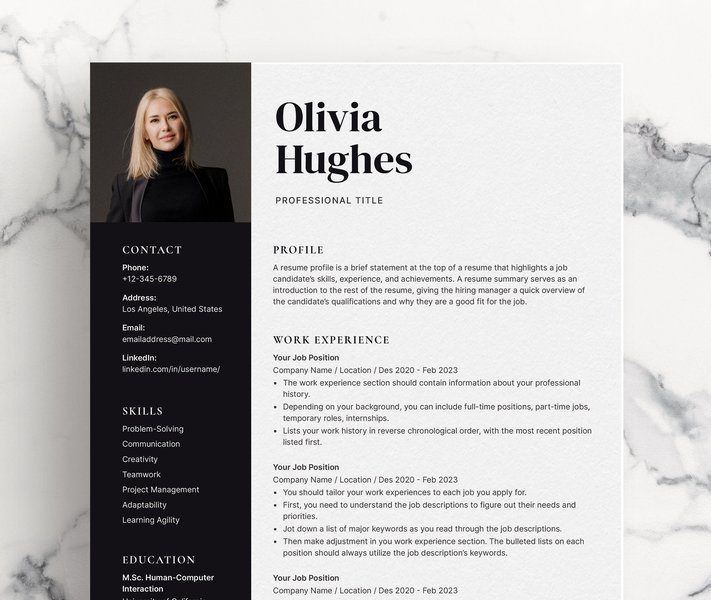
A clean, well-structured resume template enhances readability.
Show, Don't Just Tell: The Power of Quantifiable Achievements
Beyond just listing job duties, I want to see impact. This means looking for bullet points that describe accomplishments using action verbs and, crucially, quantifiable results. Instead of "Managed social media accounts," I'd look for "Increased social media engagement by 35% in six months by implementing a new content strategy." Numbers, percentages, and specific outcomes provide concrete evidence of the candidate's contributions and capabilities.
Why? Quantifiable achievements demonstrate the candidate's effectiveness and potential value to my organization. They differentiate high performers from those who simply fulfilled basic job functions and help me gauge the potential return on investment for hiring this individual.
Clarity is Key: Formatting and Readability
A resume must be easy to read and navigate quickly. I'd look for a clear, consistent format (like reverse-chronological), professional font choices, adequate white space, and distinct sections (Summary, Skills, Experience, Education). Recruiters often spend only seconds on an initial scan, so information needs to be easily digestible.
Why? Poor formatting makes it difficult and time-consuming to find relevant information. A clean, professional presentation suggests attention to detail and good communication skills, while a cluttered or confusing layout can be an immediate turn-off.
Professionalism and Attention to Detail
Typos, grammatical errors, or inconsistencies in formatting signal a lack of attention to detail. I'd also look for a professional tone and appropriate contact information. A well-crafted professional summary at the top can provide a valuable snapshot of the candidate's key qualifications and career goals.
Why? Attention to detail is often a proxy for work quality. Errors suggest carelessness, which is undesirable in any role. Professionalism in the resume reflects professionalism in the workplace.
Why These Elements Matter: The Employer's Goal
Ultimately, employers look for these elements because they need to make efficient and effective hiring decisions. They seek candidates who are not only qualified (relevance) and capable of delivering results (quantifiable achievements), but also professional (formatting, error-free) and genuinely interested in the specific role (often indicated by tailoring). These factors help predict future job performance and ensure a good fit within the team and company culture.
Employer Priorities: A Visual Representation
Understanding What Recruiters Value Most
The following chart visualizes the relative importance an employer might place on various components of a resume during the initial screening phase. While all sections contribute, some factors like direct experience relevance and quantifiable results often carry more weight in quickly determining a candidate's suitability.
This chart highlights that while aspects like a professional summary and skills section are valuable, the core focus during a quick review often lands on directly relevant experience, measurable results, and evidence that the resume is specifically targeted to the role (tailoring and keywords).
2. Actionable Steps to Elevate Your Resume (Inspired by the Video)
Translating Insights into Concrete Improvements
Based on the common mistakes highlighted in the Indeed video and reinforced by best practices, here are three specific actions I would take to improve my resume:
Improvement 1: Crafting a Compelling Professional Summary
The video emphasizes the mistake of omitting a summary. I will add or refine a concise (3-5 sentence) Professional Summary at the top of my resume. This section will immediately highlight my key qualifications, years of experience, core strengths, and career objective, tailored specifically to align with the target job description. It serves as an "elevator pitch" to capture the recruiter's interest from the start.
Improvement 2: Quantifying Your Impact with Numbers
Generic descriptions of duties are less impactful than specific achievements. I will review my "Experience" section and revise bullet points to include quantifiable results wherever possible. This means adding numbers, percentages, or specific examples to demonstrate the scope and success of my contributions (e.g., "Managed a budget of $X," "Improved efficiency by Y%," "Led a team of Z people," "Generated $W in revenue").
Improvement 3: Strategic Keyword Integration and Skills Section
Leaving out a dedicated skills section or failing to incorporate relevant keywords is a critical error, especially for ATS screening. I will create or enhance a distinct Skills Section listing my most relevant hard and soft skills. More importantly, I will meticulously analyze the target job description and strategically weave essential keywords and phrases throughout my resume, particularly in the Summary, Skills, and Experience sections, ensuring alignment without "keyword stuffing."
Mindmap: Key Areas for Resume Enhancement
Visualizing the Path to a Stronger Resume
This mindmap illustrates the interconnected areas crucial for resume improvement, branching out from the core goal of creating an effective job application document. It covers content refinement, strategic tailoring, and presentation elements discussed.
Focusing on these three interconnected areas—Content Enhancement, Strategic Tailoring, and Presentation/Format—provides a comprehensive framework for significantly improving resume effectiveness.
3. The Undeniable Advantage of Resume Tailoring
Why One Size Doesn't Fit All in Job Applications
Sending the exact same resume for every job application is a common mistake with significant downsides. Tailoring your resume to each specific job you apply for is crucial for several compelling reasons:

Just as a tailor customizes clothing, you should customize your resume for the job.
Navigating the Digital Gatekeepers: Applicant Tracking Systems (ATS)
As mentioned earlier, many employers use ATS software to scan and rank resumes based on keywords found in the job description. A generic resume might lack the specific terms the system is searching for, causing it to be filtered out before a human ever sees it. Tailoring involves identifying these keywords and incorporating them naturally into your resume, significantly increasing your chances of passing this initial screening.
Making a Strong Impression: Demonstrating Interest and Fit
When a hiring manager sees a resume that clearly reflects the language and priorities of their job posting, it signals that the applicant has done their homework and is genuinely interested in this specific role and company. It shows initiative and a targeted approach, setting you apart from candidates who submit generic applications. It makes the recruiter's job easier by immediately highlighting your suitability.
Highlighting Your Most Relevant Value Proposition
You likely have a diverse range of skills and experiences. Tailoring allows you to emphasize the specific qualifications and accomplishments that are most pertinent to the target role. By rearranging bullet points, adjusting your summary, and tweaking skill descriptions, you can present yourself as the ideal candidate for that particular position, rather than a generalist.
Generic vs. Tailored: A Comparison
The table below summarizes the key differences in approach and likely outcomes between submitting a generic resume versus a tailored one.
| Feature | Generic Resume | Tailored Resume |
|---|---|---|
| Content Focus | Broad overview of all experiences/skills | Highlights experiences/skills most relevant to the specific job |
| Keywords | May lack specific keywords from the job description | Strategically incorporates keywords from the job description |
| ATS Performance | Higher risk of being filtered out | Higher chance of passing ATS screening |
| Employer Impression | May seem unfocused or lacking effort | Demonstrates genuine interest and strong fit |
| Efficiency for Recruiter | Requires more effort to find relevant information | Easy to quickly identify key qualifications |
| Overall Effectiveness | Lower chance of securing an interview | Significantly higher chance of securing an interview |
In essence, tailoring transforms your resume from a passive historical document into an active marketing tool specifically designed to secure an interview for a particular job.
Frequently Asked Questions (FAQ)
Quick Answers to Common Resume Queries
How long should my resume be?
What's the best font to use on a resume?
Should I include a photo on my resume?
How do I handle employment gaps on my resume?
References
- How To Tailor a Resume To a Job Description in 7 Steps - Indeed
- 35+ Resume Tips & Best Practices for 2024 - Resume Genius
- How to Tailor Your Resume to a Job Description (With Tips and Examples) - Jobscan
-
Top 10 Resume Writing Tips for 2024 - LiveCareer
- 10 Resume Tips to Help You Land Your Dream Job in 2024 - Hloom
- How to Tailor Your Resume to Match a Job Description (+ Examples) - Teal
- Resume Tips: Avoid These 8 Mistakes | Indeed Career Tips - YouTube
Recommended
Last updated April 12, 2025