
Retrieval-Augmented Generation (RAG) in Artificial Intelligence
Enhancing AI Capabilities through Integrated Information Retrieval
Key Takeaways
- Enhanced Accuracy: RAG improves the precision of AI responses by integrating external and up-to-date data sources.
- Dynamic Knowledge Integration: It allows AI models to access real-time information, overcoming the limitations of static training data.
- Versatile Applications: RAG is utilized across various domains, including customer support, research, and enterprise knowledge management, enhancing the effectiveness of AI solutions.
Introduction to Retrieval-Augmented Generation (RAG)
Retrieval-Augmented Generation (RAG) is a sophisticated framework in the field of artificial intelligence that synergizes the capabilities of information retrieval systems with generative AI models, particularly large language models (LLMs) like GPT. This integration aims to address and overcome the inherent limitations of LLMs, such as the generation of outdated or inaccurate information due to their reliance solely on pre-trained data. By incorporating external knowledge sources, RAG ensures that AI models can produce responses that are not only contextually relevant but also factually accurate and up-to-date.
How Retrieval-Augmented Generation (RAG) Works
1. Retrieval Phase
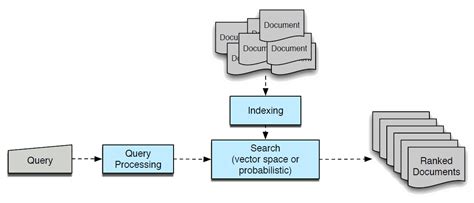
In the retrieval phase, the system initiates by processing the user's input, which could be a query, prompt, or any form of textual input. The RAG system then searches through designated external knowledge bases, such as databases, scholarly articles, proprietary documents, or real-time data sources, to identify and retrieve relevant information. This step is crucial as it ensures that the AI has access to the most current and authoritative information, which serves as a foundation for generating accurate responses.
2. Augmentation Phase
Once the relevant information is retrieved, the augmentation phase commences. In this stage, the retrieved data is seamlessly integrated into the input prompt for the generative AI model. This enriched prompt provides the AI model with additional context, facts, and details that go beyond its pre-trained knowledge base. By doing so, the model is equipped with specific and pertinent information that enhances its ability to generate meaningful and precise responses.
3. Generation Phase
With the augmented prompt in place, the generative AI model processes the combined information to produce a comprehensive response. This output is thus grounded in both the AI's inherent capabilities and the newly incorporated external data. The result is a response that not only leverages the creative and predictive strengths of the generative model but also maintains a high level of factual accuracy and relevance.
Key Features and Advantages of RAG
- Improved Accuracy: By leveraging external data sources, RAG minimizes the risk of generating incorrect or outdated information, enhancing the reliability of AI responses.
- Dynamic Knowledge Integration: RAG allows AI systems to access and utilize real-time or frequently updated data, making them adaptable to evolving information landscapes and current events.
- Enhanced Contextual Understanding: The incorporation of retrieved data aids the AI in comprehending complex queries, enabling it to provide more nuanced and contextually appropriate answers.
- Domain-Specific Customization: RAG can be tailored to specific industries or use cases by connecting the model to specialized knowledge bases, such as medical databases for healthcare applications or legal documents for the legal sector.
- Cost-Effective Model Maintenance: RAG reduces the necessity for constant retraining of the generative model, as new information can be integrated through retrieval mechanisms, thereby lowering maintenance costs and efforts.
- Reduced Hallucinations: By grounding responses in specific, retrieved sources, RAG diminishes the likelihood of the AI generating fictional or unsupported information.
- Scalability: The framework supports scalability by allowing the integration of multiple and diverse knowledge sources, enabling the AI to handle a wide array of topics and queries effectively.
Applications of Retrieval-Augmented Generation (RAG)
1. Customer Support and Virtual Assistants
RAG-powered chatbots and virtual assistants can deliver accurate and timely responses to customer inquiries by accessing internal databases, product information, and policy documents. This ensures that customers receive reliable support without the system generating incorrect or outdated information, thereby enhancing user satisfaction and trust.
2. Research Assistance
Researchers benefit from RAG systems by utilizing them to retrieve and synthesize information from vast repositories of academic journals, patents, and other scholarly materials. This facilitates efficient literature reviews, data analysis, and the generation of informed hypotheses, accelerating the pace of scientific discovery.
3. Enterprise Knowledge Management
Organizations can deploy RAG to manage and leverage their internal knowledge bases, such as documentation, reports, and employee records. This integration supports informed decision-making, streamlines workflows, and enhances collaboration by providing employees with easy access to pertinent information.
4. Education and Training
In educational settings, RAG can be utilized to create intelligent tutoring systems that provide students with accurate and customized learning materials. By accessing up-to-date educational resources, these systems can offer personalized feedback and support, catering to individual learning needs.
5. Healthcare Support
RAG systems assist medical professionals by retrieving insights from clinical databases, research papers, and patient records. This aids in diagnosis, treatment planning, and staying abreast of the latest medical advancements, ultimately improving patient care outcomes.
6. Legal and Financial Services
In the legal and financial sectors, RAG provides access to up-to-date legal precedents, market data, and regulatory information. This enables professionals to make informed decisions, conduct thorough analyses, and maintain compliance with industry standards.
7. Technical Documentation and Support
RAG can streamline access to technical manuals, troubleshooting guides, and system documentation, aiding both employees and customers in resolving technical issues efficiently and accurately.
8. Content Creation and Management
Content creators and marketers utilize RAG to generate high-quality, data-driven content by accessing relevant market trends, consumer data, and competitive analyses. This enhances the relevance and impact of marketing campaigns and content strategies.
Challenges and Considerations in Implementing RAG
- Data Quality and Relevance: The effectiveness of RAG is contingent upon the quality and pertinence of the retrieved data. Poorly curated or irrelevant data sources can undermine the accuracy and reliability of the AI’s responses.
- Latency and Performance: The process of retrieving external data can introduce delays, especially when dealing with large or complex knowledge bases. Ensuring optimized retrieval mechanisms is essential to maintain prompt response times.
- Integration Complexity: Seamlessly combining retrieval systems with generative models requires robust technical infrastructure and expertise. Ensuring efficient and accurate data flow between components is a complex task that demands careful implementation.
- Security and Privacy: Accessing and handling external data sources necessitates stringent security measures to protect sensitive information and comply with privacy regulations. Ensuring data integrity and confidentiality is paramount.
- Scalability: As the volume of data and the number of queries increase, maintaining the scalability of RAG systems becomes challenging. Effective management of resources and infrastructure is required to support growing demands.
- Cost Implications: Building and maintaining the necessary infrastructure for RAG can be cost-intensive, particularly for organizations with extensive data retrieval and processing needs.
- Bias and Fairness: Ensuring that retrieved data is unbiased and that the generative model does not propagate or amplify existing biases is a critical ethical consideration in deploying RAG systems.
Comparative Analysis: RAG vs. Traditional Generative Models
| Aspect | Traditional Generative Models | Retrieval-Augmented Generation (RAG) |
|---|---|---|
| Knowledge Base | Static, limited to pre-training data | Dynamic, integrates external, up-to-date sources |
| Accuracy | Prone to hallucinations and outdated information | Enhanced accuracy through factual data retrieval |
| Contextual Understanding | Depends solely on internal training | Improved by incorporating external context |
| Customization | Requires fine-tuning for specific domains | Easily tailored to various domains via external sources |
| Maintenance | Needs periodic retraining to update knowledge | Maintains up-to-date information without retraining the model |
| Scalability | Limited by the size of the training data | Highly scalable with the ability to integrate multiple data sources |
Future Prospects of RAG in AI
The future of Retrieval-Augmented Generation holds significant promise as AI continues to evolve. With advancements in natural language processing, machine learning, and data retrieval technologies, RAG is expected to become more efficient, accurate, and widely adopted across various industries. Potential developments include:
-
Enhanced Retrieval Techniques: Improvements in the algorithms and methodologies for data retrieval will increase the speed and relevance of the information accessed, further boosting the performance of RAG systems.
-
Integration with Real-Time Data Streams: Incorporating real-time data streams, such as live news feeds or sensor data, will enable RAG to provide even more current and contextually relevant responses.
-
Expansion to Multimodal Data: Extending RAG to handle multimodal data, including images, videos, and audio, will enhance its applicability in diverse scenarios requiring comprehensive information."
-
Improved User Personalization: RAG will increasingly support personalized interactions by integrating user-specific data, preferences, and history, enabling more tailored and effective AI responses.
-
Ethical and Responsible AI: Ongoing focus on mitigating biases and ensuring fairness in data retrieval and response generation will be critical in the ethical deployment of RAG systems.
-
Lowered Barriers to Implementation: Simplified frameworks and tools for integrating RAG will make it accessible to a broader range of organizations, including small and medium-sized enterprises.
-
Interdisciplinary Applications: RAG will find applications in emerging fields such as augmented reality, virtual reality, and the Internet of Things (IoT), enhancing the intelligence and interactivity of these technologies.
Conclusion
Retrieval-Augmented Generation represents a transformative advancement in the realm of artificial intelligence, bridging the gap between static generative models and dynamic, real-time data utilization. By integrating robust information retrieval mechanisms with the creative and language generation capabilities of large language models, RAG significantly enhances the accuracy, relevance, and contextuality of AI-generated responses. Its versatility across various domains—from customer support and research to healthcare and legal services—demonstrates its potential to revolutionize how organizations and individuals interact with AI systems.
However, the implementation of RAG is not without its challenges. Ensuring data quality, managing latency, addressing integration complexities, and maintaining ethical standards are critical considerations that must be meticulously managed. As technology continues to advance, the future of RAG in AI looks promising, with ongoing developments poised to further amplify its capabilities and applications. By embracing RAG, the AI landscape can achieve a new standard of intelligence that is both dynamic and deeply informed by the vast expanse of available data.
References

Last updated January 20, 2025