
Unmasking the Unknown Caller: A Deep Dive into Reverse Phone Lookups
Discovering the Identity and Context Behind Unfamiliar Phone Numbers
Have you ever received a call from an unknown number, leaving you wondering who it could be? In an age of rampant spam, scams, and unsolicited calls, identifying the source of an unfamiliar phone number has become a common necessity. This comprehensive guide delves into the world of reverse phone lookups, exploring how they work, the information they can reveal, and the best tools available to help you unmask unknown callers. We will specifically examine the number 516-446-7491 as a practical example to illustrate these capabilities.
Key Insights into Reverse Phone Lookups
- Purpose and Functionality: Reverse phone lookups are tools that enable you to identify the owner, location, and other details associated with a phone number, essentially working in reverse of a traditional phone book.
- Information Revealed: These services can provide a caller's full name, address, phone carrier, line type (landline, cellular, VoIP), and even identify if the number is linked to spam or fraud.
- Combatting Unwanted Calls: Reverse phone lookups serve as a crucial first line of defense against telemarketers, robocalls, and various scams, helping you decide whether a call is safe to answer.
Decoding 516-446-7491: A Practical Reverse Lookup
When you encounter a number like 516-446-7491, your first instinct might be to ignore it or block it. However, a reverse phone lookup can shed light on its origin and purpose. For the number 516-446-7491, public records indicate it is associated with a landline phone number prefix hosted by Verizon New York Inc. This particular prefix (516-461) has 235 numbers listed under it. While this initial information is helpful, a more detailed reverse lookup can uncover much more.

A classic rotary phone, representing the origin of telephone communication and the need for identifying callers.
The Power of Reverse Phone Lookups
A reverse phone lookup is a powerful online tool that takes a phone number as input and provides information about its owner and related details. Unlike traditional phone directories where you search for a number by name, this process works backward. It's akin to having a detective at your fingertips, capable of sifting through billions of records to uncover the truth behind an unknown call or text.
What Can a Reverse Phone Lookup Uncover?
The information obtainable from a reverse phone lookup varies depending on the service, but commonly includes:
- Owner's Name: Often the most sought-after detail, revealing the full name of the individual or business registered to the number.
- Location: The city and state associated with the phone number, and sometimes even a specific address.
- Phone Carrier and Line Type: Identifying if the number is a landline, cellular, or Voice over Internet Protocol (VoIP) number, and which provider services it (e.g., Verizon, AT&T, T-Mobile).
- Spam and Fraud Reports: Crucial insights into whether the number has been reported by other users as spam, a scam, or associated with fraudulent activity. This is a significant advantage in avoiding unwanted calls.
- Other Contact Details: In some cases, additional phone numbers, email addresses, or even social media profiles linked to the owner.
- Risk Scores: Some advanced services provide risk scores, indicating the likelihood of the number being associated with risky behavior.
The Mechanics Behind the Search
Reverse phone lookup services work by accessing extensive databases of phone numbers, public records, and carrier information. When you enter a number, the system performs a rapid search to match it with available data. This can involve:
- CNAM Lookups: A "Caller Name" (CNAM) lookup pings the carrier network to retrieve the subscriber's current name.
- Public Record Databases: Cross-referencing with vast databases of U.S. and Canadian consumers and businesses.
- Community-Based Reporting: Platforms like Truecaller and tellows leverage user-generated data, where a community of millions reports and flags suspicious numbers, contributing to a collective defense against spam.
Why Perform a Reverse Phone Lookup?
The reasons for conducting a reverse phone lookup are diverse, ranging from simple curiosity to critical personal safety concerns. In today's interconnected world, an unknown call can be more than just an annoyance; it can be a threat.

A vintage telephone, a symbol of communication's evolution and the persistent need to identify callers.
Protecting Yourself from Scams and Fraud
One of the primary motivations for reverse lookups is to identify and avoid scam calls. Statistics show a significant rise in scam calls, with Americans losing billions annually. Reverse lookup tools can help:
- Identify Robocalls and Telemarketers: Many services maintain extensive databases of known robocallers and telemarketing numbers.
- Detect Fraudulent Attempts: By identifying the caller, you can discern if it's a legitimate contact or a phishing attempt designed to extract personal information or money. Companies like the CRA (Canada Revenue Agency) even advise verifying their calls independently before providing any personal details.
- Community Reporting: Platforms thrive on user feedback. If a number has been reported as suspicious by others, you'll be alerted, allowing you to block or ignore it with confidence.
Verifying Contacts and Ensuring Safety
Beyond avoiding scams, reverse lookups offer peace of mind in various scenarios:
- Unrecognized Calls from Known Contacts: Sometimes an old friend or family member might call from a new or unfamiliar number. A quick lookup can confirm their identity.
- Online Dating and Meetings: For those meeting new people from online platforms, a reverse phone lookup can verify the person's name and address, helping to ensure safety and prevent "catfishing" or other romance scams.
- Business and Professional Inquiries: Confirming the identity of a potential client, real estate agent, or business contact before engaging further.
Leading Reverse Phone Lookup Services
The market for reverse phone lookup services is vast, with many providers offering both free and premium options. While "free" services might offer limited information, paid subscriptions typically provide more comprehensive reports.
Prominent Tools and Their Offerings
Here's a comparison of some notable reverse phone lookup services:
| Service Name | Key Features | Pricing Model | Notable Strengths |
|---|---|---|---|
| Truecaller | Caller ID, Spam Blocking, Community Reports, Limited Free Web Searches, App for unlimited access | Freemium (limited free web, premium app features) | Largest user community (450M+), excellent spam detection, real-time identification |
| Whitepages | Name, Address, Phone Carrier, Spam/Fraud Check, Public Records, Premium for full reports | Freemium (basic free, premium subscription) | Comprehensive contact info, property data, strong for US numbers |
| 411.com | Full Name, Address, and more details for free | Free (advertisement-supported) | Straightforward and free service for basic lookups |
| NumLookup | Owner's Full Name, Location, Carrier, Social Media Profiles (if available) | Free (for US numbers) | Focus on owner's full name, user-friendly, no registration required |
| Spokeo | Name, Location, Carrier, Social Media Profiles, Past Addresses, Relatives | Freemium (initial free check, paid reports) | Broad data aggregation, including social media and historical info |
| Intelius | Full Name, Aliases, Photos, Current/Past Addresses, Other Contact Details, Background Checks | Paid (subscription or one-time reports) | In-depth background checks, useful for dating safety and suspicious callers |
| IPQualityScore | Line Type, Location, Owner Details, Spam/Risk Scores, Data Appending, API access | Free tools (API services for businesses) | Advanced risk scoring, focus on fraud prevention for businesses |
| tellows | Community-reported spam numbers, caller protection, ratings and comments | Free (community-driven) | Strong community focus on identifying and reporting scam/spam numbers |
| Spy Dialer | Free reverse lookup for mobile, landline, and email addresses | Free | "Sneaky but legal" approach, simple and quick lookups |
| Who Called Me / UnknownPhone.com | Free reverse lookup, user comments, spam identification | Free (community-driven) | Focus on identifying unknown and scam callers through user contributions |
Choosing the Right Tool
When selecting a reverse phone lookup service, consider:
- Cost: Are you looking for a free basic lookup or a comprehensive paid report?
- Information Desired: Do you just need a name, or are you looking for more detailed information like address history, social media, or risk scores?
- Accuracy and Reliability: Look for services that update their data regularly and have a good reputation for accuracy.
- Privacy: Ensure the service operates with discretion and privacy, ensuring the person looked up is not notified.
Understanding Spam Statistics: A Radar Chart Analysis
Beyond simply identifying a caller, some advanced reverse phone lookup services, like Truecaller, provide valuable "Spam Statistics." These statistics offer a deeper understanding of a number's reputation and potential risk, allowing you to make an informed decision about whether to answer. Below is a conceptual radar chart demonstrating how different aspects of a phone number's spam profile might be assessed.
This radar chart illustrates the typical profiles of different types of callers based on various metrics derived from reverse phone lookup data. A "Typical Spam Number Profile" would likely show high scores in spam reports and look-ups, indicating that many users have flagged it and searched for it, while having a low pick-up rate as users avoid it. Its risk and fraud likelihood would also be elevated. Conversely, a "Legitimate Caller Profile" would exhibit low spam reports and risk scores, with a higher pick-up rate and a normal volume of calls. An "Unknown but Low Risk" profile might have moderate look-ups but generally low spam reports, suggesting it's unfamiliar to many but not necessarily malicious. This visual representation helps to quickly assess the nature of an unknown number and inform your decision-making.
Understanding Call Logs
While reverse phone lookups are crucial for identifying unknown callers, managing your call logs is equally important for tracking your communication history and recognizing recurring unknown numbers. Call logs provide a record of incoming, outgoing, and missed calls, often including the date, time, and duration of each call. Analyzing your call log in conjunction with reverse lookup services can help you identify patterns of unwanted calls or track down important but unrecognized contacts.
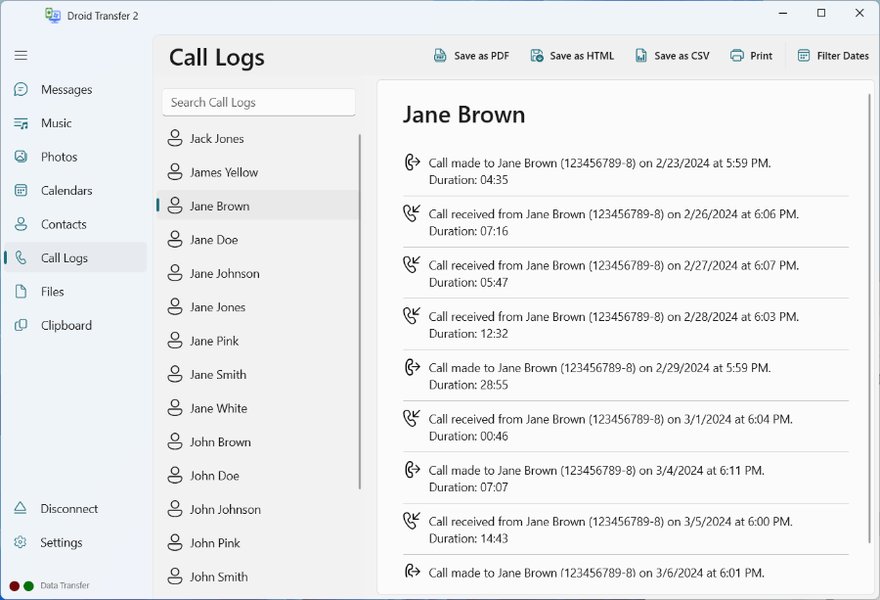
A typical mobile phone call log, displaying a list of calls with names and numbers.
Many smartphones allow you to view, manage, and even export your call history. This can be invaluable for documenting suspicious activities, especially if you're dealing with persistent harassment or fraud attempts. If you suspect a call is malicious, reviewing your call log for similar numbers or patterns, then performing a reverse lookup on those numbers, can strengthen your case if you decide to report it to authorities or your phone carrier.
FAQ on Reverse Phone Lookups
What is a reverse phone lookup?
Is it free to do a reverse phone lookup?
What information can I get from a reverse phone lookup?
Is a reverse phone lookup private?
Can I use a reverse phone lookup for any phone number?
How accurate are reverse phone lookups?
Conclusion
Reverse phone lookups have become an indispensable tool in navigating the complexities of modern communication. From identifying potential scam callers to verifying unknown contacts, these services empower individuals to make informed decisions about who they engage with. While the number 516-446-7491 may initially appear as just another unknown caller, the principles of reverse phone lookup demonstrate how easily such a number can be investigated to reveal its nature and purpose. By leveraging the various free and premium tools available, you can enhance your personal safety and maintain peace of mind in an increasingly connected world.
Recommended Further Exploration
- How to block unwanted calls and text messages effectively?
- What are the most common phone scams and how can I protect myself?
- Which mobile applications offer the best caller ID and spam blocking features?
- Are there any legal implications or privacy concerns associated with using reverse phone lookup services?