
Unlocking Coherent Systems: Where RFSoC Multi-Board Synchronization Shines
Discover the real-world impact of precisely timing multiple RF System-on-Chip boards for advanced applications.
Radio Frequency System-on-Chip (RFSoC) technology integrates critical RF signal chain components onto a single chip, offering unprecedented performance and integration. However, many cutting-edge applications require channel counts or processing power exceeding a single device. RFSoC multi-board synchronization addresses this by enabling multiple RFSoC boards to operate in perfect unison, ensuring precise timing alignment, phase coherence, and data consistency across the entire distributed system. This capability is not just a technical feat; it's the key enabling technology behind numerous advanced RF systems.
Essential Insights
- Phase Coherence is Key: Multi-board synchronization ensures precise phase alignment across channels distributed over multiple boards, crucial for applications like beamforming in radar and communications.
- Scalability for Complex Systems: It allows developers to build large-scale systems with high channel counts (e.g., massive MIMO, large sensor arrays) by linking multiple RFSoC boards coherently.
- Broad Application Spectrum: The technology is vital across diverse fields, including defense (radar, EW), telecommunications (5G/6G), scientific research (radio astronomy), and advanced test equipment.
Understanding RFSoC Multi-Board Synchronization
The Foundation of Coherent Distributed RF Systems
RFSoC devices, like AMD's Zynq UltraScale+ RFSoC family, feature integrated high-speed analog-to-digital converters (ADCs) and digital-to-analog converters (DACs) alongside programmable logic and processing cores. While features like Multi-Tile Synchronization (MTS) ensure alignment of the data converters within a single RFSoC chip, many applications demand synchronization across multiple chips, often residing on separate boards.
Multi-board synchronization extends the principles of MTS to coordinate multiple RFSoC devices. It involves distributing common clock signals (Reference Clock, SYSREF) and implementing protocols to manage timing distribution and compensate for skews and delays introduced by cables, connectors, and board layouts. The goal is deterministic latency and phase alignment, ensuring that signals captured or generated by different boards are perfectly time-matched. This prevents performance degradation caused by timing errors, clock drift, or phase misalignment, which is critical for maintaining data accuracy and signal integrity in high-performance systems.
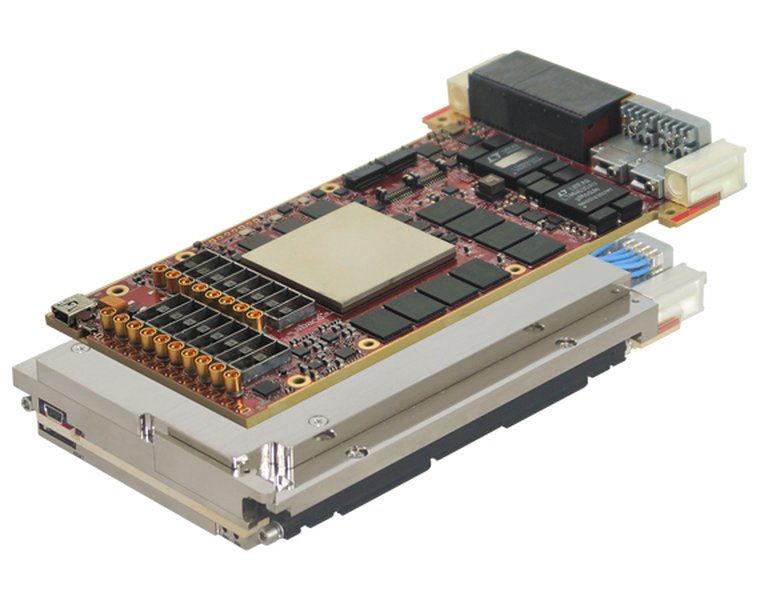
An example RFSoC board, like the Abaco VP431, integrates RF data converters and processing capabilities, forming the building blocks for multi-board synchronized systems.
Key Practical Applications
The ability to synchronize multiple RFSoC boards unlocks capabilities essential for a wide range of demanding applications:
1. Phased Array Systems (Radar and Communications)
Achieving Precise Beamforming
Phased array systems utilize multiple antenna elements to electronically steer beams of radio waves for transmission or reception. Achieving accurate beamforming requires precise control over the phase and timing of signals at each element.
- Radar Systems: In defense, aerospace, and automotive radar, multi-board synchronization allows large antenna arrays, distributed across multiple RFSoC boards, to operate coherently. This enhances target detection range, improves resolution, enables accurate tracking, and increases resistance to interference. Synchronization ensures that signals from all channels align perfectly to form sharp, steerable beams.
- Communications Beamforming: For satellite communications or point-to-point links, synchronization enables the formation of highly directional beams, increasing signal strength, improving spectral efficiency, and reducing interference.
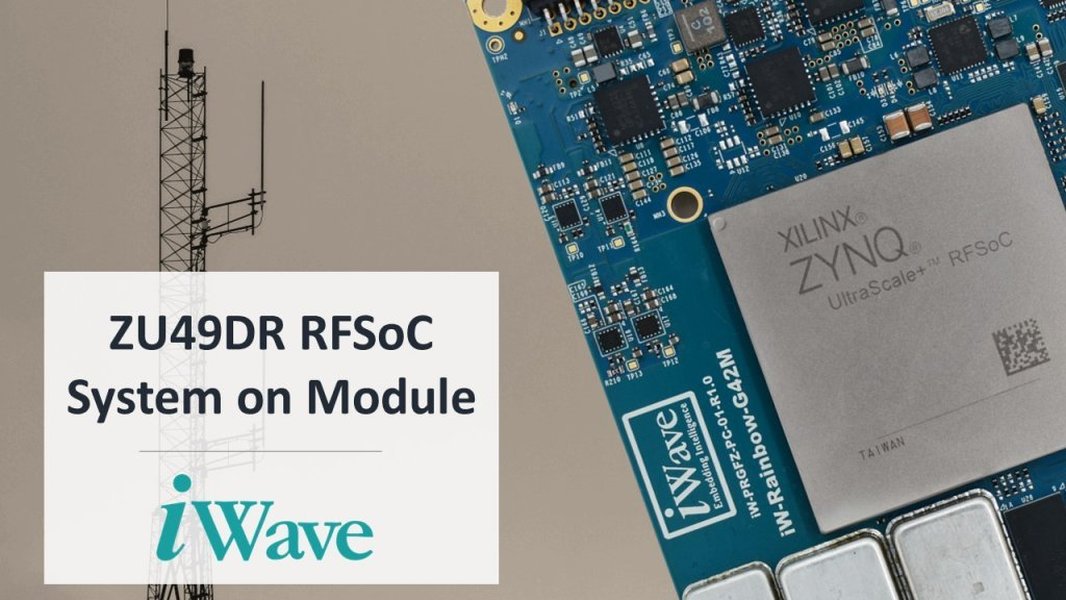
RFSoC System-on-Modules provide the core processing for applications like phased array radar, where multi-board synchronization is critical.
2. Advanced Wireless Communications (5G/6G and Massive MIMO)
Enabling High-Capacity Networks
Next-generation wireless standards like 5G and 6G rely heavily on technologies like Massive Multiple Input Multiple Output (MIMO) to achieve high data rates and support numerous users simultaneously.
- Massive MIMO Base Stations: These systems employ base stations with hundreds or even thousands of antennas. RFSoC multi-board synchronization is crucial for coordinating the vast number of RF channels distributed across multiple boards within the base station. This enables coherent spatial multiplexing (transmitting multiple data streams simultaneously in the same frequency band) and precise beamforming towards individual users, maximizing spectral efficiency and network capacity.
- 5G/6G Beam Steering: Synchronization allows for dynamic beam tracking and interference mitigation, essential for maintaining robust connections in mobile environments.
3. Signal Intelligence (SIGINT) and Electronic Warfare (EW)
Coordinated Signal Collection and Analysis
SIGINT and EW systems often involve monitoring wide frequency spectrums and analyzing signals collected from multiple, sometimes geographically dispersed, sensors.
- Accurate Signal Interception: Synchronization ensures that signals captured by different RFSoC boards (potentially on different platforms like aircraft or ground stations) are time-aligned. This allows for accurate direction finding (determining the location of signal emitters), coherent signal analysis, and correlation of data from multiple sensors to build a comprehensive electronic picture of the environment.
- Distributed EW Systems: In electronic attack scenarios, synchronized RFSoC boards can generate precisely timed and phased jamming signals from multiple locations to effectively counter adversary systems.
4. Distributed Systems
Synchronized Operation Across Locations
Multi-board synchronization extends beyond single enclosures, enabling coherent operation in systems spread across different physical locations.
- Distributed Antenna Systems (DAS): Used to provide wireless coverage in large venues (stadiums, airports) or complex environments, DAS requires synchronization between remote radio units connected to a central processing hub. RFSoC synchronization ensures seamless handoffs and consistent signal quality across the coverage area.
- Distributed Sensor Networks: Applications like networked radar systems or large-scale environmental monitoring benefit from synchronized data acquisition across multiple nodes, enabling coherent processing of data collected over wide areas.
- Large Scientific Instruments: Fields like radio astronomy (e.g., Very Long Baseline Interferometry - VLBI) and particle physics experiments rely on synchronizing signals from detectors spread over large distances to achieve high resolution or precise event timing. RFSoC multi-board synchronization provides a powerful platform for building the complex data acquisition and processing back-ends for these instruments.
5. High-Performance Test and Measurement
Multi-Channel Stimulus and Response
Testing complex devices like phased array antennas, MIMO chipsets, or multi-channel communication systems requires test equipment capable of generating and capturing multiple synchronized signals.
- Multi-Channel Signal Generation: Synchronized RFSoC boards can act as arbitrary waveform generators (AWGs) producing phase-coherent signals across many channels to simulate realistic operating conditions.
- Synchronized Data Acquisition: They can simultaneously capture responses across multiple device-under-test (DUT) ports with precise time alignment, enabling accurate characterization of multi-channel performance.
Visualizing Application Dependencies
Relative Importance of Synchronization Aspects
Different applications place varying levels of emphasis on the specific benefits provided by RFSoC multi-board synchronization, such as phase coherence, timing accuracy, scalability (channel count), and high bandwidth handling. The following chart provides a qualitative assessment of these dependencies for key application areas.
Application Mindmap
Mapping the Landscape of Synchronized RFSoC Applications
This mindmap provides a visual overview of the diverse practical applications enabled by RFSoC multi-board synchronization, branching out from the core technology to specific use cases within major fields.
Synchronization"] id1["Phased Array Systems"] id1a["Radar"] id1a1["Defense & Aerospace"] id1a2["Automotive"] id1a3["Beamforming & Tracking"] id1b["Communications"] id1b1["Satellite Comms"] id1b2["Point-to-Point Links"] id2["Wireless Communications"] id2a["Massive MIMO"] id2a1["5G / 6G Base Stations"] id2a2["Spatial Multiplexing"] id2b["Beam Steering / Tracking"] id3["SIGINT & EW"] id3a["Signal Interception"] id3b["Direction Finding"] id3c["Electronic Attack (Jamming)"] id3d["Distributed Surveillance"] id4["Distributed Systems"] id4a["Distributed Antenna Systems (DAS)"] id4b["Distributed Sensor Networks"] id4c["Scientific Instruments"] id4c1["Radio Astronomy (VLBI)"] id4c2["Particle Physics"] id5["Test & Measurement"] id5a["Multi-channel AWG"] id5b["Synchronized Data Acquisition"] id5c["Device Characterization"]
Demonstration: Multi-Board Synchronization in Action
Visualizing Coherent Signal Processing
Understanding the practical implementation and results of multi-board synchronization can be aided by visual demonstrations. The video below showcases how synchronization is achieved between multiple RFSoC boards (specifically using the ZU49DR System-on-Module), ensuring coherent signal processing. It illustrates the alignment of waveforms captured or generated across different boards, highlighting the precision required for applications like phased arrays or advanced communications. Observing such demonstrations helps solidify the concept of achieving phase and time alignment in a real-world multi-board setup.
Video demonstrating multi-board synchronization using ZU49DR RFSoC System-on-Modules.
Summary of Applications and Synchronization Benefits
Matching Technology Capabilities to Application Needs
The following table summarizes the key applications discussed and highlights how specific benefits of RFSoC multi-board synchronization meet their critical requirements.
| Application Area | Key Synchronization Requirement | Benefit Enabled | Example Use Case |
|---|---|---|---|
| Phased Array Radar | Phase Coherence, Timing Accuracy | Precise Beamforming, High Resolution | Advanced military radar systems |
| Massive MIMO (5G/6G) | Phase Coherence, Channel Scalability | Spatial Multiplexing, High Capacity | Next-generation cellular base stations |
| SIGINT / EW | Timing Accuracy, Deterministic Latency | Accurate Direction Finding, Coordinated Analysis/Attack | Electronic surveillance systems |
| Distributed Sensing | Timing Accuracy across distance | Coherent Data Fusion | Radio telescope arrays (VLBI) |
| Test & Measurement | Timing Accuracy, Phase Coherence | Repeatable Multi-channel Testing | Validating multi-antenna communication devices |
| Distributed Antenna Systems (DAS) | Timing Alignment, Clock Drift Compensation | Seamless Coverage, Signal Integrity | Wireless coverage in large venues |
Frequently Asked Questions (FAQ)
+ What is the difference between Multi-Tile Synchronization (MTS) and Multi-Board Synchronization?
Multi-Tile Synchronization (MTS) refers to the synchronization of multiple ADC and DAC tiles within a single RFSoC chip. It ensures deterministic latency and phase alignment between these converters on the same device. Multi-Board Synchronization extends this concept to align multiple separate RFSoC devices, often located on different physical boards. It addresses the additional challenges of distributing synchronization signals (like reference clocks and SYSREF) across boards and compensating for timing variations introduced by external cabling and circuitry.
+ Why is precise synchronization so critical for these applications?
In applications like phased arrays and MIMO, the relative phase and timing of signals across different channels directly determine the system's ability to form beams, cancel interference, or spatially multiplex data streams. Even small timing errors (picoseconds) or phase misalignments can severely degrade performance, leading to distorted beams, reduced data rates, or inaccurate measurements. For SIGINT and scientific applications, precise time alignment is essential for correlating signals from different sensors or experiments accurately.
+ What are the main technical challenges in achieving multi-board synchronization?
Key challenges include:
- Clock Distribution: Ensuring a high-quality reference clock reaches all boards with minimal skew and jitter.
- SYSREF Distribution: Accurately distributing the SYSREF signal, which acts as a timing marker, to all RFSoC devices simultaneously.
- Deterministic Latency: Managing and compensating for delays introduced by clock buffers, cables, connectors, and variations in board layout.
- Environmental Variations: Mitigating the effects of temperature changes or vibrations that can affect clock stability and signal path delays.
- Scalability: Maintaining synchronization performance as the number of boards in the system increases.
+ How is multi-board synchronization typically implemented?
Implementation usually involves a combination of hardware and software/firmware:
- Hardware: Using dedicated clock distribution chips and carefully designed board layouts to route reference clocks and SYSREF signals with matched lengths and minimal distortion. Specialized synchronization modules or backplanes might be used.
- RFSoC Configuration: Configuring the internal clocking resources and MTS features within each RFSoC device appropriately.
- Calibration & Software: Implementing calibration routines (often in firmware or software) to measure and compensate for residual timing skews between boards. Software frameworks may automate parts of the synchronization and verification process.
Recommended Reading
- Explore the technical challenges and solutions involved in distributing clocks for RFSoC multi-board synchronization.
- Learn more about how Multi-Tile Synchronization (MTS) works within a single Zynq UltraScale+ RFSoC device.
- Compare different methods used for synchronizing RFSoCs specifically for phased array radar applications.
- Understand the importance of achieving deterministic latency in RFSoC-based synchronized systems.
References
Last updated April 28, 2025