
Multi Board Synchronization on Xilinx RFSoC Board & Systems
Ensuring precise timing and coherent data processing across RFSoC boards
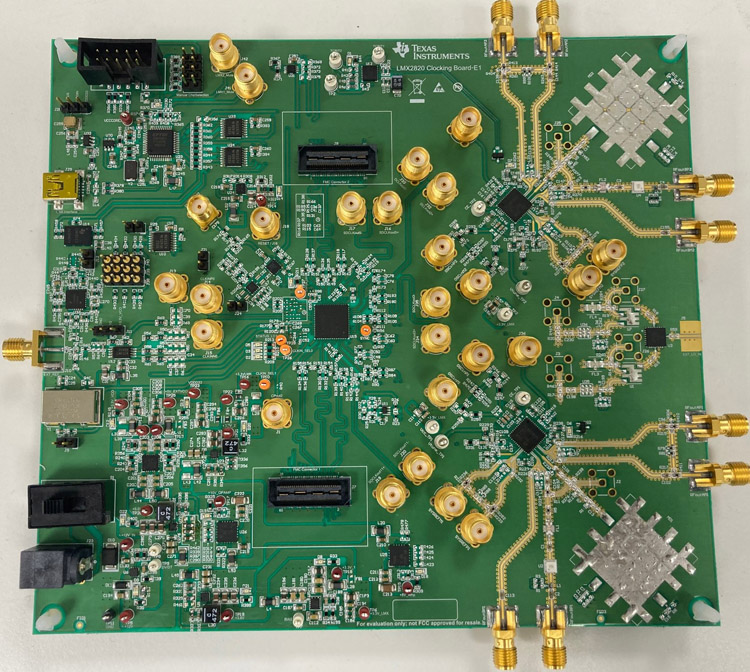
Key Highlights
- Multi-Tile Synchronization: Aligning ADC and DAC tiles within and across boards.
- Clock Distribution & SYSREF Signal: Utilizing a common clock and SYSREF for phase alignment.
- Practical Solutions & Applications: Enabling coordinated signal processing for advanced RF applications.
Understanding Multi Board Synchronization
Multi board synchronization on Xilinx RFSoC (Radio Frequency System-on-Chip) boards involves techniques and methods designed to ensure that multiple boards, often equipped with high-speed ADCs (Analog-to-Digital Converters) and DACs (Digital-to-Analog Converters), operate with precise timing alignment. In applications such as phased array radars, advanced communication networks, and data acquisition systems, maintaining coherent timing across multiple boards is critical for ensuring data consistency, achieving desired signal processing outcomes, and minimizing errors that could otherwise arise from timing discrepancies.
Multi-Tile Synchronization (MTS)
A central concept in the synchronization process is Multi-Tile Synchronization (MTS). Modern RFSoC devices use MTS to coordinate their built-in ADC and DAC tiles both within a single chip and across multiple boards. MTS ensures that:
- The conversion processes of analog to digital and vice versa occur in a well-coordinated manner.
- Phase alignment is maintained across different signal channels, crucial for applications like beamforming and phased array antennas.
- Data acquisition from multiple sensors or transmission paths remains coherent and free of timing-induced errors.
Benefits of Multi-Tile Synchronization
Using MTS in RFSoC systems provides several practical benefits. Primarily, it minimizes phase noise, supports accurate delay compensation, and reduces the overall likelihood of data mismatch. In multi-channel RF applications, MTS plays a pivotal role in ensuring that data captured from various channels can be integrated seamlessly for subsequent signal processing.
Critical Components of the Synchronization Process
Achieving robust multi board synchronization requires the integration of several hardware and software components. Proper configuration and physical setup are essential to overcome challenges like clock drift and phase misalignment. The following sections explore these components:
Clock Distribution and SYSREF Signal
At the heart of successful synchronization lies the effective distribution of a common clock signal across all RFSoC boards. This involves:
- Common Clock Signal: Distribution of a stable, high-frequency clock signal is mandatory across all boards. This common clock ensures that each board follows the same timing reference, allowing multiple boards to operate synchronously.
- SYSREF Signal: The SYSREF signal is a critical reference used to mark the timing across the system. It establishes fixed points in the clock domain so that each board can calibrate its internal timing accordingly. The proper routing and distribution of this signal, possibly using clock distribution chips or dedicated distribution amplifiers, is vital for phase alignment.
Ensuring Timing Accuracy
It is not sufficient to merely provide a clock; the quality of the clock distribution is as important as its existence. Phase noise, jitter, and skew must be minimized. Engineers often employ specialized devices such as clock managers, low-skew distribution networks, or dedicated synthesizers designed specifically for RF applications. By doing so, they ensure that the SYSREF remains stable and that timing markers are distributed uniformly, ensuring synchronization across all channels.
Hardware and Tools Empowering Synchronization
The hardware stack used in a multi board synchronization setup often comprises both Xilinx RFSoC development boards and additional synchronizing hardware that work together to ensure timing accuracy. Some critical tools and reference designs help engineers implement these synchronization concepts effectively:
Reference Designs and Evaluation Kits
Xilinx and other contributors to the RFSoC ecosystem provide robust reference designs that demonstrate the principles and best practices of multi board synchronization. These designs often include:
- Pre-configured examples that utilize MTS for aligning DAC and ADC tiles.
- Design guidelines for clock distribution networks and correct SYSREF routing.
- Firmware and drivers to support synchronization through the RFSoC MTS repository and related demonstration platforms.
Evaluation Tools
Evaluation tools and kits such as RF-DAC and RF-ADC evaluation boards play a significant role in allowing engineers to test synchronizing methodologies in real environments. These tools simulate practical application scenarios and offer insight into fine-tuning both the clocking mechanisms and the multi-tile synchronization.
Applications and Practical Considerations
Multi board synchronization in RFSoC systems is not just a theoretical exercise but a necessity in real-world applications that require accurately coordinated signal processing. Let’s explore some of these applications and the challenges involved:
Real-World Applications
The ability to synchronize multiple RFSoC boards has a transformative impact on several advanced technologies:
- Phased Array Radars: In phased arrays, the precise phase alignment enabled by multi board synchronization helps steer and focus the radar beam effectively, leading to improved target detection and tracking.
- MIMO Communication Systems: Multi board synchronization supports multiple-input, multiple-output systems, ensuring that signals across different antennas maintain phase coherence, which is crucial for optimal data throughput and interference minimization.
- Distributed Data Acquisition: In scenarios involving sensor networks or radio telescopes, synchronized data capture across numerous boards allows for accurate and meaningful aggregation of data, ensuring that spatial and temporal analysis is reliable.
- Advanced Signal Processing: Applications such as beamforming and synthetic aperture radar rely on the precise timing alignment provided by multi board synchronization, thereby enhancing system performance.
Challenges and Mitigation Strategies
Despite the clear benefits, implementing effective multi board synchronization faces several challenges:
- Clock Drift and Skew: Variations in clock frequencies may lead to drift and misalignment between boards. This requires robust design practices such as the use of high-stability clock sources and disciplined distribution networks.
- Environmental Variations: Temperature fluctuations and mechanical variations can affect the performance of clock generations and distribution systems. Mitigation involves using temperature-compensated oscillators and environmental shielding when necessary.
- Signal Integrity: Distributing SYSREF and clock signals over long board distances can lead to signal degradation. Engineers address these issues by using differential signaling and employing proper impedance matching strategies.
Feature Comparison: Synchronization Strategies
A table below compares key aspects of common multi board synchronization strategies and the benefits they offer in RFSoC systems:
| Aspect | Description | Benefits |
|---|---|---|
| Multi-Tile Synchronization | Coordinating ADC/DAC tiles within and across boards using precise timing markers. | Ensures phase alignment and coherent data processing. |
| Clock Distribution | Using a common clock source with low jitter and minimal skew. | Maintains consistent timing across all boards. |
| SYSREF Signal | Establishing a common reference point for aligning clock domains. | Provides fixed timing markers, crucial for synchronizing conversions. |
| Reference Designs & Tools | Pre-configured examples and evaluation kits provided by manufacturers. | Accelerates development and reduces design risk. |
| Environmental Mitigation | Utilizing temperature-compensated oscillators and robust shielding techniques. | Reduces timing drift and maintains signal integrity. |
Realizing an Effective Synchronization System
Implementing a robust multi board synchronization system on Xilinx RFSoC boards involves both careful hardware configuration and practical system-level integration. Engineers typically follow these systematic steps:
- System Design & Planning: Begin with a detailed design that considers clock distribution airflows, physical interconnections, and the overall required timing precision.
- Utilization of Reference Designs: Leverage available reference designs and evaluation kits to reduce development time. These resources often provide recommended configurations for both hardware and firmware.
- Precise Signal Routing: Ensure that the clock, SYSREF, and associated synchronization signals are routed with minimal loss and interference. This might involve differential pair routing and the use of impedance-controlled traces.
- Testing & Tuning: Employ evaluation boards and diagnostic tools to measure phase noise, jitter, and drift. Continuous monitoring helps in fine-tuning the system to achieve the desired synchronization quality.
- Deployment & Maintenance: Once deployed, ongoing calibration and environmental monitoring may be necessary to maintain performance, especially for critical applications like communications and radar systems.
Industry Impact and Future Trends
The relevance of multi board synchronization in RFSoC systems extends well beyond current applications. With the rapid expansion of 5G, next-generation wireless networks, and the increasing reliance on coordinated sensor arrays, precise synchronization not only supports current systems but also lays the foundation for future innovations. The integration of advanced clock management techniques and robust synchronization protocols is expected to become a cornerstone in the evolution of multi-channel RF and signal processing systems.
Emerging Innovations
Researchers and engineers are continuously pushing the boundaries of synchronization technology. Future trends may involve deeper integration of AI and machine learning to anticipate and compensate for timing disagreements in real-time. The development of even more refined clock distribution networks and synchronized multi-channel data acquisition systems promises to further enhance the performance of complex RF systems.
References
- How to Setup Multiboard Synchronization - AMD Support
- Multi Board Synchronization on RFSoC Boards - iWave Systems
- RFSoC Multi-Tile Synchronization - HiTech Global
- RFSoC MTS Repository on ZCU208 - PYNQ
- Multi-Tile Synchronization - AMD Documentation
- RFSoC Multiboard Synchronization Discussion - EEVblog
- Multi-board Synchronization with Quartz RFSoC - RF Globalnet
- Multi-Tile Synchronization - Xilinx Wiki
- RF Globalnet
- iWave Systems
Recommended Related Queries
Last updated March 4, 2025