
Exploring the Sweet World of Rice Syrup: A Comprehensive Guide
Unveiling the Composition, Uses, and Nutritional Profile of This Versatile Sweetener
Key Insights into Rice Syrup
- Versatile Sweetener: Rice syrup, also known as brown rice syrup or rice malt syrup, is a popular natural sweetener widely used as an alternative to sugar, honey, maple syrup, and corn syrup in various culinary applications, including baking, glazes, marinades, and beverages.
- Fructose-Free and Vegan: A significant characteristic of rice syrup is its low or no fructose content, making it a preferred choice for individuals seeking low-fructose sweeteners or adhering to vegan and gluten-free diets.
- Nutritional Nuances: While often marketed as a "healthier" alternative, rice syrup is primarily composed of glucose, maltose, and maltotriose. It provides a quick source of energy but is generally low in essential vitamins, minerals, protein, and fat. Its high glycemic index (around 98) means it can significantly impact blood glucose levels.
What is Rice Syrup? Unpacking its Origins and Production
Rice syrup is a natural liquid sweetener derived from cooked rice, primarily brown rice. The production process involves breaking down the starches in rice into simpler sugars through enzymatic action, often using barley malt powder. This natural process, called hydrolysis, results in a thick, viscous syrup with a mild, subtly nutty, and sometimes caramel or butterscotch-like flavor. Its color can range from a light amber to honey-brown, and its consistency is often compared to that of honey, though it tends to be less viscous.
While brown rice is highly nutritious in its whole form, the syrup produced from it contains very few of these nutrients. It is mainly composed of various sugars, predominantly maltotriose (around 52%), maltose (around 45%), and a small amount of glucose (around 3%).
The Manufacturing Journey of Rice Syrup
The creation of rice syrup involves a fascinating transformation of rice starch into sugars. The general process entails:
- Cooking Rice: Rice, typically brown rice, is cooked to gelatinize its starch.
- Enzymatic Breakdown: Specific non-GMO enzymes, often from barley malt, are introduced to the cooked rice. These enzymes break down the complex starches into simpler sugars like maltose, maltotriose, and glucose.
- Filtration and Concentration: The liquid mixture is then filtered to remove impurities, and the resulting sweet liquid extract is concentrated through evaporation until it reaches the desired thick, syrupy consistency.
This process is considered more natural and less processed compared to the production of refined sugar or corn syrup, contributing to its appeal as a "clean label" ingredient for manufacturers.
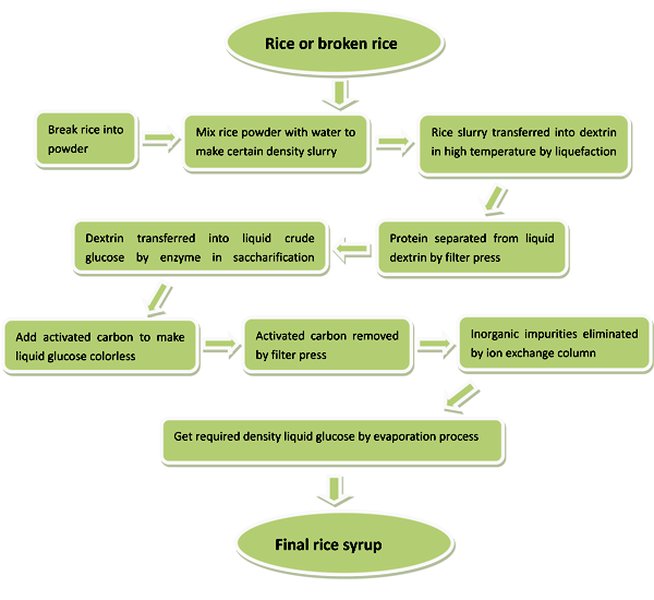
A simplified flowchart illustrating the production process of rice syrup.
Culinary Applications: How to Sweeten and Enhance with Rice Syrup
Rice syrup is celebrated for its versatility in the kitchen. Its mild sweetness and smooth texture make it an excellent substitute for various traditional sweeteners. Here are some of its primary culinary uses:
Baking and Desserts
As a natural sweetener, rice syrup can replace refined sugar, honey, or maple syrup in a wide array of baked goods like cookies, cakes, and muffins. Its subtle sweetness and ability to retain moisture can enhance both the flavor and texture of these items. It's also a popular topping for pancakes and waffles, or a sweet addition to homemade ice cream and other desserts.
Glazes, Sauces, and Marinades
One of the distinctive uses of rice syrup, particularly in Korean cuisine, is to add a shiny glaze and a touch of sweetness to savory dishes. When mixed with ingredients like soy sauce or other seasonings, it creates excellent glazes for meats, tofu, or roasted vegetables. It can also be incorporated into homemade sauces like barbecue sauce or teriyaki, where its mild flavor balances savory ingredients while maintaining a smooth consistency.
Beverages and Binding Agent
Rice syrup can sweeten hot and cold beverages, including tea, coffee, and lemonade. Beyond sweetness, it also acts as a binding agent in various food products, such as granola bars and cereals, contributing to their texture and cohesion. It's often found in health food and organic products due to its natural and versatile nature.

An example of traditional Korean rice syrup, often used for its unique glazing properties.
Nutritional Profile and Health Considerations
While often perceived as a "healthier" alternative due to its natural origin and low fructose content, it's important to understand the nutritional nuances of rice syrup.
Caloric Content and Macronutrients
Rice syrup is primarily composed of carbohydrates, with minimal amounts of protein and fat. A serving of rice syrup (e.g., 1 tablespoon or 15g) contains approximately 47 calories. For comparison, 1 cup of rice syrup (around 238 grams) can contain approximately 752 calories and 186 grams of carbohydrates. It's important to note that while it provides a quick source of energy due to its glucose content, it offers very few essential vitamins or minerals.
Glycemic Index and Fructose Content
One of the most significant aspects of rice syrup's nutritional profile is its high glycemic index (GI), which can be around 98. This is considerably higher than regular table sugar (GI of 65), meaning it causes a more significant and rapid increase in blood glucose levels after consumption. This is a crucial factor for individuals managing blood sugar, such as those with diabetes.
However, a key advantage often highlighted is its low or absent fructose content. While honey contains almost equal amounts of glucose and fructose (approximately 60% fructose and 40% glucose), rice syrup is predominantly composed of glucose, maltose, and maltotriose. This makes it a preferred option for individuals who are sensitive to fructose or following a low-fructose diet, as well as for vegan diets where honey is excluded.
Arsenic Concerns
A point of consideration with rice-based products, including rice syrup, is the potential for arsenic content. Rice is known to absorb arsenic from the soil, and some sources suggest that the syrup production process might concentrate these levels. While this is a concern, for most individuals consuming rice syrup in moderation as part of a balanced diet, the impact is likely minimal. However, health experts sometimes recommend considering its use carefully due to this and its high glycemic index.
Rice Syrup vs. Other Sweeteners: A Comparative Analysis
To fully appreciate rice syrup, it's helpful to compare it with other popular natural sweeteners like honey and maple syrup.
This radar chart visually compares rice syrup against honey and maple syrup across several key attributes, offering a multi-faceted perspective on their differences.
Comparative Table of Sweeteners
Here's a detailed comparison highlighting key differences between rice syrup, honey, and maple syrup:
| Attribute | Rice Syrup (Brown Rice Syrup) | Honey | Maple Syrup |
|---|---|---|---|
| Origin | Fermented cooked rice (typically brown rice) | Nectar collected and processed by bees | Sap from maple trees |
| Primary Sugars | Glucose, Maltose, Maltotriose (very low/no fructose) | Fructose (approx. 60%), Glucose (approx. 40%) | Sucrose, Glucose, Fructose, Maltose |
| Glycemic Index (GI) | Very high (around 98) | Moderate (around 58-61) | Moderate (around 54) |
| Sweetness Intensity | Mild, subtle (about half as sweet as sugar) | Bold, pronounced (sweeter than sugar) | Moderate (similar to sugar) |
| Flavor Profile | Nutty, toasty, caramel-like, neutral | Floral, earthy, distinct depending on nectar source | Earthy, woody, caramel, distinct maple flavor |
| Consistency | Thick, viscous (less viscous than honey) | Viscous, sticky | Fluid, slightly viscous |
| Vegan Friendly | Yes | No (animal product) | Yes |
| Nutritional Value | Minimal nutrients (some potassium, zinc, calcium) | Vitamins, amino acids, antioxidants, minerals | Antioxidants, minerals (manganese, zinc, potassium, calcium) |
| Common Uses | Baking, glazes, marinades, vegan substitute | Sweetener, medicinal, baking, beverages | Pancakes, baking, glazes, dressings |
| Dietary Considerations | Low fructose, gluten-free. High GI may impact blood sugar. | Contains fructose and glucose. Beneficial compounds. | Contains fructose and glucose. Good mineral profile. |
Understanding Rice Syrup in Korean Cuisine
Rice syrup, known as "ssal-jocheong" in Korean cuisine, holds a special place as a fundamental ingredient. It is distinct from other sweeteners due to its unique flavor profile and functional properties.
In Korean cooking, rice syrup is prized for its ability to impart a natural sweetness, but also for its characteristic contribution of a glossy, appealing sheen to dishes. It's made using rice and barley malt powder, where the sprouted barley's amylase enzyme converts rice starches into sweet sugars. This results in a thick, viscous syrup with a rich, earthy, and subtly grainy flavor that is much more distinctive than plain sugar or corn syrup.
It's commonly used in marinades, sauces, and traditional confections like "yeot" (rice taffy) and "yeot-gangjeong" (crunchy nut candy). The depth of flavor and unique consistency it brings are considered essential for achieving authentic Korean tastes.
This video explains why Korean rice syrup (Ssal-Jocheong) is a staple in Korean cuisine and the base for traditional sweets, highlighting its unique role and production.
FAQs about Rice Syrup
Recommended Further Exploration
- How is rice syrup made from brown rice?
- Nutritional differences between rice syrup and agave nectar
- Traditional Korean recipes using Ssal-jocheong (rice syrup)
- Low glycemic index sweeteners for baking
References
Last updated May 21, 2025