
Risk and Return Analysis of Different Investment Portfolios
A comprehensive exploration of risk, return, and diversification strategies
Key Highlights
- Understanding the Risk-Return Trade-off: How higher risks generally provide the opportunity for higher returns, and the use of metrics to quantify risk-adjusted performance.
- Importance of Diversification: The significance of spreading investments across various asset classes to mitigate potential losses while aiming for optimal returns.
- Analytical Frameworks and Models: Application of models such as the Capital Asset Pricing Model (CAPM) and risk-adjusted metrics like the Sharpe Ratio to assess and compare portfolios.
Introduction and Background
The dynamic field of investment management constantly challenges financial analysts and investors to balance risk and return in their portfolios. At the heart of investment decision-making lies the fundamental principle that higher risk is often accompanied by the potential for higher returns – a concept encapsulated in the risk-return trade-off. This background study focuses on analyzing the risk and return attributes of different investment portfolios, giving due consideration to the tools, models, and strategies applied in modern portfolio management.
With rapid advancements in financial theory and quantitative analysis, investors today are equipped with a range of sophisticated techniques that help in constructing efficient portfolios. Central to these techniques is the notion of diversification, the process of spreading investments across various assets such as equities, bonds, real estate, and alternative instruments. Diversification is designed to reduce portfolio risk by ensuring that a setback in a single market or asset does not disproportionately impact the overall portfolio performance.
Theoretical Frameworks in Risk and Return Analysis
Risk-Return Trade-Off
The risk-return trade-off is a foundational concept in finance and investment strategy. It recognizes that the potential return on any investment is directly linked to the risk taken by the investor. In financial markets, risk is typically defined as the variability or volatility of returns, while return is the profit or yield generated by the investment. This relationship necessitates that investors who seek higher returns must be willing to accept a greater level of uncertainty and variability in their portfolio’s performance.
Modern portfolio theory (MPT) further explores this trade-off by suggesting that an optimal portfolio is one that maximizes return for a given level of risk, or equivalently, minimizes risk for a given level of expected return. This principle is fundamental in guiding investment strategies and is used extensively in combination with mathematical models to design diversified portfolios.
Capital Asset Pricing Model (CAPM)
One of the keystones of modern finance is the Capital Asset Pricing Model (CAPM), which provides a method to estimate the expected return of an asset based on its systematic risk, often measured by beta (β). CAPM establishes that the expected return on a security is equal to the risk-free rate plus a risk premium, which compensates for the variability inherent in the market. This framework helps in understanding how individual assets contribute to overall portfolio risk and in determining the appropriate required rate of return.
Specifically, the formula for CAPM is expressed as:
\( \text{\(E(R_i) = R_f + β_i \times (E(R_m) - R_f) \)} \)
where \( R_f \) denotes the risk-free rate, \( β_i \) represents the beta of the investment, and \( E(R_m) \) is the expected return of the market.
Risk-Adjusted Return Metrics
Sharpe Ratio
The Sharpe Ratio is one of the most commonly used measures in risk and return analysis. It evaluates the performance of an investment by adjusting its returns for the level of risk taken. Specifically, the Sharpe Ratio is calculated by subtracting the risk-free rate from the investment return and then dividing the result by the standard deviation of the investment’s excess return. This metric enables investors to understand how much additional return they are receiving for the additional volatility borne.
Other Metrics: Treynor and Sortino Ratios
Besides the Sharpe Ratio, other risk-adjusted performance measures include the Treynor Ratio, which focuses solely on systematic risk (using beta), and the Sortino Ratio, which differentiates between harmful volatility (downside risk) and overall volatility. These metrics help investors compare various investment strategies, ensuring the portfolio is balanced not only in terms of returns but also regarding the associated risks.
Key Investment Strategies and Portfolio Diversification
Diversification and Portfolio Construction
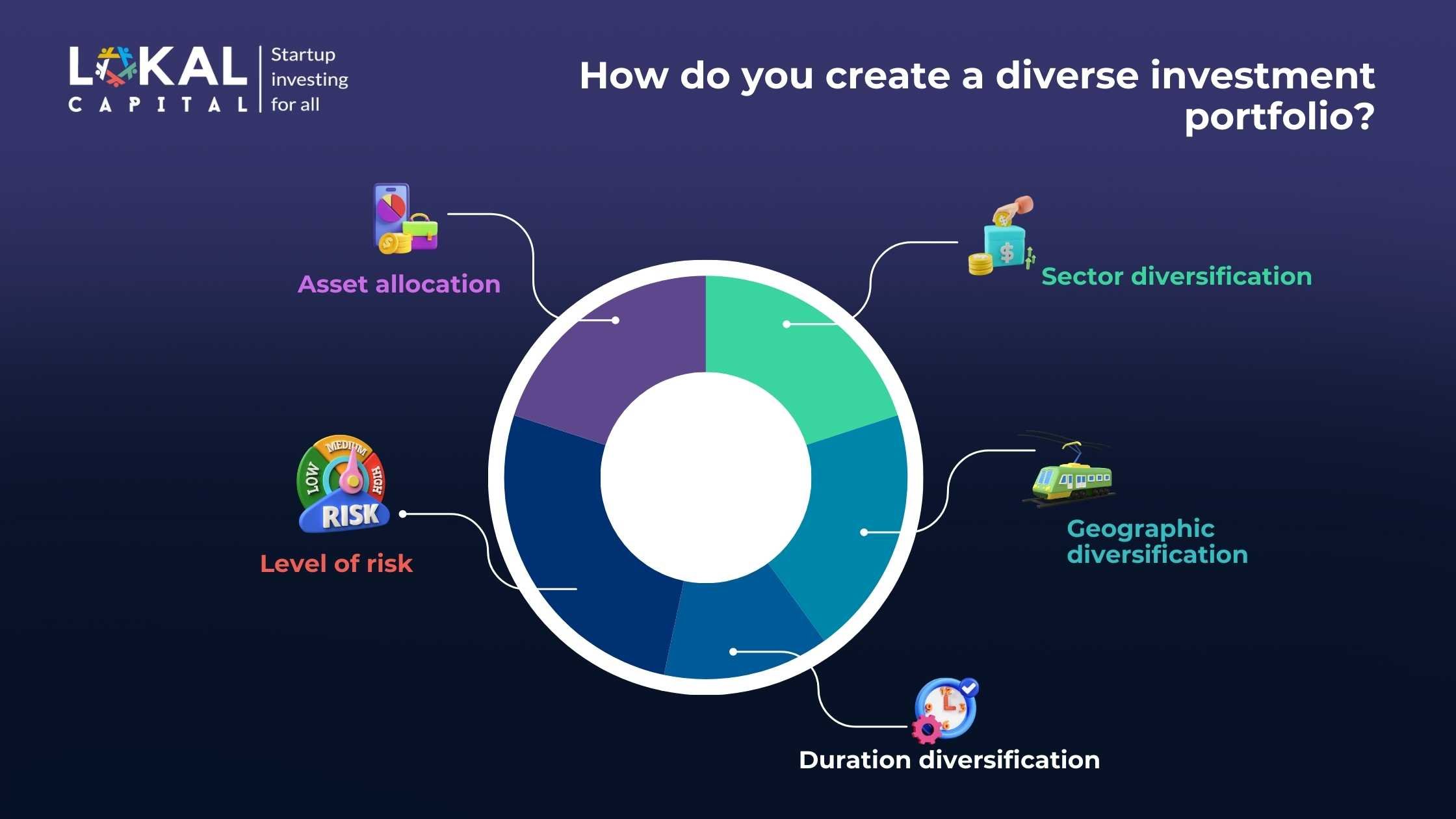
One of the primary strategies for managing risk in an investment portfolio is diversification. By allocating investments across a variety of asset classes, industries, and geographical regions, investors can mitigate the adverse effects of any one asset’s underperformance. Effective diversification ensures that the uncertainties and individual risks associated with single investments are minimized, allowing the overall portfolio to withstand market volatility.
In practice, diversification involves balancing assets that typically have low correlations. For example, combining equities with bonds can offer stability, as bonds often provide relatively steady income even when equities show pronounced volatility. Additionally, including alternative investments such as commodities or real estate can further enhance portfolio robustness by providing performance diversity under varying economic conditions.
Analytical Methods and Modern Techniques
With advancements in quantitative finance, several advanced techniques have been developed to assess the risk and return characteristics of investment portfolios. Tools such as Monte Carlo simulations and scenario analysis are used to predict how portfolios may perform under different market conditions. These techniques allow for the modeling of complex financial systems, accounting for diverse economic factors and unexpected market events.
Additionally, backtesting strategies have emerged as a powerful tool for evaluating past performance. By analyzing historical data, investors can understand the robustness of their investment models and refine their portfolios to better meet future market challenges.
Risk and Return Analysis: Practical Applications
Investment Portfolios and Their Profiles
Investment portfolios vary broadly in their composition, risk level, and return potential. For instance, equity-based portfolios, which include stocks from high-growth companies, provide substantial upside potential but also carry higher volatility. In contrast, bond portfolios traditionally offer more predictable returns with lower risk, though with reduced potential for high returns.
The choice of investment portfolio depends largely on the investor’s risk tolerance, investment horizon, and financial objectives. Younger investors with longer time horizons might opt for aggressive portfolios dominated by equities, while risk-averse investors might prefer a balanced mix that incorporates bonds and dividend-paying stocks. The selection process is informed by comprehensive risk-return analysis that weighs the benefits of potential high returns against the risks of significant losses.
Evaluating Portfolio Performance
To effectively assess portfolio performance, investors must utilize a combination of quantitative and qualitative metrics. Risk-adjusted performance measures like the Sharpe Ratio are integral in understanding how well a portfolio compensates for the level of risk assumed. Moreover, performance benchmarking against index funds or sector-specific benchmarks serves as a useful tool for gauging whether the return achieved aligns with market expectations.
Importantly, risk and return analysis is not a one-time exercise but a continuous process. Regular monitoring, evaluation, and adjustment of the portfolio are essential to adapt to evolving market conditions, regulatory modifications, and shifts in economic indicators. This continuous process ensures that portfolios remain aligned with the financial goals and risk appetite of the investor.
Comparative Analysis of Investment Portfolios
Table: Risk-Return Metrics of Various Portfolios
| Portfolio Type | Expected Return | Risk (Standard Deviation) | Risk-Adjusted Metric (Sharpe Ratio) |
|---|---|---|---|
| Equity Portfolio | High | High | Varies (Typically moderate to high) |
| Bond Portfolio | Moderate | Low | Typically moderate |
| Mixed/Hybrid Portfolio | Moderate to High | Moderate | Balanced |
| Alternative Investments | Varies | Varies | Depends on asset class |
This table summarizes different portfolio types, highlighting that risk and return characteristics differ significantly depending on asset composition. Investors use these metrics to achieve a balance that satisfies their investment strategy while managing potential downside risks.
Risk Management Strategies
Risk management in investment portfolios is a multifaceted process that involves identifying, assessing, and mitigating risks. Besides diversification, techniques such as periodic rebalancing, stress testing, and scenario analysis are commonly employed to manage and reduce risk exposures. Portfolio rebalancing involves realigning the weights of different assets periodically to maintain the desired risk profile.
Stress testing helps investors understand how extreme market conditions could impact investments, while scenario analysis enables the evaluation of potential outcomes in different economic environments. Ultimately, these strategies work together to ensure that portfolios are not overly exposed to any single source of risk.
Applications and Future Outlook
Application in Financial Management
In practical terms, risk and return analysis serves as the backbone of financial planning and portfolio management. Firms and individual investors alike use these analytical frameworks to select appropriate investment strategies, allocate assets, and monitor portfolio performance. By understanding risk—even those arising from external factors such as regulatory changes, economic downturns, or shifts in market sentiment—investment managers can make adjustments as required to protect capital and capture opportunities.
The information gleaned from risk-return analysis not only informs asset allocation decisions but also plays a critical role in determining the cost of capital and pricing financial assets. By quantifying risk, investors are better equipped to assess the adequacy of returns relative to the uncertainty they have embraced.
Looking Ahead
As global markets continue to evolve, the importance of risk and return analysis in investment management is expected to grow. Rapid technological advancements and the increasing availability of data have paved the way for more sophisticated modeling techniques. These improvements promise more accurate predictions and enhanced portfolio optimization strategies.
Ultimately, the future of investment management is closely linked to the continuous refinement of risk-return assessment methodologies. Investors will increasingly rely on advanced statistical techniques, real-time data analysis, and machine learning algorithms to navigate the complexities of modern financial markets.
References
- Risk and Return - WallStreetMojo
- Portfolio Risk Management - Finance Strategists
- Risk and Return in Financial Management - Corporate Finance Institute
- Risk Return Analytics - Strike Money
- Risk-Return Tradeoff - Investopedia
Recommended Further Queries
Last updated March 22, 2025