
Unleash the Thrill: Why Risky Play is Essential for Your Child's Development
Discover the surprising benefits of "risky playgrounds" and how they contribute to healthier, more resilient children.
Key Highlights of Risky Play
- Boosts Confidence: Risky play empowers children to test their limits, fostering a sense of "I can do this!" and encouraging them to embrace challenges.
- Enhances Physical Literacy: Activities like climbing, running, and balancing improve children's large muscle skills and body awareness.
- Develops Emotional Regulation: By navigating fear and excitement, children learn to manage their emotions and build resilience, preparing them for future challenges.
The Essence of Risky Play
Risky play involves thrilling and exciting activities where children engage in risk without certainty, experimenting and pushing themselves to figure out what will happen, without knowing the exact outcome. While it might seem counterintuitive, engaging in risky play can actually be beneficial for children’s development, as it allows them to explore and test their limits in a controlled and safe environment. It is essential in motivating children to engage with the environment.
What Constitutes Risky Play?
Risky play is not about exposing children to genuine danger. Instead, it’s about providing opportunities for them to encounter manageable risks that promote learning and growth. Examples of risky play include:
- Climbing to high places
- Playing at high speeds
- Using tools
- Playing near elements such as water or fire
- Rough-and-tumble play
- Exploring alone without supervision
The Multifaceted Benefits of Risky Play
Engaging in risky play offers a wide array of benefits for children, impacting their physical, emotional, and cognitive development.
Physical Development
Physically, risky play helps children build strength, endurance, and coordination. Activities such as climbing, running, and jumping challenge their physical abilities and contribute to their overall physical development. Children who engage in active risky play develop their large muscle skills, begin to understand how their bodies move, and learn how fun active play can be!
Emotional Growth
Emotionally, engaging in risky play boosts children’s confidence and self-esteem. When they face challenges and push themselves out of their comfort zones, they learn to cope with stress and adversity, developing resilience and grit. Risky play provides the foundation needed to regulate emotional responses like fear, nervousness, or anger in adulthood. There are times in life when we all need to move out of our comfort zone and try something new.
Cognitive Development
Beyond the physical and emotional benefits, risky play also stimulates cognitive development. Children learn to assess situations, make decisions, and solve problems as they navigate potential risks. They develop essential risk management strategies. They learn what to fear and not to fear, and how to manage their own bodies as it pertains to risk.
Striking the Balance: Safety vs. Challenge
While the benefits of risky play are clear, it’s crucial to strike a balance between allowing children to explore and ensuring their safety. A well-designed playground includes both challenging equipment and a safe and controlled environment for a child to test, assess and explore. Playgrounds should keep kids away from dangerous hazards while encouraging them to test their limits, learn to overcome challenges and take healthy risks. It is important to weigh up the perceived hazards against the possible benefit to the children – a balance should be struck so that the pupils are not missing out on the wonderful play opportunities afforded by innovative and exciting play spaces as a result of a perceived low level risk.
Creating Supportive Environments
Facilitating risky play involves creating safe, supportive environments that encourage risk-taking. Approaches are offered to promote open, constructive discussions with families and organizations. A balanced approach that emphasizes keeping children “as safe as necessary” rather than “as safe as possible” can help families shift their mindset towards encouraging risky play and benefitting from a healthy and active lifestyle.
The Role of Parents and Educators
Parents and educators play a vital role in supporting children’s engagement in risky play. This statement for paediatric health care providers (HCPs) describes the concept and benefits of outdoor risky play, along with its challenges and nuances related to children’s developmental stage, individual ability, and social and medical context. Approaches to promote open, constructive discussions with families and organizations are offered.
Many parents today worry about their children’s safety to the point of creating overly controlled environments. Parents’ fears can get in the way of giving their children freedom. Worries about kidnapping and injury, and the fear of people thinking they’re bad caregivers can drive many parents to intervene before their child can engage in risk during play. Educators’ personal experiences and perceptions inform their actions and reactions to a child engaged in risky play.
Here are some practical tips for fostering risky play:
-
Assess the environment: Identify potential hazards and determine if they can be mitigated without eliminating the opportunity for risk-taking.
-
Communicate with children: Talk to children about the risks involved in an activity and help them develop strategies for managing those risks.
-
Provide appropriate supervision: Supervise children without being overbearing, allowing them the freedom to explore and experiment while remaining vigilant about their safety.
-
Encourage problem-solving: Help children problem-solve by using phrases that create a “teaching moment” by enquiring how a child is feeling during risky play and what their next actions will be.
-
Promote open communication with families: Talking it through with our parents and our families is really important because I don't want them to just walk in and think it's like we're not being careful or thoughtful, that we're not being intentional, because we know the benefits.
The Evolution of Playgrounds: From Safe to Stimulating
For decades, US playground designers have worked on minimizing risk by reducing heights, softening surfaces, and limiting loose parts. The stereotypical modern playground — with its bright colors and rubberized flooring — is designed to be clean, safe, and lawsuit-proof. The modern playground has become mind-numbingly standard-issue—with the same type of plastic swing sets and slides—designed to minimize harm, rather than maximize enjoyment.
The Rise of "Risky" Playground Design
But now, some are starting to experiment with creating risk: A growing body of research has found that risky outdoor play is a key part of children’s health, promoting social interactions, creativity, problem-solving, and resilience. The most extreme departure from safety-first design is “adventure playgrounds,” which originated in World War II Denmark, where bomb sites became impromptu playgrounds.
Key Elements of Risky Playgrounds
Risky playgrounds often incorporate natural elements, such as trees, water, and uneven terrain, to create a more challenging and stimulating environment. They may also include loose parts, such as logs, rocks, and ropes, which children can use to build and create their own play experiences. Including natural elements in playground design could be the key to encouraging more free play and instinctual risk taking – both vital to the development of a child's creativity and self-worth.
Understanding the Different Types of Risky Play
There are several recognized categories of risky play, each offering unique developmental benefits:
Categories of Risky Play
Here is a table summarizing the different types of risky play and their potential benefits:
| Type of Risky Play | Description | Potential Benefits |
|---|---|---|
| Heights | Climbing trees, structures, or hills | Develops spatial awareness, balance, and courage |
| Speed | Running, swinging, sliding, or riding | Enhances motor skills, coordination, and risk assessment |
| Tools | Using knives, saws, hammers, or other tools | Promotes problem-solving, hand-eye coordination, and responsibility |
| Dangerous Elements | Playing near fire, water, or heights | Teaches respect for nature, safety awareness, and self-regulation |
| Rough and Tumble | Wrestling, chasing, or play fighting | Develops social skills, emotional regulation, and physical boundaries |
| Disappearing/Getting Lost | Exploring alone or in small groups without adult supervision | Fosters independence, self-reliance, and environmental awareness |
Visualizing Risky Play: Playgrounds with Natural Elements
Here are some examples of playgrounds incorporating natural elements that encourage risky play:

Children engaging in climbing activities on a playground net structure.
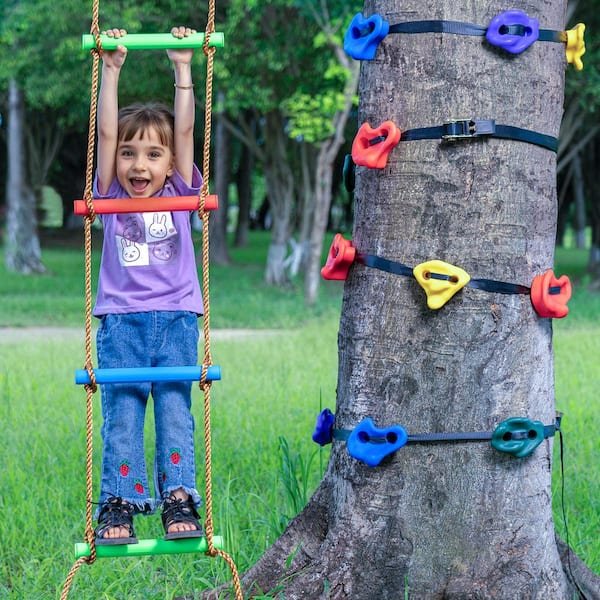
A tree climbing kit allows children to safely ascend trees and explore their surroundings from a new perspective.
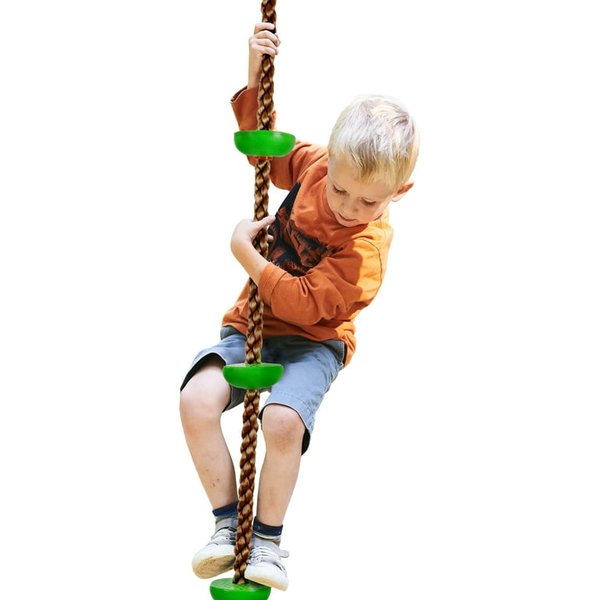
A climbing rope can provide hours of entertainment and physical activity for children.
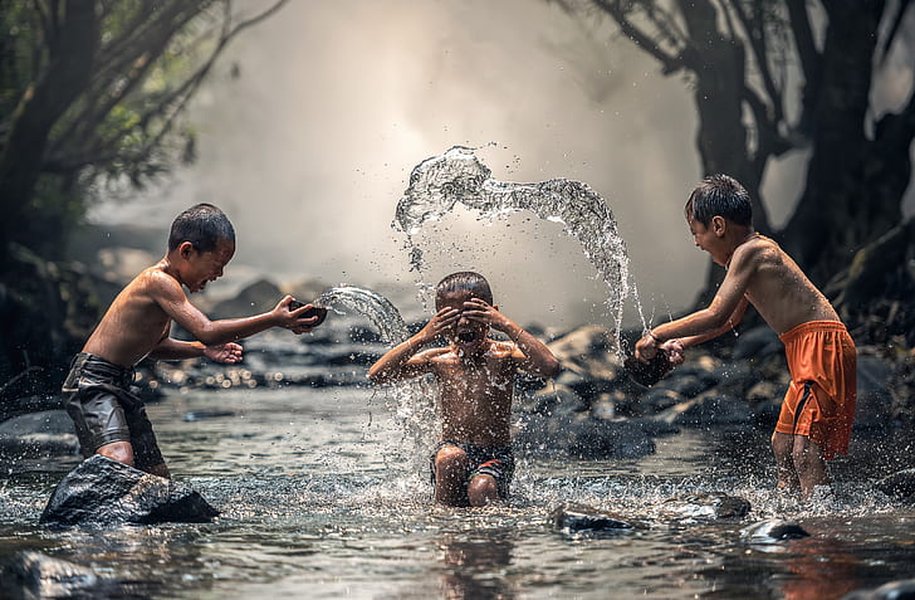
Playing in water is a classic form of risky play that allows children to explore and interact with their environment.
The German Approach to Playgrounds: Embracing Risk
German playgrounds often differ significantly from their US counterparts, with a greater emphasis on natural elements and opportunities for risky play. This approach is rooted in the belief that children need to encounter challenges and learn to manage risks in order to develop resilience and problem-solving skills.
This video explains the differences between US playgrounds and German playgrounds, highlighting the benefits of "dangerous" playgrounds in Germany. It showcases how German playgrounds incorporate natural elements and challenging features to promote children's development through risky play.
Frequently Asked Questions About Risky Play
References
Last updated April 10, 2025