
Understanding the Parable in "The Road Not Taken"
A deep dive into choices, consequences, and human experience in Frost's work
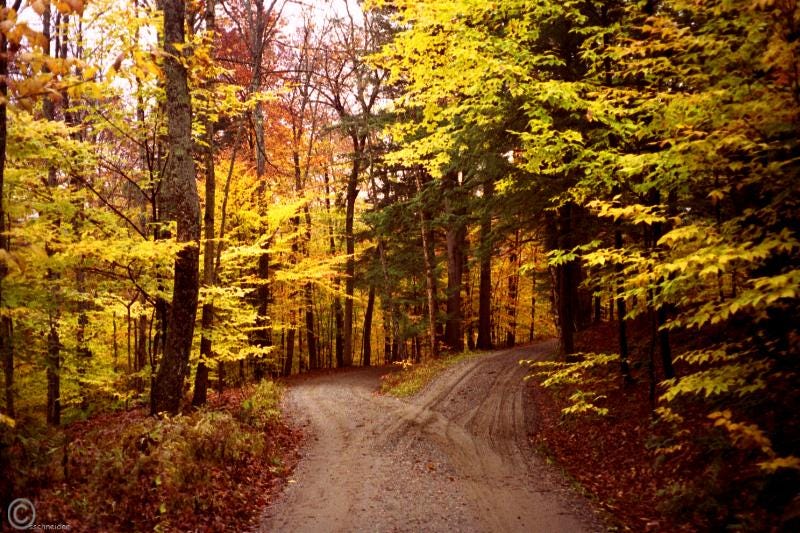
Highlights
- The Nature of Choice: The poem presents life as a series of decisions, each shaping one’s path.
- Subjectivity and Regret: The parable frames personal reflection and the bittersweet realization of what might have been.
- Illusion and Narrative: It questions the validity of the “less traveled” distinction and examines how we construct personal history.
Exploring the Core Parable
The Fork in the Road as a Metaphor
In "The Road Not Taken," Robert Frost uses the image of a traveler faced with a decision at a divergence in a wooded path as a metaphor for life’s choices. The roads in the poem represent the multiple opportunities and decisions that people encounter. As the traveler stands before two seemingly similar paths, he must decide which direction to take, fully aware that choosing one necessarily excludes the experience of the other.
This metaphor articulates the idea that life is fundamentally about decision-making. Every choice we make sets us on a new trajectory and shapes our individual histories. The act of choosing is presented as pivotal, suggesting that it is not merely the outcomes that define us, but the decisions themselves that craft our personal identity.
The Illusion of Divergence
A key element of the parable is the deceptive nature of the differences between the two paths. Although the traveler initially notes that one road appears less traveled ("grassy and wanted wear"), he later acknowledges that both routes were, in reality, very similar in terms of their wear and use. This observation invites readers to reconsider the conventional wisdom that one’s path is markedly superior or more original.
The poet implies that the differences between choices may be more of an illusion, shaped by the stories we tell ourselves. Even though we might believe that one choice is inherently more meaningful, the reality might be that the profession of that meaning is a construction of our own making. The parable thus raises questions about the nature of free will and whether our decisions are defined by intrinsic qualities or by the meanings we later assign to them.
Regret, Satisfaction, and the Passage of Time
Another central aspect of the parable involves the feelings of regret and satisfaction that accompany decisions made. The speaker in the poem reflects, with a mixture of emotions, on the decision he made. The act of choosing is imbued with an inevitable sense of loss, as the road not taken represents the endless possibilities and opportunities that were left unexplored.
The tone of the poem oscillates between satisfaction with the chosen path and a melancholic wonder about the road not taken. The famous lines— "I took the one less traveled by, / And that has made all the difference"—do not provide a definitive answer about the superiority of the choice. Instead, they suggest that every decision carries with it a burden of potential regret—a reflective sigh that may signify both contentment in the decision and a lingering curiosity about what might have been.
Themes Embedded in the Parable
The Inevitability of Making Choices
The parable underscores a fundamental truth about the human experience: choices are inevitable. At various points in life, individuals must choose a direction without the luxury of knowing the full consequences in advance. Every decision—whether monumental or seemingly insignificant—contributes to the creation of our life stories.
The traveler's predicament mirrors the reality of life where each choice, regardless of its apparent simplicity or complexity, leads to a unique outcome. Frost’s poem encourages readers to accept the inevitability of decision-making, thereby embracing the uncertainty that life offers.
The Construction of Personal Narrative
The poem also serves as an exploration into the way individuals narrate their own lives. The choice of a path in the poem is not simply a matter of circumstance, but an integral part of a narrative that defines who we are. In retrospect, the choices we make become central motifs in the stories we share about ourselves.
By choosing one road over the other, the traveler creates a personal mythology—a narrative laden with the significance of being different, of making a nonconformist choice. However, the poem also casts doubt on this constructed importance. The ultimate similarity between the roads suggests that the perceived uniqueness of our decisions might be nothing more than a romanticized tale of individual destiny.
Symbolism of Individualism Versus Conformity
Many readers perceive the poem’s narrative as an endorsement of individualism—the valorization of taking a path less traveled. On the surface, the traveler’s choice might be seen as a courageous act of defiance against the tide of conformity. However, Frost complicates this easily digestible interpretation by noting that both paths, in practical terms, were quite similar.
This duality invites a deeper inquiry into the concept of free will and the societal influence on decision-making. Is the attractiveness of a nonconformist choice simply a narrative we construct to validate our independent identity? Frost challenges the reader to think critically about whether the road less traveled actually represents something inherently better or if it is, in essence, a metaphor for how we choose to remember our lives.
A Detailed Analysis Through a Comprehensive Table
| Theme | Description | Implications in the Poem |
|---|---|---|
| Choice and Consequence | Life as a journey marked by crucial decisions, where each path chosen leads to different outcomes. | The traveler must select one road over another, symbolizing the irreversible nature of choices. |
| Illusion of Difference | The notion that the contrasting paths may not be as different as initially perceived. | The speaker later admits that both roads were very similar, prompting reflection on post-decision rationalization. |
| Regret and Reflection | The bittersweet nature of looking back on decisions, accompanied by both satisfaction and a lingering sense of "what if." | The sigh with which the traveler recounts his decision signifies the complex emotions tied to missed opportunities. |
| Narrative Construction | The act of creating personal history by attributing unique meaning to the choices made. | The traveler reassesses the significance of his choice over time, thereby reinterpreting his life’s journey. |
| Individualism vs. Conformity | The cultural valorization of nonconformity, juxtaposed with the intrinsic similarity of experiences. | The assertion of taking the "road less traveled" is later undermined by the subtle admission that the roads were nearly identical. |
Interpreting the Parable
Choice as a Defining Process
At its heart, "The Road Not Taken" is a meditation on the very act of choosing. The traveler’s decision acts as a metaphor for the various choices each individual must make throughout life. Such decisions—whether minor day-to-day choices or major life-changing events—collectively form the tapestry of our existence.
Each choice, regardless of its magnitude, bears the potential to alter our life trajectory. The parable intimates that the very act of choosing has transformative power: it narrows the vast field of possibilities into a defined narrative that becomes central to our identity. This insight speaks not only to the importance of decision-making but also to the responsibility that accompanies every choice.
The Double-Edged Sword of Regret
Integral to Frost’s parable is the intricate emotional landscape of regret and reflection. While the traveler expresses a sense of satisfaction in having chosen a distinct path, the lingering question of "what might have been" introduces an element of wistfulness. This duality captures a universal truth: every decision carries a hidden cost in the form of forgone alternatives.
The reflective “sigh” mentioned in the closing lines of the poem is emblematic of this inner conflict. It represents a recognition that, while the chosen path has defined a part of who the traveler is, the road not taken remains a haunting reminder of the lost potential and the inherent unpredictability of life. The interplay of satisfaction and regret yields a poignant commentary on the human condition.
Constructing Meaning Through Memory
An especially compelling aspect of the poem is its treatment of memory and self-narrative. The traveler’s eventual recounting of his experience—"I shall be telling this with a sigh"—hints at the act of reinterpreting experiences to create a coherent story about one’s life.
This process of narrative construction allows individuals to imbue their choices with meaning long after the decisions have been made. The parable subtly encourages readers to reflect on how the passage of time and retrospective analysis can reshape the significance of a choice. It raises an important philosophical question: Are our choices truly transformative in themselves, or is it the stories we tell ourselves about these choices that define us?
The Broader Cultural Context
Revisiting the Concept of Nonconformity
The popular interpretation of "The Road Not Taken" has, over decades, emphasized the celebration of individuality—to be seen as a person who dares to choose the less conventional path. However, a closer reading of the poem complicates this notion. Frost’s subtle commentary forces us to recognize that the celebrated differences between the paths are, in fact, constructed ideas. The roads, while outwardly seemingly different, are portrayed as essentially similar; the choice is imbued with significance only through the lens of the traveler’s own hindsight and personal reflection.
This nuanced portrayal invites a reconsideration of how society values nonconformity. Rather than simply extolling the virtue of taking an unconventional path, the poem suggests that all choices—regardless of their perceived novelty—carry inherent similarities. The emphasis, therefore, shifts from the external appearance of the choice to the internal narrative and meaning assigned to it.
The Universal Relevance of the Parable
Although deeply rooted in the specific imagery of a diverging road in a yellow wood, the parable in Frost's poem resonates broadly with anyone who has faced a moment of decision. It is a universal commentary on how individual choices define us, the inevitable uncertainty that accompanies every decision, and the way we construct meaning from our experiences. This universality ensures that "The Road Not Taken" remains a relevant and evocative piece, inviting continuous reinterpretation and critical thought.
The poem’s power lies in its simplicity and its capacity to be read on multiple levels. Whether interpreted as a celebration of independence, an exploration of inevitable regret, or a commentary on the human condition itself, the parable endures as an invitation to introspection and thoughtful engagement with the choices that shape our lives.
Integrating Insights: A Synthesis
Summing Up Key Interpretive Aspects
In synthesizing the various interpretations, it becomes clear that the parable in "The Road Not Taken" revolves around several intertwined concepts. The essence lies in the examination of decision-making as a defining and transformative process, the inherent ambiguity of our choices symbolized by two nearly identical paths, and the reverberating sentiments of regret and self-narrative construction that follow every decision.
By challenging the notion of a “less traveled” path, Frost invites readers to question the surface-level interpretations of individualism and nonconformity. Instead, he emphasizes how every choice, regardless of outward appearance, inevitably leads to a distinctive personal narrative.
Deep-Rooted Implications for Readers
The parable also serves as a reflective mirror, encouraging individuals to consider how they perceive their own choices. It prompts an examination of whether the significance attached to decisions emerges from the natural course of events or from the romanticized stories constructed in hindsight. This introspection challenges the reader to be mindful of the narratives they build around their life paths.
Ultimately, "The Road Not Taken" is not just a meditation on the inevitability of choices but also an invitation to explore the profound interconnectedness of decision, memory, and identity. It asserts that the roads—both taken and left behind—contribute immeasurably to who we are, urging us to embrace the complexities of our personal journeys.
References
- The Road Not Taken - Poetry Foundation
- The Road Not Taken by Robert Frost: Analysis - PoemAnalysis.com
- The Road Not Taken - LitCharts
- Robert Frost: The Road Not Taken - The Atlantic
- The Road Not Taken - Wikipedia
Recommended Queries
Last updated March 18, 2025