
A Glimpse into the Cosmic Horizon: Robots, Alien Worlds, and Celestial Wonders
Exploring the intersection of advanced robotics, speculative exoplanetary landscapes, and the mesmerizing spectacle of binary moons in science fiction.
Key Insights
- Robots as Pioneering Explorers: In science fiction and ambitious real-world proposals, robots are often depicted as the primary means of exploring distant, potentially hazardous alien planets, serving as our proxy in the cosmos.
- The Allure of Alien Landscapes: Imagined alien planets, often featuring stark, desolate terrains and multiple moons, provide a rich canvas for exploring themes of isolation, discovery, and humanity's place in the universe.
- Binary Moons as a Visual Icon: The presence of two moons in an alien sky is a recurring and powerful visual motif in science fiction, symbolizing the extraterrestrial and enhancing the grandeur and mystery of cosmic settings.
The vision of a lone robot surveying an alien landscape under the gaze of two moons is a powerful and iconic image in science fiction, encapsulating humanity's enduring fascination with extraterrestrial exploration and the unknown. This scenario intertwines themes of advanced technology, the boundless potential of discovery, and the profound beauty of alien celestial phenomena. From speculative art to cinematic narratives, such imagery invites us to ponder the future of space exploration and the myriad possibilities that lie beyond Earth.
The Robot as an Extraterrestrial Vanguard
In countless science fiction narratives, robots are not merely tools but sentient or semi-sentient entities that embody humanity's exploratory spirit. Their resilience, adaptability, and ability to operate in environments hostile to human life make them ideal candidates for venturing into the farthest reaches of space. The image of a robot standing on an alien ridge, observing a distant horizon, speaks to this role as a cosmic vanguard.
Robots in Planetary Exploration: From Fiction to Reality
The concept of robotic explorers predates many of our current technological capabilities. Isaac Asimov's "Robot series," for instance, explored the relationship between humans and robots, with the Three Laws of Robotics ensuring their loyalty and utility in various endeavors, including space exploration. These fictional portrayals have often mirrored real-world aspirations, such as NASA's Mars rovers (like Curiosity and Perseverance) that meticulously traverse the Martian surface, sending back invaluable data and imagery.
Looking ahead, ambitious projects like Project RIGEL propose sending "robot geologists" on multi-century journeys to exoplanets around Sun-like stars. The goal is to have these machines explore alien surfaces, search for signs of life, and study geological records, acting as a "geologist avatar" for humankind. This vision underscores the belief that robotic intelligence might be the most effective way to explore alien planets, especially those requiring long-duration missions or presenting extreme conditions.
An advanced robot exploring a desolate alien landscape.
Iconic Robots in Alien Settings
Science fiction cinema and literature are replete with examples of robots playing pivotal roles on alien worlds:
- The Robot (Lost in Space): In Netflix's "Lost in Space," the Robot forms a deep bond with Will Robinson on various alien planets, showcasing its loyalty and unique abilities, including shapeshifting. Its origin traces back to an alien race of "Robot Builders" on a "Shattered planet."
- Ash (Alien): Though not a planetary explorer in the traditional sense, Ash, the android science officer in "Alien," is revealed to be a sleeper agent tasked with retrieving an alien lifeform from the planetoid LV-426, highlighting the potential for robotic deception and hidden agendas in extraterrestrial encounters.
- Rover (Planet 51): This robotic vehicle probe, part of the astronaut Chuck Baker's mission to Planet 51, is initially designed for geological study but ultimately bonds with the alien inhabitant Skiff, exemplifying how robots can facilitate interspecies connections.
- Jimmy (Rebel Moon): In "Rebel Moon — Part Two: The Scargiver," the android knight Jimmy, voiced by Anthony Hopkins, becomes a central figure in battles on a distant moon, demonstrating advanced combat capabilities and a search for purpose.
The Mystique of Alien Landscapes and Binary Moons
The visual elements of an alien planet—its unique topography, atmospheric conditions, and celestial bodies—are crucial in building an immersive sci-fi experience. The presence of two moons, or even more, is a popular trope that instantly signals an otherworldly setting, invoking a sense of wonder and vastness.
Designing Unfamiliar Worlds
Artists and filmmakers often draw inspiration from real geological formations and astronomical phenomena to create believable yet fantastical alien environments. Simon Stålenhag's art, for instance, blends retro sci-fi elements with dystopian Swedish landscapes, often featuring massive mech robots against melancholic backdrops. Other artists use AI-generated imagery to conjure diverse "science fiction landscapes," ranging from foggy deserts to vibrant alien flora.
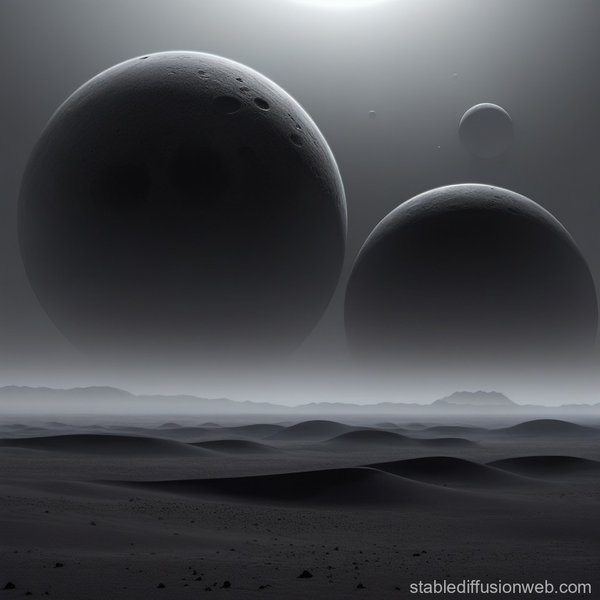
A robot gazes at two moons over a foggy alien desert.
The Role of Dual Moons
A sky with two moons immediately sets an alien tone, suggesting a different planetary system dynamics and gravitational interactions. This visual element contributes to a sense of scale and the exotic nature of the environment. In "Star Wars: A New Hope," the iconic binary sunset on Tatooine, though featuring a double star rather than two moons, similarly establishes a sense of an alien world and the protagonist's yearning for a larger destiny.
The iconic Binary Sunset scene from Star Wars: A New Hope, an enduring symbol of alien worlds.
This scene, while depicting two suns, effectively conveys the otherworldly nature of an alien planet through its unique celestial configuration, much like two moons would. It highlights the vastness of space and the possibility of life on worlds vastly different from our own, resonating deeply with the query's core theme.
The Symbiosis of Robot and Alien Environment
The relationship between the robot and its alien environment is often a narrative in itself. The robot's design, its movements, and its interactions with the landscape can reveal much about the planet's characteristics and the challenges it presents.
Visualizing Robotic Presence on Alien Terrain
To fully capture the essence of a robot on an alien planet with two moons, several artistic considerations come into play. The robot could be sleek and futuristic, designed for swift navigation, or clunky and resilient, built to withstand harsh conditions. The terrain itself might be rocky and desolate, reminiscent of a desert planet, or feature bizarre, unearthly flora and fauna, hinting at unique biological processes.
| Element | Description | Impact on Scene |
|---|---|---|
| Robot Design | From humanoid and agile to robust and utilitarian, reflecting its mission and environment. | Conveys purpose (explorer, guardian, survivor) and technological advancement. |
| Alien Landscape | Vast deserts, crystalline structures, bioluminescent forests, or volcanic plains. | Establishes mood (desolate, mysterious, vibrant) and challenges to exploration. |
| Binary Moons | Varying sizes, colors, and phases, casting unique light and shadows. | Emphasizes alien nature, provides striking visual anchor, and influences atmosphere. |
| Lighting and Atmosphere | Unusual sky colors, atmospheric effects, and distinct light sources. | Enhances realism and mood, highlighting alien properties of the planet. |
| Perspective | Close-up on the robot, wide shot showcasing the vista, or eye-level view. | Dictates emotional connection, scale, and focus of the narrative moment. |
Emotional Resonance and Philosophical Implications
The image of a lone robot surveying an alien horizon under multiple moons can evoke a spectrum of emotions: solitude, curiosity, determination, and even a touch of melancholy. It prompts reflection on humanity's drive to explore, our fascination with life beyond Earth, and the potential for intelligence—both biological and artificial—to exist across the cosmos. This narrative often carries a philosophical weight, asking what it means to be an explorer, to witness the unknown, and to represent life from one world on another.
Thematic Depths of Robotic Alien Exploration
Beyond the visual spectacle, the theme of a robot on an alien planet with two moons delves into several profound thematic layers, reflecting humanity's hopes, fears, and scientific ambitions for the future.
Frontiers of Exploration and Survival
The robot serves as an avatar for humanity's desire to push boundaries. Its ability to withstand extreme conditions, lack of need for sustenance, and programmability make it the ultimate scout for hazardous alien environments. This scenario often explores themes of survival against overwhelming odds, technological ingenuity, and the pursuit of knowledge for its own sake. Films like "Robot World" depict pilots marooned on alien planets inhabited by predatory machines, emphasizing the dangers of unknown extraterrestrial life and the resilience required for survival.
The Search for Extraterrestrial Life
The presence of a robot on an alien planet directly ties into the enduring scientific quest for extraterrestrial life. Robotic probes, whether fictional or real (like the Horus Probes in "Alien Planet"), are designed to seek out unique indigenous lifeforms and understand their ecosystems. The scene with the robot gazing at two moons can symbolize a moment of profound discovery or anticipation, as it collects data that might confirm the existence of alien biology or even intelligent civilizations.
This radar chart illustrates the perceived capabilities of an "Ideal Alien Explorer Robot" compared to "Early 21st Century Rover Capabilities." It highlights how future robotic explorers, as envisioned in science fiction and advanced proposals, would excel in areas like environmental adaptability, resource autonomy, and data collection, making them perfect candidates for observing alien vistas under multiple moons.
Frequently Asked Questions
What is the significance of robots in alien exploration narratives?
Why are two moons a common motif in sci-fi alien landscapes?
Are there real-world plans to send robots to alien planets?
How do artists and filmmakers create believable alien landscapes?
Conclusion
The powerful image of a robot standing on an alien ridge, observing two moons, is more than just a striking visual; it's a profound narrative that encapsulates humanity's deepest curiosities and aspirations. It speaks to our relentless drive to explore the unknown, the vital role that advanced robotics will play in that endeavor, and the captivating beauty of the cosmos. As we continue to gaze at the stars, this image remains a vivid reminder of the endless possibilities that await beyond our home planet.
Recommended Further Exploration
- The evolution of robots in science fiction literature
- Future of exoplanetary robot exploration missions
- Impact of binary celestial bodies on planetary environments
- Artistic representations of alien landscapes in science fiction
References
 henryherz.wordpress.com
 amazon.com
Last updated May 21, 2025