
Rocket Lab's Acquisition of Mynaric: Unpacking the StaRUG Caveat for Equity Investors
A Deep Dive into the Impact on Mynaric's Shares Amidst German Restructuring Proceedings
Rocket Lab's proposed acquisition of Mynaric for an initial $75 million has generated significant interest, especially concerning its implications for existing Mynaric equity investors. While a straightforward calculation might suggest a per-share value, the situation is complex due to Mynaric's ongoing StaRUG restructuring proceedings under German law. This intricate process introduces a critical caveat that fundamentally alters the outlook for Mynaric's current shareholders.
Key Insights into the Mynaric Acquisition and StaRUG Restructuring
- StaRUG Restructuring Precedes Acquisition: The acquisition is contingent on Mynaric successfully completing its StaRUG restructuring, which is designed to convert outstanding debt into 100% of Mynaric's equity, effectively wiping out existing public shares.
- Equity Investors May Receive No Payout: Based on the terms of the StaRUG restructuring, current Mynaric equity investors are unlikely to receive any direct payout from the $75 million acquisition price as their shares are expected to be eliminated.
- Strategic Vertical Integration for Rocket Lab: This acquisition is a strategic move for Rocket Lab to vertically integrate laser communication capabilities, crucial for its satellite constellation ambitions and existing contracts with the Space Development Agency (SDA).
The Core of the Acquisition: Rocket Lab's Strategic Play
Rocket Lab, a prominent player in launch services and space systems, announced its intention to acquire Mynaric, a leading German manufacturer of laser optical communications terminals. This acquisition is a pivotal step in Rocket Lab's strategy to become an end-to-end space company, expanding its portfolio of satellite components and enhancing its ability to vertically integrate the production and management of future satellite applications. Mynaric's expertise in laser-based satellite communication is essential for secure, high-speed data transmission between satellites, a critical component for large constellations and national security contracts.
The initial purchase price is approximately $75 million, which Rocket Lab notes is a fraction of the over $300 million previously invested in Mynaric. The deal also includes potential earn-outs of an additional $75 million based on revenue targets, bringing the total potential value to $150 million. This move is particularly significant as Mynaric is already a subcontractor to Rocket Lab, providing CONDOR Mk3 optical communication terminals for Rocket Lab's $515 million prime contract with the Space Development Agency (SDA) to produce 18 satellites for the Tranche 2 Transport Layer-Beta.
Why Laser Communications are Crucial for Space Operations
Laser communication, or optical communication, offers significant advantages over traditional radio frequency (RF) links for satellite-to-satellite and satellite-to-ground data transmission. These include higher data rates, enhanced security, and reduced interference, making them vital for the increasing demand for high-speed data transfer in large satellite constellations. The ability to scale the production of these terminals at an affordable price has been a challenge for the industry, a problem Rocket Lab aims to solve through this acquisition by applying its proven methodology of scaling satellite subsystems.
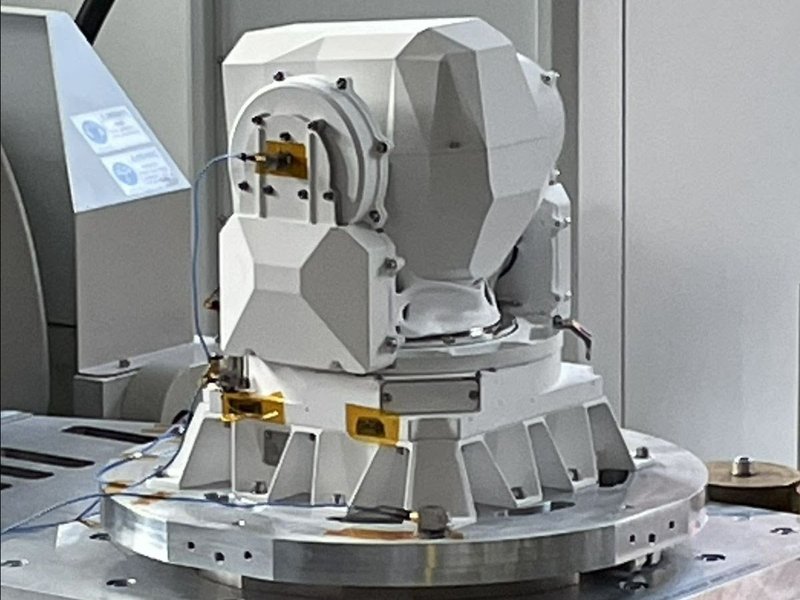
Mynaric's CONDOR Mk3 laser terminal undergoing production, a key product for high-speed satellite communication.
Understanding the StaRUG Procedure and Its Impact
The crucial aspect of this acquisition for Mynaric's current equity investors lies in the prerequisite of Mynaric completing its StaRUG restructuring proceedings under German law. StaRUG, or the Corporate Stabilization and Restructuring Act (Unternehmensstabilisierungs- und -restrukturierungsgesetz), is a German pre-insolvency rescue procedure that came into force on January 1, 2021. It allows companies facing imminent illiquidity (but not yet insolvent) to restructure their liabilities outside formal insolvency proceedings, often against the will of individual creditors or even shareholders.
How StaRUG Affects Shareholders
The StaRUG framework provides for a "restructuring plan" that can include various measures, such as debt-to-equity swaps, capital reductions or increases, and even the termination or transfer of share rights. Crucially, the completion of Mynaric's StaRUG restructuring is expected to result in certain outstanding debt held by its lenders converting into 100% of Mynaric's equity. This process, often referred to as a "cram-down," can dilute or entirely wipe out the value of existing shares, effectively transferring ownership to the creditors. The rationale behind this is to provide a viable path to recovery for the company, ensuring its continued operation and preserving value for its stakeholders (primarily creditors in this context), even at the expense of current shareholders.
Therefore, the $75 million acquisition price from Rocket Lab is not intended as a payout to existing public Mynaric shareholders. Instead, it represents the value Rocket Lab will pay to acquire the newly constituted equity of Mynaric *after* the StaRUG restructuring has converted debt into equity, thereby extinguishing the previous shares. This means that if Mynaric successfully completes its StaRUG restructuring as planned, the current equity investors holding 6.32 million outstanding shares would likely receive nothing, as their shares would cease to exist or be rendered worthless before the acquisition takes place.
Purpose and Mechanics of StaRUG
The StaRUG is designed to offer a flexible toolkit for financial restructurings, allowing for class composition and cross-class cram-downs, including those affecting shareholders. It's a debtor-driven process, meaning the company itself initiates and largely controls the restructuring plan, provided it's not already insolvent. The plan requires approval from a majority of affected creditors (75% by value within each group) and can even be confirmed by a court against the objection of a minority. This framework fills a gap in German law, enabling companies to address financial distress proactively without the stigma and more rigid procedures of full insolvency.
This video provides an overview of Rocket Lab's acquisition and capital raise, offering context to the strategic implications of the Mynaric deal.
Financial Context and Valuation of Mynaric
Mynaric has faced financial struggles, including production delays and supply chain issues, which led to its restructuring. The company has been operating in a pre-profit state with earnings insufficient to service its debt burden. While over $300 million has been invested in Mynaric to date, its market capitalization at various points has been significantly lower, reflecting its financial difficulties.
Market Capitalization and Shares Outstanding
Before the acquisition announcement and amidst its restructuring, Mynaric's market capitalization fluctuated considerably. For instance, as of May 2025, Mynaric's market cap was reported as $7.02 million USD, with approximately 6.32 million shares outstanding. Other sources cite market caps ranging from €4.42 million to $172.67 million, highlighting the volatility and differing valuations depending on the specific stock exchange (e.g., Xetra, OTC) and reporting date. The concept of "implied shares outstanding" (e.g., 33.66M) also suggests complex capital structures or potential future share issuances/conversions, which further complicates a simple per-share valuation.
The current market capitalization and shares outstanding are less relevant for the post-StaRUG acquisition scenario. The key is that the StaRUG process is designed to eliminate the existing equity structure, meaning the $75 million is not distributed to current shareholders but rather secures ownership of a restructured Mynaric with a clean equity slate for Rocket Lab.
Strategic Implications for Rocket Lab
For Rocket Lab, the acquisition of Mynaric is a calculated strategic move to enhance its position across the entire space value chain. Rocket Lab's CEO, Peter Beck, has emphasized the company's ambition to become an end-to-end space company, from launching rockets to building and operating satellite constellations. Mynaric's laser communication technology is a critical piece of this puzzle, enabling high-value satellite applications and supporting Rocket Lab's own constellation ambitions.
Vertical Integration and Market Expansion
This acquisition exemplifies Rocket Lab's strategy of vertically integrating key satellite subsystems and components. By bringing Mynaric's optical terminals in-house, Rocket Lab aims to industrialize and scale their production, addressing a major pain point in the satellite industry where high-volume, affordable laser communication products are scarce. This move also provides Rocket Lab with its first European foothold in Munich, Germany, opening up new growth opportunities in the region and adding a team of over 300 skilled engineers.
The deal not only secures a crucial supply chain for Rocket Lab's existing SDA contract but also positions it to bid on larger constellation projects and eventually operate its own high-value constellations for data and services from space, utilizing its "Flatellite" spacecraft concept.
Comparative Analysis of Strategic Strengths
To better understand the strategic advantages Rocket Lab gains, consider the following radar chart comparing hypothetical strengths in key areas post-acquisition:
This radar chart visually represents the projected enhancement in Rocket Lab's strategic capabilities post-Mynaric acquisition. Notably, there's a significant boost in 'Optical Communications' and 'European Market Presence', alongside overall improvements in 'Vertical Integration' and 'Defense Contracts', underscoring the strategic rationale behind the acquisition.
A Summary of the Situation for Mynaric Shareholders
To summarize the complex interplay of the acquisition offer and the StaRUG restructuring for Mynaric shareholders, the following table outlines the key financial and procedural elements:
| Aspect | Details | Impact on Current Mynaric Equity Investors |
|---|---|---|
| Rocket Lab's Offer Price | Initial $75 million (cash or shares), with potential for additional $75 million earn-outs. | This amount is for Rocket Lab to acquire the restructured Mynaric equity, not for distribution to pre-StaRUG shareholders. |
| Mynaric's Outstanding Shares (pre-StaRUG) | Approximately 6.32 million shares. | These shares are expected to be eliminated as part of the StaRUG restructuring process. |
| StaRUG Restructuring Condition | Acquisition is contingent on Mynaric completing its StaRUG proceedings under German law. | Critical caveat: Current debt held by lenders will convert into 100% of Mynaric's equity. |
| Effect of StaRUG on Existing Equity | The StaRUG process is designed to wipe out existing public shares (debt-to-equity conversion). | Likely no payout or value for current equity investors; their shares will be extinguished or rendered worthless. |
| Strategic Rationale for Rocket Lab | Vertical integration of laser communications, access to European market, strengthening of satellite component capabilities, support for SDA contract. | Rocket Lab gains Mynaric's technology and expertise, enabling broader strategic goals in the space economy. |
This table illustrates that while Rocket Lab is indeed offering $75 million, this sum is directed towards acquiring a *restructured* Mynaric, implying that the current share structure will be fundamentally altered or eliminated before the acquisition's completion.
Frequently Asked Questions (FAQ)
What is StaRUG?
Will Mynaric's current shareholders receive money from Rocket Lab's $75 million offer?
Why is Mynaric undergoing StaRUG restructuring?
What does this acquisition mean for Rocket Lab?
Are there any scenarios where Mynaric's current shareholders might receive value?
Conclusion
Rocket Lab's acquisition of Mynaric, while valued at an initial $75 million, presents a unique situation for current Mynaric equity investors due to the German StaRUG restructuring process. This process is expected to eliminate existing equity, converting debt into new shares that Rocket Lab will then acquire. Therefore, the $75 million is not a direct payout to current shareholders but rather the price for control of a financially reorganized Mynaric. This strategic move underscores Rocket Lab's commitment to vertical integration and its ambition to become a comprehensive leader in the space economy, leveraging Mynaric's advanced laser communication technology to bolster its satellite constellation initiatives and expand its global presence.
Recommended Further Exploration
- How German StaRUG restructuring impacts company ownership.
- Rocket Lab's strategy for end-to-end space operations.
- Future of laser communications in satellite constellations.
- Impact of acquisitions on aerospace and defense supply chains.
References
Last updated May 21, 2025