
Unveiling the Speed and Performance of the Rockwell Commander 681
A Deep Dive into the Capabilities of the Hawk Commander
Key Highlights of the Rockwell Commander 681's Speed and Performance
- Maximum Speed: The Rockwell Commander 681 boasts a maximum speed of approximately 187 knots (215 mph or 346 km/h) at sea level, showcasing its impressive performance capabilities.
- Cruise Efficiency: For optimal long-distance travel, its normal cruise speed is around 176 knots (202 mph), offering a balance of speed and fuel efficiency.
- Engine Power: Equipped with two Garrett TPE-331-43BL turboprop engines, each rated at 575 horsepower, the 681 delivers robust power for its class.
The Rockwell Commander 681, also known as the Hawk Commander, stands as a notable aircraft in the lineage of the Aero Commander 500 family. Introduced and certified on March 20, 1969, it represents a significant advancement in twin-engine turboprop design, building upon its predecessor, the 680W. This aircraft was designed to offer enhanced performance, particularly in terms of speed, pressurization, and air conditioning, making it a popular choice for executive and corporate travel during its time.
Understanding the Speed Dynamics of the Rockwell Commander 681
When discussing the speed of an aircraft, it's crucial to differentiate between various metrics such as maximum speed, normal cruise speed, and economic cruise speed. Each provides a different perspective on the aircraft's operational capabilities and efficiency. The Rockwell Commander 681 exhibits a range of speeds tailored for different flight profiles, from high-speed transit to economical long-range cruising.
Maximum Speed Capabilities
The Rockwell Commander 681 is engineered for considerable speed, especially for its class. Its maximum speed is documented to be around 187 knots (approximately 215 mph or 346 km/h) at sea level. This speed allows for rapid point-to-point travel, distinguishing it as a capable aircraft for business and personal use where time is a critical factor. Some reports even indicate cruise speeds of up to 240 knots for the 681 with its original TPE-331-43BL engines, and even higher with certain conversions like the "Super Dave" or "Super Century conversion" which could push the horsepower per side significantly, leading to enhanced performance.
Cruise Speed for Efficient Operations
For more routine operations, the Rockwell Commander 681's normal cruise speed is approximately 176 knots (202 mph). This speed is often preferred for long-duration flights as it balances efficiency with reasonable transit times. It allows for a more relaxed operation while still covering significant distances. The aircraft's ability to maintain high cruising speeds at altitude, such as 242 knots at FL250 with 575hp engines, further underscores its performance envelope.
The aircraft's fuel consumption at cruise is also quite efficient, with reported fuel flows of about 180 pounds per side, totaling 360 pounds for both engines, highlighting its "frugal" nature in terms of fuel burn for a turboprop of its size.
Technical Specifications and Performance Metrics
Beyond raw speed, several other technical specifications contribute to the overall performance profile of the Rockwell Commander 681. These include its power plant, range, service ceiling, and operational weights, all of which paint a comprehensive picture of its capabilities.
Power Plant and Engine Performance
The 681 is powered by two Garrett TPE-331-43BL turboprop engines. These engines are critical to its performance, each rated at 575 horsepower for aircraft certification, although the TPE 331-1-151K variant used in some models is rated at 665 HP. The robust engine configuration enables the aircraft to achieve impressive climb rates and sustained high-altitude performance. For example, some models with "Full Century Conversion" are stated to have 840 shaft horsepower, indicating significant power upgrades available.
Operational Range and Altitude Capabilities
The Rockwell Commander 681 offers a respectable maximum range of around 936 nautical miles (1,733 km or 1077 miles). This range makes it suitable for regional and medium-distance flights without the need for frequent refueling stops. Its service ceiling is specified at 19,400 feet, though some sources indicate a maximum altitude of FL250 (25,000 feet) for cruising, particularly for models with upgraded engines and improved pressurization systems.
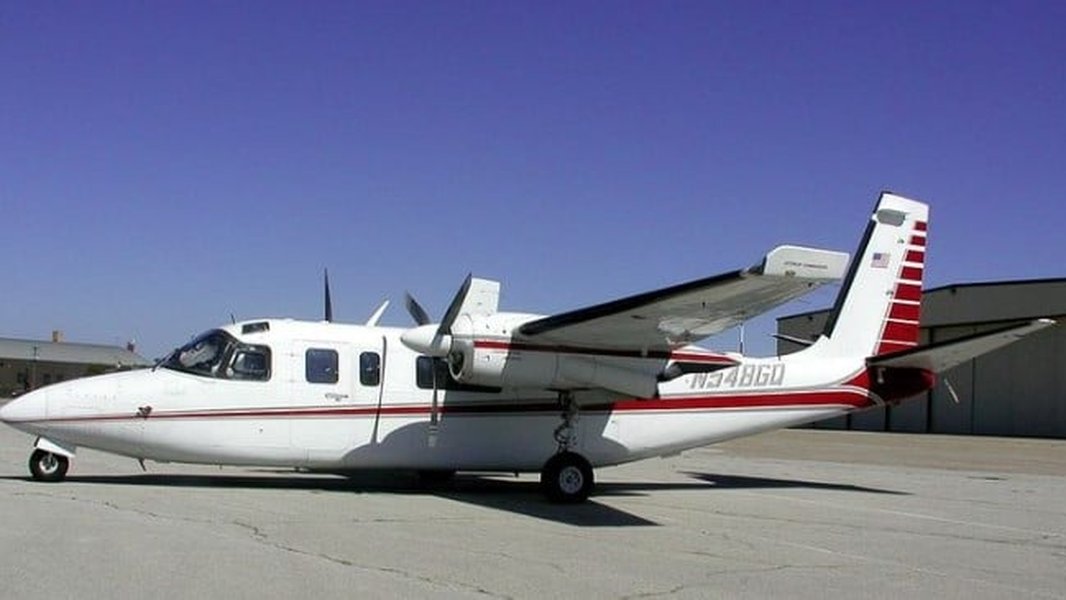
A Rockwell Commander 681 in flight, showcasing its classic design.
Key Performance Indicators
To further illustrate the 681's performance, here's a detailed table outlining its core specifications:
| Specification | Value | Notes |
|---|---|---|
| Aircraft Model | Rockwell Commander 681 (Hawk Commander) | Certified March 20, 1969 |
| Engines | 2 x Garrett TPE-331-43BL Turboprops | Each rated at 575 HP for certification (some variants up to 840 HP) |
| Maximum Speed | 187 kts (215 mph / 346 km/h) at sea level | High-performance capability |
| Normal Cruise Speed | 176 kts (202 mph) | Efficient cruising speed |
| Max Range | 936 nm (1,733 km / 1077 miles) | Suitable for regional and medium-distance flights |
| Service Ceiling | 19,400 ft (some sources indicate FL250/25,000 ft) | Operational altitude capabilities |
| Max Takeoff Weight | 9,400 lbs (4,264 kg) | Aircraft's maximum certified weight for takeoff |
| Operating Weight | 4,635 lbs (2,102 kg) | Empty weight of the aircraft |
| Initial Rate of Climb | 2850 ft/min (approx) | Impressive climb performance for its class |
| Passenger Capacity | 6-11 passengers (including crew) | Versatile cabin configuration |
Design Enhancements and Legacy of the 681
The Rockwell Commander 681 is more than just its speed; it's a product of continuous design evolution aimed at improving passenger comfort and operational efficiency. It introduced several enhancements over its predecessors, contributing to its enduring legacy.
Improvements Over Predecessors
The 681 model is largely identical to the 680W, but it incorporated significant improvements in its pressurization system and air conditioning. These enhancements made the cabin environment more comfortable, especially during high-altitude flights. Furthermore, it introduced "cockpit eyebrow" windows, a design feature that was retained in subsequent variants, improving pilot visibility and overall cockpit ergonomics.
The "Hawk Commander" Designation
For a period, the 681 was known as the "Hawk Commander," a name that reflected its improved capabilities and sleek design. While this designation was eventually dropped in 1971 with the introduction of the 681B (which focused on cost reduction through reduced trim), the Hawk Commander era marked a period of refinement and increased luxury for the Aero Commander line.
Flight Characteristics and Handling
The Twin Commander series, including the 681, is renowned for its stable flight characteristics and excellent short-field performance. This is largely attributed to its distinctive large wing, which not only provides stability but also contributes to its capability for impressive short takeoffs and landings, even from rough fields. This robustness and handling precision were famously demonstrated by aerobatic pilot Bob Hoover in his Shrike Commander, highlighting the inherent strength and aerodynamic quality of the design, although the 681 is a turboprop variant.
Radar chart comparing the Rockwell Commander 681's performance attributes.
This radar chart visually compares the standard performance of the Rockwell Commander 681 with a hypothetical upgraded version, illustrating how modifications like the "Century Conversion" can enhance its capabilities in areas such as maximum speed, range, and engine power. It highlights the potential for customization to push the aircraft's operational limits further.
Notable Incidents and Safety Considerations
While the Rockwell Commander series is known for its robust design, it is important to acknowledge that, like any aircraft, it has been involved in incidents. Analyzing these events provides valuable insights into operational safety and maintenance practices.
Accident Records and Contributing Factors
Records indicate a few notable incidents involving the Rockwell Turbo Commander 680/681. For instance, there are accounts of accidents related to takeoff and landing phases, with identified contributing factors including pilot decision-making under stress, potential instrument issues, and even fatigue. One particular incident highlighted a pilot's decision to proceed with takeoff despite known engine deficiencies, leading to a stall. Another described an in-flight encounter with turbulence and improper in-flight planning.
These incidents underscore the importance of thorough pre-flight checks, adherence to operational procedures, and proper crew rest. Despite these occurrences, the turboprop Twin Commanders, including the 681, have generally been noted for a low rate of engine-failure accidents compared to some piston-engined twins in the broader Aero Commander family, which is a testament to the reliability of their Garrett turboprop engines.
A video showing an Aero Commander 681 departing an airfield, offering a real-world glimpse of the aircraft in operation.
This video provides a visual demonstration of the Aero Commander 681 in action, allowing an appreciation for its size, sound, and general flight characteristics. It helps to contextualize the specifications and discussions about its performance, offering a more tangible understanding of this classic turboprop.
The Rockwell Commander's Enduring Appeal
Despite being a classic aircraft, the Rockwell Commander 681 and its variants continue to hold a place in aviation history and even in current operations. Its combination of speed, spacious cabin, and rugged design contributes to its lasting appeal.
Versatility in Operations
The aircraft's robust design and ability to operate from shorter, unimproved strips make it versatile for various applications. While initially sold primarily as an executive aircraft, its design characteristics lend themselves to other roles, such as cargo transport or specialized missions, though specific current uses of the 681 are less prominent than its later Jetprop counterparts.
Maintenance and Parts Availability
For owners of older aircraft like the 681, the availability of parts and maintenance support is a common concern. However, organizations like the Twin Commander Owners' Group have been instrumental in ensuring that parts remain accessible, mitigating some of the challenges associated with operating vintage aircraft. This community support helps to preserve the fleet and keep these aircraft flying.
Frequently Asked Questions about the Rockwell Commander 681
What engines power the Rockwell Commander 681?
What is the seating capacity of the Rockwell Commander 681?
Is the Rockwell Commander 681 still in active service?
What were the key improvements of the 681 over previous Commander models?
What is the range of the Rockwell Commander 681?
Recommended Further Exploration
- Explore the comprehensive history and evolution of the Aero Commander 500 family.
- Delve into the performance specifications and advancements of the Rockwell Turbo Commander 690 series.
- Understand the efficiency and operational costs associated with turboprop aircraft.
- Learn about Bob Hoover's legendary aerobatic demonstrations in the Shrike Commander.
References
Last updated May 21, 2025