
Unraveling the Mystery: Functions of Roman Dodecahedrons and Icosahedrons
Exploring theories behind ancient Roman artifacts and their enigmatic uses
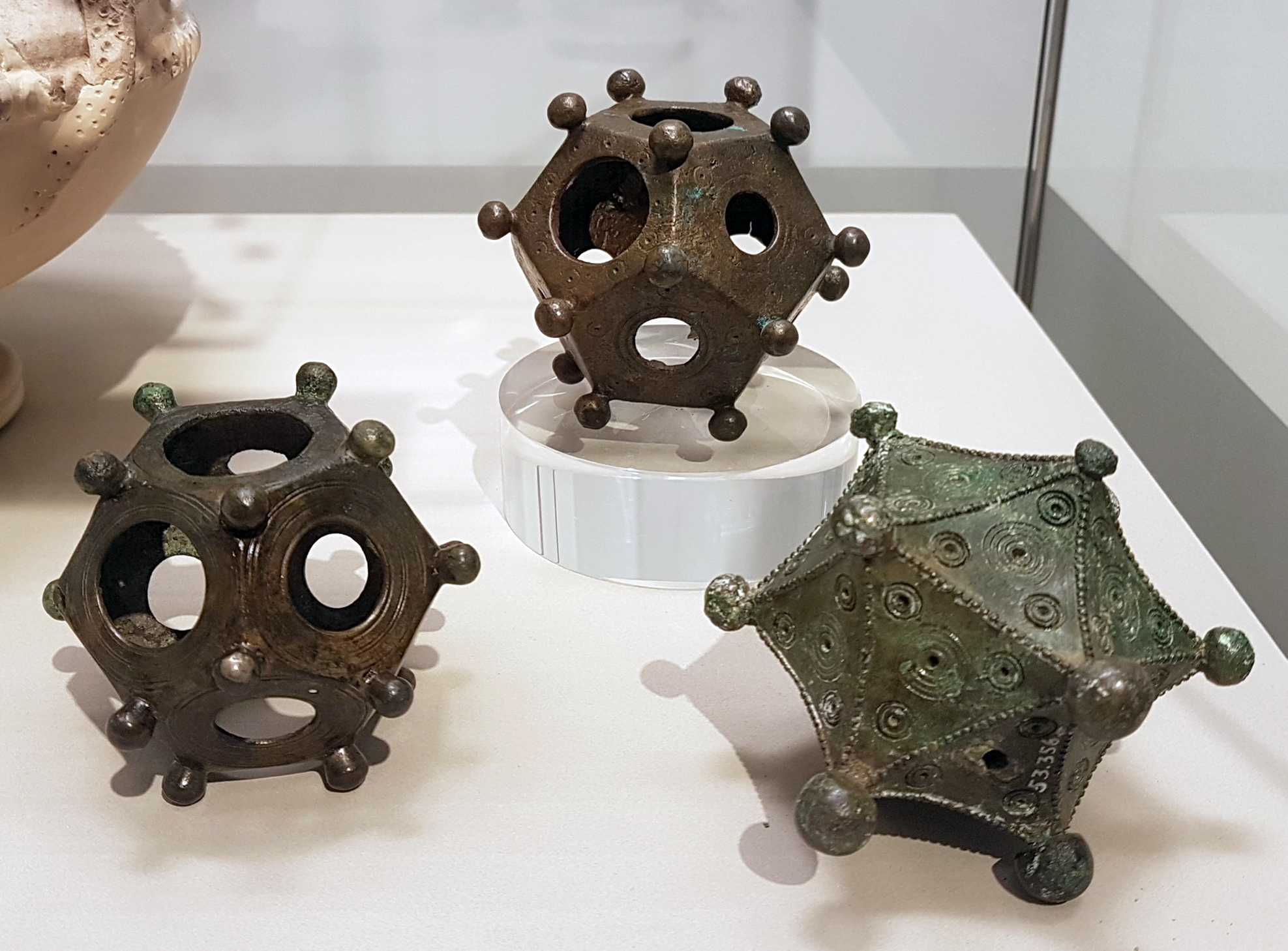
Key Highlights
- Astronomical and Agricultural Tools: The objects may have been used to track celestial movements and determine optimal farming periods.
- Measurement and Surveying Devices: Their geometric precision suggests usage in distance estimation and technical applications such as military surveying or engineering.
- Religious, Ritualistic, and Recreational Roles: These artifacts might have served in mystical rituals, coin verification, or even as gaming and decorative objects.
Detailed Analysis of Proposed Theories
1. Astronomical and Agricultural Instruments
One of the most widely discussed theories is that Roman dodecahedrons and icosahedrons were employed as early astronomical instruments. Many researchers believe the varying sizes of holes (especially in the dodecahedrons) allowed ancient users to observe and measure the angle of solar rays. This application likely facilitated the determination of seasonal changes and the optimal planting dates for crops. In regions where agriculture was integral to survival, such functional tools would have been indispensable in measuring celestial events and guiding agrarian practices.
The blends between astronomical observations and agriculture are further reinforced by the fact that similar instruments were seen in later civilizations where sun tracking was crucial. Although there is no definitive inscription explaining their use, the alignment and design of these artifacts hint at a sophisticated understanding of celestial movements.
2. Measuring and Surveying Instruments
Another prominent explanation considers these artifacts as precise instruments used for measuring distances and angles. Roman engineering and military camps frequently demanded rapid surveying methods. The geometric design—with clearly defined faces and holes in the dodecahedrons—would have allowed users to quickly gauge dimensions or to set out boundaries for construction and engineering endeavors.
The possibility of using them as measuring devices is supported by the regularity and precision inherent in their structure. Some theories propose that the principles of the golden ratio, which was known and respected by Roman architects, could have been embedded in their design. Such a measuring device might have provided rapid estimates in battlefield scenarios or for architectural planning.
3. Religious and Ritualistic Artifacts
There is strong evidence to suggest that these objects held more than purely utilitarian functions. Many examples of Roman dodecahedrons have been excavated from Gallo-Roman sites, environments that were often steeped in religious and spiritual practices. Some archaeologists theorize that these artifacts could have served a ritualistic function, perhaps as tools in divination or as symbols of cosmic order.
In one of the more intriguing discoveries, a silver dodecahedron was inscribed with names corresponding to zodiac signs, implying an astrological connection. This association opens the possibility that these objects were part of more extensive ritualistic practices, where celestial bodies and divine order played a central role. Their connection with religion might also explain why there is a deliberate absence of detailed written records, as religious practices were sometimes transmitted orally or suppressed by later cultural shifts.
4. Recreational and Gaming Objects
Some historians speculate that these artifacts might have served as early gaming devices or toys. The twenty-faced Roman icosahedron, due to its resemblance to modern dice, has been cited as potential evidence for their use in games of chance. Historical records, although sparse, indicate that various cultures experimented with objects of similar shapes for recreational purposes.
In addition to gaming, the aesthetic appeal and craftsmanship of the dodecahedrons could have rendered them as objects of social or cultural significance. Their intricate design might have also encouraged their use in symbolic ceremonies or as decorative items, further enhancing their mystique in the context of ancient Roman leisure and ritual.
5. Coin Measurement and Verification Tools
Another intriguing theory is the use of Roman dodecahedrons and, by association, the icosahedrons, in verifying or measuring coins. There is evidence from coin hoards where dodecahedrons have been discovered alongside currency, leading some researchers to propose that these artifacts helped assess the authenticity or appropriate clipping (trimming) of coins. In a marketplace where coinage was a principal medium of economic exchange, having a reliable measurement tool would have been crucial.
Even though concrete evidence is lacking, the correlation between coin hoards and these objects provides a tantalizing glimpse into their potential economic utility. By cross-referencing the sizes and angles with standardized coin dimensions, these objects might have served as rudimentary but effective coin comparators.
Comparative Overview: Dodecahedrons vs. Icosahedrons
| Aspect | Dodecahedrons | Icosahedrons |
|---|---|---|
| Structure | 12 flat pentagonal faces, each featuring circular holes | 20 triangular faces without holes |
| Probable Astronomical Use | Likely used for measuring angles of sunlight; aiding in agricultural calendars | Less likely, given the absence of holes, though still part of the overall symbolic suite |
| Measurement/Survey Device | Highly probable due to the varied holes and geometric precision | Possible secondary role in games or as complementary tools |
| Religious and Ritual Use | Strong connection with ritualistic contexts (e.g., zodiac inscriptions) | May have had symbolic or decorative roles in religious or ceremonial contexts |
| Recreational or Gaming Purpose | Some evidence suggests use in games or as leisure objects | Often associated with dice-like gaming due to twenty faces |
Historical Context and Scholarly Perspectives
Archaeological Discoveries and Interpretations
The absence of explicit inscriptions or definitive records in ancient Roman texts has led scholars to rely largely on contextual clues within archaeological sites. Discoveries of Roman dodecahedrons alongside agricultural implements, coin hoards, or at locations of religious significance have spurred multiple interpretations. The variability in size, design, and material—whether bronze or silver—further complicates deriving a single definitive function for these objects.
In contrast, the rarer Roman icosahedrons seem to indicate a more recreational or decorative role, aligning with the usage of polyhedral dice in various cultures. The dichotomy between the two forms, however, has led to theories that these artifacts could have been used in tandem, possibly complementing one another in practical or symbolic functions.
Technological Prowess of the Roman Era
The craftsmanship evident in the creation of these polyhedrons reflects a high level of technical and artistic sophistication. This level of engineering precision not only underscores their potential practical applications—be it in measurement, surveying, or astronomy—but also points towards a ceremonial value imbued by their intricate designs. Moreover, the use of geometric principles such as the golden ratio in Roman constructions suggests that these objects might have had multi-layered purposes, straddling both utilitarian functions and symbolic significance.
The interpretation of these ancient tools continues to evolve as new discoveries and technological methods—such as 3D imaging and computational modeling—offer fresh insights into their structure and possible applications. Each theory contributes to a broader understanding of the complexity of Roman society and its innovative approaches to science, warfare, religion, and daily life.
References
- Roman dodecahedron - Wikipedia
- What Was the Purpose of a Roman Dodecahedron? - History Defined
- Mystery of Ancient Roman Dodecahedrons - The Quantum Record
- Enigma of Roman Dodecahedra - Ancient Origins
- Roman Dodecahedrons - Atlas Obscura
Recommended Related Queries
Last updated March 25, 2025