
Romanian Protests on March 1, 2025
An in-depth overview of events, political context, and public sentiment
Key Highlights
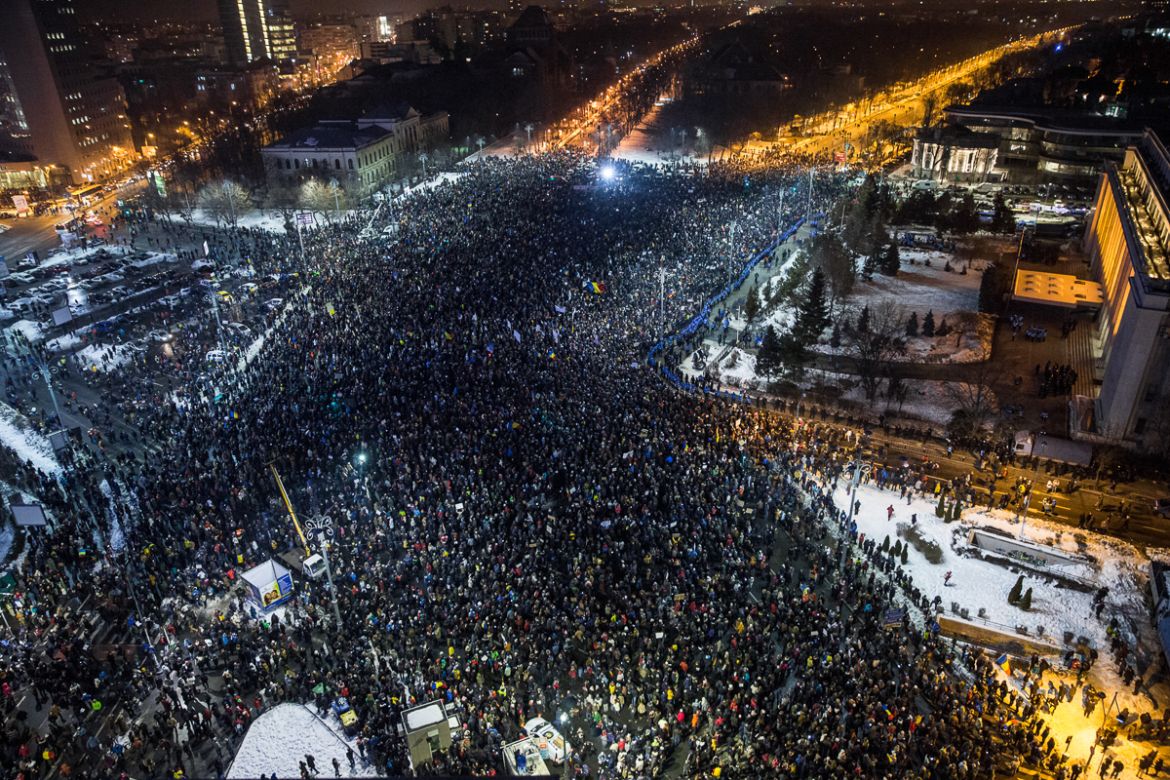
- Massive turnout and political symbolism: Tens of thousands gathered in Bucharest demanding the reinstatement of a disputed presidential election.
- Non-revolutionary but politically charged: Although passionate, the protesters did not seek to overthrow the political system and largely maintained non-violent demonstrations.
- Disputed legitimacy and institutional conflict: The protests were a reaction against a Constitutional Court decision and highlighted deep political divisions over election fairness and influence.
Overview of the Protests
On March 1, 2025, Bucharest, the capital of Romania, became the epicenter of a massive public demonstration. The protests emerged in direct response to the Constitutional Court's controversial decision to annul a recently held presidential election. This decision came in the wake of allegations surrounding Calin Georgescu – a far-right candidate who had garnered significant support during the initial election rounds. Critics argued that the annulment was rooted in politically motivated maneuvers, particularly because of accusations involving unfair social media campaigns allegedly bolstered by foreign influences.
Protesters, largely supporters of Georgescu, converged on the city with the central demand of reinstating the annulled election. Their aim was to restore what they viewed as a fundamental democratic process compromised by biased institutional intervention. Alongside calls for an election rerun, there were voiced demands for the resignation of high-profile political figures, including those associated with the outgoing leadership.
Political Context and Organizational Background
Political Catalysts
The protest must be understood against a backdrop of broader political tension. With a polarizing figure like Calin Georgescu emerging as the frontrunner in the preliminary election rounds, his subsequent disqualification inflamed his supporters. Many believed that the Constitutional Court's annulment stemmed from attempts to sideline a populist wave that was resonating with a substantial segment of the population. This decision, many felt, was an institutional overreach that interfered with the democratic process.
The events leading up to the protests also included simmering discontent against the incumbent government. The current administration, part of a pro-European coalition, had recently survived a no-confidence vote. Nevertheless, the public sentiment was charged, as many saw these judicial actions and political maneuvers as symptomatic of a deeper crisis of governance and legitimacy.
Role of Far-Right Groups
A significant organizing force behind the protests was the far-right Alliance for the Unity of Romanians. This group was instrumental in mobilizing supporters, using both traditional and digital platforms to galvanize public opinion. Their involvement lent a distinct political tint to the movement, often emphasizing nationalistic rhetoric and a narrative of victimization against an established political elite. However, it is critical to note that while the protests were highly politicized, their demands were focused on electoral justice rather than on radical systemic change.
The participation of far-right groups underscores the polarized environment in Romania, reflecting a broader trend of nationalism and socially conservative ideologies across the region. Although their presence attracted significant media attention, the protests themselves did not escalate into actions aimed at a revolutionary overhaul of the state apparatus.
Nature of the Demonstrations
Scale and Logistics
By most accounts, the protests on March 1 were characterized by a massive turnout. Tens of thousands of demonstrators filled the streets of Bucharest, with some areas like Victory Square (Piața Victoriei) reportedly expecting an overwhelming number of participants. Traffic restrictions were put into place in central districts to facilitate the large-scale assembly and ensure some measure of order amidst the large crowds.
Despite widespread expectations of significant public agitation, the overall organization of the protest leaned towards structured mobilization. Organizers made deliberate efforts to channel public dissent through organized rallies rather than uncoordinated acts of defiance.
Violence and Revolutionary Undertones
Incidents of Violence
One of the central questions surrounding these demonstrations was whether the protests reflected violent uprising or revolutionary fervor. The evidence indicates that while there were sporadic incidents that involved clashes between some protesters and law enforcement, these were isolated rather than indicative of widespread violence. The majority of demonstrators adhered to non-violent protest principles, aiming their energy at sending a measured political message rather than instigating chaos.
Law enforcement agencies were on high alert, preparing for any potential flashpoints. However, the deployment of security forces and the maintenance of public order largely prevented any sustained violent outbreaks. This proactive approach helped ensure that the protests, although charged with intense political sentiments, did not escalate into full-blown conflicts.
Revolutionary vs. Reformist
Assessing whether the March 1 protests were revolutionary or a failed attempt at revolution requires a nuanced interpretation. Unlike the 1989 Romanian Revolution, which was marked by a complete overthrow of the established regime and significant social and political upheaval, the 2025 protests were not aimed at dismantling the overall political system. Instead, protestors demanded specific electoral reforms and the rollback of judicial decisions that they perceived as undemocratic.
The demonstrations were, therefore, better characterized as a robust exercise of political dissent within the confines of the current democratic framework, rather than a revolutionary movement seeking to completely upend it. With organized channels for dissent and a focus on re-establishing election proceedings, the protests underscored a desire for systemic correction rather than a radical transformation of society.
Key Aspects of the Protest
Electoral Integrity and Judicial Oversight
Central to the protest rhetoric was the issue of electoral integrity. Many demonstrators rallied against what they perceived as an overreach by the judiciary—a move that, in their view, compromised the fairness of the electoral process. The annulment of the election had far-reaching implications for the legitimacy of both the candidates and the institutions that governed the process. The protests highlighted a cry for accountability, with organizers arguing for increased transparency in judicial and electoral proceedings.
This focus on fairness was reinforced by calls for a re-run of the presidential election, an approach that was seen as the most direct way to rectify what many believed to be significant procedural errors and political manipulations. In this context, the protests were symptomatic of broader disillusionment with political institutions and a demand for more robust checks and balances within the electoral framework.
Impact on Public Discourse
Beyond the immediate political demands, the protests catalyzed a nationwide conversation about the role of institutions in ensuring democracy. They forced the public, media, and political elites to confront uncomfortable questions regarding the integrity of the electoral process, external influences on political campaigns, and the legitimacy of institutional decisions.
Social media narratives played a significant role in shaping public opinion during this period. The rapid dissemination of information (and misinformation) highlighted how digital platforms could amplify political sentiments, further polarizing an already divided electorate. However, regardless of the digital disputes, the physical presence of tens of thousands of demonstrators underscored a real and palpable desire for restoring public trust in the democratic process.
Data and Comparative Insights
Demographics and Participation
The protest saw a diverse cross-section of society, spanning various age groups and social backgrounds. While a significant portion of the participants were ardent supporters of Calin Georgescu, others joined the demonstrations as a general statement against what they viewed as increasing governmental overreach. Analysts pointed out that the turnout was emblematic of not just political loyalty but also a growing public demand to safeguard democratic institutions.
Comparative Analysis Table
| Aspect | March 1 Protests | 1989 Revolution |
|---|---|---|
| Scale and Organization | Organized rallies with tens of thousands in attendance, structured demands | Spontaneous uprising, widespread and less centrally orchestrated |
| Nature of Demands | Electoral integrity, election rerun, and institutional accountability | Overthrow of the communist regime and fundamental systemic change |
| Violence Level | Limited violent incidents; largely peaceful | Widespread violence and chaos in pursuit of regime change |
| Long-term Impact | Pressure on government to reconsider judicial decisions and improve electoral processes | Complete overhaul of the political system |
In-Depth Political and Social Implications
Institutional Trust and Accountability
The reverberations of the protests extended beyond immediate political complaints. The incident intensified debates about the balance of power between the government and the judiciary. Protesters underscored their frustration with institutions that appeared to prioritize political expediency over democratic principles. As such, the demonstrations brought to light the critical need for reforms aimed at enhancing transparency and accountability within state institutions.
The judicial decision to annul the election, which many perceived as part of a broader pattern of institutional bias, sparked a discourse on the proper role of legal oversights in political processes. The measures adopted by the authorities in the aftermath of the protests—such as calls for clearer guidelines in electoral adjudication—reflect an attempt to restore institutional credibility and rebuild public trust.
The Role of International Perception
Internationally, the events of March 1, 2025, were observed closely as an indicator of Romania's evolving democratic landscape. Various global commentators noted that while the protests were intense and symbolically significant, they did not attain the characteristics of a revolutionary upheaval. Nonetheless, the international media highlighted the incident as a cautionary tale about how institutional decisions can spark deep-seated public dissent.
From an external viewpoint, the measured nature of the protest—as opposed to a full revolutionary crisis—was seen as reflecting Romania's relatively mature political environment. The ability of the government and security forces to manage the protests without severe disruption was regarded as a testament to both institutional preparedness and the resilience of Romanian democratic structures.
Extended Analysis of Public Sentiment and Media Influence
Media Framing and Public Interpretation
Media coverage played a pivotal role in shaping how the protests were understood by the public. Coverage ranged from highlighting the vast numbers of peaceful demonstrators to pointing out sporadic clashes with law enforcement. This dual narrative underlined the complexity of the event: while the protests were overwhelmingly peaceful and focused on specific electoral grievances, localized incidents of unrest were used by opponents to argue that the events had the potential for violence.
Digital media platforms further amplified these narratives, ensuring that the debate over electoral integrity, judicial impartiality, and democratic accountability remained at the forefront of public discourse. This fusion of traditional news with social media discussions also underscored the influence of networked communication in modern-day protest movements.
Ripple Effects and Future Implications
The protest had significant ripple effects on the Romanian political landscape. In the wake of the demonstrations, political leaders on all sides were compelled to reassess their strategies. Moderate voices within the government advocated for dialogue and reform, acknowledging the depth of public dissatisfaction. Meanwhile, far-right dynamics, which had significantly energized the demonstrators, continued to influence ongoing debates about nationalism and electoral fairness.
The event prompted introspection about the role of judicial and electoral oversight. Policy-makers began examining mechanisms to prevent what many saw as judicial overreach, with discussions underway to potentially revise legal frameworks governing elections. The reforms under consideration aimed at striking a balance between preserving judicial independence and ensuring that democratic processes remain unimpeded by partisan interference.
References
- Tens of thousands protest government before Romania's election - VOA News
- Romanian Election Annulment Protests - Wikipedia
- Tens of thousands protest in Romania's capital - AP News
-
Romanian protest demands cancelled election reinstated - Reuters
- Romanian far-right supporters rally ahead of election rerun - Yahoo News
- Major protest in Bucharest supports far-right candidate - Adevarul
-
A Million Romanians Expected on March 1 Protests - Realitatea
- Calin Georgescu Supporters Protest in Bucharest - Fanatik
-
Romanian government survives no-confidence vote - Reuters
- Protests following annulled presidential election - VOA News
Recommended Queries
Last updated March 2, 2025