
Optimizing Roo Code with LLM Agents: A Comprehensive Guide
Unlocking Advanced Automation and Development Capabilities with Intelligent LLM Integration
Key Highlights for Empowering Roo Code with LLMs
- LLM Agents Transform Automation: Large Language Model (LLM) agents are revolutionizing automation by enabling dynamic decision-making, contextual understanding, and tool integration, moving beyond traditional rules-based systems.
- Roo Code's Advanced Capabilities: Roo Code (formerly Roo Cline) stands out as an autonomous coding agent, leveraging LLMs for tasks like code generation, architectural design, and browser automation within your IDE.
- Choosing the Right LLM is Crucial: The effectiveness of Roo Code as an agent heavily depends on selecting an LLM that excels in reasoning, tool usage, and context handling, with models like Claude 3.5 Sonnet and GPT-4o showing strong potential.
The landscape of automation and software development is undergoing a profound transformation, largely driven by the advent of Large Language Models (LLMs) and their integration into intelligent agents. These sophisticated AI systems are no longer confined to simple text generation; they are evolving into powerful tools capable of performing complex tasks, understanding nuanced instructions, and interacting dynamically with various environments. For developers and automation enthusiasts, leveraging LLMs as agents within platforms like Roo Code (formerly Roo Cline) represents a significant leap forward in productivity and capability. This comprehensive guide will delve into the synergy between LLMs and agentic workflows, specifically focusing on how to maximize the potential of Roo Code by selecting and integrating the best LLM agents.
Understanding the Power of LLM Agents in Automation
Beyond Basic Automation: The Agentic Paradigm Shift
Traditional automation often relies on predefined rules and scripts, limiting its adaptability to unforeseen circumstances or complex, non-linear workflows. LLM agents, however, introduce a new paradigm. They function as advanced digital assistants, processing complex instructions, learning from each interaction, and adapting their behavior dynamically. This capability is rooted in their core components:
- LLM Core: A powerful LLM acts as the "brain," interpreting instructions, generating plans, and making decisions.
- Memory Module: Agents maintain context across interactions, remembering past decisions and applying this knowledge to future tasks. This is crucial for consistency and complex, multi-step operations.
- Tool Integration: LLM agents can interact with external environments, such as APIs, databases, browser interfaces, and other software tools. This allows them to fetch real-time information, execute actions, and perform specialized functions that extend beyond their inherent language capabilities.
- Planning and Reasoning: Unlike simple prompt-response systems, agents can break down complex tasks into sub-parts, devise a step-by-step plan, and course-correct as needed.
This dynamic combination allows LLM agents to tackle a wide range of scenarios, from converting unstructured data like emails into structured formats to automating browser-based workflows and even generating complex code.
The Transformative Impact on Workflows
The integration of LLM agents into existing systems and workflows enhances data-driven decision-making and automates complex processes. For instance, in a marketing automation platform, an LLM agent could integrate with CRM systems, analyze historical opportunities, and route leads to sales representatives most likely to close them. Similarly, in customer service, an LLM-powered agent can interpret chat conversations, decide whether to create a new support ticket, and assign the appropriate urgency level. This shift from manual to intelligent automation leads to:
- Massive gains in processing efficiency.
- Increased service quality due to faster responses.
- The ability for human teams to focus on higher-value, more creative tasks.
Roo Code: An Autonomous AI Coding Agent
Capabilities and Evolution from Cline
Roo Code, a fork of Cline (now Roo Cline), is an advanced autonomous coding agent that integrates seamlessly with your Integrated Development Environment (IDE), particularly VS Code. It provides a comprehensive suite of features designed to enhance developer productivity and streamline the coding process. While both Roo Code and Cline share core AI-powered coding capabilities, Roo Code introduces additional features and optimizations for improved performance and customization.
Roo Code seamlessly integrates with various LLMs to enhance its autonomous coding capabilities.Key functionalities of Roo Code include:
- Natural Language Communication: Interact with the agent using natural language to generate, edit, and refactor code.
- File Management: Read and write files directly within your editor.
- Command Execution: Execute terminal commands, allowing for broader interaction with your development environment.
- Browser Automation: Automate browser-based workflows using LLMs and computer vision, such as navigating web pages or interacting with online tools.
- Multi-Mode Support: Roo Code offers specialized modes like "Ask," "Architect," and "Code," each tailored to different aspects of software development. For example, the "Architect" mode can assist with architectural design, while the "Code" mode focuses on implementation.
- Higher Autonomy: Roo Code leans towards greater autonomy, allowing users to configure it to auto-approve routine edits or command executions, enabling a more "hands-off" development experience compared to Cline, which often requires more human-in-the-loop control for safety.
- Customization and Model Support: Roo Code offers extensive customization options and support for multiple AI models, including the ability to connect to models through the GitHub Copilot VSCode extension.
The Role of the LLM in Roo Code's Performance
The underlying LLM is the "brain" of Roo Code, dictating its ability to understand instructions, generate coherent and correct code, and interact intelligently with various tools. A powerful LLM enables Roo Code to:
- Interpret complex natural language queries into executable development tasks.
- Generate high-quality code, tests, and documentation.
- Plan multi-step solutions for intricate problems.
- Leverage tools effectively, such as interacting with APIs, databases, or even browser elements.
- Maintain context across prolonged development sessions, remembering previous changes and architectural decisions.
Selecting the Best LLM Agent for Roo Code
Crucial Factors for LLM Agent Performance
When choosing an LLM to power Roo Code as an agent, several critical factors come into play. The "best" LLM isn't a one-size-fits-all answer; it depends on the specific demands of your development workflow, your preference for open-source vs. closed-source models, and your budget.
- Reasoning Capabilities: An agent needs to reason through complex problems, break them down, and devise logical steps. Models excelling in chain-of-thought prompting and complex problem-solving are paramount.
- Tool Usage Proficiency: The ability to effectively use external tools (like code interpreters, browser automation, or API calls) is central to an LLM agent's utility. The LLM must be good at deciding when and how to use these tools based on the given task.
- Context Window and Memory: A larger context window allows the LLM to retain more information about the project, previous interactions, and codebase, leading to more coherent and context-aware outputs. Persistent memory modules are also vital for long-term projects.
- Cost-Efficiency: Different LLMs come with varying API costs. Balancing performance with cost is essential, especially for frequent or large-scale automation tasks.
- Model Versatility and Multimodality: While primarily a coding agent, a versatile LLM that can handle diverse textual inputs and potentially multimodal aspects (e.g., interpreting screenshots for UI automation) can offer broader utility.
- Open-Source vs. Closed-Source: Open-source models offer greater control, privacy, and customization, often at a lower direct cost, but may require more technical expertise to set up and optimize. Closed-source models often provide higher out-of-the-box performance and ease of use, but come with API costs and less transparency.
Top Contenders for Roo Code Integration
Based on their capabilities in agentic workflows and general performance, several LLMs stand out as strong candidates for powering Roo Code:
| LLM Model | Type | Strengths for Roo Code | Considerations |
|---|---|---|---|
| Claude 3.5 Sonnet (Anthropic) | Closed-Source | Excellent reasoning, strong code generation, good tool use, balanced cost-performance. Often recommended for agentic coding. | API cost, less control over model. |
| GPT-4o (OpenAI) | Closed-Source | Highly versatile, strong reasoning, multimodal capabilities (can interpret images/UIs), excellent for complex tasks, internal tool usage. | API cost, potentially higher latency for certain tasks. |
| DeepSeek R1 | Open-Source | Excels in reasoning, strong for coding tasks, can be run locally for privacy/cost control. | May require more setup for local deployment, performance can vary based on hardware. |
| Llama 3 (Meta) | Open-Source | Strong performance for an open-source model, good for self-hosted solutions, improving in reasoning and tool use. | Requires local setup and hardware, may need fine-tuning for specific tasks. |
| Mixtral (Mistral AI) | Open-Source | Efficient and performant, particularly good for summarization and text generation, improving with tool use frameworks. | May not match top closed-source models for complex reasoning out-of-the-box. |
| GPT-4 Turbo (OpenAI) | Closed-Source | High-quality code generation and reasoning, large context window. | Superseded by GPT-4o for many use cases, still has API costs. |
For autonomous coding agents like Roo Code, LLMs with strong reasoning and tool-use capabilities are paramount. Claude 3.5 Sonnet and GPT-4o are frequently highlighted for their ability to handle complex software development tasks step-by-step and integrate with various tools. DeepSeek R1 and Llama 3 offer compelling open-source alternatives, allowing for greater control and customization, especially for users comfortable with local deployment.
Why Claude 3.5 Sonnet and GPT-4o are Top Choices
Roo Code's ability to connect to models through interfaces like the GitHub Copilot VSCode extension means it can leverage powerful closed-source models. Many users in the Roo Code/Cline community find that Claude 3.5 Sonnet offers an excellent balance of performance for agentic coding. Its strong reasoning capabilities, coupled with its proficiency in understanding and executing complex instructions, make it highly effective for code generation, architectural design, and error identification.
Similarly, GPT-4o from OpenAI presents itself as an incredibly versatile and widely adopted closed-source LLM for AI agents. Its multimodal capabilities mean it can potentially interpret visual elements in a browser-based workflow (useful for Skyvern-AI's integration with computer vision for browser automation) and its internal tool usage is highly advanced. For a comprehensive coding agent like Roo Code that interacts with various aspects of a development environment, GPT-4o's broad capabilities are a significant advantage.
For those prioritizing local execution and cost-efficiency, DeepSeek R1 has emerged as a powerful open-source alternative. Its strong coding and reasoning abilities, combined with the flexibility to run it locally, make it a compelling choice for users who want to avoid API costs and retain data privacy. Projects like Roo Code are designed to integrate with various models, including those accessible via Jan or LM Studio, further empowering users to experiment with local LLMs like DeepSeek R1 and Llama 3.
Integrating LLMs and Building Effective Agents for Roo Code
The Architecture of LLM-Powered Agents
Building effective LLM agents for Roo Code involves more than just plugging in an LLM. It requires understanding the agent's architecture, which typically includes:
- LLM Core: The chosen language model.
- Prompt Template: The instructions and context provided to the LLM to guide its behavior, goals, and tool usage. This is crucial for shaping the agent's persona and constraints.
- Planning Module: Allows the agent to break down complex tasks into sub-tasks and create an execution plan.
- Memory Module: Enables the agent to maintain context across interactions, learn from past actions, and remember relevant information.
- Tools/Capabilities: A set of predefined or dynamically created functions that allow the LLM agent to interact with external environments (e.g., file system, terminal, browser, APIs). Roo Code's integration with the IDE and operating system provides these crucial tools.
The Model Context Protocol (MCP) in projects like Roo Code allows for extending capabilities by adding unlimited custom tools, integrating with external APIs, and connecting to databases, further enhancing the LLM agent's functionality.
Key Considerations for Integration
To maximize the effectiveness of an LLM agent with Roo Code, consider the following:
- Defining Clear Objectives: Clearly outline the tasks you want Roo Code to automate or assist with (e.g., code generation, debugging, refactoring, architectural design).
- Context Management: Ensure the LLM has access to sufficient context, including relevant code files, project structure, and previous interactions. Roo Code's deep IDE integration is key here.
- Tool Orchestration: The LLM needs to effectively decide when and how to use the tools available through Roo Code (file operations, terminal commands, browser actions).
- Human-in-the-Loop Control: While Roo Code supports higher autonomy, maintaining human oversight for critical operations (e.g., final code approval, sensitive command execution) is a best practice, as LLMs can still "hallucinate" or produce errors.
- Iterative Refinement: Building and maintaining LLM agents is an iterative process. Monitoring performance, debugging issues, and refining prompts and tool definitions are essential for continuous improvement.
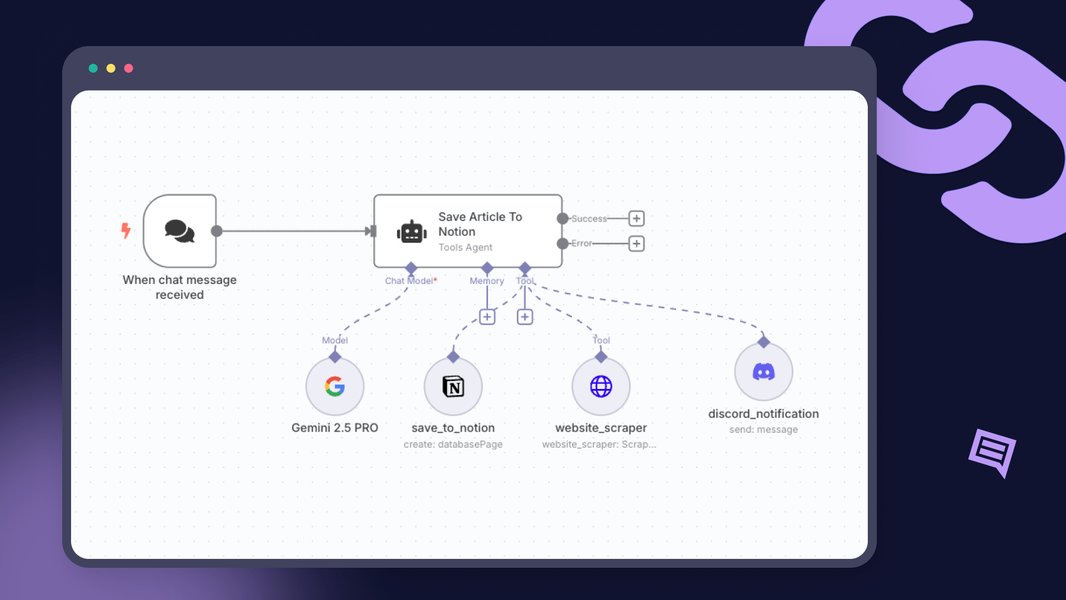 An example of an AI agentic workflow, demonstrating the sequential steps an LLM agent takes to achieve a goal.
Comparative Performance of LLMs in an Agentic Context
Evaluating LLM Strengths for Agentic Workflows
To further illustrate the strengths of different LLMs when used as agents within an environment like Roo Code, let's consider a radar chart comparing their perceived performance across several key agentic dimensions. This chart is based on general observations and reported community experiences, rather than hard quantitative benchmarks, as specific performance can vary greatly depending on the task and implementation details.
This radar chart illustrates the perceived strengths of different LLMs in an agentic context, particularly for use with Roo Code. Reasoning Depth refers to the model's ability to logically break down and solve complex problems. Tool Usage Proficiency measures how effectively the model can integrate and utilize external tools and APIs. Code Generation Quality assesses the accuracy, efficiency, and cleanliness of the generated code. Context Handling evaluates the model's capacity to maintain and utilize conversational and environmental context over time. Efficiency/Speed considers inference speed and resource usage, while Customization Flexibility reflects how easily the model can be fine-tuned or modified for specific use cases, a key advantage of open-source models.
As depicted, closed-source models like GPT-4o and Claude 3.5 Sonnet generally excel across most performance metrics, particularly in reasoning and tool usage, making them highly effective for sophisticated agentic tasks. Open-source alternatives like DeepSeek R1 and Llama 3 offer strong performance, especially in code generation, and provide superior customization flexibility, which is crucial for developers looking to tailor the agent to very specific workflows or data. The choice depends on balancing raw performance with control, cost, and the specific needs of your development environment.
Further Deep Dive: LLM Agents in Action
The Evolution of AI Agents and Workflows
The concept of AI agents is rapidly evolving. They are no longer just about automating simple, repetitive tasks. Instead, they are transforming industries by streamlining complex workflows, adapting dynamically to new situations, and interacting intelligently with various tools and systems. This evolution is enabling use cases from automated lead generation and social media strategists to complex system integrations and self-healing test frameworks.
The following video provides an excellent overview of LLM workflows, transitioning from basic automation concepts to the advanced capabilities of AI agents powered by Python and LLMs. It covers essential and advanced concepts in AI automation, including LLMs, vector databases, and Retrieval-Augmented Generation (RAG), which are all foundational for building intelligent agents.
This video is highly relevant as it addresses the core subject of LLM workflows and AI agents, which directly underpins the capabilities of platforms like Roo Code. Understanding the principles discussed here, such as the use of RAG for training LLMs on custom data and the integration of various APIs, is crucial for effectively configuring and leveraging an LLM as an agent for Roo Code. It highlights how these foundational concepts enable agents to perform sophisticated tasks, create powerful automations, and seamlessly integrate into diverse workflows.
Frequently Asked Questions (FAQ)
What is Roo Code?
Why use an LLM as an agent for Roo Code?
What makes an LLM good for agentic workflows?
Can I use open-source LLMs with Roo Code?
What are the best LLMs for Roo Code?
Conclusion
The integration of Large Language Models as agents within coding environments like Roo Code represents a significant leap in software development and automation. By combining the natural language understanding and reasoning power of LLMs with the ability to plan, use tools, and manage context, Roo Code can function as a truly autonomous assistant, streamlining complex workflows from architectural design to code generation and browser automation. While powerful closed-source models like Claude 3.5 Sonnet and GPT-4o offer unparalleled performance, the emergence of capable open-source alternatives such as DeepSeek R1 and Llama 3 provides flexibility and control for developers. The "best" LLM for Roo Code ultimately depends on specific use cases, budget constraints, and the desired balance between out-of-the-box performance and customization potential. As LLM agent technology continues to evolve, the capabilities of autonomous coding agents like Roo Code will only become more sophisticated, further transforming how we build and interact with software.
Recommended Search Queries
- How to build custom tools for LLM agents?
- Which LLM agent frameworks are best for multi-agent systems in 2025?
- DeepSeek R1 vs. Claude 3.5 Sonnet: A comparison for autonomous coding.
- How to integrate LLMs with Robotic Process Automation (RPA) for enhanced efficiency?