
Rotation in Empty Space
Exploring the Debate: Is Rotation Relative or Absolute?
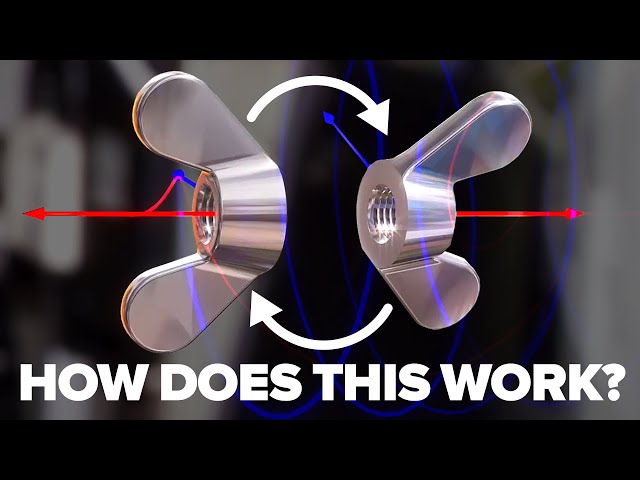
Key Highlights
- Newton's Bucket and Absolute Effects: Observations like the water concavity suggest measurable physical effects of rotation even without external references.
- Reference Frames and Relativity: General relativity and Mach's principle emphasize how rotation is interlinked with the reference frame and the distribution of mass in the universe.
- Detectability vs. Measurement: While rotation produces real forces such as the centrifugal force, the interpretation of these effects depends on the underlying theoretical framework.
Understanding the Concepts of Rotation
The debate about whether rotation is relative or absolute in empty space has persisted among physicists and philosophers for centuries. This question touches on the fundamentals of mechanics and the nature of space itself. Two core perspectives emerge from classical mechanics and modern physical theories:
Newtonian Perspective
Absolute Rotation in Classical Mechanics
In classical mechanics, Isaac Newton provided compelling arguments for what is known as absolute rotation. Newton’s bucket experiment is one of the most famous illustrations of these ideas:
Consider a bucket filled with water that is initially at rest. When the bucket is spun, the water eventually begins to curve upward along the edges, forming a concave surface. Crucially, this curvature arises not merely due to the relative motion between the bucket and the water but because of the rotation relative to an implied fixed space – sometimes referred to as absolute space.
Newton argued that the deformation of the water's surface is an observable consequence of the rotating state. The centrifugal force, which results in an outward push experienced by the water, provides evidence of an absolute rotational motion. Even if the bucket was isolated in what might be considered empty space, the water's behavior (its persistent concavity) signals that rotation is happening. Consequently, within the Newtonian framework, rotation appears to be an intrinsic property of a body – independent of external landmarks or other references.
The Role of Centrifugal Effects
Another support for absolute rotation in classical terms is the incontestable physical effects observed in a rotating system, such as centrifugal forces and Coriolis effects. Such forces are directly measurable and manifest regardless of any external reference, as demonstrated by the behavior of gyroscopes or Foucault’s pendulum. In these experiments, the forces that arise indicate a real physical rotation, suggesting that the phenomenon is somewhat absolute even in relative isolation.
Einsteinian and Modern Perspectives
General Relativity and the Nature of Space
In contrast to the classical view of absolute rotation, modern theories—most notably Albert Einstein’s general relativity—challenge the notion of absolute space. According to general relativity, space and time are interconnected in a four-dimensional continuum known as spacetime. In this framework, the curvature of spacetime is influenced by mass and energy, and the behavior of objects (including any rotation) is described by the geodesics in that spacetime.
From a relativistic standpoint, when an object rotates in an otherwise empty universe, the rotation is defined not through an external absolute space but through the dynamical structure of spacetime itself. In other words, general relativity tells us that the metric properties of spacetime—how distances and times are measured—are affected by the presence of matter, and this can blur the clear distinction between absolute and relative rotation.
A notable phenomenon in general relativity is frame dragging or the Lense-Thirring effect, where a rotating mass can 'drag' the spacetime fabric along with it. This effect suggests that the rotation of an object interacts directly with the geometry of the universe, thereby reinforcing the idea that any measurement of rotation cannot be completely isolated from the environment, even if that environment is sparse. Thus, within the context of general relativity, the concept of rotation must be understood in relation to spacetime geometry and its curvature, rather than an absolute reference frame.
Mach's Principle and the Relativity of Rotation
Adding another layer to the discussion is Mach's principle, which argues that every local inertial frame is influenced by the global distribution of mass in the universe. According to Mach, the effects we attribute to rotation (such as centrifugal forces) are not the result of an inherent property of an isolated object, but instead arise from the object's motion relative to the mass of distant stars and galaxies.
Mach's principle implies that without a universe containing other masses, the very concept of rotation (and thus inertial frames) may lose its meaning. In an empty universe, the absence of external objects complicates the way we define motion entirely. Even though an object might still experience internal centrifugal forces, the interpretation of those forces as evidence of absolute rotation becomes less tenable when compared with a view that insists all motion is fundamentally relational.
Physical Effects in an Empty Universe
Whether rotation is considered absolute or relative in an empty universe rests on a nuanced distinction between the detectability of phenomena and their interpretation:
Detectable Rotation: Centrifugal and Coriolis Effects
Even if an object exists alone in empty space, internally measurable effects such as centrifugal force remain. These forces are often taken as evidence that rotation is "real" in some undeniable sense. An object spinning in isolation will still exhibit phenomena that can be internally verified using devices such as accelerometers or gyroscopes. This detectability leans towards an interpretation of absolute rotation in the sense that the effects itself are inherent to the rotating body.
However, although these effects are measurable and consistent with Newtonian mechanics, the interpretation of why these effects arise may change in a relativistic context. In general relativity, these measurable internal effects are rather a feature of the object’s interaction with the curved spacetime, and they require no absolute external reference. Thus, what one might call “absolute effects” can also be conceptually explained via the geometry of the universe.
Rotation Without External References
In an otherwise empty universe where no external bodies exist to serve as reference points, the definition of rotation becomes more abstract. The observable consequences, like the concavity seen in Newton's bucket or the operation of a gyroscope, still occur. This greatly complicates the dichotomy between relative and absolute rather than providing a clear answer.
Some argue that since these internal forces are consistent regardless of external matter, it supports an absolute characterization of rotation. Others maintain that because the metric of spacetime itself determines the propagation of forces, such rotation is only meaningful in relation to that spacetime structure. Both interpretations rely on established experimental evidence, though they emerge from different theoretical underpinnings.
A Comparative Table of Perspectives
| Aspect | Classical (Newtonian) | Modern (Relativity) | Mach's Principle |
|---|---|---|---|
| Definition of Rotation | Intrinsic property measurable by effects like centrifugal force | Defined relative to the curvature of spacetime and influenced by mass-energy | Motion is defined relative to the massive stars and matter in the universe |
| Detectability in Empty Space | Observable via water concavity, gyroscopic effects | Detectable as effects on local inertial frames; frame-dragging phenomena | Meaningful only in the context of an interacting universe |
| Theoretical Implications | Supports concept of absolute space; unique measurable effects | Rotation is a relative phenomenon governed by spacetime geometry | Local inertial forces arise from the gravitational influence of surrounding masses |
| Experimental Validation | Newton's bucket, centrifugal force measurement | Gyroscope experiments, Foucault’s pendulum, Lense-Thirring effect | Observations consistent with a universe whose mass distribution defines local physics |
Integrating the Perspectives
Synthesizing the diverse viewpoints reveals that the question of whether rotation is relative or absolute in empty space is not binary but depends on the framework of understanding:
Under the classical Newtonian framework, rotation is generally considered absolute, owing to the observable and measurable physical effects on a rotating body's internal structure. Newton's bucket experiment offers a tangible demonstration of how rotation manifests its absolute physical properties—effects that persist even in the absence of other bodies.
In modern physics, especially within the framework provided by general relativity, rotation is seen as relative to the geometry of spacetime. The measurable internal forces, while real and significant, stem from an object's interaction with spacetime rather than an immutable external "absolute space." This relativistic interpretation gains further nuance with Mach's principle, wherein the rotation of a body can be seen as dependent on the distribution of mass in the universe.
Therefore, the detection of rotation in an isolated system in empty space does not conclusively point to an absolute state but rather emphasizes an inherent property of motion observable through internal forces. The interpretation shifts based on whether one adheres to a Newtonian notion of immutable space or accepts the relativistic description of a dynamic, curved spacetime where all motion is relational.
Mathematical Expression Example
Centrifugal Acceleration
An illustrative physical quantity is the centrifugal acceleration felt by a point rotating with angular velocity \( \omega \) at a distance \( r \) from the axis of rotation. This is given by:
\[ \text{\( a_c = \omega^2 r \)} \]
This equation, though simple, highlights that even in the absence of external objects, measurable effects indicate rotation. In a Newtonian view, \( \omega \) represents an inherent absolute rotation, whereas a relativistic interpretation treats it within the local spacetime curvature.
Historical and Philosophical Context
From Newton to Mach and Einstein
Newton’s Original Insights
Historically, Newton's argument in favor of an absolute space provided a robust framework that resonated with observable phenomena. Even without external points of reference, the internal dynamics of a system appeared sufficient to define a unique rotational state. This concept was foundational in establishing many classical mechanics principles, where effects like the deviation of a freely rotating pendulum from its initial plane were taken as evidence of absolute motion.
The Shift to Relativity
With the advent of general relativity, and through the lens of Mach's ideas, physicists started to scrutinize the idea of a fixed background. Instead, it was posited that all motion, including rotation, is only defined in relation to the overall matter in the universe. Einstein’s theory dramatically altered how rotation was understood, suggesting that the metric of spacetime itself—a dynamic, evolving entity—influences and defines the observed rotational effects.
References
- Absolute Rotation - Wikipedia
- Absolute Space and Time - Wikipedia
- Is rotational motion relative to space? - Physics Stack Exchange
- Is Rotation Absolute? - Physics Stack Exchange
- Rotation: Is it Absolute? - Science Forums
Recommended Further Exploration
Last updated March 18, 2025