
Streamlining Your Civil Inspections: Understanding Your RRI Process and Numbering
A clear guide to the Request for Receiving Inspection form, procedure, and unique identification system.
Managing incoming materials and ensuring they meet project specifications is crucial in civil engineering. The Request for Receiving Inspection (RRI) process is a cornerstone of quality assurance. This guide provides the necessary RRI documents and clarifies the specific numbering system you will use.
Highlights: Key Takeaways
- RRI Documents Provided: You have received the necessary soft copy of the RRI form and the accompanying procedural document to guide your inspections.
- Specific Numbering Protocol: Your Civil-related RRIs follow a defined structure starting with 1A5J-STJV-RRI-C00-A0001, ensuring unique identification and traceability.
- Sequential Advancement: The system uses a sequential counter (the last four digits, e.g., A0001, A0002) for easy tracking, while the area code (C00) remains constant for Civil RRIs.
Drafting Your Communication: Email to Mubeen
Subject: Request for Receiving Inspection (RRI) Soft Copy, Procedure, and Numbering Guidelines
Dear Mubeen,
I hope this email finds you well.
Please find attached the soft copy of the Request for Receiving Inspection (RRI) form and the detailed procedure document for your use and reference. These documents are essential for standardizing our approach to incoming material inspections, ensuring quality control, and maintaining compliance across our civil projects.
As you know, the RRI process is a critical quality gate. It verifies that materials, components, or equipment received meet the specified requirements before they are formally accepted and used. The attached procedure outlines the necessary steps, from initial checks to documentation.
RRI Numbering System for Civil Related Inspections:
To ensure clear tracking and organization, we have implemented a specific numbering system for Civil Related RRIs. Please adhere to the following structure:
- Your First RRI Number: Your sequence will commence with
1A5J-STJV-RRI-C00-A0001. - Sequential Incrementation: For each subsequent Civil Related RRI you initiate, please increment the last four digits sequentially (e.g., the next numbers will be
1A5J-STJV-RRI-C00-A0002,1A5J-STJV-RRI-C00-A0003, and so on). - Area Code Stability: The 'C00' segment designates the Civil discipline/area and will remain constant for all your Civil RRIs under this project scope. There is no need to change this part of the number based on specific work locations within the civil scope.
This structured numbering system is vital for maintaining accurate records, facilitating audits, and ensuring traceability throughout the project lifecycle. It helps distinguish inspections clearly and prevents duplication or confusion.
The attached procedure provides further details on conducting the inspections, including using checklists to verify quantities, check for damage, confirm specifications, and document findings accurately.
Please review the attached documents at your earliest convenience. Should you have any questions regarding the RRI form, the procedure, or the numbering system, please do not hesitate to reach out. I'm available for a quick call or meeting to clarify any points.
Attachments: RRI_Form_SoftCopy.pdf, RRI_Procedure.pdf
Thank you for your diligence in implementing this important quality process.
Best Regards,
[Your Name]
[Your Position]
Understanding the Request for Receiving Inspection (RRI)
What is an RRI?
A Request for Receiving Inspection (RRI), often called an incoming inspection, is a formal process used in quality management systems. Its primary purpose is to systematically inspect and verify that materials, components, or products received from suppliers or other sources meet predefined specifications and quality standards before they are accepted into inventory or used in production or construction. This step is crucial for preventing defective items from entering the workflow, thus ensuring the quality and integrity of the final output.
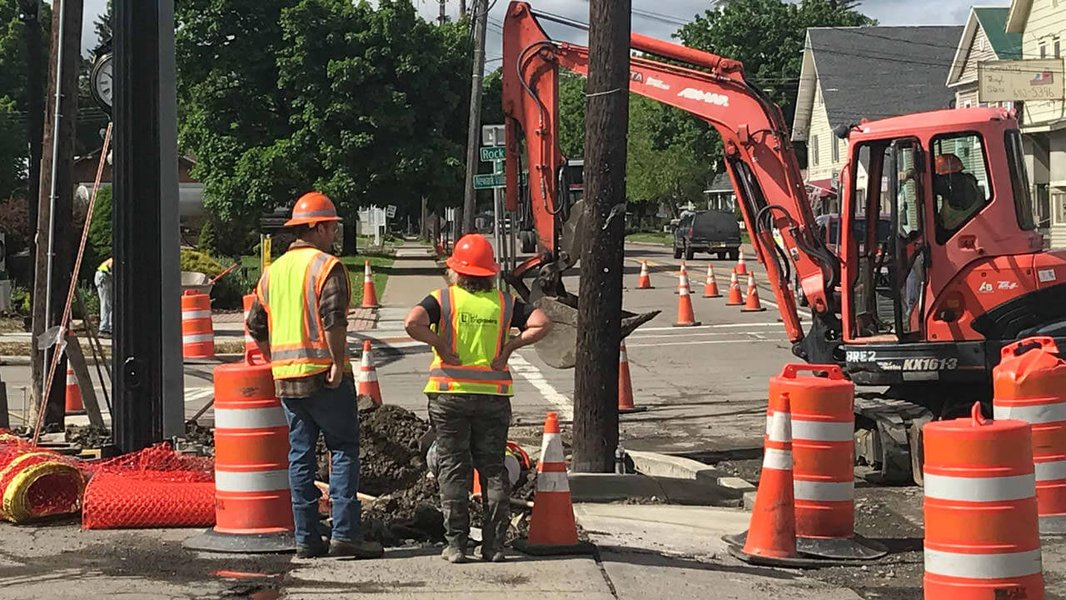
Civil engineers conducting an on-site inspection, a critical part of quality assurance similar to the RRI process.
Why is the RRI Process Important?
- Quality Assurance: It serves as a critical checkpoint to catch non-conformances early.
- Compliance: Ensures materials meet contractual, regulatory, and project-specific requirements.
- Cost Prevention: Identifies defects before they cause costly rework, delays, or failures later in the project.
- Supplier Performance: Provides data on supplier quality, aiding in supplier management.
- Traceability: Creates a documented record of inspection results linked to specific receipts.
Decoding Your RRI Number: 1A5J-STJV-RRI-C00-A0001
A Structured Approach to Identification
The RRI number provided (1A5J-STJV-RRI-C00-A0001) is not just a random sequence; it's a structured identifier designed for clarity and control. While the exact meaning of each segment is specific to your project's document control system, typical interpretations are outlined below. This structured approach, often detailed in a Document Numbering Procedure, ensures every inspection request is uniquely identifiable and categorized correctly.
| Segment | Example | Potential Meaning / Function |
|---|---|---|
| Project Identifier | 1A5J |
A code uniquely identifying the overall project or contract. |
| Originator/Entity Code | STJV |
Identifies the company, joint venture, department, or contractor initiating the RRI. |
| Document Type | RRI |
Clearly indicates the type of document: Request for Receiving Inspection. |
| Discipline/Area Code | C00 |
Specifies the relevant discipline (e.g., C for Civil) and possibly a sub-area (00). This part remains constant for all Civil RRIs as instructed. |
| Sequential Number | A0001 |
A unique, sequentially assigned number for each RRI within the defined category (Project + Originator + Type + Discipline). It increments for each new request (A0002, A0003...). The 'A' might indicate a revision or series. |
Understanding this structure helps in filing, retrieving, and referencing inspection records efficiently.

Ensuring safety and quality through inspection and certification in civil projects relies on meticulous documentation like RRIs.
Visualizing the RRI Workflow
Mindmap of the Receiving Inspection Process
The RRI process involves several key steps, from the arrival of goods to the final disposition and record-keeping. This mindmap illustrates a typical workflow associated with a Request for Receiving Inspection.
(e.g., 1A5J-STJV-RRI-C00-AXXXX)"] id3["Perform Inspection"] id3a["Gather Documentation (PO, Specs)"] id3b["Use Inspection Checklist"] id3c["Visual Inspection"] id3d["Dimensional Checks"] id3e["Testing (if required)"] id3f["Verify Quantity & Packaging"] id4["Document Findings"] id4a["Record Results on RRI Form"] id4b["Note Conformances & Non-Conformances"] id4c["Attach Evidence (Photos, Test Reports)"] id4d["Inspector Signature & Date"] id5["Disposition Decision"] id5a["Acceptance"] id5a1["Release to Stores/Use"] id5b["Rejection"] id5b1["Quarantine Material"] id5b2["Notify Supplier"] id5b3["Arrange Return/Scrap"] id5c["Conditional Acceptance (Use-As-Is / Rework)"] id6["Record Keeping"] id6a["Update Inventory System"] id6b["File Completed RRI"] id6c["Update Supplier Performance Records"]
This flow ensures that each step is followed systematically, leveraging the RRI form and the unique numbering system for complete traceability.
Evaluating Numbering System Approaches
Comparing Document Identification Strategies
Different projects and organizations use various methods for numbering documents like RRIs. The system described (1A5J-STJV-RRI-C00-A0001) is a hybrid approach, incorporating project, entity, type, discipline, and sequence information. This radar chart provides a subjective comparison of common numbering strategies based on key attributes. Your system aims for high traceability and auditability within a complex project environment.
The hybrid system, while less simple initially, offers superior traceability, auditability, and information richness, making it well-suited for complex projects requiring detailed categorization and tracking of inspections.
Understanding Document Numbering Systems
The Importance of Structured Identification
A well-defined document numbering system, like the one used for your RRIs, is fundamental to effective document control. It provides a unique identifier for every document, facilitating organization, retrieval, version control, and auditing. This video offers a brief overview of the concepts behind document control numbering.
Video explaining the basics of document control numbering systems.
Implementing such systems ensures that everyone is working with the correct versions of documents and that records, like inspection reports, can be easily located and referenced when needed.
Frequently Asked Questions (FAQ)
What exactly is a Request for Receiving Inspection (RRI)?
An RRI is a formal document and process used to request and record the inspection of incoming goods, materials, or equipment. It ensures that items received meet specified quality standards, quantity requirements, and show no signs of damage before being accepted.
Why is the specific RRI numbering system necessary?
A structured numbering system (like 1A5J-STJV-RRI-C00-A0001) provides a unique identifier for each inspection. This allows for:
- Easy Tracking: Locating specific inspection records quickly.
- Organization: Filing and retrieving documents systematically.
- Auditability: Providing a clear trail for quality audits and verification.
- Clarity: Avoiding confusion between different inspections, projects, or disciplines.
- Data Analysis: Enabling analysis of inspection trends by category (e.g., by discipline 'C00').
What should I do if I find non-conforming materials during inspection?
The RRI procedure document (attached to the email) should detail the steps for handling non-conformances. Generally, this involves:
- Documenting the non-conformance clearly on the RRI form (with evidence if possible).
- Segregating or quarantining the non-conforming items to prevent unintended use.
- Notifying the relevant parties (e.g., Quality Control department, Procurement, Supplier) as per the procedure.
- Following the defined process for disposition (e.g., rejection, return to vendor, rework, use-as-is concession).
Do I need to change the 'C00' part of the number for different civil work areas?
No. As per the instructions provided, the 'C00' segment identifies the overall Civil discipline or category for these RRIs. It should remain constant for all RRIs you generate under this scope, regardless of the specific physical location or sub-area of the civil work. Only the final sequential digits (A0001, A0002, etc.) should change.

Testing and inspection are integral parts of civil engineering quality control, supported by processes like RRI.
Recommended Reading
- What are the detailed steps for conducting a receiving inspection in a construction environment?
- Explore best practices for document control numbering systems in large engineering projects.
- Learn how to create an effective checklist for incoming material inspections.
- Understand the procedures for managing non-conforming materials found during inspection.
References
Last updated May 5, 2025