
Dr. Ryan Christopher McMinds: Pioneering Research in Microbial Ecology and Symbiosis
An in-depth look at the career, research, and contributions of a leading quantitative ecologist.
Highlights
- Expert in Host-Microbe Symbioses: Dr. McMinds specializes in the evolution of interactions between hosts and their microbial communities, with a significant focus on coral biology and marine ecosystems.
- Distinguished Career Path: Currently a Quantitative Ecologist at the Northwest Indian Fisheries Commission (NWIFC), he previously served as a Research Assistant Professor at the University of South Florida (USF).
- Impactful Research Contributions: His work, employing advanced genomics and bioinformatics, has significantly advanced the understanding of phylosymbiosis and the ecological dynamics of microbiomes, evidenced by numerous publications and thousands of citations.
Introduction to Dr. Ryan Christopher McMinds
Dr. Ryan Christopher McMinds is a highly respected quantitative ecologist and researcher renowned for his insightful work at the confluence of microbiology, ecology, bioinformatics, and evolutionary biology. His career, as of May 2025, is characterized by a deep commitment to unraveling the complexities of host-microbe symbioses, particularly within marine environments such as coral reefs. Dr. McMinds combines rigorous field research with sophisticated laboratory and computational techniques to explore the patterns and processes governing these vital biological interactions.
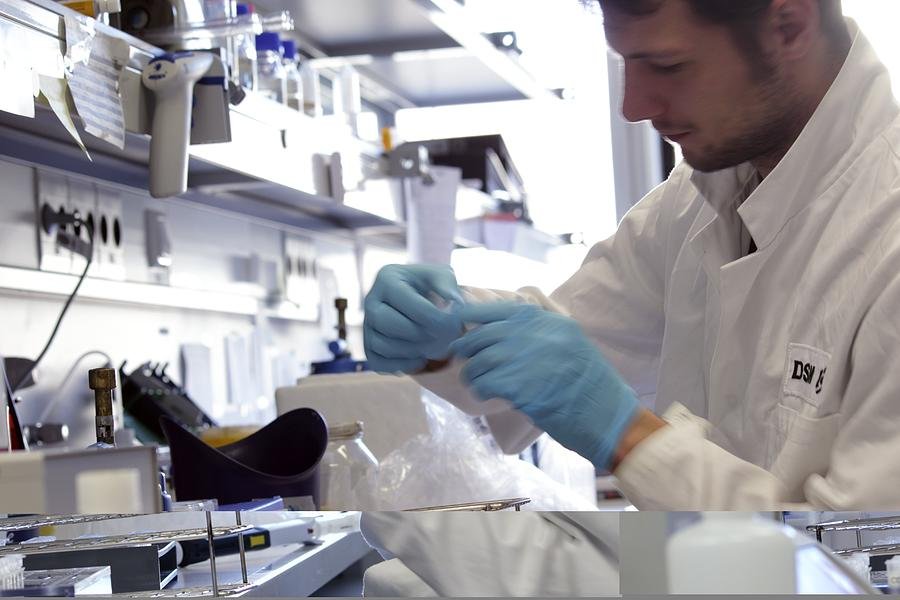
A representative image of a microbiology laboratory, reflecting the environment central to Dr. McMinds' research.
Educational Path and Foundation
Dr. McMinds' strong academic foundation has been instrumental in shaping his research trajectory and expertise.
Doctoral Studies
Dr. McMinds earned his Ph.D. in Microbiology from Oregon State University, completing his degree in December 2018. During his doctoral studies, he worked under the guidance of Dr. Rebecca Vega Thurber and was significantly involved with the Vega-Thurber lab. His research focused on microbial ecology and evolutionary biology, with a strong emphasis on coral and marine research. His doctoral work contributed substantially to understanding coral reef health and diversity, including influential research stemming from the Global Coral Microbiome Project.
Undergraduate Degree
Prior to his Ph.D., Dr. McMinds obtained a Bachelor of Science (B.S.) in Marine Science and Biology from the prestigious Rosenstiel School for Marine and Atmospheric Sciences (RSMAS) at the University of Miami. This early exposure to marine science laid the groundwork for his later specialization.
Professional Journey
Dr. McMinds' career reflects a dynamic progression from academic research to applied ecology, leveraging his profound expertise in microbial systems.
Current Role: Quantitative Ecologist
As of early 2025, Dr. McMinds serves as a Quantitative Ecologist at the Northwest Indian Fisheries Commission (NWIFC), based in Olympia, Washington. In this capacity, he applies his skills in ecology, bioinformatics, and data analysis to address complex issues related to fisheries management and environmental health, supporting indigenous fisheries and ecosystem sustainability.
Previous Academic Position
From 2020 to early 2025, Dr. McMinds was a Research Assistant Professor in the Department of Integrative Biology (also affiliated with the College of Public Health) at the University of South Florida (USF) in Tampa. During his tenure at USF, his office was located at IDRB 404 / SCA 106. His research continued to focus on the evolution of host-microbe symbioses, the genetic bases of these associations, and their ecological implications. His historical USF email was mcmindsr@usf.edu.
In-Depth Research Focus and Methodologies
Dr. McMinds' research is characterized by its interdisciplinary nature, exploring the intricate relationships between hosts and their associated microbial communities.
Core Research Areas
His primary research interest lies in the evolution of host-microbe symbioses. This encompasses a wide spectrum of interactions, from obligate symbionts to transient associations. He has a particular focus on coral biology and the microbiomes of marine organisms. His work seeks to understand the patterns of these associations and the evolutionary and ecological forces that shape them. He has conducted fieldwork in diverse locations, including the Galapagos Islands and the South Pacific, to study these systems in their natural environments.
Key Concepts and Discoveries
A significant aspect of Dr. McMinds' research involves the concept of phylosymbiosis, which posits that the composition and richness of a host's microbiome reflect the host's evolutionary history. His contributions to the Global Coral Microbiome Project provided strong evidence for this phenomenon in corals. He also investigates how environmental stressors impact microbial communities, sometimes leading to "Anna Karenina effects" where stress increases variability in microbiome structure, and explores inter-genomic communication between hosts and microbes.
Methodological Expertise
Dr. McMinds employs a range of advanced techniques in his research. These include quantitative ecological approaches, bioinformatics, and genomics (such as metagenomics and next-generation sequencing). This allows for comprehensive analysis of complex microbial datasets, revealing insights into microbial diversity, function, and host-microbe interactions. His expertise also extends to comparative immunology and evolutionary ecology, as seen in studies on immune responses in primates.
Conceptual image representing the collaborative and cutting-edge nature of microbiome research, a field central to Dr. McMinds' work.
Visualizing Expertise: A Profile Overview
The radar chart below offers a visual representation of Dr. McMinds' multifaceted expertise, highlighting both his foundational knowledge and its application in impactful research. The chart scores (on a scale where the minimum is 4 and maximum is 10) reflect strong capabilities across interconnected disciplines, crucial for his interdisciplinary work. "Foundational Expertise" refers to the core knowledge base, while "Applied Research Impact" signifies the effective utilization and influence of this expertise in his scientific contributions.
Mapping a Scientific Career
Dr. McMinds' career path, research interests, and key contributions can be visualized through the following mindmap. This diagram provides a structured overview of his academic progression, professional roles, and the primary areas that define his scientific endeavors, showcasing the interconnectedness of his work.
Oregon State University"] id1_2["B.S. Marine Science & Biology
University of Miami (RSMAS)"] id2["Career Path"] id2_1["Quantitative Ecologist
Northwest Indian Fisheries Commission
(2025-Present)"] id2_2["Research Assistant Professor
University of South Florida
(2020-2025)"] id3["Research Focus"] id3_1["Host-Microbe Symbioses"] id3_2["Coral Biology & Microbiomes"] id3_3["Quantitative Ecology"] id3_4["Bioinformatics & Genomics"] id3_5["Marine Microbial Ecology"] id4["Key Contributions & Projects"] id4_1["Phylosymbiosis Research"] id4_2["Global Coral Microbiome Project"] id4_3["Microbial Stress Responses Studies"] id4_4["Anna Karenina Effects"] id5["Skills & Methodologies"] id5_1["Metagenomics"] id5_2["Next-Generation Sequencing (NGS)"] id5_3["Computational Biology"] id5_4["Ecological Data Analysis"] id5_5["Marine Ecology Fieldwork
(e.g., Galapagos, South Pacific)"]
Significant Contributions & Impact
Dr. McMinds' work has led to notable advancements in our understanding of microbial ecology and symbiotic relationships.
Key Projects and Collaborations
His involvement in initiatives like the Global Coral Microbiome Project has been pivotal. This large-scale collaborative effort has provided critical insights into the diversity and function of coral-associated microbes worldwide and how they respond to environmental change. He has collaborated with numerous researchers, including Rebecca Vega Thurber, Deron E. Burkepile, and Andrew A. Shantz.
Publications and Citations
Dr. McMinds is a prolific author with numerous peer-reviewed publications in high-impact journals covering ecology, microbiology, and marine biology. His research is widely recognized and cited, with his Google Scholar profile indicating over 5,700 citations as of May 2025. This high citation count underscores the significance and influence of his contributions to the scientific community. His ORCID ID is 0000-0001-6333-6845, providing a verified record of his scholarly output.
The following table summarizes key phases and focus areas in Dr. McMinds' career:
| Period | Role / Focus Area | Institution / Context |
|---|---|---|
| Pre-2018 | Ph.D. in Microbiology; B.S. Marine Science & Biology | Oregon State University (Ph.D., Vega Thurber Lab); University of Miami (B.S., RSMAS) |
| December 2018 | Ph.D. Completion | Oregon State University |
| 2020 - Early 2025 | Research Assistant Professor; Focus: Host-microbe symbioses, coral microbiomes | University of South Florida (Integrative Biology); Global Coral Microbiome Project |
| Early 2025 - Present | Quantitative Ecologist; Focus: Applied ecology, fisheries, bioinformatics | Northwest Indian Fisheries Commission (NWIFC) |
Frequently Asked Questions (FAQ)
What is Dr. Ryan McMinds' current professional position?
What are Dr. McMinds' primary research interests?
Where did Dr. Ryan McMinds earn his Ph.D.?
What is "phylosymbiosis," a concept prominent in Dr. McMinds' research?
Conclusion
Dr. Ryan Christopher McMinds stands out as a dedicated and influential scientist whose multidisciplinary approach has significantly advanced the fields of microbial ecology, symbiosis, and marine biology. His transition from academia to applied ecology at the Northwest Indian Fisheries Commission demonstrates a continued commitment to leveraging his expertise for broader environmental and societal benefit. His research continues to illuminate the complex and vital roles that microbes play in host health and ecosystem function.
Recommended Further Exploration
- Explore the latest research on host-microbe symbioses in marine environments.
- What is the Global Coral Microbiome Project and its key findings?
- How does bioinformatics contribute to modern ecological research?
- Learn more about the role of quantitative ecologists in fisheries management and conservation.
References
Last updated May 21, 2025