
Reclaiming Your Lawn: Effective and Safe Dandelion Removal Strategies
Unveiling the Best Methods to Bid Farewell to Pesky Dandelions
Dandelions, with their cheerful yellow blooms and distinctive white puffballs, are a common sight in lawns across the globe. While some appreciate their early spring beauty and ecological benefits, many homeowners view them as tenacious weeds that can quickly overtake a pristine lawn. The key to successful dandelion removal lies in understanding their persistent nature—specifically, their deep taproots and prolific seed dispersal. This comprehensive guide explores various safe and effective methods to eliminate dandelions from your lawn, focusing on both immediate removal and long-term prevention.
Essential Insights for Dandelion Control
- Root Removal is Paramount: Dandelions are persistent because even a small fragment of their deep taproot (which can extend 2-3 feet) can regenerate a new plant. Complete root removal is crucial for effective elimination.
- Prevention is Your Best Defense: The most effective long-term strategy for managing dandelions involves promoting a dense, healthy lawn that naturally crowds out weeds and prevents new seeds from germinating.
- Timing and Persistence Matter: Whether you choose manual, natural, or chemical methods, applying treatments at the right time (early spring and late fall are often most effective) and consistently repeating efforts will yield the best results.
Understanding Your Opponent: The Dandelion's Resilience
The Biology Behind Dandelion Persistence
Before diving into removal methods, it's helpful to understand why dandelions are so challenging to eradicate. Dandelions (Taraxacum officinale) are broadleaf perennial weeds that thrive in full sunlight and various soil conditions. Their resilience stems from several key biological characteristics:
- Deep Taproots: Dandelions possess a robust taproot that can grow remarkably deep, often 6 to 18 inches, and sometimes even up to 2-3 feet. This deep root allows them to access water and nutrients more effectively than many grass species, and it's also why partial removal often leads to regrowth.
- Prolific Seed Production: After flowering, dandelions form characteristic white puffballs, each capable of releasing thousands of seeds (up to 20,000 viable seeds from a single plant). These seeds are easily carried by the wind, allowing dandelions to spread rapidly to new areas, including your neighbors' lawns and back into yours.
- Adaptability: Dandelions are incredibly adaptable and can grow in various soil types, even unhealthy or compacted clay soil. They are often one of the first blooms in spring, providing an early food source for pollinators, but also an early indicator of their presence in your yard.
Effectively controlling dandelions requires a multi-pronged approach that targets both existing plants and prevents future germination.
Manual Removal Methods: The Hands-On Approach
Precision and Persistence
Manual removal is an excellent option for lawns with a small to moderate number of dandelions, or for those who prefer to avoid chemical treatments. The key to success here is ensuring you remove the entire taproot.
Hand Pulling and Digging
Hand pulling is most effective when the soil is moist, ideally after a good rain or thorough irrigation. Moist soil makes it easier to dislodge the entire taproot without breaking it. For best results:
- Timing: Pull dandelions when they are young and small, before their taproots have fully developed and before they go to seed.
- Technique: Grasp the plant firmly at its base and pull slowly and steadily, aiming to extract the entire root. If the soil is dry or compacted, use a tool to loosen the soil around the taproot first.
- Tools: While simple hand pulling is possible, specialized tools like dandelion forks, stand-up weed pullers (e.g., Grampa's Weeder, Fiskars 4-claw), or even a fat straight-head screwdriver can make the process much easier and more effective, especially for deeper roots. These tools are designed to leverage and extract the taproot with minimal effort and disruption to your lawn.
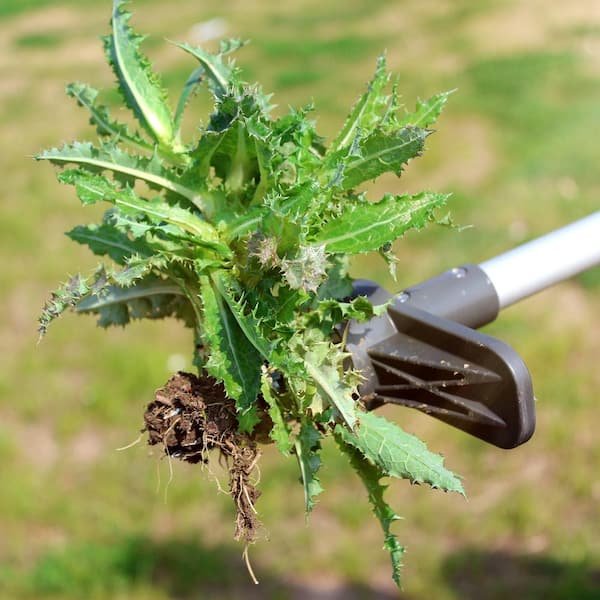
A stand-up weed puller efficiently extracting a dandelion.
Even with careful manual removal, it's unlikely you'll get every dandelion in one go, as any remaining root fragments can regrow. Regular checks and repeat removals every few weeks are necessary.
Boiling Water Application
For isolated dandelions, particularly in pathways or driveways where grass isn't a concern, boiling water can be a simple and effective chemical-free solution. Pouring boiling water directly onto the dandelion will scald the plant and can kill it down to the root. However, be cautious as it will kill any surrounding vegetation, including grass.
Natural and Organic Treatments
Environmentally Friendly Solutions
For those seeking alternatives to synthetic herbicides, several natural methods can help control dandelions. While often less potent than chemical options, consistent application can yield good results.
Vinegar Solutions
Vinegar, specifically horticultural vinegar (acetic acid at 20% concentration or higher), can effectively kill dandelions. Household vinegar (5% acetic acid) is generally not strong enough to kill the taproot, though it may scorch the leaves. For a homemade weed killer, a mixture of horticultural vinegar with a few drops of dish soap can enhance its effectiveness by helping the solution stick to the plant's foliage.
Application: Spray the mixture directly onto the dandelion, avoiding contact with desired plants as it is non-selective and will kill any plant it touches. Spraying individual dandelions with a spray collar (like a can with the bottom removed) can protect nearby grass and plants. Repeat applications may be necessary as the taproot can sometimes survive.
Salt, Soap, and Water Mixture
A mixture of organic dish soap, salt, and water can also be used as a spot treatment for dandelions. Pour this solution directly onto the soil surrounding each dandelion. This mixture can kill the dandelions within days, but like vinegar, it can also harm or kill grass and other plants if applied indiscriminately. Use sparingly and precisely.
Corn Gluten Meal (CGM)
Corn Gluten Meal acts as a natural pre-emergent herbicide, preventing new weed seeds, including dandelion seeds, from germinating. It also provides nitrogen, benefiting your lawn. However, CGM will not kill existing dandelions, as it primarily works by inhibiting seed germination. It is most effective when applied in early spring before seeds sprout. Note that since dandelions are perennial and regrow from their roots, CGM alone won't prevent their return if they are already established.
Iron-Based Herbicides (FeHEDTA)
Products containing iron (FeHEDTA) are a newer, natural, and pet-safe option for selectively killing broadleaf weeds like dandelions without harming your grass. Iron-based herbicides work by causing dandelions to absorb an excessive amount of iron, leading to their demise. These are excellent for those looking for a chemical-free, yet selective, approach.
This video demonstrates how iron HEDTA can safely eliminate dandelions without harming your lawn. Iron-based herbicides offer an organic solution for targeted weed control, showcasing a natural and effective approach to maintaining a pristine lawn.
Chemical Herbicides: Targeted Solutions
When and How to Use Them
For large infestations or when natural methods aren't sufficient, chemical herbicides can be effective. It's crucial to select the right type and apply it correctly to protect your lawn and the environment.
Broadleaf Herbicides
Broadleaf herbicides are designed to kill dandelions and other broadleaf weeds without harming grasses. These are commonly found in "weed and feed" products or as standalone sprays.
- Active Ingredients: Look for products containing 2,4-D, MCPP (mecoprop), or dicamba. FeHEDTA is a natural, selective option.
- Application Timing: The best times to apply herbicides are in early spring when dandelions are actively growing but before they produce seeds, or in late fall. Fall applications are often more effective as the plant is transferring nutrients to its roots, allowing the herbicide to be transported throughout the plant, weakening or killing it before winter.
- Technique: Apply when the dandelion leaves are large enough to absorb the chemical effectively. Wait 2-3 days after application before mowing to allow the herbicide to transfer to the roots. Always follow the manufacturer's instructions for proper use, safety, and re-entry intervals.
Non-Selective Herbicides
Non-selective herbicides (like glyphosate) will kill any plant they contact, including grass. These are best reserved for spot treatments in areas where you don't mind killing surrounding vegetation, such as cracks in driveways, pathways, or flower beds before planting. Apply carefully to avoid drift onto desirable plants.
Preventative Measures: The Ultimate Defense
Cultivating a Healthy, Resilient Lawn
The most sustainable and effective way to control dandelions is through prevention. A thick, healthy lawn naturally crowds out weeds, making it difficult for dandelion seeds to germinate and establish. Think of your grass as an active competitor against weeds.
Proper Mowing Practices
- Mow Higher: Set your mower to a higher setting (2-3 inches or more). Taller grass grows thicker, shading the soil surface. This shade prevents dandelion seeds from receiving enough sunlight to sprout.
- Leave Clippings: Leave mulched grass clippings on your lawn. They return nutrients to the soil and can also help hinder the growth of new weeds.
Optimal Watering and Fertilization
- Deep, Infrequent Watering: Water your lawn deeply and less frequently to encourage deep root growth in your grass, making it more resilient to stress and weed invasion.
- Regular Feeding Program: Follow a regular fertilization schedule tailored to your grass type and soil needs. A well-fed lawn is denser and healthier, leaving less room for dandelions to establish. Consider organic fertilizers like corn gluten meal, which also offer pre-emergent benefits.
Improving Soil Health
- Soil Testing: Conduct a soil test to understand your soil's pH and nutrient levels. Dandelions often thrive in poor or acidic soils, or those low in calcium and organic matter. Adjusting soil pH and improving organic content can naturally discourage dandelion growth.
- Aeration: Address compacted soil through aeration. Dandelions can break up compacted clay, so improving soil structure makes your lawn less hospitable to them.
- Mulching: Apply mulch to planting beds. This creates a barrier that suppresses weed growth and makes it easier to pull any young dandelion seedlings that do emerge.
Pre-Emergent Herbicides
Applying a pre-emergent herbicide in late winter or early spring can prevent dandelion seeds (and other weed seeds) from germinating. This creates a chemical barrier in the soil. However, note that some pre-emergent products are not effective against dandelions that regrow from existing taproots. Always read the label carefully.
Choosing the Right Strategy: A Comparative Analysis
Evaluating Effectiveness, Effort, and Environmental Impact
Selecting the best dandelion removal method depends on your priorities, the extent of the infestation, and your tolerance for dandelions. Here's a comparative overview:
| Method | Effectiveness Against Taproot | Effort Level | Environmental Impact | Best Use Case | |||||
|---|---|---|---|---|---|---|---|---|---|
| Hand Pulling/Digging | High (if root fully removed) | High (labor-intensive) | Very Low (zero chemicals) | Few dandelions, small lawns, eco-conscious approach. | |||||
| Boiling Water | High (localized) | Low (simple) | Very Low (zero chemicals) | Isolated dandelions in non-lawn areas (e.g., cracks). | |||||
| Horticultural Vinegar | Moderate (may not kill deep roots) | Medium (spot treatment) | Low (natural acid) | Spot treatment, chemical-free zones, careful application needed. | |||||
| Salt/Soap Mixture | Moderate (localized) | Medium (spot treatment) | Low (natural ingredients) | Spot treatment on individual dandelions; caution for grass. | |||||
| Corn Gluten Meal | N/A (prevents germination) | Low (application) | Very Low (natural fertilizer) | Prevention of new seedlings, general lawn health. | |||||
| Iron-Based Herbicides | High (selective, post-emergent) | Low (spray application) | Very Low (natural iron) | Safe, selective killing of broadleaf weeds without harming grass. | |||||
| Broadleaf Herbicides | High (systemic) | Low (spray application) | Medium (chemical) | Large infestations, desire for a weed-free lawn. | |||||
| Non-Selective Herbicides | High (kills all plants) | Low (spray application) | High (chemical, non-selective) | Areas where no plant growth is desired (e.g., gravel). | Healthy Lawn Practices | Prevention | Ongoing (regular care) | Very Low (natural processes) | Long-term control, overall lawn vitality. |
Assessing Dandelion Control Effectiveness
A Radar Chart Comparison of Methods
To further illustrate the strengths and weaknesses of various dandelion removal strategies, the following radar chart provides a visual comparison across several key performance indicators. These ratings are opinion-based, reflecting typical outcomes observed by gardeners and lawn care professionals.
The radar chart illustrates the trade-offs between different methods. For instance, while broadleaf herbicides offer high root elimination efficacy and speed, they rank lower in environmental friendliness compared to manual pulling or iron-based solutions. Healthy lawn practices, though slow for immediate removal, score exceptionally high in long-term prevention and environmental safety, highlighting their crucial role in an integrated weed management plan.
Integrated Dandelion Management: A Holistic Strategy
Combining Approaches for Maximum Impact
The most effective way to safely remove dandelions and keep them from returning is to adopt an integrated pest management (IPM) approach. This involves combining several methods tailored to your specific situation and commitment level:
- Assess the Infestation: For a few dandelions, manual removal is often sufficient. For a widespread problem, you might start with a targeted herbicide or natural alternative, followed by manual removal of stragglers.
- Prioritize Prevention: Regardless of your chosen removal method, continuously work on improving your lawn's health. This is the cornerstone of long-term dandelion control. A dense, healthy lawn naturally suppresses weeds.
- Timely Action: Act early! Removing dandelions before they go to seed is critical to breaking their reproductive cycle. Early spring and late fall are prime times for treatment.
- Be Persistent: Dandelions are tough. It's unlikely you'll eliminate them permanently with a single effort, especially given that seeds can blow in from neighboring yards. Regular monitoring and consistent application of your chosen methods are key.
Remember that dandelions, while a nuisance to some, do offer benefits, such as providing early season food for pollinators and breaking up compacted soil. The decision to remove them, and how, is ultimately up to your personal preference and lawn goals.
Frequently Asked Questions (FAQ)
Can I really get rid of dandelions permanently?
What is the best time of year to treat dandelions?
Will household vinegar kill dandelions?
Are there pet-safe options for dandelion removal?
Why do dandelions keep coming back even after I pull them?
How does a healthy lawn prevent dandelions?
Conclusion
Eliminating dandelions from your lawn safely and effectively requires a strategic approach. Whether you opt for the hands-on precision of manual removal, the eco-friendly benefits of natural treatments, or the targeted power of herbicides, understanding the dandelion's resilience is key. Ultimately, fostering a robust and healthy lawn through proper cultural practices remains the most sustainable and preventative measure against these pervasive weeds. By combining removal techniques with diligent lawn care, you can significantly reduce dandelion populations and cultivate the lush, weed-free lawn you desire.
Recommended Further Reading
- Advanced lawn care practices for weed prevention
- Benefits and uses of dandelions in gardening
- Comparison of organic vs synthetic weed killers
- Tools and techniques for effective weed pulling
References
Last updated May 21, 2025