
Exploring the Sixteen Samskaras: Ancient Hindu Rites of Passage
Sacred Milestones Shaping Life from Conception to Cremation
Key Insights into the Ancient Samskaras
- Meaning and Purpose: Samskaras, meaning "to prepare, perfect, polish," are sacred rites of passage in Hinduism that mark significant milestones throughout a person's life, aiming for spiritual purification, development, and the inculcation of virtues.
- Comprehensive Journey: The most commonly accepted list comprises sixteen Samskaras, guiding an individual through prenatal stages, childhood, education, marriage, and ultimately, the final rites after death.
- Historical Evolution and Variation: While ancient texts mention a larger number of Samskaras, the tradition evolved over time, with regional, caste, and family customs influencing which rituals are observed; however, the core purpose of marking life's crucial transitions and fostering spiritual growth remains central.
In ancient periods of Hinduism, life was viewed as a sacred journey, punctuated by significant rites and rituals known as Samskaras. The term "Samskara" originates from Sanskrit and conveys the meaning of "to prepare, perfect, or polish." These ceremonies were not merely social events but held deep spiritual significance, believed to purify the soul, cleanse sins, and foster spiritual development and ethical conduct. They served as outward symbols of inner transformation, marking an individual's progress through various stages of life.
While ancient texts refer to varying numbers of Samskaras, ranging from 16 to 40, the most widely accepted and practiced list includes sixteen principal rites. These cover the entire lifespan of a Hindu, beginning even before birth and extending to the final rites after death. The performance and specifics of these rituals have historically varied depending on region, caste, and family traditions, yet their fundamental purpose of guiding an individual through life's crucial transitions and instilling important values has remained consistent.
The Significance and Philosophy Behind Samskaras
Purification, Growth, and Spiritual Edification
The philosophy underpinning the Samskaras is deeply intertwined with the Hindu understanding of life, karma, and spiritual liberation. Samskaras are considered a form of spiritual endeavor (sadhana), an external discipline designed for internal spiritual growth and refinement. They are believed to leave positive impressions or "samskaras" on the mind and soul of the individual, shaping their character, behavior, and perception of the world.
These rites of passage are seen as opportunities to shed negative influences and accumulate positive spiritual energy. By engaging in these prescribed rituals, individuals are guided towards a life of dharma (righteousness), purpose, and eventual union with Brahman (the ultimate reality). The emphasis is not solely on the external performance of the ritual but on the inner transformation and the conscious shaping of one's character and values.
Samskaras as Impressions and Dispositions
In the context of Indian philosophy, particularly in schools like Samkhya and Yoga, Samskaras are also understood as the impressions, residues, or latent potencies that accumulate in the mind from past experiences, actions, and thoughts. These subliminal impressions influence an individual's tendencies, behaviors, and responses to the world. The Samskara rites of passage, in this sense, are aimed at creating positive impressions and purifying negative ones, contributing to a more virtuous and spiritually aligned individual.
The Importance of Virtues
It is important to note that while the performance of Samskaras is significant, ancient texts also emphasize that the true value lies in the cultivation of virtues. The Gautama Dharmasutra, for instance, highlights eight virtues—compassion, patience, lack of envy, purity, tranquillity, positive disposition, generosity, and lack of possessiveness—as being more crucial than the mere performance of the rituals for attaining spiritual liberation.
The Sixteen Principal Samskaras: A Journey Through Life's Stages
From Conception to Final Liberation
The sixteen Samskaras provide a structured pathway through the various stages of human life, each ritual marking a significant transition and carrying specific intentions and prayers for the individual's well-being and spiritual growth. These can be broadly categorized into prenatal, childhood, education, marriage, and death sanskaras.
Prenatal Samskaras: Setting the Stage for a Pure Beginning
The journey of Samskaras begins even before birth, underscoring the Hindu belief in the continuity of life and the importance of a spiritually conducive environment for the developing fetus. The three prenatal Samskaras are:
- Garbhadhana (Conception Rite): Performed by the married couple to sanctify the act of conception and pray for a healthy, virtuous, and spiritually inclined child.
- Pumsavana (Fetus Rite): Typically performed in the third month of pregnancy, this ritual is aimed at promoting the healthy development of the fetus, traditionally with prayers for the birth of a male child, though its interpretation has evolved over time.
- Simantonayana (Hair Parting Rite): Performed in the fourth or fifth month of pregnancy, this ceremony is intended to wish for the well-being and intellectual development of the child and the safety of the mother.
Childhood Samskaras: Nurturing Growth and Identity
These Samskaras mark important milestones in a child's early life, focusing on physical health, naming, and the first steps towards formal learning.
- Jatakarman (Birth Ceremonies): Performed at the time of birth, this ritual welcomes the newborn into the family and the world, often involving the father touching the baby's lips with honey and ghee and reciting Vedic mantras for longevity and well-being.
- Namakarana (Naming Ceremony): Usually held on the eleventh or twelfth day after birth, this ceremony officially gives the child a name, often chosen based on astrological considerations or family traditions.
- Nishkramana (First Outing): This ritual marks the child's first formal outing from the house, often to see the sun or the moon, signifying their introduction to the external world.
- Annaprashana (First Feeding of Solid Food): Performed when the child is around six months old, this ceremony introduces solid food into the child's diet, accompanied by prayers for good health and nourishment.
- Chudakarana (First Haircut): Also known as Mundan, this ritual involves the first shaving of the child's head, believed to purify the child and remove negative influences from past lives. This ceremony is often performed within the first few years.
- Karnavedha (Ear Piercing Ceremony): This ritual involves piercing the child's ears, believed to have health benefits and also serving as an adornment.
Education Samskaras: The Path to Knowledge and Wisdom
These Samskaras are crucial for the intellectual and spiritual development of the individual, marking the beginning and progression of their education.
- Vidyarambha (Beginning of Education): This ceremony marks the formal start of the child's education, often involving the worship of Goddess Saraswati and Lord Ganesh for blessings of wisdom and intellect. In ancient times, this could precede the study of Vedic texts.
- Upanayana (Sacred Thread Ceremony): A highly significant Samskara, particularly for boys, marking their initiation into Vedic study and the beginning of brahmacharya (student life). The wearing of the sacred thread (Yajnopaveetam or Janeau) symbolizes the individual's commitment to spiritual learning and their connection to the divine. This is considered a second birth, a spiritual one.
- Vedarambha (Beginning of Vedic Study): This ritual specifically marks the commencement of studying the Vedas and other scriptures under the guidance of a Guru. In ancient times, students would live with their Guru in a Gurukul, dedicating themselves to learning and disciplined living.
- Keshanta (First Shaving for Students): Performed towards the end of the student life, this ritual involves the first shaving of the beard for boys, symbolizing their transition towards adulthood and the completion of a phase of their education.
- Samavartana (End of Student Life): This ceremony marks the completion of one's formal education and the return home from the Guru's house. It signifies the readiness of the individual to enter the next stage of life, typically that of a householder.
Marriage Samskara: The Foundation of Family Life
The Vivaha Samskara is one of the most important rites of passage, marking the beginning of the gṛihastha (householder) stage of life and the union of a man and a woman in sacred matrimony.
- Vivaha (Marriage Ceremony): This is a complex Vedic ritual with the fire deity Agni as the primary witness. It signifies the lifelong commitment and bond between the couple, the beginning of their family life, and their responsibility to contribute to society and uphold dharma. Worship of Ganapati (Ganesh) often precedes the marriage ceremony for an auspicious beginning.
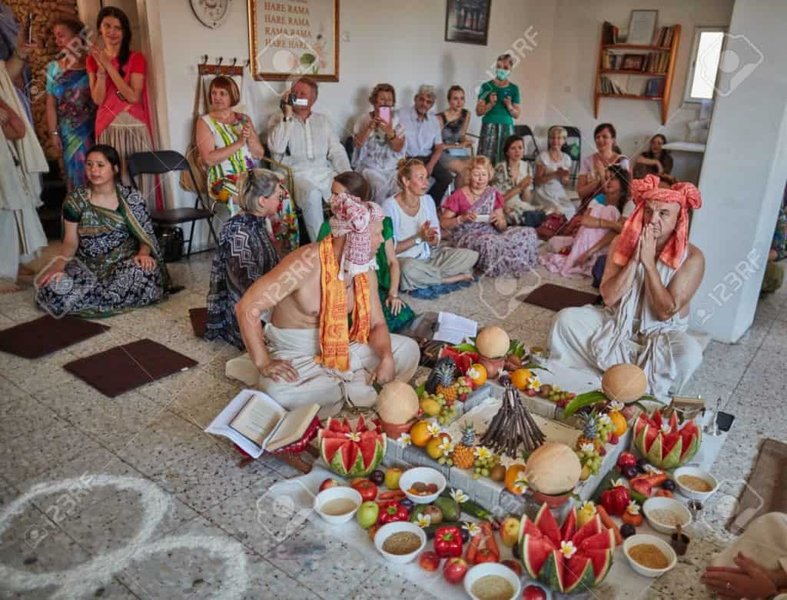
A traditional Hindu wedding ceremony, a key Samskara.
Post-Marital and Final Samskaras: Later Life and Liberation
While the list of sixteen primarily focuses on earlier stages, some traditions extend to include rites for later life stages and the final journey.
-
Vanaprastha (Entering the Forest Dweller Stage): While not always listed as one of the 16, this traditionally marked the stage of life where an individual, after fulfilling their household duties, would retire to the forest to pursue spiritual practices. Some traditions consider a ritualistic transition to this stage.
-
Sannyasa (Renunciation): Similarly, the final stage of life involving complete renunciation of worldly ties to dedicate oneself entirely to spiritual liberation is also sometimes marked by a formal ritual.
-
Antyeshti (Funeral Rites): This is the final Samskara, performed after death. It involves cremation and subsequent rituals to ensure the peaceful transition of the soul. This is a crucial rite for the well-being of the departed and the purification of the mourners.
Here is a table summarizing the sixteen principal Samskaras and their significance:
| Samskara | Stage of Life | Significance |
|---|---|---|
| Garbhadhana | Prenatal | Sanctifying conception, praying for a virtuous child. |
| Pumsavana | Prenatal | Promoting fetal development, traditionally praying for a male child. |
| Simantonayana | Prenatal | Ensuring well-being of mother and child, praying for intellectual development. |
| Jatakarman | Birth | Welcoming the newborn, prayers for longevity and well-being. |
| Namakarana | Childhood | Giving the child a name. |
| Nishkramana | Childhood | Child's first outing to the external world. |
| Annaprashana | Childhood | First feeding of solid food. |
| Chudakarana | Childhood | First haircut, purification. |
| Karnavedha | Childhood | Ear piercing for health and adornment. |
| Vidyarambha | Education | Formal beginning of education. |
| Upanayana | Education | Initiation into Vedic study, wearing the sacred thread. |
| Vedarambha | Education | Beginning of Vedic scriptural study. |
| Keshanta | Education | First shaving of beard for students. |
| Samavartana | Education | Completion of student life. |
| Vivaha | Marriage | Sacred union and beginning of householder life. |
| Antyeshti | Death | Funeral rites and rituals for the departed soul. |
Evolution and Practice in Modern Times
Continuity and Adaptation of Traditions
While the concept of Samskaras originated in ancient times and is rooted in Vedic traditions, their practice has evolved over centuries. The emphasis and performance of certain Samskaras may differ in contemporary Hinduism compared to ancient periods. In modern times, while all sixteen Samskaras are recognized, typically only a few are widely observed, primarily Jatakarma (birth rites), Upanayana (sacred thread ceremony), Vivaha (marriage), and Antyeshti (funeral rites). This adaptation reflects changing social structures, lifestyles, and priorities.
Explore the 16 Samskaras in Hinduism, their significance, and spiritual journey.
Despite the variations in practice, the underlying philosophy of Samskaras as rites of passage that purify, prepare, and perfect an individual for their journey through life remains a fundamental aspect of Hindu tradition. They continue to serve as important cultural markers and provide a framework for understanding the different stages of life and their associated responsibilities and spiritual opportunities.
FAQ: Understanding Samskaras
What is the main purpose of Samskaras in Hinduism?
The main purpose of Samskaras is to mark and sanctify important transitions in a person's life, from conception to death. They are believed to purify the individual, remove negative influences, and foster spiritual growth, ethical development, and a deeper connection with their religious and cultural heritage.
How many Samskaras are traditionally recognized?
While ancient texts mention varying numbers, the most commonly accepted list includes sixteen principal Samskaras, covering the entire lifespan of a Hindu.
Are all sixteen Samskaras still practiced today?
In modern times, the widespread practice of all sixteen Samskaras varies greatly depending on region, caste, and family traditions. However, some core Samskaras such as birth rites, sacred thread ceremony (for some communities), marriage, and funeral rites are still widely observed.
Do Samskaras only involve external rituals?
No, Samskaras involve both external rituals and internal transformation. While the ceremonies are outward expressions, the true aim is to cultivate inner virtues, shape character, and foster spiritual development.
What is the significance of the prenatal Samskaras?
The prenatal Samskaras highlight the importance of the well-being and spiritual development of the child even before birth. They involve prayers and rituals for a healthy pregnancy, a virtuous child, and a positive start to life's journey.
Why is the Upanayana Samskara considered important?
The Upanayana Samskara is a significant initiation rite, particularly for boys, marking the beginning of their formal education, their entry into student life (brahmacharya), and their commitment to spiritual learning and discipline. It is often referred to as a second, spiritual birth.
What role does Vivaha (marriage) play as a Samskara?
Vivaha is a fundamental Samskara marking the transition to the householder stage (gṛihastha). It is considered a sacred union and a lifelong commitment, essential for continuing the family line, fulfilling social responsibilities, and pursuing dharma together.
What is the purpose of the Antyeshti Samskara?
Antyeshti is the final Samskara, the funeral rites performed after death. Its purpose is to ensure the peaceful departure of the soul and to provide a sense of closure and purification for the grieving family members.
References
Last updated May 2, 2025