
Saudi Arabia's Transformative Ambition: A Deep Dive into Vision 2030 and Giga-Projects
Unveiling the Kingdom's Bold Blueprint for Economic Diversification and Global Influence
Key Highlights of Saudi Arabia's Vision 2030
- Economic Diversification: Saudi Vision 2030 is a sweeping government program initiated by Crown Prince Mohammed bin Salman (MBS) aimed at significantly reducing the Kingdom's reliance on oil by diversifying its economy into non-oil sectors such as tourism, entertainment, technology, and renewable energy.
- Giga-Projects as Catalysts: Central to Vision 2030 are numerous "giga-projects" – massive, ambitious developments like NEOM, Qiddiya, and the Red Sea Project. These projects are designed to attract foreign investment, create millions of jobs, stimulate various industries, and position Saudi Arabia as a global leader in innovation and sustainability.
- Social and Cultural Transformation: Beyond economic goals, Vision 2030 also encompasses significant social and cultural reforms, including enhancing quality of life for citizens, promoting entertainment, empowering women, and fostering a more vibrant society.
Under the visionary leadership of Crown Prince Mohammed bin Salman (MBS), Saudi Arabia has embarked on an unprecedented journey of national transformation known as Vision 2030. Launched in 2016, this ambitious strategic framework is designed to revolutionize the Kingdom's economic, social, and cultural landscape, moving it away from its historical dependence on oil revenues. The core of this transformation lies in a series of colossal investment initiatives, often referred to as "giga-projects," which collectively represent one of the largest clusters of development efforts globally.
The Genesis of Vision 2030: A Paradigm Shift
Why Saudi Arabia is Redefining its Future
Saudi Vision 2030 is much more than an economic plan; it is a comprehensive blueprint for the Kingdom's future, encompassing three primary themes: a vibrant society, a thriving economy, and an ambitious nation. Spearheaded by MBS, who also serves as the head of the Council of Economic and Development Affairs (CEDA), the initiative seeks to unlock Saudi Arabia's full potential by leveraging its unique strengths: its pivotal role in the Arab and Islamic worlds, strong investment capabilities through the Public Investment Fund (PIF), and its strategic geographical position.
The imperative for this transformation stems from a recognition of the need to build a sustainable future beyond oil. By diversifying economic sources, Saudi Arabia aims to create new avenues for growth, enhance global integration, and improve the quality of life for its citizens and residents. The reforms include fostering a supportive business environment for both local and international investors, investing heavily in education to prepare the workforce for future jobs, and enhancing governmental efficiency.
Unpacking the Giga-Projects: Pillars of Transformation
Monumental Developments Driving Economic Diversification
At the heart of Vision 2030's economic diversification strategy are the giga-projects. These are not merely large-scale constructions but integrated developments designed to create entirely new cities, tourism destinations, and industrial hubs. Valued collectively at an astonishing $1.3 trillion in real estate and infrastructure projects launched over the past eight years, these initiatives aim to generate jobs, attract significant foreign direct investment (FDI), and position Saudi Arabia as a global leader in innovation and sustainability.
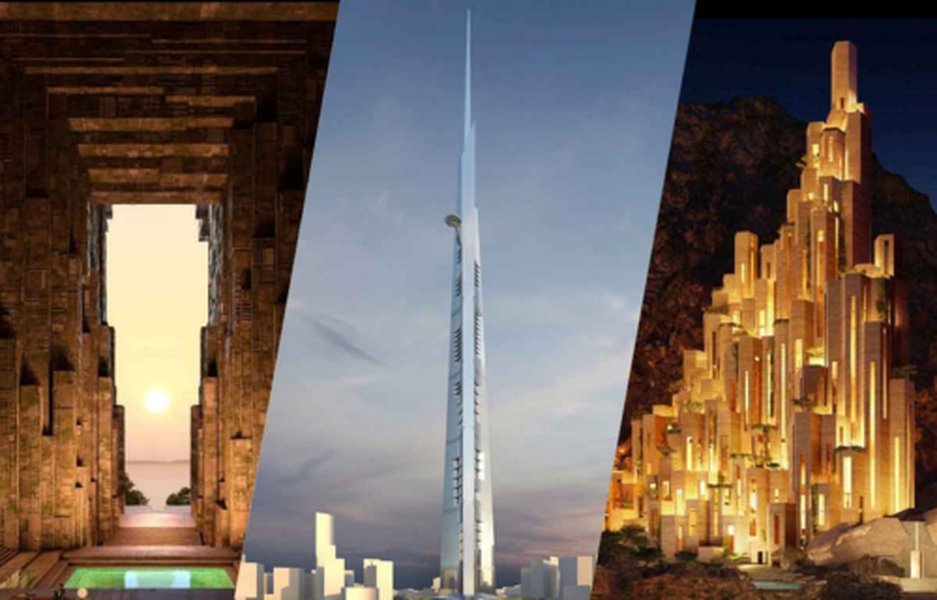
An overview illustrating some of Saudi Arabia's ambitious giga-projects transforming its landscape.
NEOM: The Futuristic Megacity
NEOM stands as the most ambitious and perhaps most recognized of Saudi Arabia's giga-projects. Envisioned as a futuristic megacity in the northwest of the Kingdom, it is set to be a global hub for innovation, technology, and sustainable living. NEOM includes several distinct regions:
- The Line: A revolutionary 170-kilometer-long, zero-carbon linear city designed to house millions, integrating urban development with nature. While initial projections for its capacity have been adjusted, construction is actively underway.
- Trojena: A mountain tourism destination offering year-round outdoor sports and adventure, including the Middle East's first outdoor ski resort.
- Oxagon: A floating industrial complex focused on advanced and clean manufacturing.
- Sindalah: A luxury island resort destined to be a premier Red Sea destination.

Construction progress on The Line within the NEOM megaproject, showcasing early groundworks.
The scale of NEOM's earthworks and piling operations is immense, reflecting the unprecedented nature of this project. While facing some skepticism and adjustments in scope, its development continues to push the boundaries of urban planning and sustainability.
Qiddiya: The Entertainment Capital
Located on the edge of Riyadh, Qiddiya is being developed as Saudi Arabia's capital of entertainment, sports, and culture. Led by the Qiddiya Investment Company (QIC), this giga-project aims to create a vibrant destination for Saudi youth and international visitors alike. Key attractions include:
- Six Flags Qiddiya City: Set to be the largest and most expensive Six Flags park globally, featuring 28 rides and attractions across six themed lands, including the record-breaking Falcons Flight roller coaster.
- A Formula One racing track, water parks, and numerous sports stadiums.
The Red Sea Project and Amaala: Luxury Tourism Destinations
Red Sea Global (RSG) is developing two of the world's most ambitious regenerative tourism projects: The Red Sea and Amaala. These initiatives prioritize environmental sustainability and conservation while offering luxury experiences. The Red Sea, spanning 28,000 square kilometers, is surrounded by one of the world's largest barrier reef systems, with visitor numbers capped to ensure ecological preservation.
Diriyah Gate: Historical and Cultural Revival
Diriyah, a UNESCO World Heritage site and the historical birthplace of the first Saudi dynasty, is undergoing a $50 billion revamp. This giga-project focuses on showcasing 300 years of Saudi Arabia's rich history and cultural heritage to a global audience, transforming it into a blend of cultural, historical, and tourism landmarks.
ROSHN Group: Redefining Urban Living
ROSHN Group, a leading multi-asset class real estate developer, is a key enabler of Vision 2030, with a mission to build 400,000 homes across Saudi Arabia. Their focus is on transforming urban landscapes and developing integrated, human-centric communities that enhance connectivity and elevate the quality of life.
New Murabba: Riyadh's New Global Landmark
Announced in 2024, New Murabba is a massive urban project in Riyadh featuring the iconic Mukaab, a cube-shaped skyscraper, alongside extensive commercial zones and green spaces. This project aims to make Riyadh a global landmark and foster national pride.

A rendering of the Mukaab, a centerpiece of the New Murabba project in Riyadh.
Investment and Funding Mechanisms
The Public Investment Fund (PIF), Saudi Arabia's sovereign wealth fund, plays a central role in financing these giga-projects. With estimated assets of $925 billion, the PIF is actively investing in diverse sectors both domestically and internationally. The Kingdom also seeks to attract substantial foreign direct investment, offering new opportunities across burgeoning sectors like infrastructure, tourism, entertainment, health and science, technology, and renewable energy. The government has also initiated programs like Shareek, investing $51 billion to stimulate private sector participation, create jobs, and achieve significant GDP growth.
Economic and Social Impact of Vision 2030
Transforming the Kingdom's Landscape
Vision 2030 is designed to yield profound economic and social impacts. Economically, it aims to increase the non-oil GDP, create millions of new jobs, and attract foreign investment to drive sustainable growth. Socially, it seeks to enhance the quality of life, empower citizens, and introduce a more vibrant cultural and entertainment scene.
Key Economic Indicators and Forecasts for 2025
As Saudi Arabia marches toward its Vision 2030 goals, 2025 is projected to be another transformative year:
- GDP Growth: Projected to grow by 3.7%, outpacing the global average.
- Consumer Spending: Forecasted to rise by 4.5%.
- Non-oil GDP Growth: Expected to sustain robust growth, averaging 4.4% annually from 2025 onward.
- Foreign Investment: Initiatives in infrastructure, tourism, and technology are designed to attract significant FDI.
The construction market is booming, offering local and international businesses new opportunities to participate in world-class developments. Sectors like renewable energy, industrial manufacturing, and AI are attracting substantial investment, with AI alone projected to add $135 billion to the economy by 2030. Saudi Arabia's successful bids to host Expo 2030 and the FIFA World Cup 2034 further underscore its commitment to showcasing its economic transformation and attracting global participation.
Social Reforms and Quality of Life
Beyond economic objectives, Vision 2030 includes significant social reforms. These include greater social openness, promoting entertainment, and empowering women in the workforce. The establishment of the General Entertainment Authority (GEA) has led to public concerts and cultural events that were once restricted, contributing to a more vibrant society.
Challenges and Opportunities Ahead
Navigating the Path to a Diversified Future
While the ambition of Vision 2030 is undeniable, the Kingdom faces various challenges in its implementation. These include the sheer scale and complexity of the giga-projects, the need for continued foreign investment, and the development of a robust private sector workforce.
However, the opportunities presented by Vision 2030 are equally significant. The transformation offers professionals a unique chance to contribute to nation-building, attracting global talent to work on some of the world's most innovative projects. The shift towards sustainability, green energy, and high-tech industries presents vast potential for new partnerships and economic growth.
Key Investment Opportunities and Challenges in 2025
The following table summarizes key investment opportunities and challenges in Saudi Arabia for 2025:
| Category | Opportunities | Challenges |
|---|---|---|
| Infrastructure & Smart Cities | NEOM, Red Sea Project, Qiddiya, New Murabba; focus on sustainability, innovation, tourism, and tech hubs. | High capital expenditure, complex project management, potential for delays, geopolitical considerations. |
| Renewable Energy | Ambitious goal of 50% green energy by 2030; vast solar and wind resources; world's largest green hydrogen plant. | Initial investment costs, grid integration complexities, talent acquisition in specialized fields. |
| Tourism & Entertainment | Luxury resort projects (Soudah Peaks), theme parks (Six Flags Qiddiya), cultural sites (Diriyah); rich cultural and natural resources. | Developing necessary hospitality infrastructure, attracting diverse visitor demographics, maintaining cultural authenticity. |
| Industrial & Manufacturing | Transition to high-end fields (EVs, advanced equipment); focus on localization of production (steel plate, chemicals). | Building skilled labor force, fostering local supply chains, competing with established global manufacturing hubs. |
| Technology & Digital Economy | Digital sector contributing 14% to GDP; AI projected to add $135 billion by 2030; strong emphasis on innovation. | Talent retention, regulatory framework evolution, cybersecurity risks. |
| Real Estate | Population growth and urbanization driving demand for residential and commercial properties; new integrated communities. | Ownership restrictions in holy cities, market fluctuations, ensuring affordability and accessibility for all segments. |
The transformation under Vision 2030 is not without its critics and challenges, including questions about financial returns for some projects and the pace of certain developments. However, Saudi officials maintain their commitment to the ambitious goals, adapting strategies as needed to ensure the successful realization of the vision.
A Visual Overview of Strategic Focus Areas
Assessing Saudi Arabia's Vision 2030 Priorities
To further illustrate the multifaceted nature of Saudi Arabia's Vision 2030 and its giga-projects, the radar chart below provides an opinionated assessment of the Kingdom's strategic focus across several key development areas. This chart highlights the perceived emphasis and potential impact in each category, based on the ambitious goals and significant investments being made.
This radar chart visually represents how Saudi Arabia prioritizes different aspects of Vision 2030. "Economic Diversification" and "Infrastructure Development" show the highest emphasis, reflecting the Kingdom's direct investment in large-scale projects and non-oil sectors. "Tourism & Entertainment" also ranks high, given the focus on creating new destinations and experiences. "Technological Advancement" is a strong area, with significant investments in AI and digital transformation. "Sustainability & Environment" underscores the commitment to green energy and eco-friendly developments, while "Social Modernization" reflects the cultural shifts and quality of life improvements. The "Projected 2025 Impact" dataset provides an outlook on where significant progress is anticipated in the near term.
A Glimpse into Saudi Arabia's Megaprojects
Understanding the Scale of Ambition
The following video provides a concise overview of some of the biggest megaprojects underway in Saudi Arabia, offering a visual representation of the scale and ambition of these developments. It helps contextualize the sheer volume of investment and construction transforming the Kingdom.
A video showcasing some of the major giga-projects under construction in Saudi Arabia, part of Vision 2030.
This video highlights how these projects, from futuristic cities to massive entertainment complexes, are integral to Saudi Arabia's strategic vision. It provides a visual complement to the detailed descriptions, emphasizing the physical manifestation of the Kingdom's transformative goals.
Frequently Asked Questions (FAQ)
What is Saudi Vision 2030?
What are "giga-projects" in Saudi Arabia?
Who is Mohammed bin Salman (MBS) and what is his role in Vision 2030?
What are the main objectives of these investment projects?
What challenges do these projects face?
Conclusion
Saudi Arabia's Vision 2030, spearheaded by Crown Prince Mohammed bin Salman, represents an audacious and comprehensive national transformation. Through a series of monumental giga-projects and widespread reforms, the Kingdom is actively reshaping its economic landscape, fostering social change, and asserting its position as a dynamic global player. While the journey is ambitious and presents its share of challenges, the scale of investment and the strategic focus on diversification, sustainability, and innovation underscore Saudi Arabia's deep commitment to building a prosperous and vibrant future beyond oil. The ongoing developments serve as a testament to a nation determined to redefine itself on the world stage.
Recommended Searches
- Impact of Vision 2030 on Saudi society
- Foreign investment opportunities in Saudi giga-projects
- Saudi Arabia's renewable energy goals 2030
- Comparison of NEOM with other smart cities