
Understanding "Sauf Stipulation Contraire": A Key Legal Phrase
Navigating the Nuances of Contractual Agreements and Legal Wording
The phrase "sauf stipulation contraire" is a key expression frequently encountered in legal documents, contracts, and general terms and conditions, particularly in French-speaking contexts. While the user query contains a slight variation ("stipulation connaître"), the intended phrase is almost certainly "sauf stipulation contraire," which translates directly to "unless otherwise stipulated" or "except where otherwise stipulated" in English. Understanding this phrase requires first understanding the concept of a "stipulation" itself.
Key Insights on "Sauf Stipulation Contraire"
- Definition: "Sauf stipulation contraire" translates to "unless otherwise stipulated" or "except where otherwise stipulated."
- Function in Law: This phrase allows for general rules, conditions, or default provisions in a document to be overridden or modified by specific, express agreements made elsewhere within the same document or a related one.
- Importance: It provides flexibility in legal texts, establishing a baseline while permitting parties to agree upon specific exceptions or different terms tailored to their particular circumstances.
What is a Stipulation?
At its core, a "stipulation" refers to a condition, requirement, or item that is specified or demanded as part of an agreement or contract. It is essentially a formal term for a specific clause, provision, or understanding that parties agree upon. The word "stipulation" comes from the Latin "stipulatio," meaning "obligation verbale" or "promise by contract," highlighting its historical roots in formal agreements.
In a legal context, a stipulation is a concrete agreement or concession made between opposing parties, often in a judicial proceeding, designed to simplify or shorten litigation. Parties may stipulate to certain facts or procedures that are not in dispute, thus avoiding the need to present evidence or argue those points in court. This streamlines the legal process and saves time and resources.
Beyond courtrooms, stipulations are fundamental building blocks of contracts. When parties enter into a contract, they "stipulate" the terms and conditions that will govern their relationship and obligations. These can include details about delivery times, payment schedules, quality standards, or any other specific conditions the parties wish to include.
Merriam-Webster defines stipulation as "an act of stipulating" or "something stipulated; especially : a condition, requirement, or item specified in a legal instrument." Similarly, other definitions emphasize it as an agreement, a bargain, proviso, or condition agreed upon by parties.

Formalizing Agreements with Stipulations
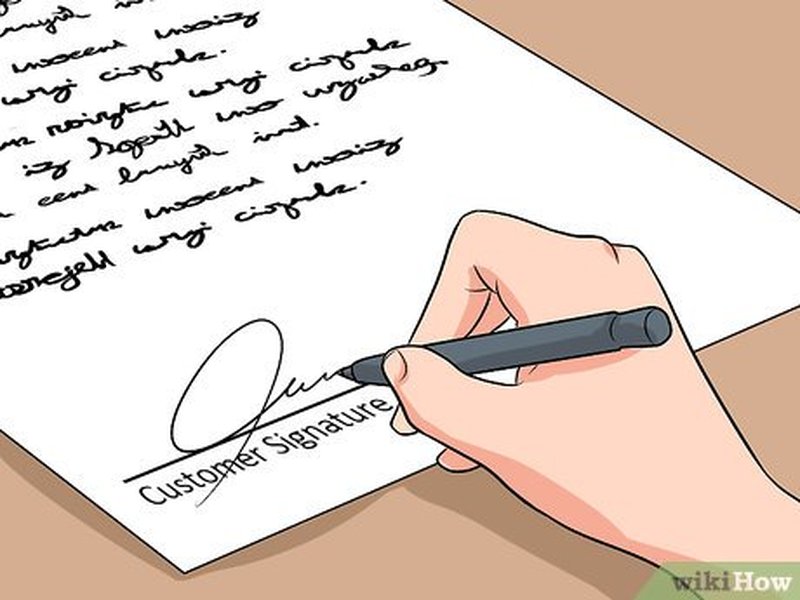
The act of signing a contract formalizes the stipulations agreed upon by the parties. Each signature signifies assent to the conditions and requirements detailed within the document. Without clear stipulations, contracts would lack the necessary structure and specificity to define the parties' obligations and rights. Stipulations ensure that all parties are clear on what is expected and agreed upon.
Deconstructing "Sauf Stipulation Contraire"
Now, let's combine the understanding of "stipulation" with the French word "sauf." "Sauf" in French translates to "except," "unless," "save," or "but." When paired with "stipulation contraire" (contrary stipulation), the phrase "sauf stipulation contraire" forms a conditional clause.
The literal translation is "except a contrary stipulation." In practice and legal usage, this means that a general rule or statement made in a document will apply *unless* a specific clause or condition within the same document (or a related binding agreement) explicitly states something different or contradictory.
Meaning and Application
The phrase "sauf stipulation contraire" is a standard legal boilerplate used to establish a default rule while preserving the ability for specific exceptions or modifications. It provides flexibility without undermining the general framework of the agreement.
Consider a contract's General Terms and Conditions (GTC). The GTC might state, "Payment is due within 30 days of invoice date, sauf stipulation contraire." This means that the standard payment term is 30 days. However, if a specific agreement or an addendum related to a particular transaction includes a clause stating, "Payment for Order #123 is due within 60 days," this specific stipulation overrides the general 30-day rule for that specific order because it is a "stipulation contraire."
This structure is crucial in legal drafting as it allows for:
-
Establishing clear default positions.
-
Accommodating specific, negotiated terms for individual cases.
-
Ensuring that specific agreements, which often reflect unique circumstances, take precedence over general provisions when there is a conflict.
Drafting Precise Legal Language
When drafting legal documents, phrases like "sauf stipulation contraire" are used precisely to manage the relationship between general rules and specific exceptions. Clarity in these stipulations is paramount to avoid ambiguity and potential disputes regarding which term applies. Legal professionals carefully craft these clauses to ensure the intended hierarchy of terms is clear.
Contextual Usage Examples
"Sauf stipulation contraire" is used across various types of legal and contractual documents. Here are a few examples based on common contexts:
In General Terms and Conditions:
A document outlining general terms might state: "All deliveries shall be made Ex Works, sauf stipulation contraire dans la commande spécifique." (All deliveries shall be made Ex Works, unless otherwise stipulated in the specific order.) This means the standard is Ex Works, but a specific purchase order can specify a different delivery term (like CIF or DAP).
In Arbitration Clauses:
An agreement might contain a clause like: "Sauf stipulation contraire, le tribunal arbitral statue définitivement par une ou plusieurs sentences." (Except where otherwise stipulated, the arbitral tribunal shall make a final award by one or more awards.) This sets the default procedure for arbitration outcomes.
In Governing Law Clauses:
A contract could specify: "Les présentes Conditions sont régies par le droit français sauf stipulation contraire expresse via un Contrat client distinct." (These Conditions are governed by French law unless expressly stipulated otherwise via a separate Customer Agreement.) This establishes French law as the default but allows for a different governing law to be chosen in a specific agreement.
The use of "sauf stipulation contraire" ensures that while a general rule is stated, it is not an absolute and can be departed from if the parties have specifically agreed to different terms in a clear and documented manner.

The Binding Nature of Stipulations
For a "stipulation contraire" to be effective, it must typically be clearly documented, often in writing and agreed upon by the parties, frequently through signing a specific contract or addendum. The principle of "sauf stipulation contraire" reinforces the importance of the specific, agreed-upon terms, highlighting that they take precedence over general or default clauses.
Comparison with Similar Phrases
The concept of allowing exceptions to a general rule is common in legal drafting and can be expressed using various phrases, depending on the language and specific context. In English, similar phrases include "unless otherwise agreed," "except as otherwise provided," or "subject to any specific agreement."
In French, variations like "sauf disposition contraire," "sauf convention contraire," or "sauf indication contraire" carry similar meanings, all pointing to the idea that a general rule applies unless a specific, contrary arrangement has been made.
Key Concepts and Terminology
Understanding legal documents often involves grasping specific terms and how they relate to each other. Here is a simple table summarizing some related concepts:
| Term (French) | English Translation | Meaning in Context |
|---|---|---|
| Stipulation | Stipulation / Clause / Provision | A specific condition, requirement, or term agreed upon in a contract or legal document. |
| Sauf | Except / Unless | Indicates an exclusion or condition under which a statement does not apply. |
| Contraire | Contrary / Otherwise | Indicating something different or conflicting with a general rule or statement. |
| Sauf stipulation contraire | Unless otherwise stipulated / Except where otherwise stipulated | A general rule applies unless a specific, conflicting stipulation is made elsewhere. |
| Convention | Agreement | A broader term for a pact or understanding between parties. |
| Disposition | Provision / Arrangement | A clause or section within a legal text or contract. |
Understanding Related Legal Terms
This table helps illustrate how "stipulation" fits into the broader vocabulary of legal agreements. While "stipulation" emphasizes the act of agreeing to specific conditions, "convention" and "disposition" are often used to refer to the agreements or clauses themselves. The phrase "sauf stipulation contraire" specifically leverages the idea of a concrete, agreed-upon condition (a stipulation) that runs counter to a general rule.
Implications in Legal Interpretation
The presence of "sauf stipulation contraire" in a legal document guides its interpretation. It signals to the reader that the statement it modifies is a default rule and that they should look for any specific clauses that might provide an exception.
When interpreting a document containing this phrase, one must first identify the general rule being stated. Then, critically examine the rest of the document, particularly specific sections like "Special Conditions," "Addendums," or clauses related to the specific subject matter, for any stipulations that explicitly contradict or modify the general rule. If such a contrary stipulation exists, the specific stipulation prevails over the general rule introduced by "sauf stipulation contraire."
This principle aligns with common legal interpretation rules, where specific provisions often override general ones in cases of conflict, reflecting the likely intent of the parties to make specific arrangements for particular circumstances.
Ensuring Clarity
While "sauf stipulation contraire" provides structural flexibility, its effectiveness relies on the clarity of the "stipulation contraire" itself. Ambiguous or poorly worded specific clauses can lead to disputes over whether they truly constitute a "contrary stipulation" capable of overriding the general rule. Therefore, precise language in both the general clauses and the specific exceptions is vital for preventing misunderstandings and litigation.

Agreements Must Be Clear
The act of signing a service agreement, or any contract, underscores the importance of clear and unambiguous language. Every stipulation, whether a general rule or a specific exception introduced by "sauf stipulation contraire," must be easily understood by all parties to ensure the agreement is enforceable and serves its intended purpose.
Frequently Asked Questions (FAQ)
What is the direct English translation of "sauf stipulation contraire"?
The most common and accurate English translations are "unless otherwise stipulated" or "except where otherwise stipulated."
Where is this phrase typically used?
It is widely used in legal documents, contracts, terms and conditions, general agreements, and statutes, particularly in French-speaking jurisdictions or in documents translated from French.
What is the purpose of including "sauf stipulation contraire" in a document?
Its purpose is to set a default rule or condition that applies generally, while allowing for specific exceptions or modifications to be made elsewhere in the document or a related agreement. It provides flexibility and ensures that specific, agreed-upon terms override general ones.
What happens if there is a "stipulation contraire"?
If a valid "stipulation contraire" (a contrary stipulation) exists in the document or a related binding agreement, the specific terms of that contrary stipulation will take precedence over the general rule that was introduced by "sauf stipulation contraire." The general rule will not apply in that specific instance.
Is "sauf disposition contraire" the same as "sauf stipulation contraire"?
While very similar and often used interchangeably, "disposition" can refer more broadly to any clause or provision in a text (including laws), whereas "stipulation" specifically relates to a condition or term agreed upon between parties, typically in a contract. However, in practice, both phrases function similarly to allow for exceptions.
References
Last updated April 18, 2025