
SAX vs. StAX: XML Parsing in Java
Comprehensive insights into the fundamental differences and use cases
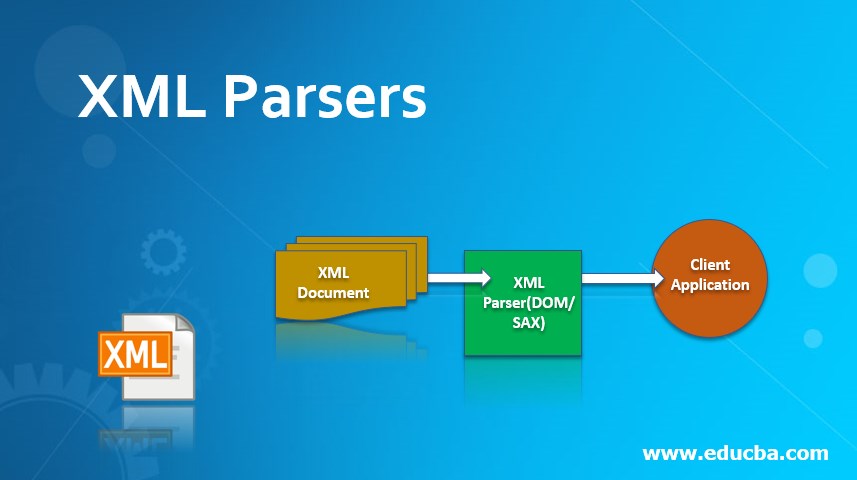
Highlights
- Parsing Model: SAX uses a push model, while StAX uses a pull model, offering different levels of control.
- Directionality and Capabilities: SAX is read-only, whereas StAX supports both reading and writing XML documents.
- Ease of Use and Control: StAX provides simpler and more intuitive code for complex tasks with enhanced control over parsing.
Introduction
XML parsing in Java is an essential task for many applications that must read, process, or generate XML documents. Two widely used APIs for XML parsing are SAX (Simple API for XML) and StAX (Streaming API for XML). Although both are streaming APIs designed to work efficiently with large XML files, they differ significantly in their design and implementation. In this discussion, we explore the intricacies of each parsing approach, contrasting their behavior, control mechanisms, and the levels of ease-of-use they offer to developers.
Parsing Model Differences
SAX: The Push Model
SAX is characterized by its push-based model. In this approach, the parser controls the traversal of the XML document and notifies the application about various events as soon as it encounters them. These events typically include the start of an element, the end of an element, and character data within elements. One of the main advantages of the SAX model is its efficiency in processing large XML documents because it does not require the full document to be loaded into memory. However, because the events are triggered automatically in a sequential manner, the application has limited control over the parsing flow. Developers must implement callback methods or event handlers to respond to these events, which can lead to a more convoluted state management process, especially for complex XML structures.
StAX: The Pull Model
In contrast, StAX employs a pull-based parsing model. With StAX, the application explicitly requests the next event from the parser at its convenience. This gives developers greater control over the parsing process because they can decide when to advance the parser and which events to process. This model is particularly useful when you want to selectively process parts of an XML document or stop parsing at a specific point. The pull model not only simplifies state management but also leads to cleaner and more maintainable code. Additionally, StAX is designed to be bidirectional, meaning that it can handle both reading and writing of XML data, which is extremely beneficial in applications that require modifications to the XML documents.
Control and Flexibility
Control and Flow
A significant difference between SAX and StAX lies in the control available to the developer over the parsing process. A SAX-based parser automatically pushes XML elements to the application as it reads through the document. This means that once the parser starts emitting events, the application must handle these events sequentially without the ability to intervene in the flow. In scenarios where only part of an XML document is required, SAX does not offer a straightforward option to skip unneeded sections.
On the other hand, the pull-based approach used by StAX places the control in the hands of the developer. This means that the application can decide when to request the next XML event, iterate over events as needed, or even quit parsing early if sufficient data has been gathered. This dynamic control is especially useful for large documents or when the XML structure is complex, as it allows for more flexible and finely tuned parsing strategies.
Bidirectional Processing
The functionality of the two APIs diverges further when it comes to document manipulation. SAX is strictly a read-only parser; it only processes XML for reading purposes. Should there be a need to modify or write new XML documents, developers must employ a separate API or an additional processing step after reading. In contrast, StAX is inherently bidirectional. Not only does it allow for reading XML documents, but it also provides built-in support for writing XML data. This dual capability streamlines the process of both parsing and generating XML, making StAX a more attractive option for applications that need to manage XML content dynamically.
Memory Efficiency and Performance
Both Approaches
Regardless of whether you choose SAX or StAX, both APIs are designed for scenarios involving large XML files because they do not require the entire document to be loaded into memory. This streaming-based approach ensures that memory consumption remains low even when processing files that span hundreds of megabytes. They are inherently faster than tree-based XML parsers such as the DOM parser due to their sequential processing. The key performance benefit here is that both methods enable forward-only, event-driven reading, which is significantly more efficient for simply traversing a document.
Subtle Nuances in Performance
While both SAX and StAX share similar memory efficiency benefits, the overall performance can depend on the complexity of the XML structure and the specific operations performed during parsing. SAX can process events more rapidly in cases of straightforward sequential reads, while StAX’s ability to control when to read events can potentially add slight overhead but also allow the developer to optimize the workflow by bypassing unnecessary parts of the document. In general, however, both methods perform well under similar conditions and are preferred over memory-intensive alternatives.
Ease of Use and Implementation Complexity
SAX: Challenges in State Management
One of the challenges inherent to SAX is its reliance on event callbacks. Since SAX pushes events to the application without a request, developers must design their code to handle various events in real time. This often requires maintaining internal state within the application to track the progress of parsing, particularly when handling nested or complex XML elements. This kind of event-driven state management can become cumbersome, leading to code that is harder to debug or extend as the project complexity grows.
StAX: Simplicity in Iteration
In contrast, StAX simplifies the parsing process by using an iterator-based approach. Developers pull events from the parser as needed, which often results in more linear and readable code. By eliminating the need to maintain internal state across multiple callback methods, StAX offers a more intuitive approach that is easier to understand and maintain. This advantage is particularly significant when dealing with nested XML elements or when the parsing logic requires selective processing of data. The reduced complexity can lead to fewer bugs and simpler debugging sessions.
Practical Considerations and Use Cases
When to Choose SAX
SAX is an excellent choice when you are dealing with extremely large XML documents that need to be processed in a read-only manner. Its memory efficiency makes it suitable for situations where the entire XML document cannot be loaded into memory due to size constraints. Moreover, if your application only requires a simple, sequential read of the XML file and does not necessitate any modifications or the need for random access, SAX can be an ideal solution. However, the complexity involved in handling state between callbacks should be taken into account, especially in more intricate parsing scenarios.
When to Choose StAX
StAX is better suited for applications that require both reading and writing of XML documents. Its pull-based model offers developers the flexibility to control the parsing process more precisely, which is particularly useful when you need to parse only a portion of an XML document or stop parsing under specific conditions. The easy-to-manage nature of StAX makes it a good option for processing XML structures that are complex and require selective handling. This flexibility, combined with its built-in support for writing XML data, positions StAX as a versatile choice for modern XML applications where modifications are expected.
Feature Comparison Table
| Feature | SAX | StAX |
|---|---|---|
| Parsing Model | Push-based mechanism with automatic callbacks | Pull-based mechanism with manual event requests |
| Directionality | Read-only XML parsing | Bidirectional: supports both reading and writing |
| Control Over Parsing | Less control; events are handled as they occur | High control; explicit event iteration and selective parsing |
| Ease of Implementation | Requires complex state management via callbacks | Simpler, iterator-based approach leads to more maintainable code |
| Memory Efficiency | Highly efficient due to streaming and low memory usage | Also memory efficient with additional control features |
Technical Considerations in Code Development
Event Handling and State Management
When developing applications using SAX, handling events requires the implementation of a set of callback methods such as startElement, endElement, and characters. These methods are triggered as the parser encounters different parts of the XML document. Developers must maintain a robust internal state system to ensure that the application processes the XML data correctly, especially when dealing with nested elements. In contrast, the pull-based nature of StAX allows developers to write loops that iterate through XML events. This more iterative code structure is easier to understand, debug, and extend for future changes.
Schema Validation and Error Handling
One aspect worth noting is that while SAX supports XML schema validation, allowing it to check the XML data against a predefined structure, StAX does not inherently support this validation mechanism. Therefore, if XML schema validation is a requirement for your application, you may need to implement additional validation logic when using StAX, or opt for SAX for its built-in capabilities. Error handling in both models is generally robust, but the event-driven nature of SAX might require additional safeguards to capture and respond to errors in the stream of events.
Use Cases and Recommendations
Enterprise and Large-Scale XML Processing
In environments where XML documents are enormous and the application needs to perform a one-time, read-only processing job, SAX remains a favorable option due to its minimal memory footprint and efficient streaming of data. However, the added complexity in state management should be acknowledged, and alternative design patterns might be necessary to manage the complexity.
Conversely, for applications that require modifications to XML documents, such as in configuration management systems or applications that dynamically generate XML content, StAX’s dual capability of read/write offers notable advantages. The flexibility to pull events when necessary and control the parsing flow renders StAX particularly useful in scenarios where only tokenized sections of an XML document need to be processed or updated.
Integration with Other APIs
Another consideration is the integration of these XML parsing APIs with other libraries and frameworks. SAX’s event-driven approach might integrate well with existing event-processing frameworks, particularly in legacy systems where similar patterns are already in use. On the other hand, StAX can be integrated seamlessly with modern Java applications where readability and maintainability are prioritized, and where the ability to both generate and consume XML content under a single API is beneficial.
References
- SAX vs. StAX Tutorial - Jenkov
- Parsing an XML File Using SAX Parser - Baeldung
- StAX vs SAX Parser in Java - GeeksforGeeks
- Parsing XML using Various Parsers - Java Code Geeks
- Choosing Between SAX and StAX - Stack Overflow
- Oracle XML Parsing Documentation
- XML Parsing with StAX - HowToDoInJava
-
SAX Parser Overview - Oracle
- Understanding XML Parsing – IBM Developer
-
Differences in Java XML Parsing - DZone
Recommended Related Queries
 rdayala.wordpress.com
Last updated March 2, 2025