
Comparative Study of Core Axes across Scandinavian Regions
Exploring Historical, Cultural, and Technological Insights
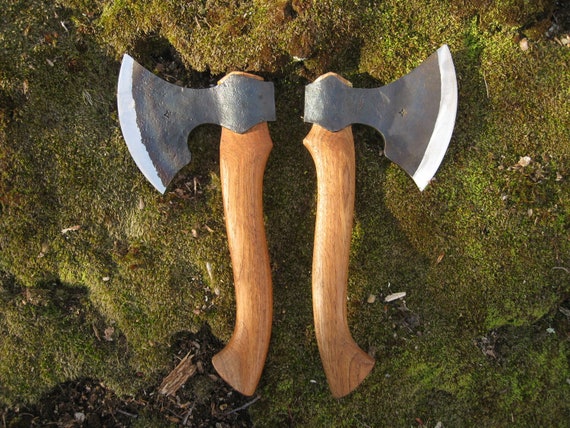
Key Highlights
- Historical Evolution: Core axes have evolved from Mesolithic tool assemblages to symbols of status and innovation in modern craftsmanship.
- Cultural & Geographical Diversity: Variations reflect trade networks, regional cultures, and socio-economic dynamics across Scandinavia.
- Interdisciplinary Perspectives: Archaeological findings combined with cultural, technological, and economic analyses reveal deep insights into societal changes.
Introduction
The study of core axes in Scandinavia presents an intriguing lens into the technological, cultural, and economic development of the region. This investigation encompasses analyses of archaeological finds, stylistic transformations, and regional production practices across Denmark, Norway, Sweden, and Finland. With these axes serving both utilitarian and symbolic roles, they open a window onto prehistoric technologies as well as evolving aesthetic and functional paradigms. By comparing axes from the Mesolithic period through the Bronze and Viking Ages to modern-day production, researchers are able to piece together a narrative of regional interaction, trade, and cultural exchange.
Historical Context and Evolution
Mesolithic Foundations
Core axes in prehistoric Scandinavia first appear during the Mesolithic period (approximately 8000-4000 BC) as essential tools for basic subsistence activities. Early hunter-gatherer societies relied on these lithic tools crafted from locally available stones, wood, and other materials to perform tasks such as hunting, fishing, and woodworking. The design of these axes was functional, often optimized for versatility to meet the diverse needs of these groups. The evolution of these tools during this early stage reflects a combination of available resources, environmental conditions, and limited technological specialization.
Transition into the Neolithic and Bronze Age
With the advent of agriculture and the Neolithic revolution, there came significant changes in tool-making techniques. The production of core axes became more refined. In southern Scandinavia, notably within the Sandarna culture, axes started to display distinct stylistic and functionality traits such as shaft holes that facilitated their use as handles—a characteristic that improved handling for prolonged tasks such as woodcutting.
Transitioning further, the Bronze Age heralded innovations as metal replaced stone in many tool-making practices. The introduction of bronze axes, including socketed designs and palstaves, marked not just a technological leap but also a change in the social and ceremonial significance of axes. Some axes started to double as status symbols, evidencing a shift from purely utilitarian objects to markers of power and identity within the community.
The Viking Age and Cultural Symbolism
During the Viking Age, the symbolism attached to axes deepened significantly. Beyond their practical applications in daily life and warfare, axes came to represent social status, power, and even divine association. They were often elaborately decorated, used not only as instruments of combat but also as emblematic artifacts in rituals and in the demonstration of societal prominence. The battle axe, in particular, emerged as an iconic weapon that was both feared and revered. As such, these axes were integrated deeply into the identity of the warrior class and played a pivotal role in shaping cultural narratives.
Comparative Regional Analysis
Technological Features Across Regions
Across Scandinavia, the production and design of core axes reveal significant regional distinctions that mirror local resource availability and cultural interactions. For instance, in southern Sweden, the Sandarna axes are well known for their distinct design elements, such as a shaft hole, which not only aided in hafting but also signified a specific regional manufacturing tradition. In contrast, archaeological excavations in Norway and Denmark have unearthed variations of stone and bronze axes that align with different technological adaptations and usages among early communities.
These technological shifts are also reflective of an adaptive approach by ancient cultures to respond to changing environmental and socio-economic landscapes. For example, as trade networks expanded, patterns in core axe production and style began mirroring the influence of cross-cultural contacts, where innovations from distant regions were adapted to local contexts.
Cultural and Socioeconomic Impacts
The role of core axes extends beyond their practical functionality. They serve as indicators of the social dynamics in ancient Scandinavian societies. Each region contributed uniquely to the evolution of these tools through distinct skills and traditions. Archaeologists have noted that the distribution of certain types of axes, like the shaft-hole axes, provides evidence of extensive trade networks that connected disparate groups. These trade networks facilitated the exchange of not only goods but also ideas, customs, and technology.
The cultural context in which these axes were produced and used is intricately tied to the social structures of the time. Many of the designs reflect a communal ethos where craftsmanship, resource-sharing, and social coherence were paramount. For example, the careful integration of wooden handles with stone or metal heads speaks to an advanced understanding of ergonomic design and a communal approach to tool usage. At the same time, the symbolic decoration on battle axes during the Viking Age is indicative of societal values that emphasized honor, strength, and the warrior ethos.
Geospatial Distribution and Trade Networks
Trade and Cultural Exchange
The spatial distribution of core axes across Scandinavia points to the existence of robust trade networks among early populations. Axes, especially those with unique features such as the shaft-hole design, often traverse regional boundaries, indicating extensive exchanges between groups. The movement of these tools aligns with the broader patterns of migration and cultural dissemination observed during the Mesolithic and Neolithic periods.
This connectivity was not solely about trade in physical goods; it was equally a conduit for the sharing of technological advancements, artistic trends, and social practices. Through these networks, innovations in tool-making and modifications in design were transmitted across long distances, contributing to a shared yet regionally varied technological heritage.
Regional Variations and Their Implications
Research indicates that while there is a marked uniformity in the general shape and function of core axes, subtle stylistic differences are pronounced when one observes them on a regional scale. For instance, the distinctive features of the Sandarna axes in Sweden contrast with those discovered in Norway or Denmark, where local variations might show differences in flaking techniques, hafting methods, and even the utilization of materials. These differences not only speak to the availability of particular resources but also to the local artisan knowledge and preferences that drove innovation in each region.
Modern Perspectives on Scandinavian Axe Production
Reviving Traditional Crafts
In contemporary Scandinavia, the ancient tradition of axe making is still honored and has experienced a resurgence in interest, particularly in Sweden. Renowned manufacturers such as Gränsfors Bruk and Hults Bruk maintain high standards of craftsmanship that trace their origins to the ancient techniques first seen in prehistoric times. Although modern production utilizes state-of-the-art methods, the fundamental connection to the historic and cultural past remains central to these companies. Their products are celebrated not just as functional tools but as culturally significant artifacts that embody the region's historical continuity.
Economic and Cultural Comparisons
While Sweden stands out for its modern production and consistent adherence to high-quality craftsmanship, other Scandinavian countries such as Norway and Denmark have taken different paths. In Denmark and Norway, modern axe use is predominantly linked to practical applications rather than production. These countries often rely on imports from Swedish or Finnish manufacturers. Finland, too, contributes significantly through brands like Fiskars, well-known for combining functional design with innovative techniques.
This divergence in modern production illustrates broader economic trends and cultural priorities in Scandinavia. The emphasis on production quality, design aesthetics, and artisanal value in Sweden and Finland contrasts with the utilitarian outlook seen in Norway and Denmark. Such regional disparities continue to enrich the tapestry of Scandinavian cultural heritage while highlighting the evolution from ancient traditions to contemporary industry.
Comparative Analysis Using a Structured Approach
Comprehensive Comparison Table
The following table provides a structured comparison of the key aspects of core axes across Scandinavian regions, focusing on historical significance, modern production practices, and cultural impact.
| Country | Historical Significance | Technological Evolution | Modern Production | Cultural Impact |
|---|---|---|---|---|
| Sweden | Rich legacy from Mesolithic to Viking Age; Sandarna axes reflecting regional styles. | Evolution from basic stone cores to refined hafted designs in both stone and bronze. | Major manufacturers such as Gränsfors Bruk and Hults Bruk ensure high-quality craftsmanship. | Deep cultural attachment; axes seen as emblematic of Scandinavian heritage. |
| Norway | Part of shared broader Scandinavian prehistory; evidence of trade networks. | Similar evolutionary traits with local adaptations in stone-working techniques. | Limited local production; reliance on Scandinavian and Finnish imports. | Historical and practical significance, maintaining tradition through utilitarian use. |
| Denmark | Shares historical trajectory with neighboring regions; early adoption of advanced designs. | Shows unique flaking and hafting methods influenced by local material availability. | Generally imports axes; emphasis on preserving historical designs in domestic collections. | Cultural resonance in ceremonial contexts; traditional designs continue to influence modern replicas. |
| Finland | Distinct contribution in modern manufacture rather than prehistoric tradition. | Focus on innovation in axe design, integrating modern technologies with traditional aesthetics. | Fiskars and other manufacturers highlight quality and innovation. | Axes are celebrated as both functional tools and art objects, respecting historical continuity. |
Interdisciplinary and Future Research Perspectives
Integrating Archaeology, Anthropology, and Technology
The comparative study of core axes in Scandinavian regions is inherently interdisciplinary. Archaeologists analyze excavation sites and tool typologies; anthropologists seek to understand the social and cultural contexts; and technologists apply modern methods and techniques for reconstructing manufacturing processes.
Modern research has seen the application of technologies such as 3D scanning and experimental archaeology to replicate ancient methods. These techniques have provided new insights into manufacturing processes, such as the precise methods used to knap stone axes or forge metal heads. Moreover, isotopic analyses and geochemical sourcing have brought clarity to the origins of the materials used in these tools. Together, they form a composite picture of how core axes functioned as both practical tools and as emblems of cultural identity.
Social and Economic Dynamics Through Material Culture
The study of core axes is not just confined to technological evolution; it also serves to illuminate the broader social and economic dynamics of the region. Analyzing the distribution, style, and sponsored trade of these tools opens a window into the socioeconomic organization of ancient communities. Evidence of trade routes, exchange systems, and regional production specialization speaks to the complex societal interactions that defined early Scandinavian societies.
Each region’s approach to axe production and usage provides clues into their interaction with natural resources and neighboring cultures. For instance, while Swedish artisans maintained a long-standing tradition with a focus on aesthetic perfection, Norwegian and Danish archaeological records suggest a more pragmatic approach. These patterns illustrate how material culture, embedded within broader socio-economic frameworks, can be leveraged to understand the evolution of early human settlements in Scandinavia.
Future Directions in Comparative Studies
Ongoing research continues to delve deeper into aspects such as regional trade networks, social stratification, and cultural symbolism. Digital databases and advanced imaging techniques are increasingly used to analyze large datasets of archaeological finds. This interdisciplinary methodology will likely yield further insights into the shifts in manufacturing techniques, the influence of environmental changes, and the socio-cultural implications of tool distribution across the region. Scholars anticipate that future research will integrate both traditional methods and innovative technologies, thus broadening the comprehension of Scandinavia’s rich material heritage.
Implications and Broader Significance
Cultural Identity and Heritage Preservation
The study of core axes—and by extension, the broader spectrum of prehistoric tools—is fundamental not only in understanding past societies but also in preserving their cultural legacy. Scandinavian core axes are key components of regional heritage, representing the ingenuity, resilience, and complex socio-cultural dynamics of ancient populations. Their preservation, study, and even modern reproduction underscore a continuous dialogue between the past and present. Museums, academic institutions, and manufacturers contribute to keeping this history alive, thereby nurturing a sense of identity and continuity in Scandinavian culture.
Technological Innovation Inspired by Tradition
Modern producers of axes, particularly in Sweden and Finland, draw inspiration from ancient designs while incorporating contemporary technology. Innovations are driven by the need for functional excellence, sustainable production, and aesthetics that pay homage to historical forms. This melding of tradition with innovation reflects a broader trend throughout Scandinavia—balancing modernization with cultural continuity. The comparative study of core axes is thus also a study in how societies evolve by retaining core elements of their past while adapting to new technological and economic realities.
Ultimately, the multifaceted study of core axes across Scandinavian regions opens a compelling narrative that interweaves historical evolution, cultural symbolism, economic dynamics, and technological progression. These tools, seemingly simple in design, encapsulate a rich tapestry of human innovation and societal development that continues to resonate in each modern iteration of axe production and usage.
References
For further detailed information and to explore academic and cultural resources on the study of core axes in Scandinavia, consider visiting the following links:
- Lithic Production | Milwaukee Public Museum - MPM
- Unto a Good Land. Early Mesolithic Colonization of Eastern Central Sweden
- The History of the Axe | Gränsfors Bruk Sweden
- Cultural and Economic Negotiation - Antiquity
- PLOS ONE - Scandinavian Archaeological Studies
Recommended Queries
Explore more related topics to expand your understanding of Scandinavian material culture and prehistoric technology:
 woodtrekker.blogspot.com
Last updated March 19, 2025