
Navigating the Landscape of Scientific Research: A Comprehensive Classification Guide
Uncover the multifaceted world of scientific research through detailed classification and relevant examples.
Key Highlights of Scientific Research Classification
- Fundamental vs. Applied Research: Understand the distinction between research aimed at expanding knowledge and research focused on solving practical problems.
- Qualitative vs. Quantitative Research: Explore the differences between research that delves into understanding experiences and meanings versus research that uses numerical data for analysis.
- Descriptive vs. Experimental Research: Learn how research can either describe phenomena or manipulate variables to determine cause-and-effect relationships.
Understanding Scientific Research and Its Importance
Scientific research is a systematic and organized effort to investigate specific problems and answer questions using the scientific method. It is crucial for expanding knowledge, validating existing theories, and discovering new ones across various disciplines. Scientific research provides a foundation for evidence-based decisions and innovations in fields ranging from medicine and engineering to social sciences and humanities. This process involves formulating hypotheses, designing experiments or studies, collecting and analyzing data, and drawing conclusions based on the evidence.
Research plays a vital role in both scientific and non-scientific fields. In daily life, people encounter new problems, events, and phenomena that require practical solutions. Scientists undertake research to identify causes, find solutions, provide explanations, and explore applications to address these challenges.
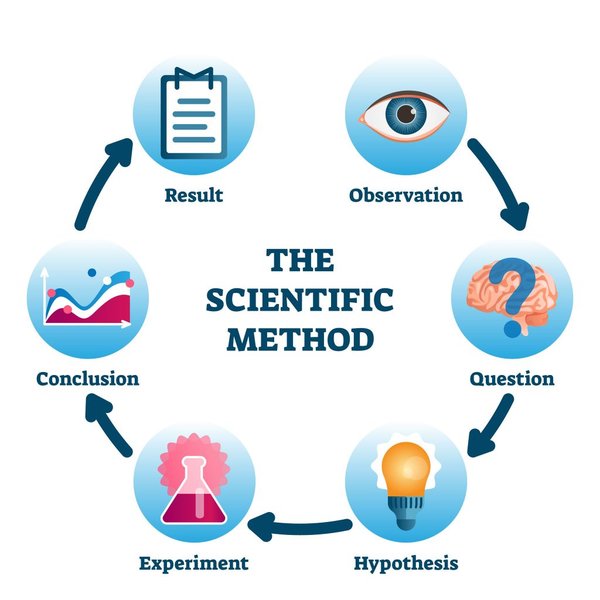 The Scientific Method - Australian Environmental Education
Classifying Scientific Research: A Detailed Overview
Scientific research can be classified in numerous ways, depending on the criteria used. These classifications help to organize and understand the different approaches and purposes of research. The classifications can be based on the objective of the research, the type of data used, the extent of knowledge about the subject, the degree of variable manipulation, or the specific branch of science involved.
Here, we explore the primary methods for classifying scientific research, offering a comprehensive understanding of their distinctions and applications.
1. Fundamental vs. Applied Research
One of the most common classifications divides research into fundamental (or basic) and applied research. These categories are distinguished by their objectives and the nature of their outcomes.
 Biology and Biomedical Science Laboratory - INTO Study
Fundamental (Basic) Research:
- Objective: To expand the existing knowledge base by discovering new scientific theories and principles.
- Focus: Theoretical, aiming to understand fundamental processes and phenomena.
- Application: May not have immediate practical applications but provides the groundwork for future applied research.
- Example: Investigating the properties of newly discovered materials or studying the behavior of subatomic particles.
Applied Research:
- Objective: To find solutions to specific, practical problems using existing knowledge.
- Focus: Practical applications, aiming to improve processes, products, or policies.
- Application: Directly applicable to real-world situations, often leading to tangible outcomes.
- Example: Developing new medical treatments, improving agricultural practices, or creating more efficient energy technologies.
2. Qualitative vs. Quantitative Research
Another important classification is based on the type of data used: qualitative or quantitative.
Qualitative Research:
- Objective: To explore and understand the meanings, experiences, and perspectives of individuals or groups.
- Data: Non-numerical, including interviews, observations, and textual or visual materials.
- Analysis: Interpretive, focusing on identifying patterns, themes, and insights.
- Example: Studying the experiences of patients undergoing cancer treatment or exploring the cultural practices of a community.
Quantitative Research:
- Objective: To measure and quantify variables, test hypotheses, and establish relationships between variables.
- Data: Numerical, including measurements, statistics, and numerical ratings.
- Analysis: Statistical, using mathematical models and statistical tests to analyze data.
- Example: Conducting a survey to measure public opinion on a policy issue or performing an experiment to test the effectiveness of a new drug.
3. Descriptive vs. Explanatory Research
Research can also be classified based on its purpose: descriptive or explanatory.
Descriptive Research:
- Objective: To describe the characteristics of a population, situation, or phenomenon.
- Focus: Providing a detailed account of what is happening, without necessarily explaining why.
- Methods: Surveys, observations, and case studies.
- Example: Describing the demographics of a city's population or documenting the behaviors of animals in a specific habitat.
Explanatory Research:
- Objective: To explain the relationships between variables and understand why certain events occur.
- Focus: Identifying cause-and-effect relationships and testing theories.
- Methods: Experiments, longitudinal studies, and statistical analysis.
- Example: Investigating the factors that contribute to climate change or studying the effects of a particular teaching method on student achievement.
4. Other Types of Research
In addition to the main classifications, several other types of research exist, each with its specific purpose and methodology.
- Exploratory Research: Used to investigate a problem that is not clearly defined, helping to gain initial insights.
- Correlational Research: Examines the relationship between two or more variables without determining cause and effect.
- Experimental Research: Involves manipulating one or more variables to determine their effect on another variable, establishing causality.
- Longitudinal Research: Studies the same variables over an extended period, allowing researchers to observe changes and trends.
- Cross-Sectional Research: Collects data from a population at a single point in time.
- Mixed Methods Research: Combines qualitative and quantitative approaches to provide a more comprehensive understanding of the research problem.
- Classification Research: Aims to organize units into groups.
Example: Classifying Research on Renewable Energy Adoption
To illustrate how research can be classified, consider a scientific research topic focused on the adoption of renewable energy technologies.
 Little Beakers Science Lab - KHOU
Research Question: What factors influence the adoption of solar panels by households in urban areas?
Classification:
- Fundamental or Applied:
- Applied Research: This research is primarily applied because it seeks to solve a specific problem: increasing the adoption of renewable energy.
- Qualitative or Quantitative:
- Mixed Methods Research: The research could use both qualitative and quantitative methods. Quantitative data might include the number of households adopting solar panels, energy consumption rates, and cost savings. Qualitative data could involve interviews with homeowners to understand their motivations and barriers.
- Descriptive or Explanatory:
- Explanatory Research: The research aims to explain why some households adopt solar panels while others do not, exploring the relationships between various factors (e.g., income, awareness, incentives) and adoption rates.
Research Approaches:
- Quantitative Approach:
- Method: Surveying a large sample of households to collect data on income, energy consumption, awareness of solar energy benefits, and adoption rates.
- Analysis: Using statistical analysis to identify correlations between these factors and solar panel adoption.
- Qualitative Approach:
- Method: Conducting in-depth interviews with homeowners who have adopted solar panels and those who have not.
- Analysis: Identifying common themes and patterns in their responses to understand their motivations, concerns, and experiences.
Visualizing the Types of Scientific Research
To further illustrate the classification of scientific research, here's a table that summarizes the key characteristics of each type:
| Type of Research | Objective | Data Type | Analysis Method | Example |
|---|---|---|---|---|
| Fundamental (Basic) | Expand knowledge | Theoretical | Conceptual analysis | Studying properties of new materials |
| Applied | Solve practical problems | Empirical | Statistical analysis | Developing new medical treatments |
| Qualitative | Understand experiences and meanings | Non-numerical (interviews, observations) | Interpretive analysis | Studying patient experiences |
| Quantitative | Measure and quantify variables | Numerical (statistics, measurements) | Statistical analysis | Surveying public opinion |
| Descriptive | Describe characteristics of a population | Observational | Descriptive statistics | Describing city demographics |
| Explanatory | Explain relationships between variables | Experimental | Regression analysis | Investigating factors of climate change |
The Importance of Scientific Rigor
Regardless of the type of research, scientific rigor is essential. Rigor ensures that the research is conducted in a systematic and transparent manner, minimizing bias and maximizing the reliability and validity of the findings. Key components of scientific rigor include:
-
Clear Research Question: A well-defined research question guides the entire research process.
-
Appropriate Methodology: Selecting the right methods for data collection and analysis ensures the research question is addressed effectively.
-
Systematic Data Collection: Collecting data in a consistent and standardized manner reduces errors and biases.
-
Transparent Reporting: Clearly documenting the research process, including methods, results, and limitations, allows for replication and scrutiny by other researchers.
-
Ethical Considerations: Adhering to ethical principles ensures the rights and well-being of participants are protected.
FAQ: Frequently Asked Questions
What is the primary difference between basic and applied research?
Basic research aims to expand knowledge and understand fundamental principles, while applied research seeks to solve specific, practical problems using existing knowledge.
When should I use qualitative research methods?
Qualitative research methods are best used when you want to explore and understand the meanings, experiences, and perspectives of individuals or groups, especially when dealing with complex or abstract concepts.
How do I ensure rigor in my scientific research?
Ensure rigor by clearly defining your research question, selecting appropriate methodologies, collecting data systematically, reporting your findings transparently, and adhering to ethical principles.
What is mixed methods research, and when is it appropriate?
Mixed methods research combines qualitative and quantitative approaches to provide a more comprehensive understanding of the research problem. It is appropriate when neither qualitative nor quantitative methods alone can adequately address the research question.
Why is classification important in scientific research?
Classification helps to organize and understand the different approaches and purposes of research, making it easier to navigate the vast landscape of scientific inquiry and select the most appropriate methods for a given research question.
References
Last updated April 14, 2025