
Understanding Section 1250 Recapture vs. Unrecaptured Section 1250 Income
A comprehensive guide to depreciation recapture in real estate transactions
Key Takeaways
- Section 1250 Recapture involves the re-characterization of depreciation deductions taken using accelerated methods that exceed the straight-line amount, with the recaptured portion taxed at ordinary income tax rates.
- Unrecaptured Section 1250 Income refers to the gain attributable to straight-line depreciation on real property, taxed at a preferential maximum rate of 25% rather than the regular capital gains rate.
- Differences in Application include the type of depreciation used, the tax rates applied, and the frequency with which these rules affect modern real estate transactions, since most post-1986 properties are depreciated using the straight-line method.
Introduction
In the realm of real estate taxation, understanding the nuances of depreciation recapture is crucial when it comes to the disposition of depreciable property. Specifically, taxpayers dealing with Section 1250 property often encounter two important concepts: Section 1250 recapture and unrecaptured Section 1250 income. Each concept has distinct implications and different tax treatments. This guide provides an in-depth explanation of both terms, the underlying mechanics, and the differences between them. We'll also explore how these rules apply in various scenarios, including those involving partnerships and different methods of depreciation.
Section 1250 Recapture
Definition and Purpose
Section 1250 recapture is a tax mechanism employed when real property, subject to depreciation, is sold. Its primary purpose is to “recapture” the portion of the gain attributable to depreciation deductions that exceed what would have been allowed under the straight-line method. The intent is to ensure that if accelerated depreciation (or bonus depreciation) was claimed on a rental or commercial property, the tax benefits received from this accelerated expense are partly reversed upon sale.
Mechanics of Section 1250 Recapture
Recapture under Section 1250 applies when the depreciation deductions taken (especially when using methods like accelerated or bonus depreciation) have resulted in a basis reduction that is lower than under straight-line depreciation. In simple terms, if you have claimed extra depreciation above the straight-line amount, the gain equating to that excess depreciation is “recaptured” and taxed as ordinary income. This tax treatment is different because ordinary income rates are usually higher than the preferential long-term capital gains rates.
When Does Section 1250 Recapture Occur?
Section 1250 recapture generally occurs in scenarios where accelerated depreciation methods have been utilized. Since the IRS requires that most residential rental properties placed in service after 1986 use the straight-line method of depreciation, true instances of Section 1250 recapture have become relatively uncommon. Essentially, if the depreciation was taken solely by the straight-line method, very little, if any, depreciation would be considered as “excess” and therefore subject to Section 1250 recapture.
Tax Implications
The gain attributable to the excess depreciation over the straight-line depreciation is taxed at the taxpayer's ordinary income tax rate. This recapture treatment may lead to a significantly higher tax burden compared to if the gain were taxed at long-term capital gains rates, emphasizing the need for careful planning when electing a method of depreciation.
Unrecaptured Section 1250 Income
Definition and Characteristics
Unrecaptured Section 1250 income is a distinct concept that applies to the gain from the sale of real property for which the taxpayer has taken only straight-line depreciation. Under prevailing tax rules, most depreciable real estate since the mid-1980s is depreciated using the straight-line method. Hence, almost the entire depreciation expense falls under this category.
Calculation and Reporting
When a taxpayer sells a Section 1250 property, the gain attributable to the straight-line depreciation is computed and reported as unrecaptured Section 1250 income. Although this gain arises from depreciation deductions, it is taxed at a maximum rate of 25%—a rate that sits between the ordinary income tax rate and the long-term capital gains tax rate. This favorable rate creates an incentive structure wherein depreciation benefits and subsequent gain recognition upon sale are taxed less heavily than ordinary income.
How It Differs from Section 1250 Recapture
Unlike Section 1250 recapture, which typically involves recapturing additional depreciation from accelerated methods, unrecaptured Section 1250 income represents the gain built up solely through straight-line depreciation. Since nearly all post-1986 rental real estate is depreciated by straight-line rules, unrecaptured Section 1250 income tends to be a more common issue.
Consequently, when a taxpayer looks at their tax returns, the amount listed as unrecaptured Section 1250 gain is essentially the financial benefit received from the steady annual depreciation deductions. Notably, even though this portion of the gain is linked to depreciation, it does not convert into ordinary income; instead, it benefits from a capped tax rate of 25%.
Comparing Section 1250 Recapture and Unrecaptured Section 1250 Income
Key Differences
Although both terms concern the tax treatment of gains arising from depreciation on real property, their applications and tax treatments differ. The primary distinctions include:
| Aspect | Section 1250 Recapture | Unrecaptured Section 1250 Income |
|---|---|---|
| Type of Depreciation | Arises when accelerated depreciation (or bonus depreciation) exceeds the straight-line amount. | Occurs when depreciation is taken solely by the straight-line method. |
| Tax Rate | Taxed at ordinary income rates, which are generally higher. | Taxed at a maximum rate of 25%, a preferential rate compared to ordinary income. |
| Frequency | Less common, due to the IRS mandate of straight-line depreciation for most real estate after 1986. | More common with modern depreciation practices in real estate. |
| Application | Focuses on recapturing the tax benefit associated with excess depreciation beyond the straight-line amount. | Covers the gain that reflects the benefit of using the straight-line method over the life of the property. |
Detailed Analysis
Depreciation Methods and Their Impact
The choice of depreciation method used by taxpayers is pivotal in determining whether Section 1250 recapture or unrecaptured Section 1250 income applies. Accelerated depreciation methods, such as bonus depreciation, provide a faster recovery of the asset’s cost with larger deductions in the early years. These methods can lead to a situation where the amount of depreciation taken exceeds what would have been allowed under the straight-line method. When the property is sold, the excess depreciation is “recaptured” and taxed as ordinary income. This is the heart of Section 1250 recapture.
On the other hand, when the taxpayer chooses, or is required, to use the straight-line method—as is common with most rental property acquired after 1986—the depreciation deductions do not exceed the straight-line benchmark. Therefore, the entire gain attributable to the cumulative depreciation comes under unrecaptured Section 1250 income, attracting the special maximum rate of 25%. This differentiation is important because it influences the overall tax liability upon sale of the property.
Tax Reporting and Compliance
Both Section 1250 recapture and unrecaptured Section 1250 income must be accounted for on tax filings. Typically, these amounts are calculated on worksheets provided in the tax form instructions for Schedule D. When a property is sold, the taxpayer must identify and separate the gain that is attributable to depreciation from the other components of the total gain. The portion attributable to depreciation based on the straight-line method is categorized as unrecaptured Section 1250 income.
Conversely, if any part of the depreciation computed on the property was accelerated or bonus depreciation that exceeds what would be allowed under the straight-line method, that excess is included in the Section 1250 recapture and taxed at ordinary income tax rates. This reporting distinction is vital because it directly affects the overall tax burden. Taxpayers should maintain meticulous records of depreciation taken, including any adjustments made under various methods, to ensure accurate tax reporting.
Real-World Implications and Strategies
The distinction between Section 1250 recapture and unrecaptured Section 1250 income is not just an academic exercise—it has real-world consequences for property owners and real estate investors. For example, in situations where accelerated depreciation has been used, the tax impact at the time of sale can lead to a significant ordinary income tax liability. Taxpayers who opt for accelerated depreciation on certain assets should plan for the eventual recapture in their long-term tax strategy.
Many investors now prefer using the straight-line method given the long-term benefit of having gains taxed at a lower rate when the property is sold. This approach results in unrecaptured Section 1250 income, where the maximum tax rate is capped at 25%. However, there are instances where accelerated depreciation is beneficial in the early years of property ownership, despite the potential for a higher tax rate upon sale. Navigating these choices requires careful analysis of cash flow needs, investment horizon, and the anticipated market conditions when the property might be sold.
Special Considerations for Partnerships
In the context of partnerships, the allocation of depreciation and subsequent recapture can become more complex. When a property is owned by a partnership, the depreciation deductions and gains upon sale must be allocated among the partners in accordance with both the tax rules and the partnership agreement. Special allocations, contributed property, and changes in ownership interest all add layers of complexity. In such cases, the proper attribution of both Section 1250 recapture and unrecaptured Section 1250 income must be carefully accounted for on each partner’s tax return.
Partners must be diligent in tracing the depreciation taken before and after the formation of the partnership, especially when special methods for allocation or remedial adjustments under partnership tax rules are used. When property is sold, the partnership’s gain is divided among the partners based on predetermined proportions, and the amount subject to recapture (if any) is allocated according to each partner’s share of depreciation deductions. This complexity underscores the importance of early planning and consultation with tax professionals when structuring such investments.
Advanced Examples and Illustrations
Worked Example: Depreciation of a Rental Property
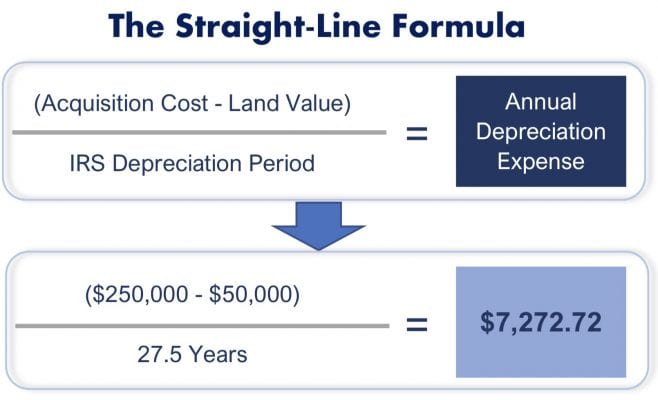
Consider a rental property purchased for a substantial amount where the taxpayer elects to use the straight-line depreciation method over a useful life defined by the IRS guidelines. Over several years, the taxpayer claims annual depreciation deductions, which systematically reduce the property's adjusted basis. At the time of sale, the gain on the sale is determined by subtracting the adjusted basis (original cost less accumulated depreciation) from the sale price.
Here, the entire depreciation taken (which is in line with the straight-line method) is treated as unrecaptured Section 1250 income. Although the property has appreciated, the gain corresponding to the cumulative depreciation is taxed at a preferential rate (maximum 25%). If, however, the taxpayer had used accelerated depreciation (where allowed) and claimed significantly higher deductions in the initial years, any depreciation claim in excess of the straight-line method would be subject to Section 1250 recapture and taxed at the ordinary income rate.
Numerical Illustration
Imagine a scenario in which a property was purchased for $500,000. Under straight-line depreciation, the taxpayer is allowed a depreciation of $10,000 per year—resulting in $100,000 in total depreciation over 10 years. If the property sells for $700,000, the taxable gain is $200,000. Of that gain, $100,000 is attributed to the depreciation taken and treated as unrecaptured Section 1250 income, thus subject to a 25% tax rate. This results in a tax liability on that portion of $25,000. Had the taxpayer opted for accelerated depreciation and taken an extra $20,000 per year in the early years (totaling an extra $60,000 over the decade), that additional $60,000 would be recaptured and taxed at the higher ordinary income rate.
Comparison Table: Effect of Depreciation Methods
| Scenario | Depreciation Method | Total Depreciation Taken | Amount Subject to Section 1250 Recapture | Tax Rate Applied |
|---|---|---|---|---|
| Example A | Straight-Line | $100,000 | $100,000 (unrecaptured Section 1250 income) | Maximum 25% |
| Example B | Accelerated/Bonus Depreciation | $160,000 (includes $60,000 excess) | $60,000 (recaptured portion) | Ordinary Income Tax Rates for $60,000; Remaining $100,000 at 25% |
This table illustrates that the method of depreciation can significantly affect the tax consequences upon sale. Taxpayers need to carefully analyze their depreciation strategy to balance immediate tax benefits against potential future tax liabilities.
Additional Considerations and Planning Strategies
Tax Planning and Timing
Recognizing the difference between Section 1250 recapture and unrecaptured Section 1250 income is an essential part of a strategic tax planning approach. Taxpayers may benefit from timing the sale of their real property in a manner that minimizes the impact of depreciation recapture. For example, holding the property for a longer duration might allow for a more favorable overall capital gains treatment on the appreciation portion while the tax on unrecaptured Section 1250 income remains capped at 25%.
Moreover, taxpayers may explore alternative depreciation schedules within the confines of the tax code. Although accelerated depreciation methods provide immediate cash flow benefits, the potential hit from recapture should be factored into long-term tax planning. Advanced planning can involve projecting future tax liabilities and considering the impact of depreciation recapture when evaluating the profitability of a real estate investment.
Implications for Partnerships
In the context of partnerships, the allocation of depreciation and the subsequent recapture of gains add another layer of complexity. Partnerships must allocate the depreciation benefits and potential recaptured amounts among the partners according to their respective interests and special allocation formulas. This allocation can affect individual partners’ tax liabilities differently. Therefore, partnerships often engage tax professionals to ensure that the allocation of both depreciation deductions and subsequent recapture is done in compliance with tax rules and in an equitable manner.
Special considerations also arise when properties are contributed by one partner or when partners’ interests change over time. In such cases, both the historical depreciation and the subsequent gain need to be carefully tracked. The proper allocation is essential not only for compliance purposes but also for managing the overall tax burden for each partner.
Impact on Investment Decisions
Investors can utilize the insights regarding Section 1250 recapture and unrecaptured Section 1250 income to make more informed decisions about their portfolios. For instance, if an investor anticipates selling a property in the near future, they might consider the depreciation method that minimizes potential tax liabilities at sale. Conversely, for long-term investments, the benefits of accelerated depreciation might outweigh the future tax consequences if the property’s income generation and overall return justify the decision.
The trade-off often involves balancing immediate tax relief through higher depreciation deductions against the longer-term impact of having a portion of the gain taxed at higher ordinary income rates. Tax advisors and investment professionals typically analyze scenarios and run projections to determine the most beneficial depreciation strategy based on market conditions, holding periods, and anticipated future tax legislation.
Conclusion
In summary, Section 1250 recapture and unrecaptured Section 1250 income are both integral components of the tax treatment applicable to the sale of depreciable real property. Section 1250 recapture generally applies when accelerated or bonus depreciation exceeds the straight-line method, resulting in a portion of the gain being taxed as ordinary income. In contrast, unrecaptured Section 1250 income refers to the gain attributable entirely to straight-line depreciation and is taxed at a maximum rate of 25%. Each method of depreciation carries its own implications, and the choice between them should be made with careful consideration of both the immediate tax benefits and the long-term consequences at the time of sale. Successful tax planning involves understanding these differences, accurately tracking depreciation, and considering the potential impact on overall tax liability. Whether you are managing individual real estate investments or navigating the complexities of partnership allocations, it is essential to consider these factors to optimize tax efficiency while ensuring compliance with current tax regulations.
References
- Recaptured and Unrecaptured Real Estate Rental Section 1250 Gain - TaxCPE
- What is Section 1250 Property? - Fit Small Business
- There's Always a Catch with Depreciation Recapture - CLA Connect
- What is the Depreciation Recapture Tax Rate and How Does It Work? - Accounting Insights
- Depreciation Recapture on Real Estate - EisnerAmper
- Depreciation Recapture in a Partnership Context - The Tax Adviser
- Unrecaptured Section 1250 Gain Information - Thomson Reuters
- Unrecaptured Section 1250 Gain Explained - FreshBooks
- IRS Topic Number 409 - Depreciation
- CFR Title 26 Section 1.453-12 - Cornell Law
- Discussion on Unrecaptured Section 1250 Gain - Reddit
- IRS Regulations on Depreciation Recapture - IRS
- Section 1250 Depreciation Issues - Efirst Bank 1031
Learn More
Last updated February 18, 2025