
Secure Medical Image Steganography
A comprehensive guide to techniques and benefits
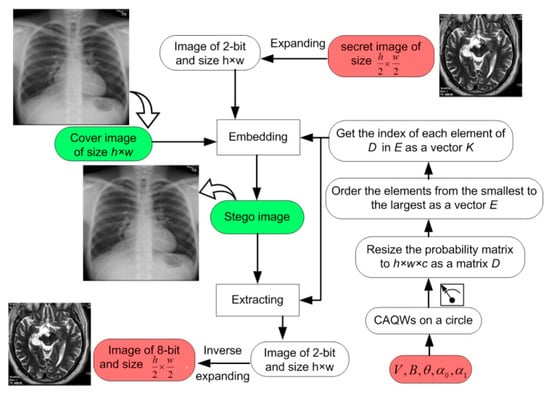
Key Highlights
- Data Confidentiality: Embedding sensitive patient information within medical images maintains data privacy while preserving image quality.
- Advanced Techniques: Combining cryptographic methods with adaptive steganography and deep learning improves security and reversibility.
- Applications and Challenges: These methods support telemedicine and electronic health records, though they require balancing between embedding capacity and diagnostic usability.
Overview of Secure Medical Image Steganography
Secure medical image steganography is an advanced field focused on embedding confidential information directly into medical images. This technique is essential in healthcare due to its dual ability to preserve the diagnostic quality of images such as X-rays, MRIs, and CT scans, while simultaneously protecting patient data by concealing it within the image itself. The integration of steganographic methods with encryption and advanced data-hiding techniques enables secure transmission over public networks and storage systems, making it highly relevant in today’s data-driven health care environments.
The primary benefits of using secure medical image steganography include maintaining patient privacy, ensuring data integrity, and enhancing the security of digital assets. This is particularly critical in telemedicine and electronic health records (EHRs), where the inadvertent exposure of sensitive data could have severe consequences for both patient care and legal compliance.
Core Techniques and Methods
Fundamental Steganographic Approaches
The most common approach in medical image steganography relies on manipulating pixel data to hide secret information without causing perceptible distortion. One routinely implemented method is the Least Significant Bit (LSB) modification. In this method, the least important bits of the image pixels are replaced with bits of the secret data. Despite its simplicity, LSB-based techniques are effective when combined with robust encryption measures.
Another classical method is the use of the Discrete Wavelet Transform (DWT) and Discrete Cosine Transform (DCT) to embed data within different frequency components of the image. These transforms allow the hidden data to be resilient against common image processing attacks such as compression or noise filtering. By distributing the data across various frequency bands, the overall image quality is preserved, ensuring diagnostic utility.
Encryption and Steganography Combination
A prevalent variant within this field is the integration of encryption techniques with steganography. Here, patient data is first encrypted using methods such as DNA-based Advanced Encryption Standard (AES) or Data Encryption Standard (DES). The encrypted data is then embedded into the cover image using LSB, DWT, or DCT techniques. This dual-layer approach offers enhanced security by making it much more difficult for an attacker to extract or unveil the concealed information without both the correct decryption key and the knowledge of the embedding method.
Reversible data hiding is a further refinement where the original image can be fully recovered after extracting the hidden data. This property is extremely valuable in medical imaging where any alteration might compromise diagnostic details. The technique of reversible data hiding ensures that both the hidden data and the original image remain intact and unaltered after the retrieval process.
Adaptive and Deep Learning-Based Methods
With the integration of machine learning, particularly deep learning frameworks, the field of medical image steganography has seen significant advancements. Modern techniques leverage algorithms like the Mask-RCNN model to adaptively select regions of minimal medical importance for embedding data. By focusing on areas that do not compromise critical diagnostic information, adaptive steganography ensures that the hidden information does not interfere with the clinical interpretation of images.
Additionally, the use of convolutional neural networks (CNNs) for image de-noising and data embedding has also enhanced the capacity and reliability of steganographic methods. These models not only help in robustly embedding larger volumes of data but also assist in maintaining high image quality, which is paramount for accurate medical diagnosis.
Innovative Techniques and Methods
The evolving field sees the incorporation of various novel techniques aimed at improving security and data integrity:
- Pixel Variance Method: This technique focuses on analyzing the variance across pixels to guide the embedding process in a way that minimizes visual distortion. By exploiting the natural variability in pixel intensities, sensitive data can be included without altering the overall appearance of the image.
- Image Partitioning and Chaos-Based Approaches: Methods based on chaos theory, such as those using the Henon map, help distribute secret data across multiple segments of an image. Such approaches ensure that even if part of the steganographic data is exposed or altered, the complete recovery of concealed information remains challenging.
- Hybrid Techniques: The combination of multiple techniques, such as reversible data hiding coupled with encryption and adaptive embedding using deep neural networks, provides a layered security approach. These hybrid methods are robust against a spectrum of attacks and ensure the sustainable preservation of medical image quality.
A Comparative Overview of Techniques
The following table summarizes the various techniques used in secure medical image steganography, highlighting their advantages and specific challenges:
| Technique | Key Advantages | Implementation Challenges |
|---|---|---|
| LSB Modification |
|
|
| DWT/DCT Based Methods |
|
|
| Encryption + Steganography |
|
|
| Deep Learning and Adaptive Methods |
|
|
Applications in Healthcare
Telemedicine and Secure Sharing
In the rapidly evolving field of telemedicine, secure medical image steganography plays an indispensable role. Medical professionals routinely share diagnostic images over networks that might not be entirely secure. Embedding patient data directly within the image files allows these images to be transmitted over public networks while maintaining the confidentiality of sensitive patient details. Additionally, as patient information continues to be integrated into Electronic Health Records (EHRs), steganographic methods prevent unauthorized access or tampering of these records.
In many cases, the techniques of reversible data hiding ensure that the original image can be recovered once the embedded information is extracted. This guarantees that the diagnostic integrity of the image is maintained. Secure transmission and storage of medical images are essential for ensuring compliance with privacy regulations such as HIPAA in the United States or GDPR in European countries.
Electronic Health Records (EHRs) and Data Integrity
As healthcare systems become increasingly digitized, ensuring the integrity and confidentiality of patient data stored within EHRs is paramount. Secure medical image steganography embeds critical data—including patient records, diagnostic annotations, and metadata—directly into the images. This approach minimizes the risk of unauthorized data exposure while also helping verify the integrity of the image and embedded data. Any tampering attempts can be more readily detected by comparing the expected hidden data with what is retrieved from the image.
Moreover, hospitals and clinics benefit from improved workflow efficiency as sensitive data can be securely integrated with the images during the diagnostic process. When combined with cryptographic techniques, this dual-layer method of data protection ensures that sensitive information remains secure throughout its lifecycle—from capture and storage to transmission and eventual retrieval.
Security Considerations and Future Trends
Ensuring Data Integrity and Patient Privacy
One of the absolute priorities in secure medical image steganography is balancing data security with image quality. The embedded data should not interfere with the image’s diagnostic usability. Thus, any chosen method must guarantee that the steganographic process does not result in visual artifacts that could mislead medical professionals. In this context, security is enhanced by:
- Employing encryption prior to embedding ensures that even if the steganographic data is compromised, it remains unreadable without the appropriate decryption key.
- Utilizing adaptive methods like deep learning assists in selectively identifying regions within an image that are less critical diagnostically, thereby safely hiding the sensitive data.
- Incorporating reversible data hiding techniques preserves the original image, making it possible to restore the image to its pristine form after the concealed data is extracted.
Challenges in Implementation
Despite significant advancements, certain challenges remain:
- Embedding Capacity vs. Image Quality: One of the fundamental dilemmas is how to maximize the amount of data embedded while ensuring that the quality and diagnostic value of the image remain uncompromised.
- Robustness to Image Processing: Medical images might undergo various forms of processing, such as compression, resizing, or denoising. Ensuring that the embedded data remains intact and retrievable during these transformations is crucial for real-world applications.
- Computational Complexity: Advanced adaptive and deep learning-based methods, though effective, require significant computing power for both embedding and extraction. This is particularly important in real-time telemedicine applications.
Future Directions
Research in secure medical image steganography continues to evolve. Future trends suggest:
- Integration with Blockchain: Utilizing blockchain technology for managing keys and verifying stego data integrity provides an immutable ledger, further enhancing the system's security.
- Improved Deep Learning Models: As computational capabilities improve, more sophisticated models will be used to optimize both the capacity and accuracy of hidden data extraction.
- Augmented Reality Diagnosis Tools: With advancements in augmented reality for medical diagnostics, there might be opportunities to integrate steganographic methods within these tools to provide enhanced security.
Comparative Analysis of Techniques
Techniques and Their Specific Roles
The table below synthesizes the primary steganographic techniques used in secure medical image steganography along with their roles and associated benefits:
| Technique | Description | Advantages | Challenges |
|---|---|---|---|
| LSB Modification | Embedding data by altering the least significant bits of pixels. |
|
|
| DWT/DCT Methods | Utilizing frequency domain transformations to embed data across different image segments. |
|
|
| Encryption + Steganography | First encrypting the data before embedding it in the image. |
|
|
| Adaptive & Deep Learning Methods | Using AI to identify optimal embedding regions and maintain image quality. |
|
|
References
- A High Quality Secure Medical Image Steganography Method - IEEE Xplore
- Secure Transmission of Medical Images using Encryption and Steganography - GitHub
-
Medical steganography: Enhanced security and image quality - ScienceDirect
- Secure Medical Image Steganography Method Based on Pixels Variance - IEEE Xplore
- Secure Medical Image Steganography Research - Hindawi Journals
Related Queries for Deeper Insights
Last updated March 6, 2025