
Understanding seL4 Microkernel Design and Its Formal Verification
A deep dive into the architecture and rigorous proof techniques of the seL4 kernel
Key Highlights
- Minimalistic and Secure Design: seL4’s architecture drastically reduces the trusted computing base by focusing on core functionality.
- Layered Formal Verification: A step-by-step transformation from high-level specifications to a machine-code equivalent provides robust correctness proofs.
- Mathematical Rigor: Isabelle/HOL is employed to mathematically demonstrate that the implementation adheres strictly to its formal model.
Introduction to seL4 Microkernel Architecture
The seL4 microkernel is celebrated for its exceptional combination of performance, security, and reliability. It builds upon the lineage of L4 microkernels with a core philosophy centered on minimalism. This minimalistic approach reduces the codebase to only essential functionalities, thereby decreasing the potential for vulnerabilities.
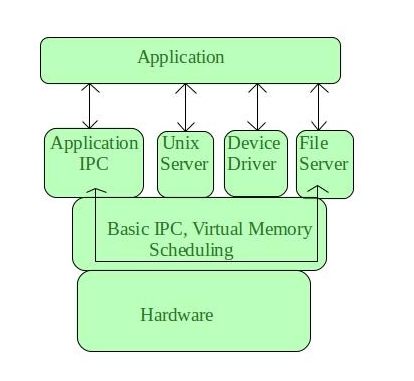
The design philosophy of seL4 is driven by several core principles. It implements only the necessary features such as inter-process communication (IPC), process scheduling, and address space management. All other services are moved to user space, which not only simplifies the kernel itself but also minimizes risks by reducing the size of the trusted computing base (TCB). With fewer lines of critical code, ensuring correctness through formal verification becomes more viable.
Design Features of seL4
Minimalistic and Efficient Codebase
The kernel has a lean implementation typically comprising around 8,700 lines of C code along with a limited amount of assembly code. This ensures that the number of potential errors is minimized across the entire system. A smaller codebase naturally lends itself better to comprehensive analysis and formal verification.
Strong Security through Isolation
A defining characteristic of seL4 is its emphasis on security. Its architecture ensures strict separation between the kernel and user-space components, enforcing fine-grained access control mechanisms that limit the permissions each component holds. This isolation ensures that even if an application is compromised, the potential impact on the rest of the system is tightly controlled.
Focus on Formal Verification
At the heart of seL4’s trustworthiness is its formal verification—the only general-purpose operating system kernel to receive a full machine-checked proof of correctness. Unlike conventional testing methods that rely on running test cases, formal verification employs advanced mathematical techniques to ensure that the kernel operates exactly as specified.
Formal Verification Process
Formal verification is a rigorous process that translates the high-level functional requirements of a system into a mathematical framework. For seL4, this process is designed in layers, ensuring that each aspect of the code—from the abstract behavior to the executable binary—is validated against a mathematical model.
Step 1: Formal Specification
The first step in verifying seL4 involves developing an abstract model of the kernel's functionality. This high-level specification uses higher-order logic (HOL) to define precisely what the kernel should do in every possible scenario. The abstract model forms a clear blueprint that captures all expected behaviors, detailing how inter-process communication, scheduling, and memory management should function.
Step 2: Translating C Code into Mathematical Semantics
The seL4 microkernel is primarily implemented in C, a language that does not inherently support formal semantics. As a result, a crucial part of the verification process is translating the C code into a formal mathematical model. This is achieved using a C parser developed within the theorem prover environment, such as Isabelle/HOL. This parser interprets the semantics of the C language and converts the code into corresponding HOL formulations.
By converting the C implementation to a formalized version, the process bridges the gap between abstract specifications and concrete code. This transformation enables the formulation of a proof that the behavior of the code strictly agrees with the predefined specification.
Step 3: Refinement Proofs Across Abstraction Layers
Once the abstract specification and the formalized version of the C code are available, the next step is to demonstrate that the implementation is a refinement of the specification. The refinement proof verifies that every behavior exhibited by the code is allowed by the abstract model. This is known as a layered proof where:
- The highest layer represents the abstract model or specification.
- Intermediate layers gradually introduce more details, bridging the abstract and the concrete.
- The final layer corresponds to the actual C code implementation, and ultimately, the executable binary.
In each layer, rigorous mathematical proofs are used to ensure that any properties assumed in the abstract model remain valid in the concrete implementation. One remarkable aspect of seL4’s verification is that these proofs also cover the correctness of the compiled binary, ensuring that the compiler and linker do not introduce errors.
Step 4: Use of Isabelle/HOL in the Verification Process
Isabelle/HOL serves as a powerful proof assistant for the formal verification of seL4. It facilitates the interactive theorem proving required to validate that the C code meets the strict specifications. The verification process includes nearly one million lines of formal proof steps, each meticulously checked by the theorem prover.
The use of Isabelle/HOL means that every aspect of the seL4 microkernel—from the logical flow of operations to the rigorous enforcement of security policies—has been mathematically proven to adhere to its specification. This level of assurance is crucial for systems where security and reliability are of paramount importance.
Step 5: Verification of Binary Code
Recent developments in the seL4 verification process extend the formal proofs to the compiled binary. After showing that the C implementation is a correct refinement of the abstract specification, additional proofs demonstrate that the translation from C to binary preserves the correctness properties. This validation is essential, as it ensures that the executable code running on hardware behaves exactly as verified.
With binary code verification, seL4 achieves a complete chain of correctness—that is, from high-level abstract models through to the low-level executable code. This end-to-end verification builds a compelling guarantee that the kernel will never perform an unsafe operation.
Detailed Comparison of Verification Layers
The table below provides a structured comparison of the various layers involved in the seL4 verification process:
| Layer | Description | Key Activities |
|---|---|---|
| Abstract Specification | A high-level mathematical model describing all expected behaviors of the kernel. | Defining system properties using higher-order logic; setting explicit performance and safety requirements. |
| C Code Implementation | The actual seL4 kernel written in C (and some assembly) with a minimalistic, secure design. | Implementation of essential OS functionalities like IPC, scheduling, and address handling. |
| Formalization of C Code | Translating the implementation into a mathematical model. | Using a C parser to create corresponding HOL expressions to allow formal reasoning. |
| Refinement Proofs | Establishing that the implementation is a correct refinement of the specification. | Proving that every behavior in the C code is allowed by the abstract model; layered proof approach. |
| Binary Verification | Ensuring the compiled binary accurately implements the verified C code. | Extending proofs to binary code; demonstrating that compiler and linker maintain the specification. |
Implications and Benefits of This Approach
Enhanced Trustworthiness
The rigorous verification of seL4 means that its operation is not based on empirical tests alone but is mathematically guaranteed. This provides unprecedented assurance, particularly in safety-critical and security-sensitive environments where even minimal errors cannot be tolerated.
Reduced Attack Surface
By limiting functionalities to only what is necessary, the microkernel minimizes potential vulnerabilities. The fine-grained access control mechanisms enforced by the kernel help ensure that each application or process receives only the permissions strictly required for its operation.
Robust Performance
Despite the additional layers of verification, seL4 maintains performance that is comparable to other high-performance microkernels. Its minimal design ensures that the computational overhead is kept low, making it suitable for real-world deployments even in resource-constrained environments.
Overall System Security
The binary-level verification process greatly enhances the overall system security. Since the entire software stack from the abstract specification to running binary is verified, it reduces the need for placing trust in the compiler, linker, or even hardware behavior, assuming these elements adhere to standard specifications. This thorough validation is instrumental in building systems where security is paramount.
Mathematical Notions in the Verification Process
Use of Higher-Order Logic (HOL)
Higher-order logic is central to the formal verification of seL4. It allows the expression of properties and behavior in a mathematical framework where functions and operations can be rigorously defined and manipulated. The use of HOL ensures that proofs are precise and cover all possible execution paths.
For example, consider a simplified expression of a property using HOL:
\( \forall x \in \mathbb{N},\ f(x) = x + 1 \)
In seL4's context, a similar level of precision is applied to prove that every kernel function behaves exactly as its formal specification dictates.
Interactive Theorem Proving
Interactive theorem proving with tools like Isabelle/HOL involves carefully constructing and checking each proof step. The correctness of the seL4 kernel is validated through nearly one million proof steps, which are reviewed dynamically, ensuring that every possible behavior of the kernel conforms to the desired properties of safety, termination, and functional correctness.
Verification Beyond the Kernel
While the seL4 microkernel itself is formally verified, this does not automatically extend to the entirety of an operating system that may run atop it. However, the robust, verified foundation provided by seL4 allows system architects to build further layers with a greater degree of confidence. The outcomes of the rigorous verification process create a reliable base upon which security-sensitive applications and systems can be constructed.
Each enhancement or additional feature layered on top of the microkernel can subsequently be analyzed in the context of its interactions with the verified kernel. This layered approach to system design effectively compartmentalizes risk and builds more resilient overall architectures.
References
- seL4 Microkernel Project - Trustworthy Systems
- seL4 Whitepaper - seL4 Systems
- seL4 Documentation - seL4 Systems
- seL4 Proof FAQ - seL4 Systems
- seL4 Verification - Trustworthy Systems
- Introduction to seL4 - Hensoldt Cyber
- seL4 Developer Kit Documentation
- Formal Verification of an OS Kernel - ACM
- Formal Verification in OS Kernels - ACM Transactions on Computer Systems
-
Klein's Verification Work - Trustworthy Systems
Recommended Related Queries
 cdn.hackaday.io
Last updated March 4, 2025