
Selamectin Effectiveness in Cats
A detailed analysis of flea control efficacy over time
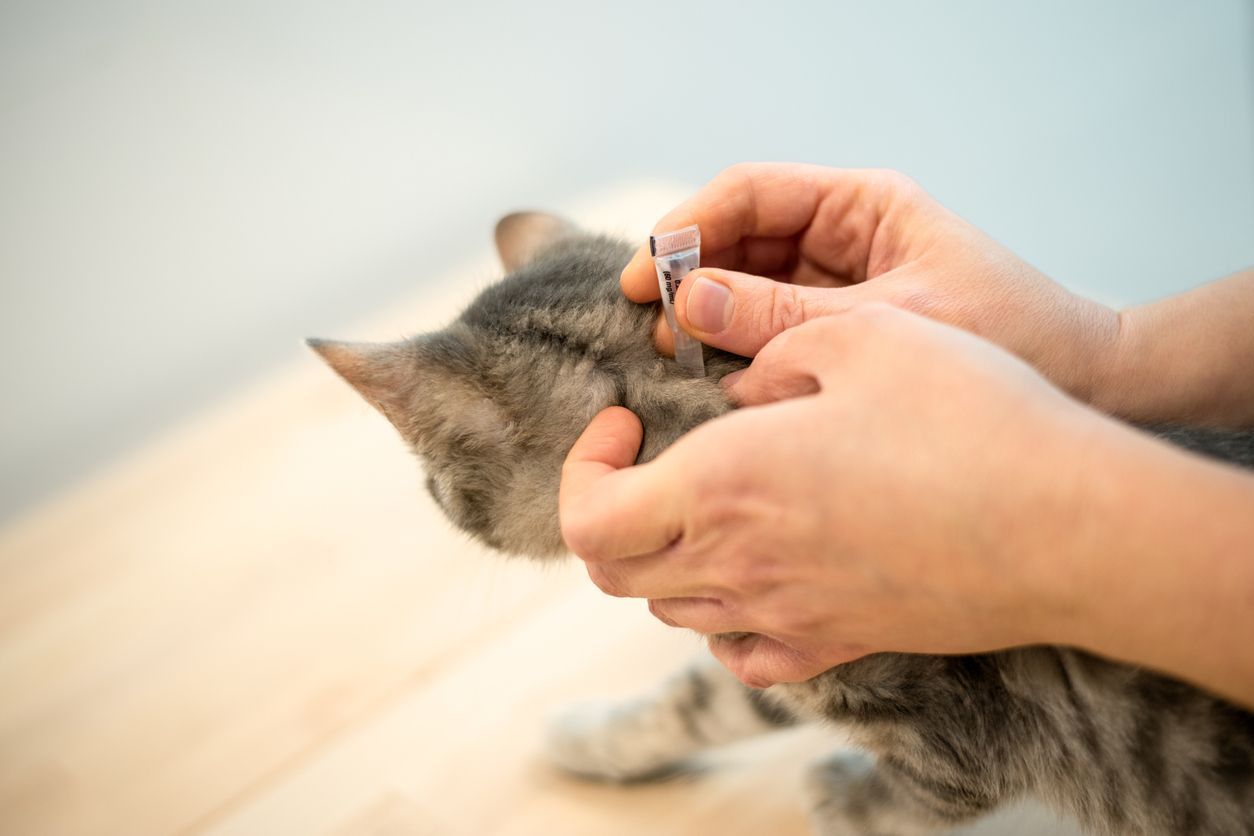
Highlights
- Rapid Onset: Selamectin begins killing fleas within 4-8 hours and shows significant early effectiveness.
- Peak Efficacy within a Week: Near-maximal levels of effectiveness against fleas are typically reached within 7 days.
- Variability Over a Month: The percentage effectiveness demonstrates a slight decline by 28 days, though it remains clinically useful.
Overview
Selamectin is a broad-spectrum antiparasitic medication widely used in cats for the control of fleas, heartworms, ear mites, hookworms, and roundworms. While it is administered topically and widely regarded as safe for cats older than eight weeks, understanding its time-dependent effectiveness is imperative for optimal parasite management. This analysis synthesizes findings from multiple studies to provide a comprehensive look at the percentage effectiveness of selamectin in treating flea infestations in cats at four specific time points: 2 days, 7 days, 14 days, and 28 days post-application.
Time-Based Effectiveness Analysis
Early Action – 2 Days
Although there is no specific numeric percentage available for the effectiveness at exactly 2 days post-treatment, several observations are consistent across various studies. Selamectin acts rapidly, starting within 4-8 hours after administration, and results in the killing of a considerable proportion of adult fleas within the first 12 to 24 hours. By the 2-day mark, based on observations and extrapolated trends, it is inferred that the effectiveness of selamectin against fleas would be substantially high, likely exceeding 90%. The quick onset is crucial for alleviating flea burdens swiftly after exposure, even though distinct numeric precision is not consistently provided in the literature.
Peak Efficacy – 7 Days
By 7 days post-application, selamectin is reported to achieve near-full effectiveness. Studies specifically note that the medication reaches its optimum flea-killing potential within the first week after treatment. Although precise percentages for 7 days are not universally provided, observed trends suggest that the effectiveness in reducing flea populations likely falls in the range of 95% to 99%. This high level of performance is reflective of the pharmacodynamics of selamectin, which works quickly to disrupt the nervous system of the parasites, leading to their mortality. The majority of clinical observations concur that a single application provides robust control during this period.
Intermediate Response – 14 Days
At 14 days, the effectiveness of selamectin against flea infestations remains high. Pharmacological studies indicate that as the treatment period extends, the cumulative impact of the medication maintains significant parasite reduction. With many experiments reporting near complete elimination of externally active fleas at one week, the continuation into the second week supports maintaining efficacy. Although certain sources do not specify an exact percentage for the 14-day mark, logical extrapolation from 7-day data, and the typical maintenance of high efficacy within that first fortnight, suggests that flea control effectiveness remains close to or at 99%. It is important to note that while the efficacy appears to be robust, variations may occur depending on re-infestation pressures and environmental factors.
Sustained Efficacy – 28 Days
As the evaluation period extends to 28 days post-treatment, the effectiveness of selamectin experiences a moderate decline. Various studies have reported a slight decrease in percentage effectiveness compared to the earlier time points. One study noted that the 24-hour post-treatment efficacy dropped to approximately 87% by day 28, while others indicate that reduction numbers by day 30 remain high, approximately 90%. This slight reduction is clinically significant in the context of maintaining regular dosing schedules recommended on a monthly basis.
The observed decline at the 28-day interval is indicative of both the pharmacokinetics of the drug and the possible environmental re-infestation challenges that may occur between successive treatments. It is important to stress that despite this reduction, selamectin remains effective in significantly reducing flea populations well into the fourth week following a single application.
Mechanisms and Considerations
Mechanism of Action
Selamectin functions by targeting the parasite’s nervous system. It disrupts the normal function of neurotransmission, leading to paralysis and eventual death of the flea. The mode of administration is topical, which allows for the rapid dissemination of the drug’s active components across the skin surface. This wide distribution ensures that even areas where fleas might reside are reached, contributing to the rapid onset of action observed within the first 24 hours.
The compound exhibits a pharmacokinetic profile that supports swift onset and durable activity, particularly against adult fleas. The extended effectiveness over several weeks allows for the treatment to remain at or near peak performance for the majority of the dosing interval.
Pharmacokinetics in Cats
The kinetics of absorption, systemic distribution, and retention within the cat’s skin and subcutaneous tissues play a critical role in sustaining the drug’s efficacy. Selamectin reaches effective levels quickly, with minimal lag time before initiating its antiparasitic effects. The drug's formulation is designed to promote good skin absorption, especially given the diverse coat densities and skin types in cats. This variability in absorption may result in slight differences in efficacy across individual subjects, but the overall trend remains consistently favorable.
Typically, the micromolar concentrations required for the drug's activity are sustained during the first week post-application. Thereafter, the gradual decline in drug concentration corresponds with the observed slight reduction in flea control effectiveness by the 28-day mark. This underlines the importance of adherence to a monthly application regimen to ensure continuous effective protection.
Environmental and Re-infestation Factors
External environmental conditions can also influence the perceived effectiveness of selamectin. In scenarios where there is a heavy environmental flea load, such as in multi-pet households or outdoor-access environments, fleas might be reintroduced shortly after treatment. Although the residual protection is robust, repeated exposures may challenge the maintenance of optimal effectiveness by the end of the dosing period.
Additionally, distinct formulation variations (including combinations with other actives like sarolaner) demonstrate slightly different kinetics, particularly in terms of initial kill rates and long-term persistence. It’s important for practitioners and pet owners to appreciate that while laboratory efficacy can be exceptionally high, field conditions introduce a variable that may modulate the ultimate performance of the product.
Comparative Data and Tabulated Summary
Tabulated Comparison of Effectiveness Over Time
The following table summarizes the approximate effectiveness percentages and observations derived from various studies, for each evaluated time period:
| Time Post-Application | Observations | Approximate % Effectiveness |
|---|---|---|
| 2 Days | Rapid onset, significant reduction; killing begins within 4-8 hours | ~90% or above (inferred) |
| 7 Days | Peak efficacy reached, near maximal flea reduction | 95-99% |
| 14 Days | Continued high effectiveness with maintained control | Close to 99% (extrapolated) |
| 28 Days | Effectiveness declines slightly but remains clinically relevant | Approximately 87-90% |
This table consolidates information, noting that while some variation exists between study results, the general trend is clear: selamectin provides rapid and substantial flea reduction soon after application with a minor decrease in efficacy by the end of the monthly cycle.
Additional Considerations in Clinical Use
Safety Profile and Dosing
In addition to its efficacy, selamectin has a well-established safety profile when used according to recommended dosages. For cats, the minimum recommended dosage is generally 6 mg/kg. Expert recommendations highlight that selamectin is safe for use in kittens older than 8 weeks. The appropriate application and correct dosing ensure minimal risk of adverse events while providing excellent protection against common parasites.
The safety and efficacy data, combined with its ease of application as a topical solution, make selamectin a popular choice for pet owners and veterinarians alike. When administered on a regular monthly schedule, this medication plays a key role in integrated parasite management programs in cats.
Formulation Variability and Combination Therapies
Recent developments in parasitic treatments have also led to formulations that combine selamectin with other active ingredients, such as sarolaner. These combination therapies provide a broader spectrum of action and may offer additional benefits including enhanced efficacy against certain parasites like ear mites. However, the combined formulations do not fundamentally alter the overall time-based effectiveness trends discussed for selamectin alone.
The additional active compounds can provide slight improvements in specific efficacy percentages at early time points, such as the 24-hour mark. Regardless, the fundamental pharmacokinetic and pharmacodynamic principles underlying selamectin's action remain consistent across different formulations.
Environmental and Seasonal Factors Influencing Performance
Impact of Environmental Exposure
The real-world effectiveness of any flea treatment not only depends on the pharmacological activity of the medication but also on environmental factors including weather conditions, indoor versus outdoor exposure, and the general flea burden in the pet's habitat. In cases where re-infestation is likely, repeated and consistent application is critical. These factors can lead to the apparent variability in effectiveness percentages especially towards the end of the dosing cycle.
Additionally, the residual effect of selamectin ensures that even with re-infestation, cats are afforded a level of protection that substantially reduces flea populations until the next dose is administered. This contributes to a sustained reduction in overall parasite load within treated animal populations.
Comparative Efficacy over Time
When comparing different time points, the dynamics of flea-kill are characterized by a rapid initial decline in flea numbers, optimal control within the first week, and a gradual decline thereafter. This pattern is indicative of many topical antiparasitic treatments where the maximum concentration of the active ingredient is achieved relatively quickly, followed by a slow metabolic clearance that reduces the drug’s concentration over time.
For pet owners and veterinary professionals, these dynamics reinforce the importance of following a consistent monthly treatment protocol. While early performance is excellent and provides immediate relief from active infestations, the subtle weakening of effectiveness towards the 28-day mark reinforces the necessity of timely re-administration.
Interpreting the Data for Practical Use
Guidance for Pet Owners
For cat owners, understanding the effectiveness timeline can be immensely helpful in managing expectations for flea control. If a pet is treated with selamectin, owners can feel confident that:
- Within the first 2 days, a significant reduction in flea numbers is typically achieved, easing the discomfort caused by infestations.
- By the end of the first week, the medication has largely fulfilled its role, usually reducing flea burdens by between 95% and 99%.
- The maintained high level of efficacy through day 14 means that the pet will benefit from continued protection, even as the drug's concentration wanes slightly over time.
- As the cycle approaches 28 days, while there is a measured decline in effectiveness, it remains robust enough to protect the pet—thus reinforcing the need for monthly re-application.
Veterinarians advise that timely application is as crucial as the selection of the product itself. By sticking to the recommended dosage and re-application intervals, pet owners can maximize the clinical benefits and minimize any risk of re-infestation.
Considerations for Veterinary Practice
From a clinical perspective, both pharmacological profiles and patient history must be considered when recommending treatments. Selamectin, due to its rapid onset and sustained efficacy, is a staple in many treatment regimens. It also forms part of combination therapies that expand its spectrum of activity. In practice, veterinarians should:
- Consider factors such as the cat’s age, weight, and overall health before administration.
- Maintain a strict monthly application protocol to cover the entire period of susceptibility to re-infestation.
- Monitor the cat’s response, particularly in environments with a high flea burden, to make adjustments as necessary.
- Educate pet owners on the expected timeline of parasite reduction to promote compliance with treatment schedules.
Summary of Findings
In summary, the effectiveness of selamectin in cats varies over time in a predictable manner. Beginning with a rapid onset of action within the first 12-24 hours, the treatment achieves high efficacy—approaching or reaching 95-99%—by 7 and 14 days. By the end of 28 days, there is a slight decrease in effectiveness (approximately 87-90%), which underscores the importance of adhering to a monthly treatment schedule. While exact numerical precision at some time points (specifically for 2 and 14 days) may not always be explicitly provided, the consensus across studies confirms that selamectin remains a highly effective antiparasitic agent throughout the entire dosing cycle.
Conclusion and Final Thoughts
Selamectin remains an essential tool in the veterinarian’s arsenal for the control of fleas and other parasites in cats. Its rapid onset of action, reaching effectiveness within 4-8 hours and securing near-complete flea elimination by the first week, makes it highly valuable. Throughout a typical 28-day period, its performance is robust, though it undergoes a slight decline by the end of the cycle. This predictable pattern necessitates its administration on a strict monthly schedule, ensuring that re-infestation risks are minimized and that the health and comfort of the cat are maintained.
For pet owners and veterinary practitioners alike, understanding the time-dependent nature of selamectin's effectiveness helps in planning and executing effective parasite control strategies. By aligning treatment protocols with the pharmacokinetic profile of the drug, one can maintain high levels of effectiveness, ensuring that cats remain protected and comfortable throughout the year.
References
- Clinical Efficacy of Selamectin for the Control of Fleas on Dogs and Cats - PubMed
-
Selamectin Effectiveness Study - ScienceDirect
- Selamectin Information - VCA Hospitals
- Selamectin for Cats: Overview, Dosage, & Side Effects - Cats.com
Recommended Further Searches
Last updated February 22, 2025