
Unlocking Your Potential: A Comprehensive Guide to Self-Discovery
Navigate your inner landscape and chart a course for personal achievement with these powerful tools and strategies.

- 1.Key Insights for Profound Self-Discovery
- 2.The Path to Self-Knowledge: A Step-by-Step Approach
- 3.Leveraging Tools for Continuous Self-Improvement
- 4.Understanding What You Can Achieve
- 5.Frequently Asked Questions About Self-Discovery
- 6.Conclusion: Your Continuous Journey to Self-Realization
- 7.Recommended Further Exploration
- 8.Referenced Search Results
Key Insights for Profound Self-Discovery
- Personality Assessments provide structured frameworks like Myers-Briggs, Enneagram, and Big Five to map your traits and preferences.
- Reflective Practices such as journaling and self-assessment tools are crucial for connecting test results to your real-world experiences and values.
- Goal Setting and Continuous Improvement transform self-knowledge into actionable plans, focusing on SMART goals and science-backed strategies for sustained growth.
Understanding yourself deeply is the cornerstone of personal growth and realizing your full potential. This journey involves more than just a fleeting glance inward; it requires sustained introspection, awareness, and strategic application of insights. By exploring your values, passions, strengths, and even your potential blind spots, you can clarify what you want to achieve and how to get there. Fortunately, numerous free resources are available to guide you through this transformative process.
The Path to Self-Knowledge: A Step-by-Step Approach
Embarking on a journey of self-discovery can feel overwhelming, but a structured approach can make it manageable and highly effective. This involves a combination of assessment, reflection, planning, and continuous learning.
Initiating Your Personal Baseline
To begin, it's essential to establish a baseline understanding of your intrinsic characteristics. This is where personality assessments come into play. These tools offer a structured glimpse into your tendencies, preferences, and inherent style of interacting with the world.
Exploring Personality Types with Free Tests
Several reputable platforms offer free personality tests that can provide valuable insights. These tests often categorize traits based on established psychological models.
- 16Personalities: Based on the Myers-Briggs Type Indicator (MBTI) theory, this test provides descriptions of various personality types, helping you understand your cognitive functions and how you perceive the world.
- Truity: This platform offers a range of free tests, including those based on Myers-Briggs, Enneagram, and DISC frameworks, allowing for a multifaceted understanding of your personality.
- SeeMyPersonality: Provides a free Big Five personality test, detailing your traits across five broad dimensions (Openness, Conscientiousness, Extraversion, Agreeableness, and Neuroticism) without requiring registration.
- Open Source Psychometrics Project: A treasure trove of interactive personality tests, including the Big Five and Enneagram, offering detailed results for those seeking in-depth analysis.
- myDISCprofile: Offers a free DISC personality test, categorizing individuals into 27 distinct types and explaining the implications of each.
- Personality Junkie: Provides an online test to help discover your personality type and explore its connection to your identity, purpose, and potential vocation.
- Personality Assessor: Features scientifically engineered quizzes with instant results, designed by psychological researchers, and accessible without registration.
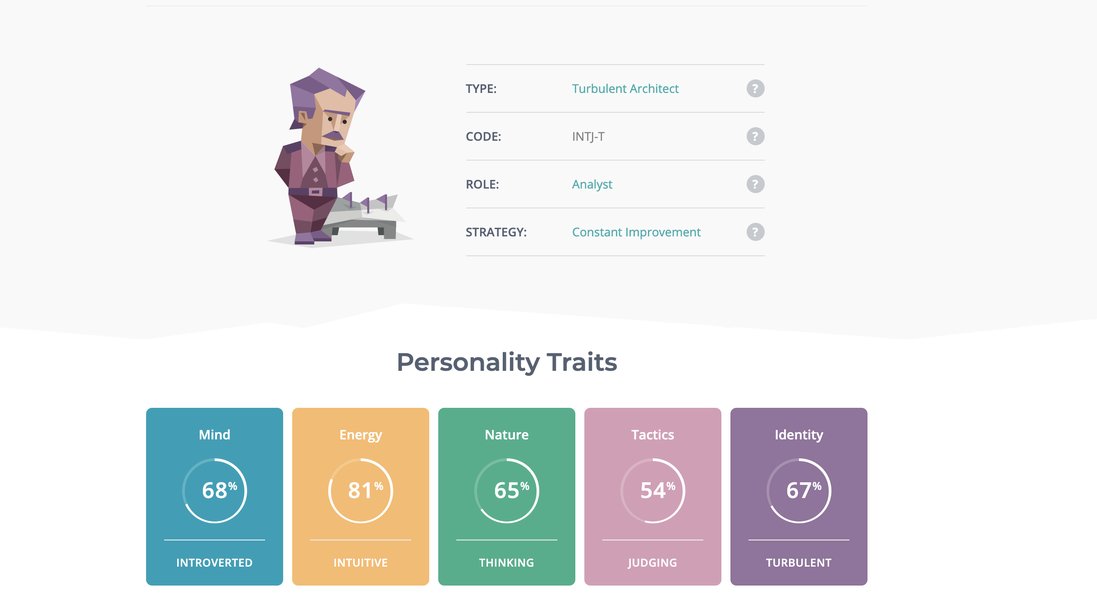
An example of personality test results, often presented in an easily digestible format.
The Power of Reflection and Integration
Taking personality tests is just the first step. The real magic happens when you integrate these results with your personal experiences and engage in deep reflection.
Journaling and Self-Reflection for Deeper Understanding
After completing any assessment, dedicate time to journaling. Ask yourself how well the results resonate with your lived experiences, your core values, and your observed strengths and weaknesses. Free journaling prompts and guided reflections can be found on sites like Positive Psychology, which emphasizes introspection to understand your true self.
- Positive Psychology: Offers resources and questions to help you delve into your inner world, fostering a deeper connection with your authentic self.
- Vivien Roggero: Provides free self-discovery tools and quizzes, including an Awareness Workbook, to help you gain insights into your personality.
- Dr. Ron Stotts: Offers a wealth of free tools, introspective exercises, and guided reflections to unlock your potential.
Translating Insights into Actionable Goals
Once you have a clearer picture of who you are, the next phase involves translating these insights into concrete, achievable goals. This moves self-discovery from an abstract concept to a tangible plan for personal evolution.
Setting SMART Goals for Personal Development
To effectively harness your newfound self-knowledge, employ the SMART goal framework: Specific, Measurable, Achievable, Relevant, and Time-bound. This methodology transforms vague aspirations into clear, actionable steps.
- MindTools: Offers detailed guidance on setting self-development goals using the SMART framework, ensuring your objectives are well-defined and trackable.
- James Clear: Provides science-backed strategies for continuous self-improvement, helping you build sustainable habits aligned with your goals.
This video explores how to set effective goals for personal growth, aligning with the principles of self-discovery and actionable planning.
Building a Concrete Plan for Growth
Based on your assessment results and reflections, identify a few high-priority strengths to develop or areas for improvement. Map out a learning path or a project that will allow you to apply your insights. Set clear milestones to track your progress and celebrate small victories along the way.
Leveraging Tools for Continuous Self-Improvement
Self-discovery is an ongoing journey, not a destination. Utilizing continuous improvement tools can help you maintain momentum and adapt your path as you evolve.
This radar chart illustrates a hypothetical individual's current stage in various self-discovery dimensions compared to their target stage, providing a visual guide for growth areas.
Tracking Progress with Digital Platforms
Several free or low-cost platforms can support your self-improvement efforts by offering features like journaling, habit tracking, and progress dashboards.
- GrowthDay: A personal development platform that includes a "5 to Thrive" dashboard and other features to help you achieve your highest potential, offering daily focus and growth tracking.
- Breeze Wellbeing: A self-care and self-development app that uses mood tracking, mental health tests, and self-growth tips to empower you on your journey.
- Discovery Hub: Offers free downloads and guides on various personal development subjects, providing continuous learning opportunities.
The Iterative Nature of Self-Discovery
It's important to remember that self-knowledge is not a static state. It's a dynamic process of learning, adapting, and refining your understanding of yourself. Don't rely on a single test or assessment. Instead, triangulate your insights by comparing results from several assessments with your personal reflections. Adjust your goals and actions monthly as you gain new insights and grow.
This mindmap illustrates the interconnected steps and tools involved in a comprehensive self-discovery journey, from initial assessment to continuous improvement.
Understanding What You Can Achieve
The ultimate goal of deep self-knowledge is to empower you to realize your full potential. By understanding your unique traits and tendencies, you can align your aspirations with your authentic self, leading to more fulfilling and sustainable achievements.
Aligning Personality with Potential
Your personality traits offer clues about environments and roles where you are most likely to thrive. For instance, if you discover you are an extrovert, roles involving high social interaction might be more energizing for you. If you are highly conscientious, you might excel in detail-oriented tasks requiring meticulous planning.
| Personality Trait (Example) | Potential Strengths | Areas for Growth | Relevant Achievements |
|---|---|---|---|
| Extroversion | Social adeptness, leadership, communication, networking | Requires social stimulation, can be impulsive, oversharing | Successful team leadership, public speaking, vibrant social circles |
| Introversion | Deep thinking, careful planning, independent work, active listening | Can be perceived as aloof, drains in large groups, avoids conflict | Expertise in specialized fields, influential writing, focused project management |
| Conscientiousness | Organized, diligent, disciplined, responsible, goal-oriented | Can be overly perfectionistic, prone to burnout, rigid | High-quality project completion, successful long-term planning, reliable task execution |
| Openness to Experience | Creative, curious, imaginative, adaptable, intellectual | Can be unfocused, impractical, rebellious, risk-prone | Innovative problem-solving, artistic endeavors, cross-cultural understanding |
| Agreeableness | Empathetic, cooperative, compassionate, trusting, altruistic | Can be easily manipulated, avoids confrontation, overly self-sacrificing | Strong interpersonal relationships, effective team collaboration, conflict resolution |
This table illustrates how understanding specific personality traits can inform your potential strengths, areas for growth, and what you can realistically achieve.
This bar chart represents an individual's perceived achievement potential across various life domains, based on a comprehensive self-assessment.
Frequently Asked Questions About Self-Discovery
What is the best personality test to start with?
How often should I reassess myself?
Can free tools truly provide deep self-knowledge?
What if my test results don't feel accurate?
How do I turn self-knowledge into actual achievements?
Conclusion: Your Continuous Journey to Self-Realization
The journey of self-discovery is a profound and enriching endeavor that empowers you to not only understand who you are but also to unlock your true potential. By utilizing a combination of structured personality assessments, consistent self-reflection through journaling, and strategic goal setting, you can systematically map your inner world and align your actions with your deepest aspirations. Remember that this is an iterative process, requiring patience, adaptability, and a continuous commitment to learning about yourself. Embrace the wealth of free online resources available, and you will find yourself better equipped to navigate life's challenges, cultivate meaningful relationships, and achieve the goals that truly resonate with your authentic self.
Recommended Further Exploration
- How to develop emotional intelligence for leadership roles?
- Strategies for overcoming procrastination and building consistent habits?
- Integrating personal values into career choices and professional development?
- The role of mindfulness in enhancing self-awareness and mental well-being?