
From Ledgers to AI: Unpacking the Technological Metamorphosis of Self-Storage
Discover how software advancements have reshaped self-storage operations, customer experiences, and profitability.
Key Transformations in Self-Storage Technology
- Operational Efficiency Revolution: Software has moved the industry from cumbersome manual processes to highly automated, streamlined operations, drastically reducing errors and administrative burdens.
- Enhanced Customer Experience: Modern software empowers customers with online rentals, digital payments, mobile access, and improved security, leading to greater convenience and satisfaction.
- Data-Driven Decision Making: Advanced analytics, AI, and IoT integration provide operators with actionable insights for dynamic pricing, optimized occupancy, and proactive facility management.
The Dawn of Self-Storage: A World Before Software
In the nascent stages of the self-storage industry, dating back to the mid-20th century, facility management was an entirely manual endeavor. Operators relied heavily on paper-based systems, including handwritten ledgers, physical rental agreements, and rudimentary bookkeeping methods to keep track of unit availability, tenant information, payments, and maintenance schedules. This analog approach, while functional for small-scale operations, was inherently labor-intensive, prone to human error, and offered limited scalability. Updating records was a time-consuming task, data accuracy could be compromised, and retrieving specific information quickly was often a challenge. The lack of sophisticated tools meant that optimizing space utilization, implementing dynamic pricing, or managing multiple facilities efficiently was nearly impossible. This reliance on manual processes constrained the industry's growth potential and the overall customer experience, setting the stage for a much-needed technological intervention.
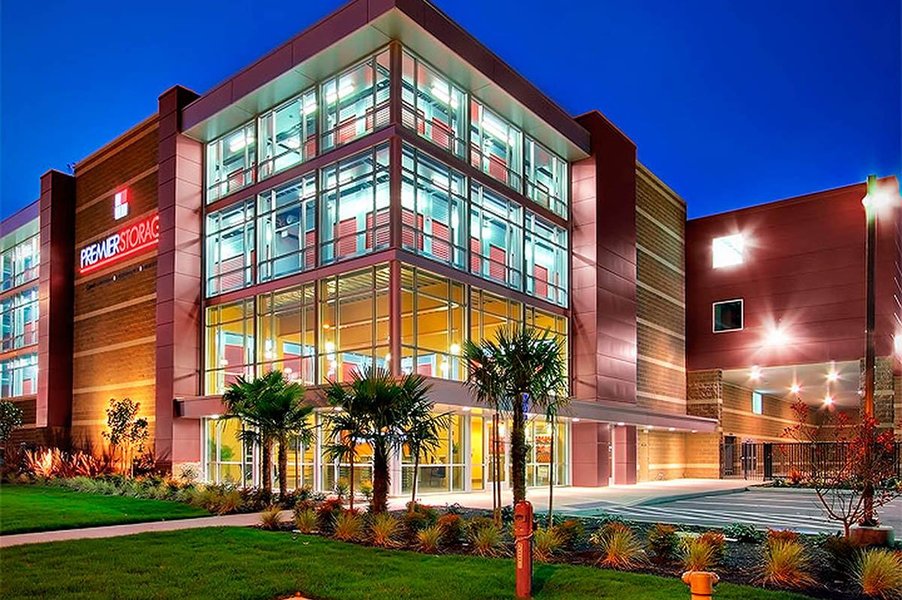
A modern self-storage facility, a stark contrast to the simple structures of the early days, now often managed by sophisticated software.
The First Wave: Digitization with Desktop Software
Entering the Digital Realm
The late 1980s and 1990s marked the first significant technological shift in the self-storage industry with the introduction of early computer systems and basic software programs. These initial solutions, often DOS-based or early Windows applications, were typically installed locally on office computers. This transition from paper to digital records was revolutionary for its time, allowing facility managers to track rentals, manage payments, and maintain unit inventories with greater accuracy and speed than ever before. While these desktop programs were limited in functionality compared to today's standards—often lacking remote access, robust integration capabilities, or advanced analytics—they laid the critical groundwork for future innovation. They demonstrated the tangible benefits of automation, such as reduced administrative workload, improved record-keeping, and more reliable financial tracking, fundamentally changing how operators perceived and managed their businesses.
Impact of Early Software
These pioneering software systems provided a basic means of record-keeping and were a crucial first step in moving away from purely manual operations. Facility operators gained tools to better monitor unit status, customer details, and payment histories. This digitization improved operational efficiency to a degree, minimizing some of the errors common with paper ledgers and making information retrieval somewhat faster. However, these systems were generally standalone, requiring on-site hardware and manual data backups, which presented their own set of challenges, including data security risks and limitations in managing multiple sites cohesively.
The Internet Era: Online Services and Enhanced Security
Connectivity Transforms Customer Interaction
The dawn of the 21st century, often dubbed the Digital Age, ushered in a wave of transformative innovations for the self-storage industry, primarily driven by the proliferation of the internet. Self-storage software began to incorporate online capabilities, significantly changing the customer experience and operational workflows. A major milestone was the introduction of online reservations and payment systems. This allowed prospective and current tenants to browse unit availability, reserve units, and make payments remotely, 24/7, eliminating the need for extensive paperwork and in-person visits. This not only offered unprecedented convenience to customers but also broadened the market reach for facility operators and improved occupancy rates.
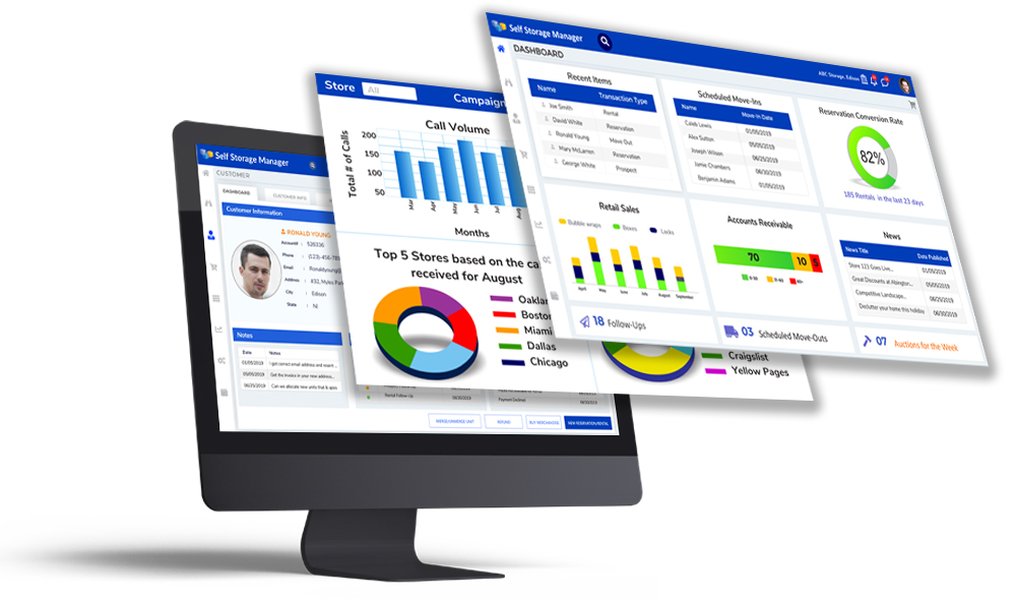
An example of a self-storage management software dashboard, illustrating digital facility oversight.
Integration of Security Technologies
Simultaneously, software advancements facilitated the integration of enhanced security technologies. Management platforms began to interface directly with physical security systems, such as automated gate access controls requiring personalized entry codes, individual unit alarms, and comprehensive CCTV surveillance networks. This integration allowed operators to monitor facility access and security events in real-time through their management software, providing a higher level of protection for tenants' belongings. These security enhancements, coupled with the convenience of online services, significantly improved customer trust and peace of mind, making self-storage a more attractive option.
The Cloud Revolution and Mobile Accessibility
Anytime, Anywhere Management
The rise of cloud computing in the late 2000s and early 2010s represented another quantum leap for self-storage software. Cloud-based platforms began to replace traditional on-premises, desktop-bound software, offering unprecedented flexibility, scalability, and cost-effectiveness. With data and applications hosted on remote servers accessible via the internet, facility owners and managers could access real-time information, manage operations, and oversee multiple sites from a single interface, anywhere with an internet connection. This eliminated the need for expensive on-site server maintenance and ensured that software was always up-to-date with automatic updates. Data security and backup also saw significant improvements, as reputable cloud providers offered robust protection measures.
Empowering Users with Mobile Solutions
Furthermore, the cloud era dovetailed with the explosion of mobile technology. Self-storage management software providers developed mobile applications for both managers and customers. Facility staff could perform tasks like unit inspections, lock checks, and payment processing on the go, directly from smartphones or tablets. Customers, too, benefited from mobile apps that allowed them to manage their accounts, make payments, receive notifications, and in some cases, even access their units using digital keys. This mobile accessibility further streamlined operations and significantly enhanced user convenience, aligning the self-storage experience with modern consumer expectations.
This video showcases storEDGE, an example of modern self-storage management software, highlighting its features and user interface designed to streamline operations and enhance user experience.
The Modern Software Landscape: AI, IoT, and Advanced Analytics
Today, as of May 08, 2025, self-storage software has evolved into sophisticated, comprehensive ecosystems that leverage cutting-edge technologies like Artificial Intelligence (AI), the Internet of Things (IoT), and advanced data analytics. These modern platforms go far beyond basic administrative tasks, offering tools that drive significant improvements in efficiency, profitability, and customer satisfaction. AI and machine learning algorithms are increasingly used for dynamic pricing, analyzing market demand, competitor rates, and historical occupancy data to recommend or automatically adjust rental rates in real-time, thereby maximizing revenue. Predictive analytics help operators forecast demand, identify at-risk tenants to improve retention, and optimize staffing and marketing expenditures.

Modern self-storage software allows for comprehensive management from various devices.
Smart Facilities and Enhanced Automation
The integration of IoT devices is transforming facilities into "smart" storage environments. Sensors embedded in units can monitor environmental conditions like temperature and humidity in real-time, crucial for climate-controlled units, and alert managers to any deviations. Smart locks and access systems provide enhanced security and can offer tenants keyless entry via mobile apps. This data feeds directly into the management software, enabling proactive maintenance and offering tenants greater peace of mind. Automation extends to customer service as well, with AI-powered chatbots handling inquiries, automated billing and reminder systems reducing administrative burdens, and integrated Customer Relationship Management (CRM) tools personalizing communication. Some platforms even offer virtual facility tours and fully online, contactless rental processes.
Visualizing Software Evolution: Key Feature Comparison
The journey of self-storage software has seen remarkable advancements across various aspects of facility management. The radar chart below illustrates a conceptual comparison of how different eras of software have performed across key metrics such as operational efficiency, customer convenience, security integration, data analytics capabilities, scalability, and remote access. This visualization helps to understand the progressive impact of technology on the industry.
As depicted, modern AI/IoT integrated software scores highest across all categories, reflecting its comprehensive capabilities. Each successive generation of software has built upon the last, consistently pushing the boundaries of what's possible in self-storage management. This evolution underscores a clear trend towards greater automation, enhanced customer centricity, and more intelligent operational oversight.
Mapping the Technological Journey
The evolution of self-storage software can be visualized as a journey with distinct stages, each characterized by key technological advancements and their impact on the industry. The mindmap below provides a structured overview of this progression, from basic manual methods to sophisticated, interconnected systems.
(Mid-20th Century)"] id1a["Paper Ledgers"] id1b["Manual Payments"] id1c["Physical Records"] id1d["Limited Scalability"] id2["Early Digitalization
(1980s-1990s)"] id2a["DOS-based Programs"] id2b["Local Desktop Software"] id2c["Digital Record Keeping"] id2d["Basic Inventory Tracking"] id3["Internet Integration
(Early 2000s)"] id3a["Online Reservations"] id3b["Online Payments"] id3c["Web-based Interfaces"] id3d["Enhanced Security Features
(Gated Access, Cameras)"] id4["Cloud Revolution & Mobile
(Late 2000s-2010s)"] id4a["Cloud-Hosted Platforms (SaaS)"] id4b["Remote Access & Multi-Site Management"] id4c["Mobile Apps for Managers & Tenants"] id4d["Automated Billing & Communication"] id4e["Improved Data Security & Backups"] id5["Modern Era: AI & IoT
(Present - 2025)"] id5a["Artificial Intelligence (AI)"] id5aa["Dynamic Pricing"] id5ab["Predictive Analytics"] id5ac["AI Chatbots"] id5b["Internet of Things (IoT)"] id5ba["Smart Sensors (Temp, Humidity)"] id5bb["Smart Locks & Access Control"] id5bc["Real-time Facility Monitoring"] id5c["Advanced CRM & Automation"] id5d["Contactless Operations"] id6["Future Outlook"] id6a["Blockchain for Security"] id6b["Augmented/Virtual Reality Tours"] id6c["Deeper AI Integration"] id6d["Sustainability Management Features"]
This mindmap illustrates the clear trajectory from basic, localized solutions towards increasingly interconnected, intelligent, and automated systems. Each phase brought new capabilities that not only improved operational efficiency but also fundamentally changed how customers interact with self-storage services.
Comparative Overview of Software Evolution Stages
To further understand the transformative impact of technology on the self-storage industry, the following table provides a comparative summary of the key characteristics, benefits, and limitations associated with each major stage in the evolution of self-storage software.
| Era | Key Technologies/Methods | Primary Benefits | Key Limitations |
|---|---|---|---|
| Manual Era (Pre-1980s) | Paper ledgers, physical contracts, manual payment processing | Basic record-keeping for small operations | Highly inefficient, error-prone, poor scalability, no remote access, limited data analysis |
| Early Desktop Software (1980s-1990s) | DOS-based/early Windows programs, local databases | Digital record-keeping, improved accuracy over manual, basic inventory tracking | Local hosting required, limited remote access, no multi-site integration, basic functionality |
| Internet-Enabled Software (Early 2000s) | Web interfaces, online reservations/payments, integration with early gate systems | Increased customer convenience, broader market reach, initial automation of payments & bookings | Often still reliant on some local infrastructure, security concerns, limited analytics |
| Cloud Computing & Mobile (Late 2000s-2010s) | SaaS platforms, mobile apps, cloud hosting, advanced security integrations | Remote access, multi-site management, scalability, automated updates, improved data security, enhanced customer self-service | Reliance on internet connectivity, potential subscription costs, data privacy considerations |
| Modern AI/IoT Integrated Software (2020s - Present) | AI/Machine Learning, IoT sensors, advanced analytics, comprehensive CRM, full automation | Dynamic pricing, predictive insights, smart facility management, superior customer experience, operational excellence, robust security | Higher implementation/subscription costs for advanced features, complexity, data management challenges |
This table highlights the progressive nature of technological adoption in the self-storage industry, demonstrating how each new era of software has addressed the limitations of its predecessors while unlocking new levels of efficiency, customer service, and strategic capability.
The Future Trajectory: What Lies Ahead?
Looking forward, the evolution of self-storage software is poised to continue its innovative trajectory, driven by emerging technologies and evolving customer expectations. We can anticipate deeper integration of AI for even more personalized customer experiences and hyper-efficient operational decision-making. Technologies like blockchain may find applications in enhancing transactional security and data privacy for tenant agreements and payments. Augmented Reality (AR) and Virtual Reality (VR) could become more commonplace for immersive virtual facility tours, allowing prospective tenants to explore units remotely in rich detail. Furthermore, there will likely be an increased focus on sustainability, with software helping to manage energy consumption and promote eco-friendly practices within facilities. The core objective will remain consistent: to make self-storage operations smarter, more secure, more convenient for customers, and more profitable for operators, ensuring the industry adapts to the demands of an increasingly digital world.
Frequently Asked Questions (FAQ)
How did early software change self-storage operations?
Early self-storage software, typically DOS-based or early Windows programs, marked the first major shift from manual, paper-based systems. It allowed for digital record-keeping of tenant information, unit availability, and payments. This significantly improved accuracy, reduced administrative time spent on paperwork, and provided a more reliable way to track inventory and financials compared to handwritten ledgers. While limited by today's standards, it was a crucial first step towards automation and efficiency.
What was the impact of cloud computing on self-storage software?
Cloud computing revolutionized self-storage software by offering enhanced accessibility, scalability, and cost-effectiveness. It allowed operators to access their management systems from anywhere with an internet connection, facilitating remote and multi-site management. Cloud solutions also typically include automatic software updates, robust data backup, and improved security, reducing the IT burden on facility owners. This shift enabled more agile operations and better integration with online services and mobile applications.
How is AI currently used in modern self-storage software?
Artificial Intelligence (AI) is used in modern self-storage software for several key functions. These include dynamic pricing, where AI algorithms analyze market data, occupancy rates, and competitor pricing to optimize rental rates and maximize revenue. AI also powers predictive analytics to forecast demand, identify customer churn risks, and optimize marketing efforts. Furthermore, AI-driven chatbots are used for customer service, handling inquiries and guiding tenants through the rental process, often 24/7.
What benefits does IoT integration bring to self-storage facilities?
Internet of Things (IoT) integration connects physical devices within a self-storage facility to the management software. This allows for real-time monitoring and control. For example, smart sensors can track temperature and humidity in climate-controlled units, alerting managers to potential issues. Smart locks and access control systems enhance security and can offer tenants keyless entry. This data helps in proactive maintenance, improving operational efficiency and providing tenants with greater assurance about the safety and condition of their stored items.
Recommended Further Exploration
- What are the specific IoT devices transforming self-storage facility management?
- How does dynamic pricing work in self-storage and what are its benefits?
- Exploring the impact of mobile applications on the self-storage customer journey.
- Future trends in self-storage technology beyond AI and IoT.
References
Last updated May 8, 2025