
Embracing Free Weights: A Senior's Guide to Strength and Mobility
Unlock Your Potential at the YMCA, Even with Knee Arthritis
- Tailored Approach for Arthritis: Prioritize low-impact, joint-friendly exercises and ensure proper form to minimize stress on your knees.
- Gradual Progression: Start with light weights or even bodyweight, focusing on mastering technique before increasing intensity or load.
- YMCA Resources: Leverage the expertise of YMCA staff and specialized programs designed for older adults to ensure a safe and effective training journey.
Starting a free weight regimen at 66, especially with knee arthritis, is a commendable step towards enhancing your overall health and maintaining independence. Free weights offer unique benefits over machines, engaging more stabilizing muscles and improving functional strength essential for daily activities. Your local YMCA is an excellent choice for this journey, offering a supportive environment and diverse programs. This comprehensive guide will equip you with the knowledge and specific exercises to safely and effectively integrate free weights into your routine, while managing your arthritis pain.
Understanding the Benefits of Free Weight Training for Seniors
As we age, maintaining muscle mass and bone density becomes increasingly crucial. Strength training with free weights is a powerful tool against age-related decline, offering a multitude of benefits:
- Muscle and Bone Health: Free weights stimulate muscle growth and improve bone density, reducing the risk of osteoporosis and fractures, which is vital for seniors.
- Enhanced Functional Strength: Exercises with free weights mimic real-life movements, making everyday tasks like carrying groceries, climbing stairs, or gardening easier and safer.
- Improved Balance and Coordination: Unlike machines that isolate muscles, free weight exercises engage multiple muscle groups and require greater balance and coordination, which can significantly reduce the risk of falls.
- Pain and Stiffness Management: For individuals with arthritis, consistent and properly executed strength training can alleviate joint pain and stiffness by strengthening the muscles surrounding the affected joints, providing better support and protection.
- Metabolic Boost: Increased muscle mass leads to a higher resting metabolism, aiding in weight management and contributing to overall energy levels.
- Mental Well-being: Regular exercise, including weight training, is known to boost mood, reduce stress, and improve cognitive function.
Navigating Free Weights with Knee Arthritis
Your concern about knee arthritis is valid, and it's essential to approach free weight training with a focus on joint protection. The good news is that weight lifting, when done correctly, can actually be beneficial for arthritis. It strengthens the muscles around the joints, providing better support and potentially easing pain and stiffness. The key is to be mindful of your body, listen to your pain signals, and choose exercises that are low-impact and allow for controlled movements.
Essential Considerations for Joint Protection
- Consult Your Doctor: Always get clearance from your physician or physical therapist before starting any new exercise program, especially with an existing condition like arthritis. They can provide personalized recommendations and limitations.
- Prioritize Proper Form: This is paramount, especially with arthritis. Incorrect form can put undue stress on your joints. Consider working with a certified personal trainer, particularly one experienced with seniors and arthritis, to learn proper technique.
- Start Light, Progress Slowly: Begin with very light weights, or even bodyweight, focusing on mastering the movement pattern. Gradually increase the weight or repetitions as your strength improves and without exacerbating knee pain.
- Listen to Your Body: Differentiate between muscle fatigue (good) and joint pain (bad). If you experience sharp, persistent, or increasing joint pain, stop the exercise and consult a professional. Avoid exercising when your stiffness is at its worst.
- Warm-up and Cool-down: Always dedicate 5-10 minutes to a warm-up before your workout (e.g., light cardio like walking and dynamic stretches) and a cool-down afterwards (e.g., static stretches).
- Opposing Muscle Groups: Ensure your routine includes exercises for opposing muscle groups (e.g., biceps and triceps, quadriceps and hamstrings) to maintain muscular balance around your joints.
- Modify as Needed: Don't be afraid to modify exercises or substitute them if they cause discomfort. For instance, seated exercises can be beneficial if standing puts too much pressure on your knees.
Your YMCA Advantage: Programs and Support
The YMCA is an excellent environment for older adults beginning free weight training, especially given your existing membership. They often have programs and staff specifically trained to support seniors:
- Specialized Senior Programs: Many YMCAs offer "Active Older Adults" programs, "SilverSneakers," "EnhanceFitness," or "Strength Train Together" classes. These are designed for seniors, often focusing on low-impact exercises, strength, balance, and flexibility. These classes frequently use dumbbells, resistance bands, and bodyweight exercises, perfect for your needs.
- Certified Trainers: The YMCA employs certified personal trainers who can create a personalized workout plan, guide you through proper form, and help you navigate exercises safely with your knee arthritis. Inquire about introductory sessions or package deals.
- Community and Motivation: Group classes and the general atmosphere at the YMCA foster a sense of community, which can be a great motivator and provide social interaction.
- Variety of Equipment: Beyond machines, YMCAs typically have well-equipped free weight areas with dumbbells, barbells, resistance bands, and kettlebells, offering a wide range of options for your progression.
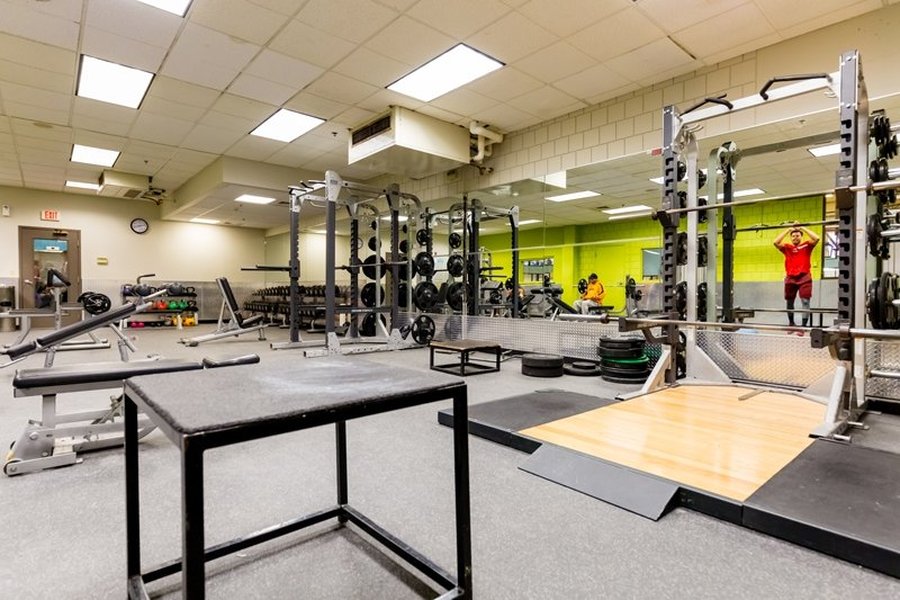
YMCA fitness centers provide a wide range of equipment for all fitness levels.
Recommended Free Weight Exercises for Seniors with Knee Arthritis
Below are specific free weight exercises that are generally safe and effective for seniors, with modifications to consider for knee arthritis. Aim for 2-3 sessions per week, allowing at least one recovery day between sessions. Start with 1-2 sets of 8-12 repetitions. If 12 repetitions feel too easy, the weight is too light. If you can't complete 8 repetitions with good form, the weight is too heavy.
Lower Body Exercises (with Knee Modifications)
For knee arthritis, prioritize exercises that strengthen the muscles around the knee (quadriceps, hamstrings, glutes) without excessive bending or impact.
1. Goblet Squats (Modified)
This exercise strengthens the glutes, quadriceps, and hamstrings. Holding a dumbbell in front of your chest (goblet style) helps maintain an upright torso.
- Execution: Stand with feet shoulder-width apart, toes slightly out. Hold one dumbbell vertically against your chest with both hands. Slowly lower down as if sitting into a chair, keeping your chest up and back straight. Only go as deep as comfortable without knee pain. Push through your heels to return to standing.
- Knee Arthritis Modification: Focus on a partial squat or use a chair to squat down to, ensuring your knees don't go past your toes. You can also perform seated squats where you stand up from a chair while holding the weight.
2. Weighted Glute Bridge
Excellent for targeting the glutes and hamstrings, with minimal direct knee impact.
- Execution: Lie on your back with knees bent, feet flat on the floor, hip-width apart. Place a dumbbell across your hips (you might want to pad it with a towel). Engage your core and glutes, lifting your hips off the floor until your body forms a straight line from shoulders to knees. Lower slowly.
- Knee Arthritis Modification: Ensure your feet are at a comfortable distance from your glutes; adjusting this can reduce knee strain. Start with bodyweight if adding a dumbbell is too much.
3. Romanian Deadlifts (RDLs)
Works the hamstrings, glutes, and lower back. Focus on hinging at the hips, not rounding the back.
- Execution: Stand with feet hip-width apart, holding a dumbbell in each hand in front of your thighs. Keep a slight bend in your knees. Hinge at your hips, pushing your glutes back, and lower the dumbbells towards the floor, keeping them close to your legs. Keep your back straight. Feel the stretch in your hamstrings. Return to standing by squeezing your glutes.
- Knee Arthritis Modification: Maintain a very slight bend in the knees throughout the movement. Don't go as low if it causes discomfort; focus on the hamstring stretch.
Upper Body Exercises
1. Dumbbell Rows (Single-Arm)
Strengthens the back muscles (lats, rhomboids) and biceps.
- Execution: Place one knee and one hand on a weight bench (or a sturdy chair) for support. Let the other arm hang down holding a dumbbell, palm facing in. Keep your back straight and parallel to the floor. Pull the dumbbell up towards your chest, squeezing your shoulder blade. Lower slowly. Repeat on the other side.
2. Dumbbell Floor Press (or Bench Press)
Targets the chest (pecs), shoulders, and triceps.
- Execution: Lie on your back on the floor (or a flat bench), holding a dumbbell in each hand above your chest, palms facing each other or forward. Lower the dumbbells slowly to the sides of your chest until your upper arms touch the floor. Press the dumbbells back up to the starting position.
- Knee Arthritis Modification: Lying on the floor can be easier on the knees than some other positions. Ensure your feet are comfortably placed on the floor.
3. Overhead Shoulder Press (Seated or Standing)
Strengthens the shoulders (deltoids) and triceps.
- Execution: Sit or stand with a dumbbell in each hand at shoulder height, palms facing forward. Press the dumbbells straight overhead until your arms are fully extended (but not locked). Lower slowly back to the starting position.
- Knee Arthritis Modification: Performing this exercise seated can take pressure off the knees and lower back, allowing you to focus on shoulder strength.
Core Exercises
A strong core supports your entire body, including your knees.
1. Dumbbell Farmer's Carry
An excellent functional exercise that builds core strength, grip strength, and overall stability.
- Execution: Hold a heavy dumbbell in each hand, arms straight down by your sides. Stand tall, engage your core, and walk slowly with control for a set distance or time.
- Knee Arthritis Modification: Choose a weight that allows you to walk without limping or putting excessive strain on your knees. Focus on maintaining good posture.
Key Programming Principles and Charting Your Progress
To effectively start and progress with free weights, especially with arthritis, a structured approach is crucial. Here's a breakdown of programming principles and a visual representation of your progress:

Consistent training can lead to significant gains in strength and confidence, regardless of age.
Structuring Your Workouts
A typical free weight session might involve:
- Warm-up (5-10 minutes): Light cardio (e.g., walking on a treadmill or stationary bike) and dynamic stretches focusing on major joints, including gentle knee circles and leg swings.
- Main Workout (20-40 minutes): Select 4-6 exercises, ensuring you cover upper body, lower body, and core. Perform 1-3 sets of 8-12 repetitions for each exercise.
- Cool-down (5-10 minutes): Static stretches, holding each stretch for 20-30 seconds. Focus on the muscles worked, including quadriceps, hamstrings, calves, chest, and back.
Remember to allow for rest days. For beginners and those with arthritis, working out every other day is a good starting point, aiming for at least two days a week of strength training.
Progressive Overload: How to Get Stronger Safely
To continue building strength, you need to gradually challenge your muscles. This is called progressive overload. For someone with knee arthritis, it’s about smart progression, not just lifting heavier. Ways to achieve progressive overload safely:
- Increase Repetitions: Once you can comfortably perform 12 repetitions with good form, try to do 1-2 more repetitions in your next session.
- Increase Sets: After you consistently hit your target repetitions for 2 sets, add a third set.
- Increase Weight: Only when you can comfortably complete all target sets and repetitions with good form and no increased knee pain, consider a slight increase in weight (e.g., 1-2.5 lbs per dumbbell).
- Improve Form: Sometimes, just refining your technique makes an exercise more challenging and effective.
- Decrease Rest Time: Gradually reduce the rest time between sets (e.g., from 90 seconds to 60 seconds) to increase intensity.
Tracking Your Progress: A Radar Chart for Holistic Fitness
Tracking your progress isn't just about weight lifted. For seniors, especially with arthritis, it's about holistic improvements in strength, mobility, pain management, and functional independence. This radar chart illustrates different dimensions of progress you can monitor.
This radar chart visually represents different aspects of your fitness journey. The "Starting Point" dataset reflects your initial assessment, while "Current Progress" shows improvements. For example, your 'Pain Management (Knees)' score might start higher (indicating more pain) and decrease over time as strength training helps. Conversely, 'Muscle Strength' and 'Functional Independence' scores should increase. This holistic view helps you appreciate all the benefits of your dedication.
The YMCA: Your Partner in Senior Fitness
The YMCA is a valuable resource for seniors looking to stay active and healthy. They offer various programs tailored to older adults, focusing on strength, balance, and overall well-being. Their staff are often experienced in working with diverse populations, including those with chronic conditions like arthritis. Leveraging these resources can significantly enhance your free weight training journey.
This 45-minute strength workout from the YMCA is tailored for seniors, offering a comprehensive routine to build strength safely and effectively. It demonstrates the type of guidance and instruction you can expect from YMCA programs, focusing on proper form and adaptability for various fitness levels.
Recommended Weekly Training Schedule
Consistency is key. Here’s a sample weekly schedule that incorporates free weight training and other beneficial activities, considering your knee arthritis:
| Day | Activity | Focus & Notes |
|---|---|---|
| Monday | Free Weight Training (Full Body) | Focus on proper form, 1-2 sets of 8-12 reps. Include 1-2 lower body exercises with knee modifications, 2-3 upper body, and 1 core. |
| Tuesday | Active Recovery / Low-Impact Cardio | Gentle walking, stationary bike, or water exercise (swimming/water walking) to reduce knee impact. 30-45 minutes. |
| Wednesday | Free Weight Training (Full Body) | Repeat Monday's routine or slightly vary exercises. Pay attention to any knee discomfort. |
| Thursday | Flexibility & Balance | Yoga, Tai Chi, or dedicated stretching and balance exercises (e.g., single-leg stands holding onto support). YMCA often has classes. |
| Friday | Free Weight Training (Full Body) | Final free weight session for the week. Lighten weight if needed due to fatigue or pain. |
| Saturday | Leisurely Activity | Enjoy a walk in the park, light gardening, or other enjoyable low-impact activities. |
| Sunday | Rest | Allow your body to recover and rebuild. |
Remember, this is a sample. Adjust it based on your energy levels, recovery needs, and how your knees feel. Consistency over intensity is the goal.
Frequently Asked Questions
What if my arthritis pain flares up?
How do I know if I'm lifting the right amount of weight?
Can I do free weight exercises at home?
What other types of exercise are good for arthritis?
Conclusion
Beginning a free weight training program at 66 is a transformative journey towards greater strength, mobility, and independence, even with knee arthritis. By focusing on proper form, starting with light weights, and gradually progressing, you can safely and effectively build muscle and support your joints. The YMCA offers an ideal environment with its tailored senior programs and knowledgeable staff. Remember to listen to your body, prioritize pain management, and celebrate every small victory. Your dedication to fitness will undoubtedly enhance your quality of life.
Recommended Further Exploration
- Explore YMCA senior fitness programs specifically designed for arthritis.
- Discover more low-impact dumbbell exercises that are gentle on the knees.
- Understand the scientific evidence behind strength training's positive effects on arthritis.
- Learn how to accurately determine the appropriate weight for your strength training.