
Exploring the Critical Factors in Senior High School Strand Selection: A Comprehensive Literature Review
A systematic analysis of research revealing how Grade 10 students make life-changing academic track decisions for their future education
Essential Insights on Senior High School Strand Selection
- Family and personal interest factors consistently emerge as the most influential determinants in strand selection across multiple studies
- Academic performance and future career goals significantly impact the decision-making process of Grade 10 students
- Socioeconomic factors and availability of resources play crucial roles in limiting or expanding students' strand options
The transition from junior high school to senior high school represents a critical junction in a student's educational journey. The selection of an appropriate strand or academic track during Grade 10 significantly influences future academic and career pathways. This comprehensive review synthesizes research on the factors influencing strand selection among Grade 10 students, drawing from both international and local studies to provide a holistic understanding of this pivotal decision-making process.
Foreign Literature on Strand Selection
International research offers valuable insights into the factors that influence educational track selection among secondary students globally. These studies highlight universal patterns in educational decision-making while acknowledging cultural variations.
Key International Studies on Educational Track Selection
| Title | Author | Year Published | Key Findings |
|---|---|---|---|
| Factors Influencing Career Preferences of Junior High School Students | Eduardo Edu C. Cornillez Jr. | 2020 | Found that future career opportunities, personality traits, family influence, and peer pressure significantly impact track selection decisions. |
| Exploring the Determinants of Senior High School Track Preference | Sunga, J. | 2021 | Identified academic interest, family support, and future prospects as primary factors affecting track preference, with teacher and family support having substantial influence. |
| Parental Influence and Students' Career Decisions | Garcia, M. A. | 2020 | Revealed that active parental involvement in the decision-making process leads to higher student satisfaction with their chosen track. |
| The Role of Self-Efficacy in Career Decisions | Thomson, R. | 2022 | Demonstrated a strong correlation between students' self-efficacy and the quality of their track selection decisions. |
| Assessing High School Students' Strand Preferences | Lee, J. & Tan, C. | 2023 | Found that students oriented toward STEM had natural inclinations toward science and technology, while those aspiring to creative fields chose arts tracks. |
Patterns in International Research
International studies consistently emphasize the multifaceted nature of educational decision-making. Family influence emerges as a dominant factor across various cultural contexts, though its manifestation may vary. Self-efficacy and personal interest also appear as universal factors, highlighting the importance of student agency in track selection.
Lokal na Literatura sa Pagpili ng Strand
Local studies from the Philippines provide crucial context-specific insights into how Filipino Grade 10 students navigate strand selection decisions. These studies consider unique cultural, socioeconomic, and educational system factors specific to the Philippine setting.
Mga Mahalagang Pag-aaral sa Pilipinas
| Pamagat | May-akda | Taon ng Paglathala | Mga Natuklasan |
|---|---|---|---|
| Factors Affecting the Choice of Senior High School Strand | Santos, R. | 2022 | Highlighted the influence of personal interest, abilities, and environmental factors on strand selection, with most students citing personal inclination as their primary basis for choosing. |
| Parental Influence on Students' Track Selection | Cruz, L. | 2021 | Identified significant impact of parental expectations on student decisions, emphasizing the critical role of active parental involvement in the selection process. |
| Strand Preferences among Grade 10 Students of San Francisco National High School | Hindi nabanggit | 2020 | Indicated that developing academic self-concept helps students make better decisions about their career paths and strand selection. |
| Preferences in Senior High School Tracks of the Grade 10 Students | Moneva & Malbas | 2019 | Found that external factors such as parental interest, financial condition, peer influence, and job opportunities significantly affect Grade 10 students' strand preferences. |
| Factors Influencing Students' Choice for a Senior High School Academic Track | Jessa V. Calibugar | 2025 | Emphasized that selecting the right senior high school track and strand is a crucial decision for Grade 10 students due to its significant impact on their future academic and career paths. |
Insights from Philippine Studies
Philippine studies reveal unique contextual factors influencing strand selection. The implementation of the K-12 curriculum reform and the economic realities of many Filipino families create specific constraints and opportunities. Studies highlight how financial considerations often outweigh personal interest for many students, particularly those from lower socioeconomic backgrounds.
Comprehensive Literature on Decision-Making Factors
Broader literature on educational decision-making provides theoretical frameworks for understanding the complex interplay of factors in strand selection. These studies offer insights into cognitive, social, and institutional dimensions of educational choices.
Theoretical Foundations and Empirical Evidence
| Title | Author | Year Published | Key Findings |
|---|---|---|---|
| Pansariling Salik sa Pagpili ng Kursong Akademiko | Diaz, M. V. | 2017 | Identified personal factors such as interest and aptitude as primary considerations that should be understood when selecting academic strands. |
| Socio-Economic Status and Academic Choices | Torres, R. C. | 2015 | Demonstrated that socioeconomic status significantly influences students' academic pathway choices and opportunities. |
| The Role of Career Guidance in Senior High School Strand Selection | Rivera, J. M. | 2018 | Emphasized career guidance as an essential tool in helping students make informed strand selection decisions. |
| Interests and Career Pathways in Senior High School | Santos, A. L. | 2019 | Highlighted student interests as a primary factor that must be understood for appropriate strand selection. |
| Factors Influencing Strand Selection among Grade 10 Students | Serrano, F. R. | 2020 | Identified parents, student interests, and job opportunities as the primary factors affecting strand selection in senior high school. |
Factor Influence Analysis: Radar Chart of Decision-Making Elements
The radar chart below illustrates the relative influence of various factors on strand selection decisions based on synthesized findings from multiple studies. This visual representation highlights how different elements carry varying weights in the decision-making process for Grade 10 students.
The radar chart reveals interesting patterns in how different factors influence strand selection across various research contexts. Local studies in the Philippines show stronger family influence and socioeconomic factors compared to foreign studies, which tend to emphasize personal interest more prominently. Career prospects remain a consistently strong influence across all research contexts.
Conceptual Framework: Decision-Making Process for Strand Selection
The mindmap below presents a conceptual framework for understanding how various factors interact in the strand selection process. This visualization helps identify the multidimensional relationships between different influences on students' decisions.
This conceptual framework demonstrates the complex interplay of factors in students' decision-making processes. Internal factors like personal interest interact with external pressures and contextual realities to shape strand selection. The framework helps educators, parents, and policymakers understand the multifaceted nature of this critical educational decision.
Informative Video Resources on Strand Selection
The following video provides practical guidance for Grade 10 students on how to select the most appropriate senior high school strand. It offers a comprehensive overview of the different tracks and strands available in the Philippine K-12 system and discusses practical considerations for making informed choices.
This video resource presents 5 practical approaches to selecting a senior high school strand that aligns with students' interests, abilities, and future goals. It addresses common concerns and misconceptions about different strands while providing concrete strategies for decision-making.
Visual Guide: Senior High School Tracks and Strands
The following images illustrate the structure of senior high school tracks and strands in the Philippine K-12 curriculum, providing visual context for understanding the options available to Grade 10 students.
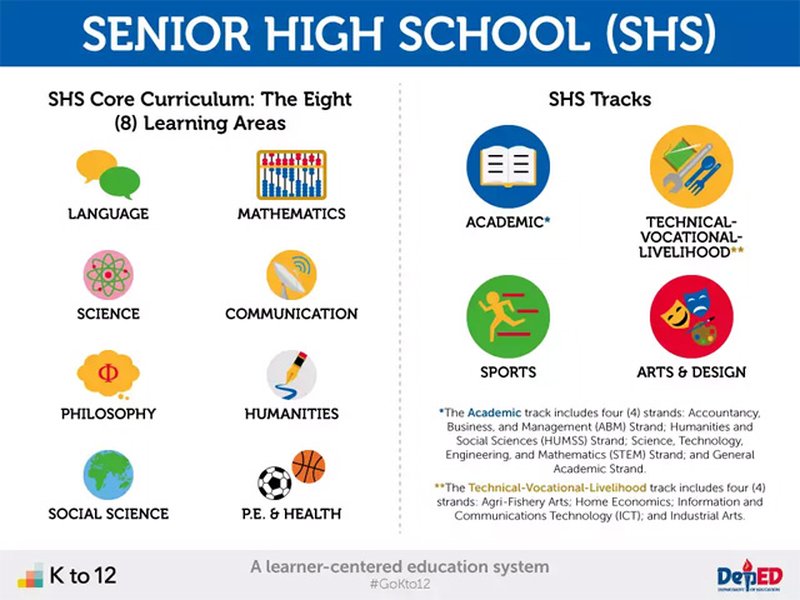
The image above provides a visual representation of the main tracks and strands available in the Philippine senior high school system. This structure helps students understand the diverse pathways available and how different strands align with various academic and career trajectories.

This visual guide illustrates how different types of intelligences correlate with various senior high school strands, helping students identify strands that align with their natural aptitudes and learning styles.
Comparative Analysis of Senior High School Strands
Characteristics and Outcomes of Main Senior High School Strands
| Strand | Core Focus Areas | Ideal Student Profile | Career Pathways | Academic Preparation |
|---|---|---|---|---|
| STEM (Science, Technology, Engineering, and Mathematics) | Advanced Mathematics, Biology, Chemistry, Physics, Research | Analytical thinkers with strong aptitude for science and mathematics | Engineering, Medicine, Architecture, IT, Research | Prepares for science, engineering, and technology courses in college |
| ABM (Accountancy, Business, and Management) | Accounting, Economics, Business Math, Marketing | Entrepreneurial mindset, good with numbers and practical problem-solving | Business, Accounting, Finance, Marketing, Entrepreneurship | Prepares for business and commerce-related college programs |
| HUMSS (Humanities and Social Sciences) | Literature, Social Sciences, Philosophy, Political Science | Creative thinkers with strong communication skills and social awareness | Law, Education, Psychology, Communication, Social Work | Prepares for liberal arts, education, and social science courses |
| GAS (General Academic Strand) | Combination of subjects from other academic strands | Students undecided about career path or seeking flexible options | Various options depending on electives chosen | Provides general preparation for diverse college programs |
| TVL (Technical-Vocational-Livelihood) | Technical skills, practical applications, work immersion | Hands-on learners with interest in specific technical skills | Immediate employment, entrepreneurship, technical courses | Provides TESDA certifications and industry-ready skills |
Frequently Asked Questions
Paano ko malalaman kung anong strand ang pinakabagay sa akin?
Ang pagkilala sa pinakabagay na strand ay nangangailangan ng masusing pag-assess sa iyong mga personal na interes, kakayahan, at mga layunin sa hinaharap. Makakatulong ang sumusunod na mga hakbang:
- Suriin ang iyong mga paboritong asignatura at kung saan ka mahusay
- Pag-isipan ang iyong mga layunin sa karera sa hinaharap
- Kumunsulta sa mga guro, guidance counselor, at pamilya
- Lumahok sa mga career assessment at orientation tungkol sa iba't ibang strand
- Isaalang-alang ang iyong mga personal na kagustuhan at kalakasan
Karamihan sa mga paaralan ay nag-aalok ng career guidance programs na tutulong sa iyong makilala ang iyong mga hilig at kakayahan upang matukoy ang pinakabagay na strand para sa iyo.
Gaano kahalaga ang pagpili ng tamang strand para sa aking kinabukasan?
Ang pagpili ng strand ay isang mahalagang desisyon dahil ito ang magsisilbing pundasyon ng iyong akademikong landas sa susunod na dalawang taon at maaaring maging tulay sa iyong kolehiyo at karera. Gayunpaman, hindi ito ganap na nakatali sa iyong hinaharap.
Bagama't ang pagpili ng tamang strand ay nagbibigay ng mga sumusunod na benepisyo:
- Mas malalim na paghahanda para sa mga katulad na kurso sa kolehiyo
- Pagkakaroon ng mga espisipikong kasanayan at kaalaman na nauugnay sa iyong hinaharap na karera
- Oportunidad na ma-explore ang larangan bago mag-commit sa kolehiyo
Mahalagang tandaan na maraming estudyante ang nagpapalit ng kanilang karera at akademikong direksyon sa hinaharap. Ang mga strand ay nagsisilbing gabay, hindi hadlang, sa iyong pangmatagalang mga layunin.
Ano ang dapat kong gawin kung hindi ako sigurado kung anong strand ang pipiliin?
Maraming estudyante ang nakakaranas ng pagiging hindi sigurado sa pagpili ng strand. Narito ang ilang mungkahi kung ikaw ay nag-aalinlangan:
- Isaalang-alang ang General Academic Strand (GAS) na nagbibigay ng mas malawak na curriculum at hindi ka naglilimita sa isang partikular na direksyon
- Makipag-usap sa guidance counselor ng iyong paaralan para sa career assessments at gabay
- Magsagawa ng sariling pananaliksik tungkol sa iba't ibang strand at ang mga kurso at karera na maaari mong tahakin mula sa mga ito
- Makipag-usap sa mga senior high school students, guro, at propesyonal sa iba't ibang larangan para sa kanilang mga pananaw
- Bisitahin ang career orientation events at senior high school fairs
Tandaan na ang pagiging hindi sigurado ay normal, at ang pagkakaroon ng bukas na isip tungkol sa iyong mga pagpipilian ay maaaring maging isang positibong bagay.
Maaari ba akong lumipat ng strand kung sa tingin ko ay hindi angkop ang una kong napili?
Oo, posible ang paglipat ng strand, ngunit may ilang konsiderasyon:
- Ang paglipat ay karaniwang pinapayagan lamang sa unang semester o sa katapusan ng Grade 11
- Maaaring kailanganin mong punan ang mga prerequisite subjects ng bagong strand na pipiliin mo
- Maaari itong maging sanhi ng pagkaantala o karagdagang academic load
- Kailangan mo ng pahintulot mula sa iyong paaralan at karaniwan ay suporta ng iyong mga magulang
Mas mainam na gumawa ng maingat na desisyon sa simula pa lamang, ngunit hindi ibig sabihin na ikaw ay ganap na nakatali sa iyong unang pagpili. Maraming paaralan ang may mga proseso para sa paglipat upang suportahan ang mga estudyante na natuklasan na mas angkop ang ibang strand para sa kanila.
Paano nakakaapekto ang strand sa pagpili ng kurso sa kolehiyo at karera sa hinaharap?
Ang kaugnayan ng strand sa hinaharap na landas sa kolehiyo at karera ay komplikado:
- Ang strand ay nagbibigay ng specialized na knowledge at skills na makakatulong sa mga katulad na kurso sa kolehiyo
- Ang ilang kolehiyo at unibersidad ay maaaring magbigay ng preference sa mga aplikante mula sa mga partikular na strand para sa mga partikular na programa
- Ang strand ay nagbibigay ng maagang exposure sa larangan na maaaring patunayan o baguhin ang iyong interes sa karera
- Hindi ito absoluto na limitasyon – maraming estudyante ang nagtatagumpay sa mga kurso sa kolehiyo na hindi direktang nauugnay sa kanilang SHS strand
Mahalagang tandaan na bagama't ang pagkakaroon ng alignment ay nakakatulong, ang mga unibersidad sa Pilipinas ay karaniwang hindi nagbabawal sa mga estudyante na mag-enroll sa mga kurso batay lamang sa kanilang SHS strand. Sa halip, ang strand ay nagsisilbing foundation para sa mas specialized na pag-aaral sa kolehiyo.
References
- Factors Affecting Grade 10 Students in Choosing Their Preferred Tracks for Senior High School - Academia.edu
- Preferences in Senior High School Tracks of the Grade 10 Students - ResearchGate
- Factors Influencing Students' Choice for a Senior High School Academic Track - Academia.edu
- Factors Affecting the Grade 10 Students Decision Making - Scribd
- Factors Affecting the Choice of Grade 10 Students in Choosing a Strand in Senior High School - Studocu
- Kalayaang Pagpili ng mga Mag-aaral sa Senior High School ng Strand at Track Tungo sa Akademikong Pagganap - ResearchGate
- Review of Related Literature - Site Title
Recommended Topics for Further Reading
 rimmia.wordpress.com
 robertbalinton143.wordpress.com
Last updated April 7, 2025