
Navigating the SEO Maze: Is Your Product Ready for the AI-Powered, Zero-Click Future?
Unpacking the shift from keywords to comprehensive, question-answering content in the age of AI Overviews.
You've hit on a critical evolution in Search Engine Optimization (SEO). The digital landscape is indeed transforming rapidly with the advent of AI Overviews (formerly Search Generative Experience or SGE) and the continued rise of zero-click searches. This shift is compelling a fundamental re-evaluation of traditional SEO practices, particularly concerning keyword optimization versus a more holistic, topical approach centered around user intent and product-specific questions.
Key Takeaways: The Evolving SEO Paradigm
- AI Overviews and zero-click searches are significantly impacting click-through rates (CTR) for traditional organic listings, pushing SEO strategies beyond simple keyword targeting. Estimates suggest organic traffic has declined by 15-30% on queries where AI Overviews appear, and nearly 60% of Google searches in 2024 ended without a click.
- Optimizing for isolated keywords is becoming less effective on its own. The focus is increasingly shifting towards building topical authority around your product by comprehensively addressing user questions, needs, and the various facets of the product itself.
- Successful SEO in 2025 and beyond involves creating high-quality, authoritative, and structured content that directly answers user queries. This approach increases the likelihood of your content being featured in AI summaries, featured snippets, and other prominent SERP features, even if direct clicks to your website decrease for some queries.
The Changing Search Landscape: AI Overviews & Zero-Click Searches
Search engines, led by Google, are increasingly aiming to provide direct answers to user queries on the Search Engine Results Page (SERP) itself. This is manifested in two key ways:
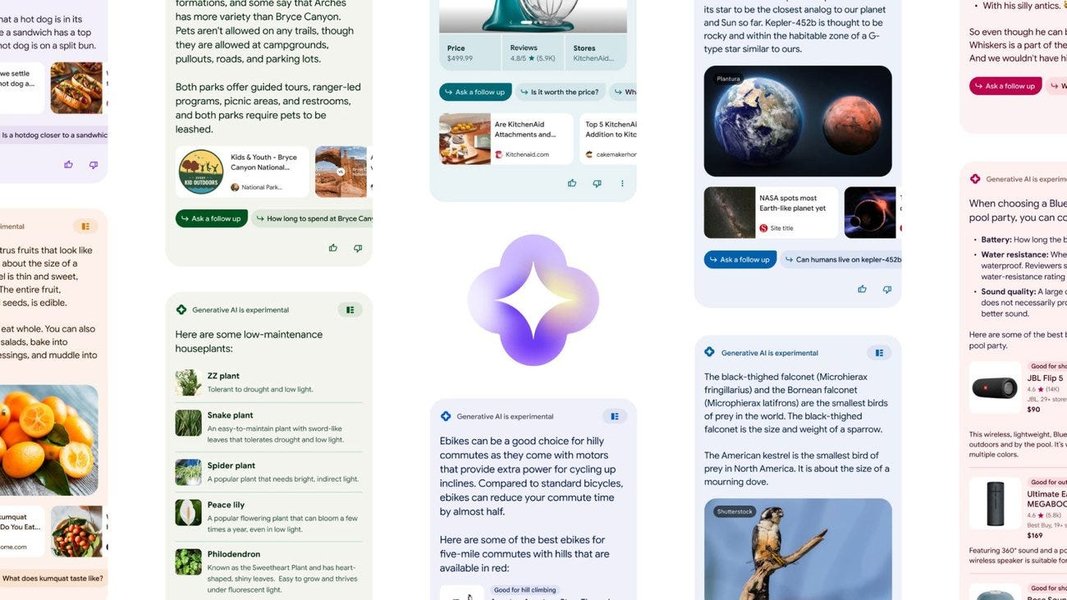
A visual representation of a generative AI search interface, showcasing direct answers.
AI Overviews: The New Information Gatekeepers
AI Overviews are AI-generated summaries that appear at the top of search results, synthesizing information from multiple web pages to provide a concise, comprehensive answer. While they can increase visibility if your content is cited, they often reduce the need for users to click through to individual websites. Studies have shown significant drops in organic CTR, with some data indicating an average decline of around 67.8% for traditional organic listings when AI Overviews are present, particularly impacting non-branded and lower-ranking keywords.
Zero-Click Searches: Answers at a Glance
Zero-click searches occur when the answer to a user's query is displayed directly on the SERP through features like:
- Featured Snippets
- Knowledge Panels
- "People Also Ask" boxes
- Direct Answer Boxes (e.g., for weather, calculations, definitions)
These features, often enhanced or powered by AI, mean users get their information without clicking on any website link. As of 2024, a significant portion of Google searches (nearly 60% in the U.S. and EU) resulted in zero clicks, a trend expected to continue.
The Diminishing Returns of Standalone Keyword Optimization
Traditional SEO heavily relied on identifying and targeting specific keywords, including related or long-tail variations, to attract clicks. However, the rise of direct answers on the SERP means this strategy is facing challenges:
- Steep CTR Decline: Lower-ranked keyword positions, where AI Overviews frequently appear, suffer the most significant CTR drops.
- Non-Branded Keywords Hit Hardest: Informational, non-branded queries are more likely to be answered directly by AI, leading to sharper CTR declines compared to branded keywords, which can sometimes see a boost due to brand recognition within an AI Overview.
- Content Summarization: If AI can effectively summarize the information targeted by your keywords, users have less incentive to visit your page, especially for informational intent.
While keyword research remains a foundational element for understanding user language and search demand, relying solely on ranking for a multitude of discrete keywords is proving insufficient to drive traffic and engagement in this new environment.
The Ascent of Topical Authority and Question-Based SEO
Your observation about shifting towards a topical model where the "product itself" is the topic is spot on. This evolution means focusing on comprehensive, authoritative content that addresses the full spectrum of user questions and informational needs related to a product or subject.
What is Topical and Question-Based Optimization?
Focusing on User Intent and Comprehensive Coverage
Instead of chasing individual keywords, this approach involves:
- Understanding User Intent: Delving deep into why users are searching and what problems they are trying to solve.
- Anticipating User Questions: Identifying all potential questions a user might have about your product or topic across their entire journey (awareness, consideration, decision). This includes benefits, features, comparisons, use cases, troubleshooting, and more.
- Creating Topic Clusters: Organizing content around a central "pillar" page (e.g., your main product page or a comprehensive guide) that links to more specific "cluster" pages or sections addressing individual subtopics and questions. This structure signals expertise and depth to search engines.
- Building E-E-A-T: Demonstrating Expertise, Experience, Authoritativeness, and Trustworthiness. High-quality, well-researched, and credible content is more likely to be sourced by AI Overviews.
Aligning with How AI Understands and Presents Information
AI algorithms are designed to understand context, semantics, and relationships between concepts. A topical approach aligns better with this by:
- Providing rich, interconnected information that AI can easily parse and synthesize.
- Structuring content logically (e.g., using clear headings, lists, tables) to facilitate extraction for SERP features.
- Using natural language that mirrors how users actually ask questions.
This video discusses how Google's AI Overviews are set to change the SEO landscape, aligning with the strategic shifts discussed.
Comparative Analysis: SEO Strategy Evolution
To better understand the shift, the following radar chart visualizes key differences between traditional keyword-focused SEO and the emerging topical, question-based approach. The scales reflect a qualitative assessment of each aspect's relevance or effectiveness, with higher scores indicating better alignment with the current search environment.
This chart illustrates that while traditional keyword SEO still holds some value, a topical and question-based approach generally scores higher in adapting to modern search engine behaviors, particularly in aligning with user intent and AI-driven features like Overviews.
Mapping the SEO Transformation
The following mindmap illustrates the core components of this SEO evolution, showing how factors like AI Overviews are driving the shift from a purely keyword-centric model to one that prioritizes topics, user questions, and overall content authority.
(as of May 2025)"] id1["Drivers of Change"] id1a["AI Overviews (SGE)"] id1b["Zero-Click Searches"] id1c["Advanced Natural Language Processing by SEs"] id1d["Increased User Expectation for Direct Answers"] id2["Impact on Traditional SEO"] id2a["Reduced Organic CTR for many queries"] id2b["Diminishing returns from isolated keyword targeting"] id2c["Greater competition for SERP visibility"] id3["The Strategic Shift: Topical & Question-Based SEO"] id3a["Focus on User Intent & Journey"] id3b["Product/Service as the Core Topic"] id3c["Comprehensive Question Answering"] id3d["Building E-E-A-T (Expertise, Experience, Authoritativeness, Trustworthiness)"] id3e["Semantic Richness of Content"] id4["Key Adaptation Strategies"] id4a["In-depth Content Creation (Pillar & Cluster)"] id4b["Structured Data Markup (Schema)"] id4c["Optimizing for SERP Features (Snippets, PAA)"] id4d["Continuous Monitoring & Iteration"] id4e["Diversifying Traffic Channels (Search Everywhere Optimization)"] id4f["Enhanced User Experience (UX) on-site"]
This mindmap highlights the interconnectedness of these trends and the strategic responses required to maintain and grow online visibility.
Actionable Strategies for Adapting Your SEO
Transitioning to this new model requires a strategic shift in how content is planned, created, and optimized.
Practical Steps:
- Deep Dive into User Questions & Intent:
- Utilize tools like "People Also Ask" sections in Google, forums (e.g., Reddit, Quora), customer reviews, social media listening, and keyword research tools that identify questions.
- Analyze your product's entire customer journey and map out questions at each stage.
- Adopt the Topic Cluster Model:
- Identify core topics central to your product or service. These become your "pillar" pages.
- Create "cluster" content that delves into specific subtopics and answers detailed questions related to the pillar. Ensure strong internal linking between pillar and cluster content.
- Prioritize High-Quality, Authoritative Content (E-E-A-T):
- Content must be accurate, comprehensive, well-written, and provide genuine value.
- Cite credible sources, showcase expertise (e.g., author bios), and ensure your site is trustworthy (secure, good UX).
- Optimize for SERP Features & Structured Data:
- Format content for readability and scannability (headings, bullet points, short paragraphs).
- Implement relevant schema markup (e.g., FAQPage, Product, HowTo, Article schema) to help search engines understand and feature your content in rich snippets and AI Overviews.
- Focus on Commercial and High-Intent Keywords Strategically:
- While broad informational keyword optimization is changing, keywords with clear commercial or transactional intent still drive valuable traffic. Integrate these naturally within your topical content.
- Enhance User Experience (UX):
- Ensure your website is fast, mobile-friendly, easy to navigate, and provides a positive experience. Poor UX can negate even the best content.
- Monitor, Analyze, and Adapt:
- Use SEO tools to track your visibility in AI Overviews and other SERP features.
- Monitor changes in traffic patterns and user engagement. The AI landscape is still evolving, so ongoing adaptation is key.
- Consider "Search Everywhere Optimization":
- As direct Google traffic for some queries may decrease, diversify your presence on other platforms where users search for information (e.g., YouTube, industry-specific forums, social media).
Traditional vs. Topical SEO: A Quick Comparison
The table below summarizes the key distinctions between the older keyword-centric approach and the newer topical, question-based model:
| Feature | Traditional Keyword Optimization | Topical & Question-Based Optimization |
|---|---|---|
| Primary Focus | Ranking for specific, often isolated keywords. | Answering user questions comprehensively; covering a topic in-depth. |
| Content Approach | Often keyword-dense pages, sometimes siloed. | In-depth, interconnected content clusters (pillar content and sub-topic pages/sections). |
| User Intent Handling | May target broad or exact match keywords, sometimes missing nuanced intent. | Deeply addresses specific user intent and a spectrum of related queries throughout the user journey. |
| Resilience to AI & Zero-Click | More vulnerable to being summarized or bypassed by AI Overviews and direct answers. | Better aligned with AI's information synthesis; higher chance of being sourced for AI Overviews and featured snippets. |
| Traffic Driver | Primarily clicks from organic keyword rankings in traditional blue links. | Visibility in AI Overviews, featured snippets, "People Also Ask," direct answers, plus traditional organic clicks. |
| Long-term Value | Potentially diminishing returns for some query types as SERPs evolve. | Builds lasting topical authority, brand credibility, and relevance in a dynamic search environment. |
| Keyword Role | Keywords are the primary target and driver of content strategy. | Keywords inform topic selection and question identification but are integrated into a broader contextual framework. |
Frequently Asked Questions (FAQ)
Are keywords completely dead in the new SEO landscape?
How can I identify the questions users are asking about my product?
- Google's "People Also Ask" boxes and "Related searches."
- Keyword research tools that have question-finder features (e.g., Semrush, Ahrefs, AnswerThePublic).
- Analyzing customer support inquiries, sales team feedback, and product reviews.
- Browsing online forums like Reddit, Quora, and industry-specific communities.
- Using social listening tools to monitor conversations about your product or industry.
What is E-E-A-T and why is it important for topical SEO?
Will this shift affect all types of keywords equally?
Conclusion
The shift from a predominantly keyword-focused SEO strategy to a more topical, question-based model centered on the product is not just appropriate but increasingly necessary. As AI Overviews and zero-click searches continue to reshape user behavior and SERP dynamics, businesses that adapt by creating comprehensive, authoritative, and user-centric content will be best positioned for sustained visibility and success. This evolution requires a deeper understanding of user intent, a commitment to quality, and a willingness to embrace new content structures like topic clusters. While it presents challenges, it also offers opportunities to build stronger brand authority and connect with audiences in more meaningful ways.
Recommended Further Exploration
- How to build topical authority for my website in 2025?
- What are the best tools for identifying user questions for SEO?
- Step-by-step guide to implementing a topic cluster model for content.
- How does structured data influence AI Overviews and featured snippets?