
Unveiling Bangalore's Crimson Jewel: An Architectural Deep Dive into the Seshadri Iyer Memorial Library
Explore the fusion of styles, intricate design, and spatial harmony of this iconic landmark nestled within Cubbon Park.
The Seshadri Iyer Memorial Hall, housing the State Central Library, is more than just a repository of books; it's a stunning architectural statement and a significant historical landmark in Bengaluru (Bangalore). Nestled within the lush greenery of Cubbon Park, its striking red facade and classical design draw the eye and invite exploration. This case study delves into the architectural intricacies, historical context, and functional design of this celebrated building.
Key Insights into the Memorial Hall
- Architectural Fusion: The building masterfully blends European Neo-classical styles (Greco-Roman, Tuscan, Corinthian) with distinct local Karnataka architectural elements, such as granite pillars.
- Iconic Design: Characterized by its vibrant red brick exterior, symmetrical layout, prominent central dome, and elegant columns and arches, it stands as a visually impressive structure.
- Functional Landmark: Originally a ceremonial hall, it now serves as the State Central Library, offering vast resources (including a Braille section) in a thoughtfully zoned space designed for quiet study and public access.
A Monument Forged in History
From Conception to Library
The genesis of the Seshadri Iyer Memorial Hall lies in the desire to commemorate Sir K. Seshadri Iyer, the esteemed Dewan of Mysore who served from 1883 to 1901. Sir Seshadri Iyer played a pivotal role in the modernization of Mysore State and the development of Bangalore, including initiatives like the Shivanasamudra hydroelectric project. His contributions prompted Lord Curzon, the Viceroy of India at the time, to support the creation of a memorial in his honor.
Funded by public donations, the building was initially conceived as a ceremonial hall. Construction dates vary slightly across sources, often cited between 1908 and 1915, with most agreeing it was repurposed into the State Central Library around 1914 or 1915. The design is attributed to Richard Sankey, the Chief Engineer of Mysore State. A bronze statue of Sir K. Seshadri Iyer, installed in 1913, stands prominently in front of the hall, situated within a charming rose garden.
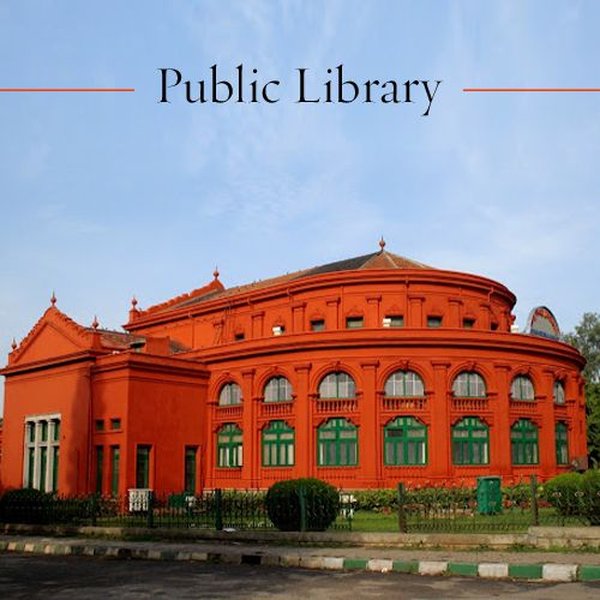
The imposing facade of the Seshadri Iyer Memorial Hall, State Central Library.
Architectural Synthesis: European Grandeur Meets Local Craftsmanship
Style and Overall Form
The library's architecture is predominantly defined as European, specifically exhibiting strong influences from the Neo-classical and Greco-Roman styles. This is evident in its symmetrical design, the use of classical orders for columns, arched windows, and the overall sense of proportion and grandeur. However, it's not a purely European structure; it skillfully incorporates indigenous elements, creating a unique architectural fusion.
The building features a distinctive apsidal or semi-circular plan at one end, crowned by a prominent dome-like structure. The entire structure is constructed primarily using red bricks and lime mortar, resulting in its iconic, vibrant red appearance that starkly contrasts with the green landscape of Cubbon Park.
Exterior Design Elements
Facade and Entrances
The main facade presents a stately appearance, featuring a higher central portion flanked by symmetrical wings. Grand porticoes supported by sturdy pillars mark the entrances. A carved stone panel often indicates the building's name and purpose. The symmetry and classical elements convey a sense of dignity and importance.
Columns and Pillars
A key feature highlighting the blend of styles is the use of columns. Elaborate Corinthian columns (characterized by acanthus leaf capitals) and simpler Tuscan columns represent the European classical influence. Complementing these are robust granite pillars, particularly supporting the porticoes, which are recognized as a nod to traditional Karnataka architecture.

Detail showing the classical columns integrated into the facade.
Arches, Windows, and Openings
Graceful arched windows are a recurring motif, particularly prominent along the semi-circular end of the building. These large openings, along with others strategically placed on the east and west facades, are crucial for allowing ample natural light into the interior and facilitating cross-ventilation, an important consideration for the local climate.
Dome and Roof Structure
The central dome or dome-like elevation is a defining characteristic, adding vertical emphasis and marking the main hall internally. The roof employs Jack arch construction, a technique using bricks or stones supported by metal beams (reportedly imported rods and angles were used here), known for its strength and ability to span large areas, contributing to the spaciousness of the interior halls.
Materials and Finishing
The predominant use of red bricks set in lime mortar gives the building its signature color and has proven durable. Stone is used for decorative elements, columns, and potentially parts of the foundation or plinth.
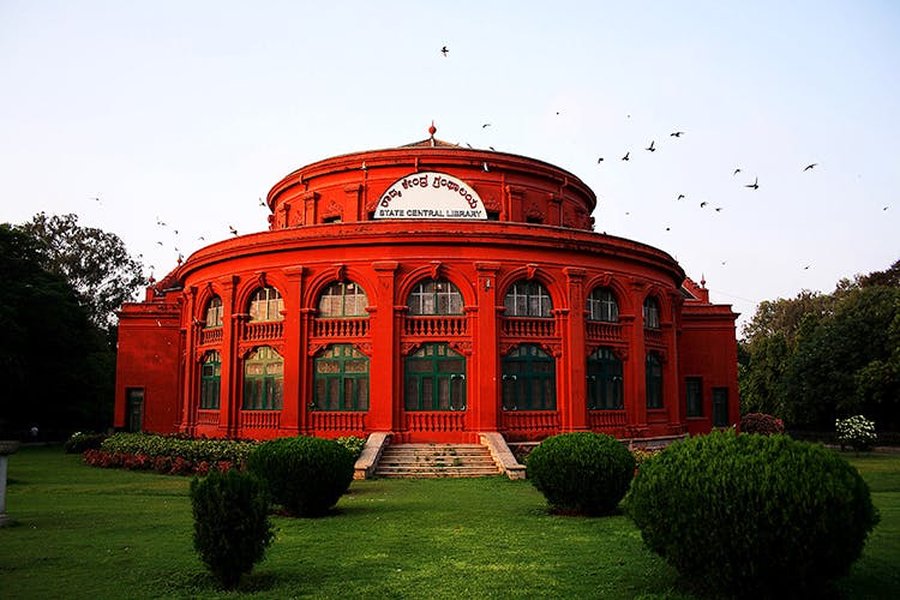
The striking red brick building stands out beautifully within Cubbon Park.
Interior Design Elements
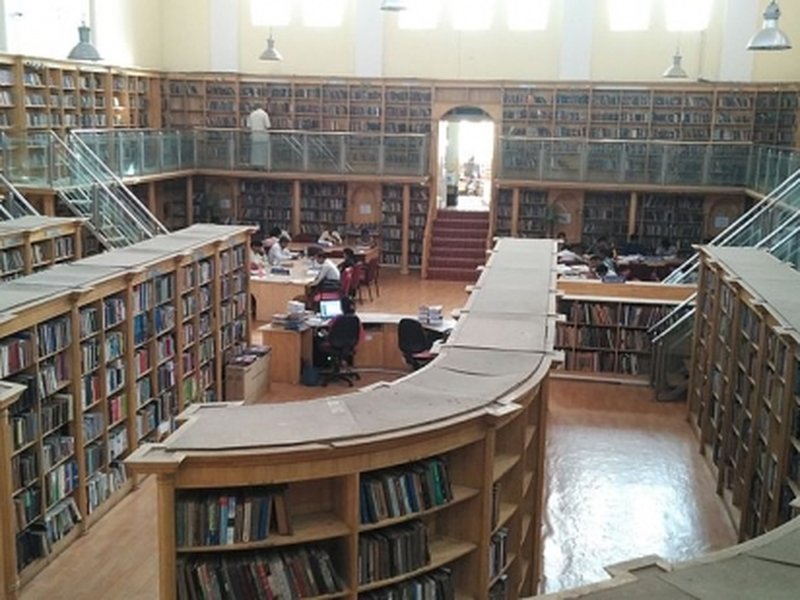
Inside, the grandeur continues. High ceilings, supported by decorative columns and arches, create a sense of openness. Intricate cornice moldings reflect Victorian and Greco-Roman influences. The large windows ensure the interior spaces, particularly the main reading hall under the dome, are well-lit naturally. Despite its location near busy city areas, the library is renowned for its profound silence, providing an ideal atmosphere for reading and study.
Interior glimpse showcasing the high ceilings and book stacks.
Spatial Organization: Layout and Zoning
Understanding the Floor Plan
While detailed architectural blueprints are not widely public, descriptions and available sketches (like those found in architectural portfolios referenced in the sources) provide a good understanding of the layout. The building largely follows the semi-circular or apsidal plan mentioned earlier.
The core space is the main hall, situated beneath the central dome. This area typically houses the main reading room and primary book collections. Circulation paths likely radiate from this central space. A wide hallway often encircles the semi-circular section, potentially providing access to more book stacks and reading nooks, benefiting from the light admitted by the arched windows.
Zoning of Spaces
The internal space is thoughtfully zoned to balance public access, quiet study, and administrative functions:
- Public Access Zones: The entrance porticoes and the main central hall constitute the primary public areas, designed to be welcoming and spacious.
- Reading and Reference Areas: The main hall under the dome serves as the principal reading area. Additional quieter reading spaces might be located along the peripheral hallways or wings.
- Book Storage: Book stacks are arranged within the main hall and potentially in surrounding corridors or designated storage zones, including areas for rare books and manuscripts.
- Specialized Sections: A dedicated Braille Section caters specifically to visually impaired readers, highlighting an important aspect of inclusivity. Sources mention it having accessible shelves reached via stairs or walkways.
- Administrative Areas: Staff and administrative offices are likely situated in less public zones, possibly on upper levels (implied by multi-level windows and high ceilings) or in designated wings, ensuring minimal disruption to library users.
This zoning promotes efficient use of space, facilitates user navigation, and helps maintain the tranquil atmosphere essential for a library.
Key Features Summary Table
This table summarizes the core architectural and functional aspects of the Seshadri Iyer Memorial Library:
| Feature | Description |
|---|---|
| Architectural Style | Blend of European Neo-classical (Greco-Roman, Tuscan, Corinthian) and local Karnataka elements. |
| Primary Materials | Red brick, lime mortar, granite (pillars), stone (decorative elements). |
| Key Exterior Elements | Semi-circular/Apsidal plan, central dome, red brick facade, classical columns, granite pillars, arched windows, Jack arch roof. |
| Key Interior Elements | High ceilings, decorative columns/arches, main reading hall under dome, ample natural light. |
| Floor Layout | Semi-circular plan centered around the main hall/dome. Circulation paths along peripheries. |
| Zoning | Clear separation of public access, reading/reference areas, book storage, specialized sections (Braille), and administrative zones. |
| Primary Function | State Central Library (reference library). |
| Notable Feature | Dedicated Braille section for visually impaired users. |
Visualizing the Library's Attributes
Architectural & Functional Assessment
The following chart provides a visual assessment of key attributes of the Seshadri Iyer Memorial Library, based on the information gathered. This is an interpretive representation reflecting aspects like historical value, architectural integrity, functional success, and public accessibility.
Conceptual Mindmap
This mindmap provides a structured overview of the key aspects covered in this case study, connecting the library's history, design, function, and significance.
A Visual Tour: Exploring the Library
While static images provide snapshots, video can offer a more dynamic sense of the space and atmosphere within the Seshadri Iyer Memorial Library. The video below provides a glimpse into the library, showcasing its architecture and environment.
Video offering a visit to the State Central Library / Sir Seshadri Iyer Memorial Library.
This video helps visualize the scale of the reading hall, the arrangement of book stacks, the quality of light from the large windows, and the overall ambiance that makes it a cherished place for book lovers and architecture enthusiasts alike.
Frequently Asked Questions (FAQ)
Who was Sir K. Seshadri Iyer? +
Sir K. Seshadri Iyer served as the Dewan (Prime Minister) of the princely state of Mysore from 1883 to 1901. He is highly regarded for his significant contributions to the modernization of Mysore and the development of Bangalore's infrastructure, including projects related to electricity and water supply. The Memorial Hall was built to honor his legacy.
What is the main architectural style of the building? +
The primary architectural style is European Neo-classical, incorporating elements from Greco-Roman, Tuscan, and Corinthian designs. However, it uniquely blends these with local Karnataka architectural features, such as the use of granite pillars, making it a fusion style.
Can I borrow books from the State Central Library? +
No, the State Central Library primarily functions as a reference library. This means books and materials can be accessed and read on the premises, but they cannot be borrowed or taken out. Memberships are typically not offered for borrowing purposes.
Is there an entry fee to visit the library or the building? +
Generally, public libraries in India, including the State Central Library, do not charge an entry fee for visitors who wish to use the reading rooms or view the building. It is open to the public for reference and study during its operating hours.
What is special about the Braille section? +
The library includes a dedicated Braille section, which houses a collection of books and materials specifically for visually impaired readers. This demonstrates the library's commitment to inclusivity and providing access to knowledge for all members of the community. Sources mention it has accessible shelving.
References
- Know Your City: Western architecture meets East at this library in Bengaluru’s Cubbon Park - The Indian Express
- The State Central Library in Bengaluru, Karnataka - Join Paper Planes
- Seshadri Memorial Library Document - Scribd
- Seshadri Iyer Memorial Hall: The Cubbon Park Library - Kumarsarav.com
- Head To State Central Library, Cubbon Park | LBB, Bangalore - LBB.in
- Seshadri Iyer Memorial Hall (State Central Library) - Wanderlog
- Undergraduate Architecture Portfolio by Abhishek Kalkunte (Includes Library Plans/Sections) - Issuu
Recommended Reading
 bangaloretourtravel.blogspot.com
Last updated April 22, 2025