
Unveiling the Connection: What Does the Ship's Wheel Truly Control?
As a helmsman, understanding this crucial link is key to navigating the seas. Let's steer through the mechanics.
When you stand on the bridge as a helmsman, the ship's wheel in your hands is more than just a decorative piece; it's your primary interface for guiding a massive vessel through the water. But to what essential component is this iconic wheel directly connected to enact your commands? Out of the options: Screw, Shaft, Rudder, or Propeller, the answer is fundamental to ship operation.
Key Insights: The Wheel's Command
- Direct Control: The ship's wheel is primarily connected to the rudder, which is the component responsible for changing the ship's direction.
- Mechanism Variety: This connection can be achieved through various systems, including direct mechanical linkages, hydraulic systems (common in modern vessels), or sophisticated electro-hydraulic systems.
- Distinction from Propulsion: The wheel does not directly control the propeller (or screw), which is responsible for the ship's forward or backward movement (propulsion). Similarly, while shafts are involved in both steering and propulsion systems, the wheel's *steering input* targets the rudder.
The Heart of Steering: The Rudder Connection
As the helmsman, your primary task is to maintain the ship's course and execute turns as required. The ship's wheel, often simply called the helm, is your tool to achieve this. When you turn the wheel, you are initiating a sequence of actions that ultimately move the rudder.
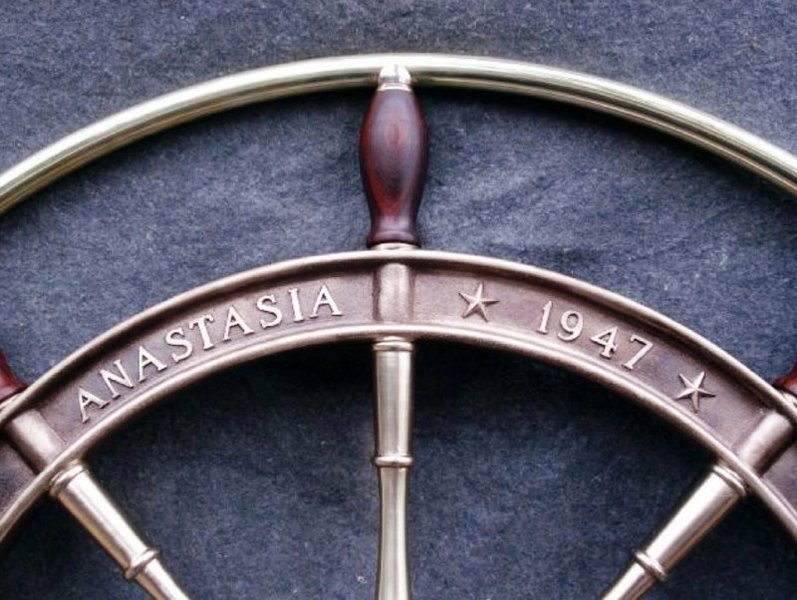
A ship's wheel, the helmsman's primary control for steering.
The rudder is a flat, plane-like structure, typically located at the stern (rear) of the ship, submerged underwater. When the rudder's angle relative to the water flow is changed, it creates a pressure differential on its sides. This differential generates a force that pushes the stern in the opposite direction of the rudder's deflection, causing the ship's bow (front) to turn towards the direction the rudder is pointed.
Understanding the Linkage: How the Wheel Moves the Rudder
The connection between the ship's wheel and the rudder isn't always a simple, direct mechanical link, especially on larger vessels. Several types of systems can transmit the helmsman's input:
- Mechanical Systems: Historically, and on smaller vessels, the wheel might be connected to the rudder via a system of ropes, chains, gears, and pulleys. Turning the wheel would physically pull these linkages, which in turn would move the tiller or rudder stock, angling the rudder.
- Hydraulic Systems: Most modern ships, particularly larger ones, utilize hydraulic steering gear. In these systems, turning the wheel operates a hydraulic pump (helm pump). This pump forces hydraulic fluid through pipes to hydraulic cylinders (rams) connected to the rudder stock. The pressure of the fluid moves the cylinders, which then pivot the rudder. This system allows for significant force multiplication, enabling a helmsman to control a very large rudder with relative ease.
- Electro-Hydraulic Systems: These are a further evolution, often found on very large or technologically advanced ships. The wheel's movement is converted into an electrical signal. This signal controls electric motors that drive the hydraulic pumps, or directly control actuators that position the rudder. These systems can be integrated with autopilot and dynamic positioning systems.

The rudder, a critical component for directing a ship's course, located at the stern.
Clarifying the Other Options
It's important to distinguish the rudder's role from the other components mentioned:
- Propeller (and Screw): The propeller (often called a "screw propeller" or simply "screw" due to its helical shape) is responsible for the ship's propulsion – moving it forward or astern. It is connected to the ship's engine via a propeller shaft and is not directly controlled by the steering wheel for directional changes. While some advanced propulsion systems (like azipods) combine propulsion and steering, the traditional ship's wheel primarily controls a separate rudder.
- Shaft: The term "shaft" can refer to several components. The propeller shaft transmits power from the engine to the propeller. The rudder stock or rudder shaft is the vertical shaft on which the rudder pivots. While a shaft is part of the rudder assembly, the wheel is connected to the rudder assembly to control its angle, not just "a shaft" in isolation or the propeller shaft. The linkages from the wheel to the rudder might also involve intermediate shafts within the steering gear mechanism. However, the ultimate controlled element for steering is the rudder.
Visualizing the Steering Mechanism
To better understand the flow of control from the helmsman's input to the ship's change in direction, the following mindmap illustrates the key components and their relationships in a typical ship steering system.
(Ropes, Chains, Gears)"] id2b["Hydraulic System"] id2b1["Helm Pump"] id2b2["Hydraulic Lines"] id2b3["Hydraulic Cylinders/Rams"] id2c["Electro-Hydraulic System"] id2c1["Electrical Signals"] id2c2["Electric Motors/Actuators"] id3["Steering Gear"] id3a["Connects Transmission to Rudder"] id4["Rudder Assembly"] id4a["Rudder Stock (Shaft)"] id4b["Rudder Blade"] id5["Ship's Response"] id5a["Change in Water Flow"] id5b["Turning Force Generated"] id5c["Change in Ship's Direction"]
This mindmap shows that the ship's wheel initiates a process through a transmission system (which can be mechanical, hydraulic, or electro-hydraulic) that acts upon the steering gear, ultimately controlling the position of the rudder blade. The rudder's interaction with the water then produces the turning force on the ship.
Comparing Component Roles in Ship Operation
The radar chart below provides a visual comparison of the primary roles of the Rudder, Propeller (Screw), Propulsion Shaft, and Steering Linkages (intermediate shafts/cables) in a ship's operation, particularly concerning the helmsman's control via the wheel.
As illustrated, the rudder scores highest in "Direct Steering Control by Wheel" and "Navigational Influence (Direction)". The propeller/screw is dominant in "Primary Propulsion Force." Shafts involved in steering linkages are crucial for "Mechanical Link to Wheel (Steering)," while the propulsion shaft is key for "Energy Transmission (Propulsion)." This chart clarifies that while shafts are present in both systems, their roles and connections to the wheel's primary function (steering) differ significantly.
Function Summary of Key Components
The table below provides a concise summary of the primary functions of the components in question and their relation to the ship's wheel and overall operation.
| Component | Primary Function | Relation to Ship's Wheel | Primary System |
|---|---|---|---|
| Ship's Wheel (Helm) | Input device for initiating course changes | The control input by the helmsman | Steering |
| Rudder | Control surface that deflects water to steer the ship | The component directly controlled by the wheel (via linkages) to change direction | Steering |
| Propeller / Screw | Generates thrust to move the ship | Not directly controlled by the wheel for steering; controlled by engine for speed/direction of thrust | Propulsion |
| Shaft (Propulsion) | Transmits power from engine to propeller | Not directly controlled by the wheel; part of the propulsion drivetrain | Propulsion |
| Shaft(s) (Steering System) | Transmit motion from wheel to steering gear/rudder (e.g., rudder stock, intermediate shafts in mechanical/hydraulic systems) | Integral part of the linkage between the wheel and rudder | Steering |
This table reinforces that the Rudder is the component whose position is the intended outcome of turning the ship's wheel for steering purposes.
How Ship Steering Works: A Closer Look
The mechanics of ship steering, especially modern hydraulic systems, can be quite intricate. The following video provides an excellent overview of how these systems function, translating the rotation of the wheel into the powerful movements of the rudder needed to guide enormous vessels.
This video details the components of a hydraulic steering gear system, illustrating how the helm pump, pipelines, and actuators work in concert. It showcases the engineering required to manage the immense forces involved in rudder operation on large commercial ships, a system ultimately initiated by the helmsman at the wheel.
Frequently Asked Questions (FAQ)
What exactly is the "helm" of a ship?
The "helm" refers to the entire apparatus used for steering a ship. This includes the ship's wheel (or tiller on smaller/older boats), the steering gear mechanism (mechanical, hydraulic, or electro-hydraulic), and the rudder itself. So, when someone "takes the helm," they are taking control of the ship's steering.
How has the connection between the wheel and rudder evolved over time?
Early steering systems involved a simple tiller directly attached to the rudder. As ships grew larger, the forces required to move the rudder became too great for a simple tiller. This led to the development of the ship's wheel, which provided mechanical advantage through ropes, chains, and a drum. Later, steam-powered, and then hydraulic and electro-hydraulic systems were introduced to provide even greater power and precision, allowing for the steering of enormous modern vessels with relative ease. Today, many ships also feature joystick or button controls integrated with sophisticated navigation systems, though the fundamental principle of controlling the rudder's angle remains.
What are the main options besides "rudder" that the wheel is *not* directly connected to for steering?
The wheel is not directly connected to the propeller (or screw) for steering; these are for propulsion. While shafts are involved in the steering mechanism (like the rudder stock), the wheel isn't just connected to "a shaft" in general; it's part of a system that targets the rudder. The main propulsion shaft is entirely separate and connects the engine to the propeller.
Are there backup steering systems on large ships?
Yes, due to safety regulations (like SOLAS - Safety of Life at Sea), large commercial ships are required to have main and auxiliary (backup) steering gear systems. If the primary system fails, the auxiliary system can be engaged to maintain control of the rudder. These backup systems often have an independent power supply and control mechanism, typically located in a steering gear compartment near the stern of the ship.
Recommended Further Exploration
- How do hydraulic steering systems in ships amplify force?
- What are the differences between various types of ship rudders?
- Explore the history of ship steering mechanisms from tillers to modern systems.
- What is the role of an autopilot system in a ship's steering?
References
 amazon.com
amazon.com
amazon.com
amazon.com
amazon.com
Last updated May 16, 2025