
Shocks and HDD Servo Systems
Understanding the Impact of Shocks on Non-operational Drives and Their Servo Mechanisms
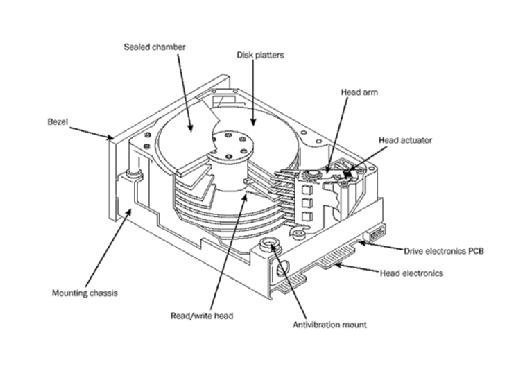
Highlights
- Shock Impact While Parked: Even when powered off, HDDs are susceptible to shocks that can disrupt the precise alignment of critical components.
- Servo System Fundamentals: The servo system in HDDs ensures that read/write heads are positioned accurately using pre-written servo patterns and a finely tuned voice coil motor.
- Protective Measures: Proper packaging and mechanical design such as head parking and damping materials significantly enhance shock resistance during shipping.
How Shocks Affect the Servo System When Not in Operation
Head Parking Mechanism and Shock Exposure
When a hard disk drive (HDD) is not operational—such as during shipping—the read/write heads are typically “parked” on a special ramp or designated area away from the disk platters. This head parking mechanism plays an essential role in reducing the risk of damage, because it minimizes direct contact between the heads and the platters. However, shocks experienced during transportation can still pose risks.
Even in this parked state, a sufficiently strong shock can:
- Displace the head actuator assembly, causing misalignment upon start-up.
- Cause the heads to inadvertently slip off their secure ramp, potentially leading to physical contact with the disk surfaces.
- Induce strain in key mechanical components such as the voice coil motor (VCM) and suspension system.
Many modern HDDs are engineered to withstand shocks up to approximately 300 G's for very brief durations. However, if a shock exceeds the designed tolerance, the internal structures might suffer damage in the form of:
Misalignment and Component Wear
A significant impact while the drive is powered off can cause the spindle bearing, actuator arm, and associated structures to absorb abnormal forces. This can lead to cumulative mechanical fatigue, which might not be immediately evident but can result in early drive failure. Even if the servo patterns written permanently on the disk remain intact, the physical misalignment of the read/write mechanism can compromise the drive's performance when it returns to operational status.
Mechanical Stress and Duty Cycle
The mechanism behind the shock resistance is not solely about the protection of the magnetic surfaces. The entire drive, including the servo system, experiences mechanical stress that can lead to:
- Permanent deformation of the head assembly.
- Potential damage at the head-disk interface (HDI) when the shock is severe enough to alter the orientation of the heads.
- Premature wear of the suspension components designed to maintain precise flying height during operation.
Protective Engineering for Non-operational States
To safeguard against shock-related damages during shipping, HDDs are designed with several mechanical and packaging features:
- Head Parking: The static head parking mechanism positions the delicate read/write heads away from the disk platters, reducing the potential for scratches or head crashes.
- Damping Systems: Internal shock-absorbing materials and dampening layers within the drive's structure help to dissipate the energy from a sudden jolt.
- Cushioning Packaging: HDDs are usually shipped in carefully engineered packaging that includes cushioning foam and shock-absorbing inserts to minimize transmitted force.
While these measures provide significant protection, they do not entirely eliminate the risk. Extreme shocks may still induce misalignments or subtle mechanical shifts that become problematic during the operational life of the device.
Understanding HDD Servo System Operation
Fundamentals of the Servo System
The servo system in an HDD is a highly specialized closed-loop control mechanism that ensures the precision alignment of the read/write head with data tracks on the spinning disk platters. Its role is crucial for both reading and writing data as even a slight misalignment can lead to errors or, in more severe cases, data loss.
Core Components
The precision of the servo system relies on several core components working in harmony:
- Servo Patterns: These are specially encoded signals embedded on the disk surface during manufacturing. They serve as positional reference marks for the servo system.
- Voice Coil Motor (VCM): Acting as the actuator, the VCM is responsible for moving the head assembly with high precision. It adjusts the position based on real-time feedback from the servo system.
- Position Error Signals (PES): Generated by reading the servo patterns, these signals indicate the difference between the actual head position and the desired data track center.
- Digital Servo Controller: This component interprets the PES and issues commands to the VCM to correct any misalignment, facilitating both track seeking and track following.
The servo system can be divided into primary functionalities:
- Track-Seeking: Moving the head to the desired track when a new data access request is made.
- Track-Following: Continuously adjusting the head position during data reading and writing to maintain alignment with the track.
- Settling: Fine-tuning the head's position to ensure precise placement once the desired track is reached.
Operation During Active Use Versus Non-operational Protection
During normal operation, the read/write heads hover extremely close to the disk’s surface. These heads use aerodynamic lift created by the spinning platters (an effect known as air bearing force) to maintain an incredibly small gap above the data tracks, typically measured in microns.
In contrast, when the HDD is not active, the servo system enters a safe state. With the heads parked on the ramp, the system is designed more for protection than for precise control. However, the same underlying mechanics remain important as they ensure that, once the drive is powered on, the read/write heads can quickly re-engage with the disk surface with high accuracy.
Role of Feedback in Servo Control
The read/write head acts as a sensor when reading servo patterns, detecting the slight variations in magnetic fields that indicate its position relative to the pre-written tracks. This feedback is used to generate the position error signal:
\( \text{Position Error Signal (PES)} = \text{Desired Position} - \text{Actual Position} \)
The digital servo controller processes this signal in real time, initiating adjustments via the VCM. This precise control loop—often executed millions of times per second—is what allows the system to maintain the necessary precision, even as the drive operates at high speeds.
| Component | Function |
|---|---|
| Servo Patterns | Provide positional feedback coordinates |
| Voice Coil Motor (VCM) | Actuates head movement based on feedback |
| Position Error Signal (PES) | Indicates misalignment by comparing actual vs. desired position |
| Digital Servo Controller | Processes feedback and corrects head position |
| Head Parking Mechanism | Secures heads during non-operational states |
Interplay Between Shocks and Servo Operations
Impact on Precision and Reliability
Shocks experienced during the non-operational state can lead to later performance issues by physically altering the geometry of the servo system. For example, even minor shifts in the head assembly can affect the position error signal, causing:
- Off-track errors during read/write operations
- Increased risk of head crashes if the slider re-engages too close to the disk surface
- Cumulative material fatigue that may reduce the overall lifespan of the drive
These effects underscore the importance of the protected state during shipping—where design optimizations help mitigate damage but require precise engineering to resume optimal function when in use.
Design Choices for Enhanced Protection
Manufacturers incorporate various design strategies to improve shock resilience even when the drive is not active. Examples of these strategies include:
- Dual-Stage Actuation: Some high-performance drives employ a dual-stage system where a primary VCM is supplemented by a micro-actuator. This design enhances both the speed and accuracy of head placement when the drive is powered-on after a shock event.
- Reinforced Suspension Systems: The suspension assembly that holds the read/write head is designed to absorb vibrational energy and minimize damage from transient forces, ensuring that the fine tolerances of the flying height are maintained.
- Advanced Packaging: Beyond the internal design, the external packaging of the HDD incorporates robust shock-absorbing materials to reduce the amplitude and duration of shock pulses transmitted to the drive.
Such measures illustrate the dual approach: intricate internal servo mechanics for everyday accuracy and external engineering strategies to safeguard these mechanisms during non-operational periods.
References
- A Quick Insight into Physical Shock Damage on Hard Disk Drive (HDD) - DataNumen
- Hard Drive Failure Modes - Sound Devices
- Can vibration damage a HDD that is powered off? - SuperUser
- Disk Research - UC Berkeley
- Operating Functions of an HDD Servo System - ResearchGate
- What servos are in hard drive write head? - Electronics StackExchange
- Operational Shock Failure Mechanisms in Hard Disk Drives - ResearchGate
- Hard Disk Drive Servo Systems - ResearchGate
- Question about HDD Shock Resistance - Tom's Hardware
- Why Hard Drives Fail - Crucial
Recommended Further Queries

 kimoechan.wordpress.com
Last updated March 2, 2025