
Unlocking Shopify App Goldmines: Your Strategic Guide to High-Potential, Low-Competition Niches
An in-depth analysis of Bundle, Discount, Import, and Bulk Edit apps to pinpoint your next winning Shopify development.
Key Insights for Your App Development Journey
- Product Import apps present a significant opportunity, balancing strong merchant demand for data management with a less saturated competitive landscape, ripe for innovative solutions.
- Bundle Sale applications continue to be highly sought after for boosting Average Order Value (AOV), but success hinges on delivering superior reliability, intuitive user experiences, and intelligent features to stand out in a crowded field.
- Across all categories, advanced automation and AI-driven capabilities are becoming crucial differentiators, offering merchants powerful tools for efficiency, personalization, and strategic decision-making.
Deep Dive into Shopify App Categories
Understanding the current market landscape, existing feature sets, and identifying specific gaps is crucial before embarking on developing a new Shopify app. Below is an analysis of the four app categories you're exploring.
1. Bundle Sale Apps
Market Landscape & Existing Features
Bundle Sale apps are incredibly popular among Shopify merchants, primarily because they are a proven strategy to increase Average Order Value (AOV) and move inventory more effectively. Existing apps in this space, such as Prime Bundles and Jobo Bundle, generally offer features like:
- Volume discounts (e.g., buy more, save more)
- Mix-and-match bundles allowing customers to create their own product combinations
- Quantity breaks and tiered pricing
- "Buy X Get Y" (BOGO) offers or "Buy X Get Y at a discount"
- Integration with Shopify inventory to manage stock levels for bundled products
- Customizable bundle displays on product pages
The market potential is high due to consistent demand, but this has also led to a high level of competition. Many apps provide similar core functionalities, making differentiation key.
Identifying Gaps & Opportunities
Despite the number of existing solutions, several gaps and opportunities remain:
- Reliability and Variant Management: User reviews for some existing apps highlight issues with accurately displaying product variants within bundles and maintaining seamless, real-time inventory synchronization, especially for complex products. An app that offers robust and error-free variant handling would be highly valued.
- Advanced Customization & Flexibility: Merchants often seek more control over how bundles are presented and how customers interact with them. Enhanced customization of the bundle builder UI/UX for the merchant and the bundle selection process for the customer is an area for improvement.
- Dynamic & Intelligent Bundling: Few apps offer sophisticated AI-driven bundle recommendations based on customer behavior, purchase history, or trending products. Most rely on manual setup by the merchant.
- Performance Analytics: While some apps offer basic tracking, there's an opportunity for more in-depth analytics on bundle performance, conversion rates, and customer segmentation related to bundles.
- Theme Integration & Usability: Ensuring seamless integration with a wide variety of Shopify themes without requiring manual code edits, and providing an intuitive setup process, are ongoing needs.
Automation Potential
- Automated Bundle Suggestions: AI algorithms could analyze sales data, product correlations, and customer browsing patterns to suggest high-converting bundle combinations to merchants.
- Dynamic Pricing for Bundles: Automatically adjusting bundle prices based on inventory levels, demand, or specific promotional periods.
- Personalized Bundle Offers: Displaying different bundle offers to different customer segments based on their past interactions or demographic data.
2. Discount Control Apps
Market Landscape & Existing Features
Discount Control apps are essential tools for Shopify merchants to implement diverse promotional strategies. Apps like Discount Master and Discounty Discount Countdown typically provide functionalities such as:
- Creation of various discount types (percentage-off, fixed amount, BOGO, free shipping)
- Volume and tiered discounts based on quantity or cart value
- Scheduled discounts for specific periods (e.g., flash sales)
- Countdown timers to create urgency
- Stackable discount logic or controls
- Targeting discounts to specific products, collections, or customer tags
The market for discount apps is very crowded, indicating high competition. While demand is consistently high, standing out requires significant innovation or addressing very specific niche needs.
Identifying Gaps & Opportunities
- Sophisticated Targeting & Personalization: Many apps offer basic targeting, but there's a gap for truly hyper-personalized discounts based on deep customer segmentation, lifetime value, real-time behavior (e.g., exit intent), or external data triggers.
- AI-Powered Discount Optimization: Systems that can recommend optimal discount levels or strategies to maximize profit margins rather than just revenue, or A/B test discount effectiveness automatically.
- Advanced Shopify Functions Integration: Leveraging Shopify's latest capabilities (like Shopify Functions) to create unique and deeply integrated discount experiences that go beyond standard app limitations.
- Usability for Complex Rules: Creating and managing complex discount rules can be cumbersome. A more intuitive interface for setting up intricate discount logic is needed.
- Impact Analytics: Beyond just tracking redemptions, providing clear insights into the true impact of discounts on customer acquisition, retention, and overall profitability.
Automation Potential
- Dynamic Discount Adjustments: Discounts that automatically adjust based on inventory levels, sales velocity, competitor pricing, or even weather forecasts in specific regions.
- Automated A/B Testing: Continuously testing different discount offers and automatically implementing the best-performing ones.
- Personalized Discount Sequences: Automating a series of targeted discount offers as part of a customer lifecycle marketing strategy.
3. Product Import Apps
Market Landscape & Existing Features
Product Import apps address the crucial need for merchants to efficiently add and update product catalogs, especially those sourcing from multiple suppliers, migrating from other platforms, or managing large inventories. While Shopify offers native import functionality, specialized apps like Robo Product Importer (and features within some bulk editors) aim to enhance this by offering:
- Import from various file formats (CSV, Excel, XML, Google Sheets).
- Mapping fields from the source file to Shopify product fields.
- Support for importing product variants, images, and metafields.
- Scheduled or automated imports.
The competition in purely dedicated "product import" apps appears lower and more specialized compared to bundle or discount apps. The market potential is medium to high, especially for stores with complex data needs.
Identifying Gaps & Opportunities
- Advanced & AI-Powered Data Mapping: Many apps require manual mapping, which can be tedious and error-prone for large or inconsistent datasets. AI-assisted mapping or more intelligent default mapping could save significant time.
- Multi-Source & Real-Time Synchronization: Seamlessly importing and, more importantly, *synchronizing* product data (inventory, price, details) from multiple supplier feeds, APIs, or external systems in near real-time.
- Robust Error Handling & Validation: Comprehensive error detection, clear reporting, and tools to easily fix import errors are critical, especially for large datasets.
- AI-Driven Product Data Enrichment: Capabilities to automatically enhance product data during import, such as generating SEO-friendly descriptions, suggesting tags, categorizing products, or optimizing images.
- Metafield Management: Easier import and management of custom metafields, which are increasingly important for Shopify stores.
- User Experience for Complex Imports: Simplifying the workflow for merchants who are not technically savvy but need to manage complex import tasks.
Automation Potential
- Fully Automated End-to-End Sync: Setting up "set it and forget it" synchronization pipelines from supplier systems to the Shopify store.
- Automated Data Transformation: Applying predefined rules to clean, format, or transform data during the import process (e.g., converting currencies, standardizing units).
- Scheduled Imports & Updates: Regularly pulling data from specified sources to keep product information current without manual intervention.
4. Bulk Edit Apps
Market Landscape & Existing Features
Bulk Edit apps are essential for merchants managing more than a handful of products, saving countless hours on tasks like price updates, inventory adjustments, or adding tags. Apps like Spreadsheet Bulk Product Manager typically offer features like:
- Editing product fields (price, compare-at price, SKU, tags, titles, descriptions, inventory) in bulk.
- Filtering products based on various criteria for targeted edits.
- CSV/Excel import and export for offline editing and updates.
- Scheduling bulk changes.
- Previewing changes before applying them.
This category has high competition, with many apps offering similar core functionalities. Shopify itself has been improving its native bulk editing capabilities, raising the bar for third-party apps.
Identifying Gaps & Opportunities
- Intuitive UI for Complex Operations: While many apps provide spreadsheet-like interfaces, performing very complex conditional edits or managing vast numbers of variants can still be clunky.
- AI-Assisted Editing: AI could suggest edits (e.g., pricing adjustments based on market trends, SEO improvements for descriptions) or help identify products needing updates.
- Robust Metafield Bulk Editing: As metafields become more integral, powerful and user-friendly bulk editing for diverse metafield types is a growing need.
- Version Control & Advanced Rollback: Offering more sophisticated undo/redo capabilities or version history for bulk changes could provide a safety net for merchants.
- Integration with Other Data Sources/Apps: Ability to pull data from or push data to other systems as part of a bulk edit workflow.
Automation Potential
- Rule-Based Automated Edits: Setting up rules that automatically trigger bulk edits when certain conditions are met (e.g., "if inventory for a product drops below X, increase price by Y%").
- Scheduled Task Automation: Automating routine bulk updates, such as syncing prices with a supplier feed daily or archiving seasonal products.
- Smart Grouping and Editing: AI could help group similar products for editing based on attributes or even image analysis, streamlining tasks like standardizing descriptions or tags.
Comparative Analysis: Opportunity Levels
To visualize the relative opportunity across these app categories, the following radar chart considers four key dimensions: Market Potential (inherent demand), Competition Level (inversely scored, so higher means lower competition), Innovation Gap (room for new, differentiating features), and Automation Opportunity (potential to leverage automation for value).
As the chart illustrates, Product Import Apps show a compelling profile with good market potential, relatively lower direct competition (higher 'Competition Inverted' score), a significant innovation gap, and substantial automation opportunities. While Bundle Sale apps have high market potential and automation opportunities, they face much stiffer competition.
Unveiling the Top App Concept: Automated Product Pipeline Manager
Based on the analysis aiming for high market potential combined with a more favorable competitive landscape and clear innovation pathways, the Product Import App category stands out. Developing an advanced solution in this space can address significant merchant pain points that are currently underserved.
Recommended App: "IntelliSync Product Pipeline"
Core Problem Addressed
Shopify merchants, especially those scaling up, dealing with multiple suppliers, dropshipping, or migrating platforms, face immense challenges in managing product data. Manual imports are time-consuming, error-prone, and lead to inconsistencies in inventory, pricing, and product details. This directly impacts sales, customer satisfaction, and operational efficiency.
Key Differentiating Features
An "IntelliSync Product Pipeline" app would differentiate itself by focusing on robust automation, intelligence, and seamless integration:
- Multi-Source & Format Ingestion: Support for CSV, Excel, XML, JSON, Google Sheets, direct API connections to major suppliers, and FTP/SFTP locations.
- AI-Powered Data Mapping & Validation: Intelligent field mapping suggestions, learning from user corrections, and pre-import data validation to catch errors (e.g., incorrect price formats, missing SKUs) before they hit the store.
- Real-Time & Scheduled Synchronization: Flexible options for continuous, real-time sync for critical data like inventory and price, alongside scheduled batch updates for other product attributes.
- Advanced Error Handling & Resolution Workflow: Clear, actionable error reports with guidance on how to fix issues, and an interface to manage and re-process failed records.
- Automated Product Attribute Enrichment: AI tools to auto-generate SEO-optimized product descriptions, suggest relevant tags and categories, standardize image sizes, or even translate product information for different markets.
- Comprehensive Metafield Management: Easy import, mapping, and bulk management of standard and custom metafields.
- Supplier-Specific Logic: Ability to configure unique rules or transformations for data coming from different suppliers (e.g., markup percentages, currency conversions).
- Detailed Logs & Audit Trails: Full visibility into all import and sync activities for troubleshooting and compliance.
Why This Stands Out
This concept moves beyond basic import functionality to offer a comprehensive data management solution. It addresses the core need for accuracy and efficiency, while the AI-driven enrichment and advanced synchronization features provide significant added value, saving merchants considerable time and helping them maintain a high-quality product catalog. The focus on diverse data sources and robust error handling tackles key pain points not fully solved by generic bulk editors or simpler import tools.
The following mindmap visualizes the core components and benefits of the proposed "IntelliSync Product Pipeline" app:
(CSV, API, XML, Sheets)"] id1_2["AI-Powered Data Mapping
& Validation"] id1_3["Real-time & Scheduled Sync
(Inventory, Price, Details)"] id1_4["Advanced Error Handling
& Reporting"] id2["Advanced Features"] id2_1["AI Product Enrichment
(Descriptions, Tags, SEO)"] id2_2["Full Metafield Management"] id2_3["Image Processing & Optimization"] id2_4["Supplier-Specific Logic & Rules"] id2_5["Change Logging & Audit Trails"] id3["Merchant Benefits"] id3_1["Drastic Time Savings"] id3_2["Reduced Data Errors"] id3_3["Scalable Catalog Management"] id3_4["Improved Data Accuracy & Consistency"] id3_5["Enhanced Product Listings"] id4["Potential Monetization"] id4_1["Tiered Subscriptions
(# Products, # Syncs, Features)"] id4_2["Usage-Based Add-ons
(e.g., AI Enrichment Credits)"] id4_3["Enterprise Plans
(Custom Integrations, Support)"]
Visualizing E-commerce Automation
Automation is a recurring theme in enhancing Shopify app capabilities. Efficient workflows, like those an advanced Product Import app can provide, are crucial for e-commerce success. The image below illustrates a conceptual e-commerce automation process, highlighting how various tasks can be streamlined.
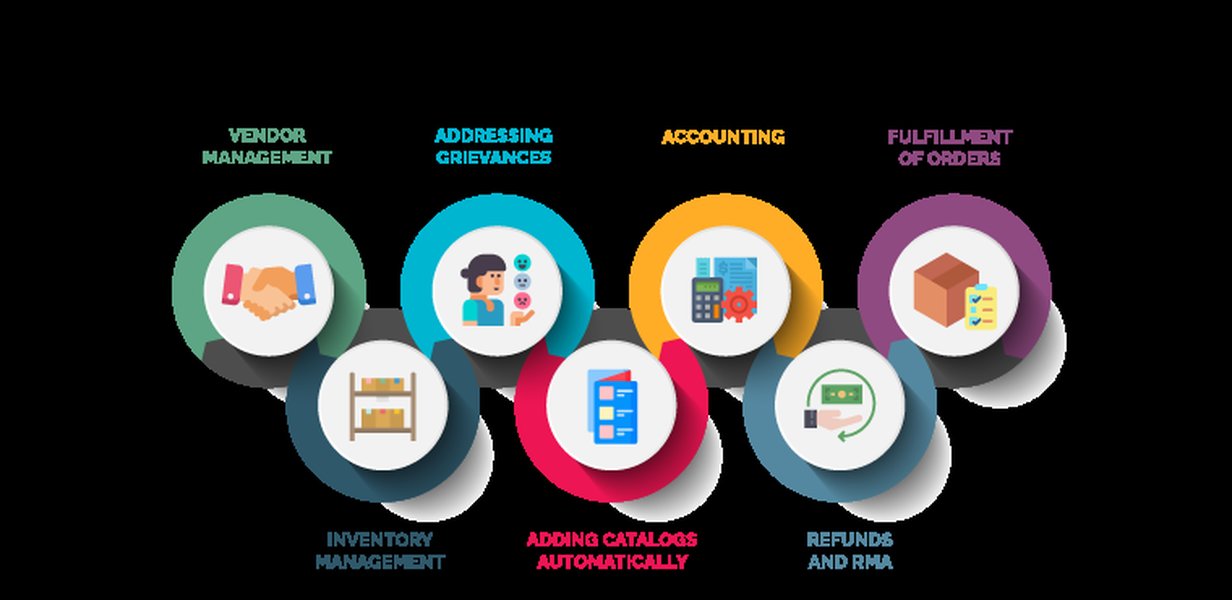
Conceptual diagram of an e-commerce automation process.
Strategic Considerations for Shopify App Development
When deciding which app concept to pursue, it's helpful to compare them across several strategic factors. The table below provides a high-level overview based on our analysis:
| Strategic Factor | Bundle Sale Apps | Discount Control Apps | Product Import Apps | Bulk Edit Apps |
|---|---|---|---|---|
| Overall Opportunity Rank | 2 (High Demand, High Comp) | 4 (Saturated, Niche Play) | 1 (Growing Need, Moderate Comp) | 3 (Utility, High Comp) |
| Key Gaps Addressed | Reliability, Variant UX, AI Bundling | True Personalization, AI Optimization | Advanced Sync, AI Mapping, Multi-Source | Complex Edits UX, AI Assist, Metafields |
| Primary Automation Focus | Smart Bundle Suggestions, Dynamic Pricing | Adaptive Discounts, Complex Rule Automation | End-to-End Data Sync, Validation & Enrichment | Scheduled Tasks, Rule-Based Batch Edits |
| Innovation Priority | Seamlessness & Intelligence | Hyper-Personalization & ROI Focus | Robustness, Connectivity & Intelligence | Efficiency & Smart Assistance |
| Est. Development Complexity | Medium to High (variants, UI) | Medium (complex rules, integrations) | High (data processing, APIs, AI) | Medium to High (UI, performance) |
| User Acquisition Difficulty | High (due to competition) | Very High (saturated market) | Medium (clear value prop for target niche) | High (many existing tools) |
This table highlights that while Product Import Apps might have higher development complexity, their clearer value proposition for a specific, underserved need could ease user acquisition compared to more saturated markets.
Insights from the Bundling Space
While our primary recommendation leans towards Product Import, understanding competitive dynamics in other high-demand areas like Bundle Sale apps is still valuable. Even in crowded markets, well-executed apps that solve core user pain points can succeed. The video below offers a review of Shopify's own Bundle app and a comparison, which can provide context on feature sets and user expectations in the bundling domain.
Video discussing Shopify Bundle app features and comparisons, useful for understanding the competitive landscape.
This review touches upon the importance of ease of use and feature completeness, aspects that are critical for any app's success, including the proposed "IntelliSync Product Pipeline."

An example of a well-designed app dashboard, crucial for user experience.
Frequently Asked Questions (FAQ)
Why are Product Import apps considered a high opportunity?
Product Import apps are seen as a high opportunity because they address a fundamental and often complex need for Shopify merchants: managing product data efficiently, especially when dealing with large catalogs, multiple suppliers, or migrations. While some bulk editors offer import functionalities, dedicated apps focusing on advanced features like AI-powered mapping, real-time multi-source synchronization, robust error handling, and automated data enrichment can provide significant value. The competition for such advanced, specialized import solutions is currently less intense than in categories like Discount Control or general Bulk Edit apps, offering a better chance for a new, innovative app to gain traction.
What are the biggest challenges in developing a successful Bundle Sale app?
The primary challenges in the Bundle Sale app market include high competition, ensuring impeccable reliability with Shopify's inventory and variant systems, and offering a truly intuitive user experience for both merchants setting up bundles and customers selecting them. Differentiating factors often lie in advanced features like dynamic or AI-suggested bundles, highly customizable bundle displays that integrate seamlessly with diverse themes, and robust analytics. Technical complexities around inventory synchronization for bundled items (especially with variants) and managing potential conflicts with other apps or promotions also pose significant hurdles.
How can AI be leveraged in these Shopify app categories?
AI can be a powerful differentiator across all categories:
- Bundle Sale Apps: AI can analyze purchase patterns to suggest optimal bundle combinations, personalize bundle offers for individual customers, and dynamically price bundles.
- Discount Control Apps: AI can optimize discount strategies by predicting their impact on profit margins, personalize discount offers based on customer behavior, and automate A/B testing of different promotions.
- Product Import Apps: AI can automate data mapping from diverse source files, validate data quality, enrich product listings by generating descriptions or suggesting tags, and categorize products intelligently.
- Bulk Edit Apps: AI can suggest relevant edits (e.g., price optimizations, SEO improvements), assist in smart filtering or grouping of products for editing, and automate routine tasks based on learned patterns.
Is it still possible to compete in the Discount Control app market?
While the Discount Control app market is highly saturated, opportunities can still exist, particularly by focusing on niche functionalities or significant innovation. Success would likely require a deep understanding of specific merchant pain points not adequately addressed by existing solutions. Areas for potential differentiation include hyper-personalization of discounts at scale, AI-driven optimization of discount strategies for profitability (not just revenue), seamless integration with emerging Shopify features (like Functions), or novel approaches to gamified discounts or loyalty-integrated promotions. However, a new entrant would need a strong unique selling proposition and a solid marketing strategy to cut through the noise.
Recommended Next Steps
To further explore the potential of your Shopify app idea, consider these related research paths:
- Explore advanced techniques for Shopify product data synchronization across multiple sales channels.
- Discover best practices for designing user-friendly interfaces for complex Shopify app functionalities.
- Investigate AI-powered product attribute enrichment services for e-commerce platforms.
- Analyze successful monetization strategies for SaaS-based Shopify applications.
References
 apps.shopify.com
apps.shopify.com
apps.shopify.com
apps.shopify.com
 shopify.com
apps.shopify.com
apps.shopify.com
apps.shopify.com
apps.shopify.com
apps.shopify.com
apps.shopify.com
 community.shopify.com
apps.shopify.com
apps.shopify.com
apps.shopify.com
apps.shopify.com
apps.shopify.com
apps.shopify.com
apps.shopify.com
 shopify.dev
community.shopify.com
apps.shopify.com
apps.shopify.com
apps.shopify.com
apps.shopify.com
 help.shopify.com
apps.shopify.com
community.shopify.com
Last updated May 9, 2025