
Implementation Challenges in Simplicial HoTT
Exploring Complexities and Solutions in Simplicial Homotopy Type Theory
Highlights
- Higher Coherence Problems: Addressing infinite proof terms and complex coherence conditions arising from semi-simplicial types.
- Constructivity and Model Structures: Overcoming constructivity limitations in simplicial sets and challenges in developing compatible model structures and Kan fibrations.
- Proof Assistants and Enhanced Equality: Advanced approaches involving stricter equality and proof assistants to manage universe levels and formalize synthetic ∞-category theory.
Introduction
Simplicial Homotopy Type Theory (sHoTT) represents an advanced extension of Homotopy Type Theory (HoTT) designed to fuse simplicial methods with type theory. This innovative framework leverages the rich structure of simplicial sets and infinite-dimensional categories to capture intricate homotopical behavior. However, the implementation of sHoTT is fraught with technical challenges that span both theoretical constructs and practical formalization efforts. In this comprehensive synthesis, we explore the primary challenges associated with the implementation of sHoTT, examine underlying reasons for these difficulties, and discuss ongoing approaches intended to address these issues.
Higher Coherence Challenges
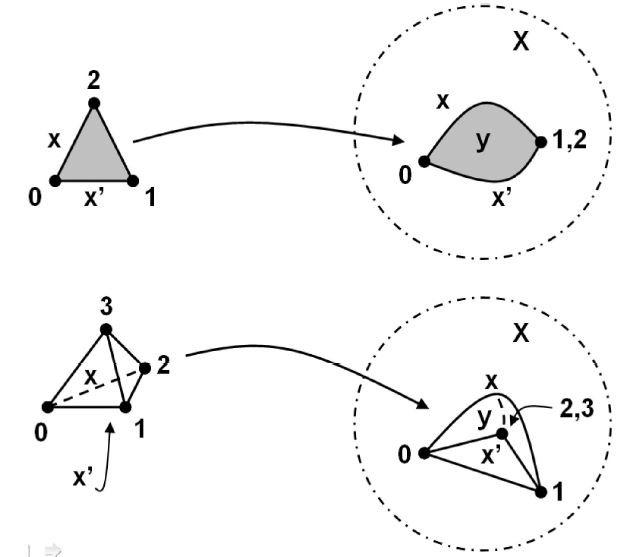
One of the most formidable obstacles in implementing Simplicial HoTT arises from higher coherence issues associated with semi-simplicial types (SSTs). In the context of sHoTT, semi-simplicial types are used to model structures with non-trivial higher-dimensional data. Unlike classical type theories which often benefit from strict (set-truncated) notions of equality, types in HoTT are interpreted as weak ∞-groupoids, meaning that every type is endowed with a hierarchy of higher-dimensional paths and homotopies.
Complexity of Higher Proof Terms
In defining SSTs, one encounters the semi-simplicial identity often expressed as \( d_i d_j = d_{j-1} d_i \) for appropriate indices \( i < j \). This identity, which is fundamental to the structure of simplicial sets, induces a cascade of “higher proof terms.” These terms are essentially proofs that the various paths and homotopies obey the necessary coherence conditions. However, they are not merely trivial equalities—instead, they involve an infinite regress of coherence data, wherein proofs about proofs themselves require justifications, leading to a combinatorial explosion. This phenomenon, sometimes metaphorically referred to as “autophagy” (wherein HoTT seems to “eat” itself), severely complicates the internal consistency and management of these higher coherences.
The Infinite Regress Problem
In practical terms, the infinite regress associated with coherence conditions means that one is forced to work with infinitary assumptions. These assumptions go beyond the standard finitary approach typically embraced in foundational type theory. When attempting to axiomatize or implement SSTs within HoTT, it becomes apparent that the standard tools do not suffice, and additional infinitary reasoning or devices such as higher inductive types may be required to ensure that all necessary coherences can be captured.
Emerging Solutions
Researchers have proposed several strategies to mitigate these issues, including the careful reintroduction of stricter forms of equality. By enforcing a more controlled version of judgmental equality within the type theory, one can sometimes reduce the proliferation of higher proof terms. Another approach involves the use of directed path types that provide a way to internalize homomorphisms in a controlled manner. These methods offer promise, but their integration into a coherent and computationally viable theory remains an active field of study.
Constructivity and Model Structure Limitations
Beyond the coherence challenge, another significant hurdle is found in the domain of constructivity and the development of compatible model structures. Simplicial sets, which serve as a key building block in sHoTT, are traditionally explored in classical homotopy theory with an emphasis on set-theoretic constructions. However, in a type-theoretic setting, these constructions must be revisited to accommodate constructive interpretations.
Constructivity Concerns in Simplicial Sets
One central issue relates to the constructive character of simplicial sets. For sHoTT to be viable, one must not only define simplicial sets but also ensure that functions and properties related to Kan fibrations are constructively valid. Kan fibrations are critical since they allow the modeling of homotopical properties in a manner that respects the univalence axiom. Unfortunately, much of the classical machinery for handling Kan fibrations relies on non-constructive principles, thus posing substantial challenges when one seeks to adapt them for a constructive framework.
Advancements in Model Structure Compatibility
The need for a refined model structure entails that the simplicial sets utilized in sHoTT must not only reflect the geometric intuitions but also respect the strict requirements of HoTT. This involves ensuring that types and their identity types are confined to the same universe level, a subtlety that is vital for maintaining consistency in the theory. As a consequence, some of the traditional model structures, such as the Kan-Quillen model, must be re-evaluated, and often expanded, to operate effectively within the reductive confines of HoTT. These refinements are essential in expanding the capacity of sHoTT to model complex homotopy types while maintaining a robust computational framework.
Technical Innovations
To address these concerns, there is ongoing development to combine tools from synthetic higher category theory with improved models of simplicial sets. One promising avenue is the formulation of a universal left fibration that can serve as a central object for constructively modeling higher categories. Additionally, progress in the field suggests that enhancements to proof assistant systems—which are designed to work within sHoTT—may leverage these refined models to offer more efficient computations and verifications.
Proof Assistants and Practical Implementation
The theoretical challenges described above are closely intertwined with practical issues encountered in proof assistants, the software systems that formalize and verify mathematical theories based on HoTT. The integration of sHoTT into a proof assistant environment demands careful treatment of both computational efficiency and logical consistency.
Role of Proof Assistants
Proof assistants such as Coq, Agda, and specialized tools like Rzk have been employed to investigate sHoTT. The implementation difficulties primarily involve managing universe levels, orchestrating the myriad coherence conditions, and ensuring that type-checking procedures remain both fast and complete. In particular, proof assistants must handle the subtle interplay between directed path types and the standard type-theoretic operations.
Directed Path Types and Operational Efficiency
The inclusion of directed path types extends the classical notion of paths (or equivalences) in HoTT, enabling a richer language for describing internal homomorphisms. However, this extension increases the complexity of type theory by introducing additional coherence requirements that must align with the rest of the framework. In practice, the implementation of these directed paths within proof assistants is achieved through a combination of novel algorithms for type checking and sophisticated normalization procedures.
Judgmental vs. Propositional Equality
One practical solution to handle these additional complexities has been the refinement of judgmental equality. By moving some aspects of equality into the judgmental realm (where equalities are decided computationally rather than proved via propositional judgments), proof assistants can streamline much of the computational overhead. This approach, while promising, results in “local equalities” and requires a careful balance to ensure that the fundamental properties of HoTT are preserved across the board.
Improving Automation and Efficiency
The challenges in efficient evaluation and computation within proof assistants are not to be underestimated. For example, the evaluation of cubical programs and the implementation of extension types demand highly optimized algorithms. Efforts to improve these aspects are crucial, as even minor computational inefficiencies can escalate dramatically in the complex landscape of sHoTT. Ongoing research is dedicated to developing new strategies for more efficient proof checking, leveraging both insights from category theory and advancements in automated theorem proving.
| Aspect | Main Challenge | Potential Solutions |
|---|---|---|
| Higher Coherence | Infinite regress in higher proof terms | Stricter judgmental equality, directed paths |
| Constructivity | Non-constructive nature of Kan fibrations | Refined model structures, synthetic ∞-categories |
| Proof Assistants | Complex universe management and normalization issues | Optimized algorithms, two-level type theory approaches |
Advanced Topics in Synthetic ∞-Category Theory
A key motivation behind the development of Simplicial HoTT is its potential to seamlessly integrate synthetic ∞-category theory into a type-theoretical framework. ∞-categories, characterized by their capacity to handle infinite-dimensional data, provide a natural setting for many modern mathematical theories. Within sHoTT, the ambition is to capture these structures synthetically, thereby offering a novel approach to higher category theory that is both rigorous and intuitively accessible.
Formalizing Synthetic ∞-Categories
The process of formalizing synthetic ∞-categories in sHoTT involves translating complex classical constructions into a type theory language. This translation is nontrivial because it must preserve all the intricate homotopical information without sacrificing the computational advantages of type theory. In particular, one must define simplicial types that can encapsulate the interplay between various dimensions and coherences intrinsic to ∞-categories. The task is further compounded by the inherent ambiguity in the traditional definitions of ∞-categories, which require novel formulations to fit within the HoTT framework.
Bridging Gaps with Novel Theoretical Constructs
To bridge the gap between classical category theory and its synthetic counterpart, researchers are exploring a range of innovative concepts. These include:
- Introducing user-defined shapes (e.g., cubes, topes) beyond the current limitations, which are presently dominated by directed intervals.
- Developing a comprehensive approach to extension types that accurately capture the intended functorial behavior within the internal language of HoTT.
- Employing multi-level type theories, such as Two-Level Type Theory (2LTT), which allow for a stratification of equality and cohesion in the type theory framework.
Potential Impact on Mathematical Formalization
Success in these areas would not only solidify the foundations of sHoTT but would also empower mathematicians to work with complex ∞-categories in a fully formalized and computer-checkable environment. Such advancements have the potential to revolutionize areas ranging from algebraic topology to theoretical computer science by providing a uniform language for higher-dimensional mathematics.
Future Directions and Emerging Research
Research in Simplicial Homotopy Type Theory is vibrant and continuously evolving. Many of the challenges outlined above are active areas of investigation, with researchers striving to produce more robust models and practical implementations.
Innovative Approaches and Proof Assistants
One promising direction is the further development of specialized proof assistants designed exclusively for sHoTT. These tools aspire to incorporate optimized type-checking mechanisms, strengthened handling of universe levels, and support for directed and user-defined path types. As the computational complexity of simulating higher categorical structures is considerable, additional research into algorithmic strategies for efficient normalization and proof verification is critical.
Refining the Notion of Equality
Another major avenue of research focuses on the redefinition of equality in HoTT. Current efforts involve experimenting with stricter judgmental equalities that can mitigate many of the problems caused by infinite coherence levels. This approach aims to strike a balance between the expressive power of the theory and the necessity for computational tractability. Enhanced equality notions are also expected to facilitate smoother integration of complex categorical structures while avoiding the pitfalls of “autophagy.”
Bridging Theoretical Frameworks
A critical goal for the future is to develop a unified framework that can reconcile the classical simplicial models with their synthetic counterparts. This involves:
- Integrating ideas from classical homotopy theory with modern type-theoretic insights to produce more versatile models.
- Utilizing recently developed concepts in synthetic ∞-category theory to establish bridges between different representations of higher-dimensional categories.
- Developing comprehensive model structures that retain the advantages of constructivity while adequately supporting the complexity of sHoTT.
Conclusion and Final Thoughts
The implementation challenges in Simplicial Homotopy Type Theory showcase the intricate interplay between advanced abstract theoretical constructs and practical formalization hurdles. The principal difficulties arise from managing higher coherence issues, addressing constructivity and model structure limitations, and implementing specialized proof assistants that can operate within the stricter confines of HoTT. In response, researchers are actively exploring modifications to equality, enhanced normalization techniques, and the formalization of synthetic ∞-categories that promise to alleviate many of these obstacles.
Looking forward, the continued progress in sHoTT holds immense promise for the development of a robust framework that may not only extend the capabilities of Homotopy Type Theory but also offer a novel lens through which to view higher-dimensional mathematics. The research integrates deep theoretical inquiries with practical software engineering challenges, bridging mathematical intuition with computational verification. Such advances are expected to play a pivotal role in the future of both higher category theory and the formalization of complex mathematical proofs.
References
- PDF - Higher coherence equations of semi-simplicial types as n-cubes of proofs - HoTT UF
- PDF - Challenges in defining semi-simplicial types in HoTT - Nott University
- ArXiv - Semi-simplicial Types in Logic-enriched Homotopy Type Theory
- PDF - Towards Simplicial Complexes in Homotopy Type Theory - HoTT UF
- PDF - Recent progress in the theory of effective Kan fibrations in simplicial sets
- Semisimplicial Types, Part I: Motivation and History - UT Austin
- Semi-Simplicial Types, Part I: Motivation and History - LessWrong
Recommended
Last updated February 24, 2025