
Maximizing Recovery: Recommended Exercises for Recurrent Shoulder Bursitis
Effective evidence-based exercise strategies for managing shoulder bursitis
Key Takeaways
- Scapular Stability: Emphasizing exercises that enhance scapular stabilization to support shoulder mechanics.
- Rotator Cuff Strengthening: Incorporating targeted rotator cuff exercises to reduce bursa compression and prevent recurrence.
- Progressive Rehabilitation: Implementing a gradual, supervised exercise regimen tailored to individual pain and functional levels.
Introduction
Recurrent shoulder bursitis is a condition characterized by inflammation of the bursa in the shoulder, leading to pain, reduced mobility, and impaired function. Managing this condition effectively requires a comprehensive approach that includes appropriate exercises aimed at reducing inflammation, strengthening supporting muscles, and enhancing overall shoulder stability. Evidence-based medicine provides a framework for selecting exercises that not only alleviate symptoms but also prevent recurrence by addressing underlying biomechanical issues.
Phased Exercise Approach
1. Initial Phase: Pain Management and Gentle Mobilization
The initial phase focuses on pain relief and maintaining shoulder mobility without exacerbating inflammation. Gentle range-of-motion (ROM) exercises are essential during this stage.
Pendulum Exercises (Codman's Exercises)
Performed by leaning forward and allowing the affected arm to hang loosely. Small circular motions are made with the arm to promote joint mobility while minimizing stress on the shoulder.
Isometric Exercises
These exercises involve contracting the shoulder muscles without moving the joint, helping to reduce pain and improve muscle strength around the shoulder.
2. Progressive Phase: Strengthening and Stabilization
As pain decreases and mobility improves, the focus shifts to strengthening the shoulder muscles and enhancing scapular stability to support the shoulder joint effectively.
Rotator Cuff Strengthening
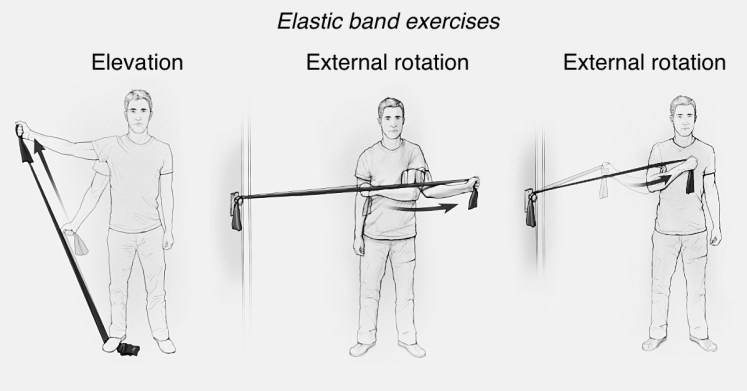
Targeted exercises like external rotations and resisted abductions help strengthen the rotator cuff muscles, which play a crucial role in stabilizing the shoulder and reducing bursa compression.
Scapular Retraction and Depression
Exercises such as scapular retraction (pulling the shoulder blades together) and depression (pulling the shoulder blades downward) improve shoulder mechanics and reduce the likelihood of impingement.
Theraband Rowing Exercises
Using an elastic band, patients perform rowing motions to strengthen the muscles around the scapula, enhancing overall shoulder stability.
3. Advanced Phase: Functional Training and Maintenance
In the advanced phase, exercises are designed to restore full shoulder function and prepare the patient for a gradual return to regular activities and sports.
Functional Movements
Exercises that mimic daily activities or specific sports movements help in transitioning back to normal routines while maintaining shoulder strength and flexibility.
Progressive Resistance Training
Gradually increasing the resistance in strengthening exercises ensures continued muscle development and joint support, preventing future flare-ups of bursitis.
Comprehensive Exercise Table
| Exercise | Purpose | Repetitions | Frequency |
|---|---|---|---|
| Pendulum Exercises | Maintain joint mobility, reduce stiffness | 10 circles each direction | 3 times daily |
| Isometric Shoulder Flexion | Strengthen shoulder muscles without movement | Hold for 5 seconds | 10 repetitions |
| Wall Pushups | Enhance scapular stability and shoulder blade strength | 10 repetitions | 3 sets daily |
| Rotator Cuff External Rotation | Strengthen rotator cuff muscles | 12 repetitions | 3 sets daily |
| Scapular Retraction | Improve shoulder blade control and stability | 12 repetitions | 3 sets |
| Theraband Rowing | Strengthen scapular muscles | 15 repetitions | 3 sets |
| Open Book Stretch | Improve shoulder flexibility | Hold for 30-60 seconds | 3 repetitions |
| Shoulder Blade Squeeze | Enhance scapular muscle strength | Hold for 6 seconds | 12 repetitions |
Additional Guidelines for Effective Rehabilitation
Individualized Exercise Program
Every patient's condition is unique, necessitating a tailored exercise regimen. Factors such as pain level, range of motion, and functional impairments should guide the selection and intensity of exercises.
Gradual Progression
Starting with low-intensity exercises and progressively increasing the difficulty ensures that the shoulder adapts without overloading the bursa or surrounding tissues.
Professional Supervision
Working with a physical therapist or healthcare provider ensures that exercises are performed correctly, reducing the risk of further injury and maximizing therapeutic benefits.
Posture Correction
Maintaining proper posture during daily activities and exercises helps in minimizing unnecessary stress on the shoulder, promoting long-term joint health.
Avoidance of Aggravating Movements
During acute phases, it's crucial to avoid movements that exacerbate pain, such as overhead activities or heavy lifting, to prevent flare-ups of bursitis.
Integrating Effective Strategies for Prevention
Strengthening Supporting Muscles
Beyond the rotator cuff and scapular muscles, strengthening the deltoids and upper back muscles can provide comprehensive support to the shoulder joint, reducing the likelihood of bursitis recurrence.
Flexibility and Mobility Maintenance
Regular stretching exercises ensure that the shoulder maintains optimal flexibility and range of motion, preventing stiffness and imbalances that could lead to bursitis.
Incorporating Functional Training
Engaging in exercises that mimic real-life activities enhances the shoulder's ability to perform daily tasks efficiently and safely, promoting overall shoulder health.
Role of Education and Self-management
Understanding Shoulder Mechanics
Educating patients about the biomechanics of the shoulder helps them recognize movements that may contribute to bursitis, enabling them to modify activities accordingly.
Self-management Techniques
Incorporating strategies such as ice therapy, proper warm-up routines, and ergonomic adjustments can complement exercise programs, enhancing overall management of shoulder bursitis.
Conclusion
Managing recurrent shoulder bursitis effectively involves a multifaceted approach centered around evidence-based exercises that address pain, strengthen supporting muscles, and enhance shoulder stability. By adopting a phased exercise regimen, individualizing programs to patient needs, and incorporating preventive strategies, individuals can achieve significant improvements in shoulder function and reduce the risk of future bursitis episodes. Professional guidance and patient education play pivotal roles in ensuring the success of rehabilitation efforts, promoting long-term shoulder health and quality of life.
References
Last updated February 5, 2025