
Evidence-Based Exercise Recommendations for Recurrent Shoulder Impingement Syndrome
Optimizing Treatment Strategies for Enhanced Shoulder Function and Pain Relief
Key Takeaways
- Comprehensive exercise programs should include rotator cuff strengthening, scapular stabilization, and range-of-motion exercises to effectively manage and alleviate symptoms of shoulder impingement.
- Gradual progression of exercise intensity, tailored to individual patient needs and pain levels, is essential for sustained improvement and prevention of re-injury.
- Collaboration with a physical therapist ensures personalized exercise regimens, proper technique, and optimal outcomes for patients with recurrent shoulder impingement syndrome.
Introduction
Recurrent shoulder impingement syndrome is a prevalent orthopedic condition characterized by persistent pain and functional limitations in the shoulder joint. This condition arises when the tendons of the rotator cuff muscles become irritated and inflamed as they pass through the subacromial space, leading to pain, weakness, and reduced range of motion. Effective management of shoulder impingement often necessitates a multifaceted approach, with exercise therapy playing a pivotal role in alleviating symptoms, restoring function, and preventing recurrence.
Comprehensive Exercise Therapy
Exercise therapy stands as the cornerstone of non-surgical treatment for shoulder impingement syndrome. A well-structured exercise program targets multiple aspects of shoulder mechanics, including muscle strength, flexibility, and joint stability. The following components are essential for an effective exercise regimen:
Rotator Cuff Strengthening
External Rotation Exercises
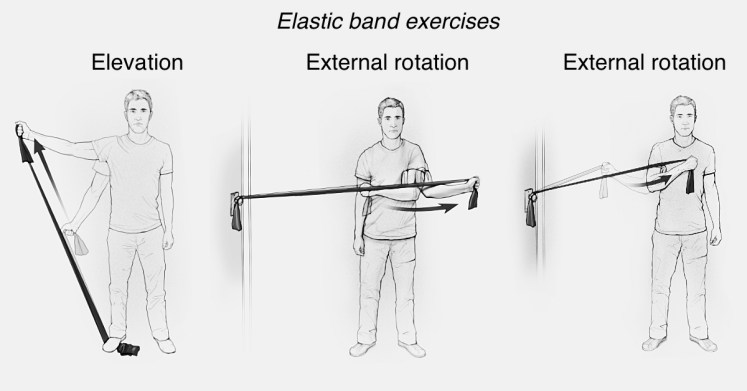
External rotation exercises are fundamental for strengthening the rotator cuff, particularly the infraspinatus and teres minor muscles. These muscles play a crucial role in stabilizing the shoulder joint and maintaining proper alignment during arm movements. Techniques include:
- Resistance Band External Rotations: Attach a resistance band to a fixed object at elbow height. With the elbow bent at 90 degrees and tucked against the side, rotate the forearm outward, keeping the elbow stationary.
- Dumbbell External Rotations: Lying on the side with a light dumbbell in the top hand, rotate the arm upward while maintaining elbow position, focusing on controlled movement.
Internal Rotation Exercises
Complementing external rotations, internal rotation exercises target the subscapularis muscle, enhancing overall rotator cuff balance and function.
- Resistance Band Internal Rotations: Similar setup to external rotations, but rotate the forearm inward towards the body.
- Dumbbell Internal Rotations: Standing or sitting with a dumbbell, move the arm inward across the abdomen, maintaining a controlled pace.
Scapular Stabilization
Scapular Retraction
Proper scapular positioning is vital for shoulder health. Scapular retraction exercises strengthen the muscles responsible for pulling the shoulder blades together, promoting better shoulder mechanics.
- Seated Rows: Using a cable machine or resistance band, pull the handles towards the torso while squeezing the shoulder blades together.
- Wall Slides: Stand with back against a wall, arms bent at 90 degrees. Slide the arms upward while maintaining contact with the wall, then return to the starting position.
Scapular Protraction
Scapular protraction exercises focus on the muscles that push the shoulder blades forward, contributing to balanced shoulder dynamics.
- Push-Up Plus: Perform a standard push-up, and at the top position, push further by rounding the upper back, emphasizing scapular protraction.
- Resistance Band Push-Aparts: Hold a resistance band with both hands extended in front. Push the band apart by moving the arms outward, focusing on scapular movement.
Range-of-Motion and Flexibility
Pendulum Stretches
Pendulum stretches enhance shoulder flexibility and reduce stiffness by allowing the arm to move freely in circular motions, promoting synovial fluid distribution.
Doorway Stretch
The doorway stretch effectively targets the pectoral muscles and deltoids, improving anterior shoulder flexibility and reducing impingement risks.
- Execution: Stand in a doorway with arms at 90 degrees against the frame. Gently lean forward until a stretch is felt across the chest and shoulders.
Progressive Strengthening Protocol
Isometric Exercises
Isometric exercises involve muscle contractions without joint movement, providing a safe starting point for strengthening while minimizing pain.
- Isometric External Rotation: Stand with the elbow fixed at 90 degrees against a wall. Push the hand outward against the wall without moving the elbow.
- Isometric Internal Rotation: Similar setup as external rotation but push the hand inward against the wall.
Resistance Band Exercises
Progressing to resistance bands introduces dynamic loading, enhancing muscular endurance and strength.
- External Rotation with Resistance Band: As described earlier, focus on controlled, steady movements to build rotator cuff strength.
- Scapular Rows with Resistance Band: Enhance scapular stabilization by performing rows, ensuring the movement originates from the shoulder blades.
Light Weight Training
Introducing light weights (1-2 lbs) further challenges the muscles, promoting hypertrophy and functional strength.
- Dumbbell Scaption: Lift light weights in a diagonal plane (30-45 degrees) to engage the supraspinatus and deltoid muscles.
- Prone Horizontal Abduction: Lying face down on a bench, lift arms horizontally to strengthen the supraspinatus and deltoids.
Exercise Frequency and Volume
Adhering to an appropriate exercise frequency and volume is crucial for optimal outcomes. The recommended parameters include:
- Frequency: Perform exercises 3-5 times per week, allowing at least one day of rest between sessions to facilitate muscle recovery.
- Sets and Repetitions: 3 sets of 10-15 repetitions per exercise, maintaining proper form and controlled movements.
- Progression: Gradually increase resistance or weight as muscle strength improves, ensuring exercises remain challenging yet pain-free.
Scapular Control and Postural Correction
Proper scapular control is integral to maintaining shoulder health and preventing impingement. Exercises targeting scapular movement and posture can significantly enhance shoulder mechanics.
Scapular Retraction and Protraction
Strengthening the muscles responsible for scapular retraction (e.g., rhomboids, middle trapezius) and protraction (e.g., serratus anterior) ensures balanced scapular movement.
- Seated Rows: Using a cable machine, pull the handles towards the torso, focusing on squeezing the shoulder blades together.
- Push-Up Plus: Perform a push-up and at the top, push further to protract the scapula, engaging the serratus anterior.
Postural Awareness and Correction
Addressing postural deviations such as forward head posture and rounded shoulders is essential. Incorporate exercises that promote an upright posture and reduce undue stress on the shoulder joint.
- Chin Tucks: Gently tuck the chin towards the neck to correct forward head posture.
- Thoracic Extensions: Use a foam roller to extend the thoracic spine, improving upper back mobility.
Functional Training and Activity Modification
Functional training integrates the principles of strength, flexibility, and coordination into movements that mimic daily activities or specific sports, facilitating a return to normal function and preventing re-injury.
Gradual Reintroduction to Activities
Patients should gradually resume overhead activities and sports-specific movements, ensuring that exercises are performed with proper technique to minimize the risk of recurrence.
Ergonomic Adjustments
Implementing ergonomic changes in daily tasks can reduce shoulder strain. This may include adjusting workstation height, using ergonomic tools, and adopting proper lifting techniques.
Monitoring Progress and Ensuring Compliance
Regular monitoring of progress and ensuring patient compliance are critical for the success of the exercise program. Key strategies include:
- Goal Setting: Establish clear, achievable goals to motivate patients and track improvements.
- Progress Assessments: Periodically evaluate strength, flexibility, and pain levels to adjust the exercise regimen as needed.
- Education: Educate patients on the importance of consistency, proper technique, and adherence to the exercise program.
Safety Considerations and Contraindications
While exercise therapy is generally safe, certain precautions should be taken to prevent exacerbation of symptoms:
-
Pain Management: Exercises should be performed within a pain-free range. Any increase in pain during or after exercises should be addressed by modifying the exercise or consulting a healthcare professional.
-
Proper Technique: Emphasize correct form to avoid unintended strain on the shoulder joint and surrounding muscles.
-
Individualization: Tailor the exercise program to the patient's specific condition, considering factors such as severity, flexibility, and strength levels.
Sample Exercise Protocol
| Exercise | Sets | Repetitions | Frequency |
|---|---|---|---|
| External Rotation with Resistance Band | 3 | 15 | 3-5 times/week |
| Scapular Retraction (Seated Rows) | 3 | 12 | 3-5 times/week |
| Wall Slides | 3 | 10 | 3-5 times/week |
| Pendulum Stretch | 2 | 20 seconds each direction | Daily |
| Doorway Stretch | 2 | 30 seconds each side | Daily |
Integration with Physical Therapy
Collaborating with a physical therapist enhances the effectiveness of the exercise program. Physical therapists provide personalized assessments, ensure proper exercise execution, and make necessary adjustments based on patient progress.
Personalized Exercise Prescription
A tailored exercise regimen considers the patient's unique anatomy, activity levels, and specific impairments, leading to more efficient and sustainable outcomes.
Manual Therapy Techniques
In addition to exercise, physical therapists may employ manual therapy techniques such as mobilization and soft tissue manipulation to further alleviate pain and improve shoulder mobility.
Patient Education and Self-Management
Educating patients on shoulder mechanics, posture, and self-management strategies empowers them to take an active role in their recovery, fostering long-term shoulder health.
Long-Term Maintenance and Prevention
Sustaining shoulder health beyond the initial rehabilitation phase is essential to prevent recurrence. Implementing maintenance strategies ensures continued strength, flexibility, and functional integrity.
Ongoing Strengthening and Flexibility Exercises
Incorporate a balanced regimen of strengthening and flexibility exercises into daily routines to maintain muscle balance and joint mobility.
Regular Activity Breaks and Ergonomic Practices
For individuals with sedentary lifestyles or occupations involving repetitive shoulder movements, taking regular breaks and adhering to ergonomic practices minimizes stress on the shoulder joint.
Periodic Evaluations
Scheduling periodic evaluations with healthcare professionals can identify early signs of shoulder dysfunction, allowing for timely interventions.
Conclusion
Managing recurrent shoulder impingement syndrome effectively hinges on a comprehensive, evidence-based exercise program that encompasses rotator cuff strengthening, scapular stabilization, and range-of-motion enhancements. By adhering to a structured exercise regimen, progressively increasing intensity, and collaborating with physical therapy professionals, patients can achieve significant pain relief, improved shoulder function, and a reduced risk of recurrence. Emphasizing personalized care and long-term maintenance strategies further ensures sustained shoulder health and quality of life.
References
Last updated February 5, 2025